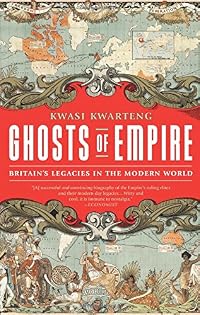
Ghosts of Empire: Britain's Legacies in the Modern World
by Kwasi Kwarteng
On This Page
Description
"Kwasi Kwarteng...masterfully re-examines the messy legacy of the British Empire--grand, colorful, and chronically unstable due to haphazard, incoherent policy-making that went unchecked."--Jacket.Tags
Recommendations







Member Reviews
I might as well admit it, I am a huge history geek. A trivia nerd. And This book was a true spur-of-the-moment purchase, inspired by the fact that it looked interesting - and that I loved Postcolonial Studies when I was at university a few years back.
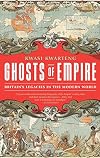
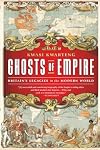
With some delay (a delay incurred especially by my subconscious obsessing over the cover -the colourful print began peeling off at the corners quite fast) I got into it. Brought it on holiday trips, read it on the bus. Anyways, the book itself is very good, if perhaps a bit overwhelming. From Iraq to Hong Kong, you are taken on a tour de force of Britain's colonial-imperial spheres of interests, and the post-colonial histories of said areas. Kwarteng does a brilliant job of showing just how show more elitist, out-of-touch and out-of-date the British colonial authorities often were - but he also manages to humanize some of the grand icons of Imperial British history.
Take for example Lord Kitchener of Khartoum - the great Victorian war hero who is probably best known today for the iconic WW1 recruitment poster "Your country needs YOU". Kwarteng reveals that because of a birth defect, Kitchener was a terrible shot. So much so that he named three of his gundogs "Bang", "Miss" and "Damn". How can you not love that little trivia tidbit? show less
With some delay (a delay incurred especially by my subconscious obsessing over the cover -the colourful print began peeling off at the corners quite fast) I got into it. Brought it on holiday trips, read it on the bus. Anyways, the book itself is very good, if perhaps a bit overwhelming. From Iraq to Hong Kong, you are taken on a tour de force of Britain's colonial-imperial spheres of interests, and the post-colonial histories of said areas. Kwarteng does a brilliant job of showing just how show more elitist, out-of-touch and out-of-date the British colonial authorities often were - but he also manages to humanize some of the grand icons of Imperial British history.
Take for example Lord Kitchener of Khartoum - the great Victorian war hero who is probably best known today for the iconic WW1 recruitment poster "Your country needs YOU". Kwarteng reveals that because of a birth defect, Kitchener was a terrible shot. So much so that he named three of his gundogs "Bang", "Miss" and "Damn". How can you not love that little trivia tidbit? show less
I'm honestly still not sure what the author was attempting here. The individual chapters covering British colonial governments in Iraq, Kashmir, Burma, Sudan, Nigeria, and Hong Kong are fine, but there doesn't seem to be much coherent connection that he's trying to make, and the selections seem somewhat random given all the other colonial experiments that he could have chosen.
Underwhelming. I believe the author had a single thought: colonialism = bad, British colonialism = especially bad. (Wait, is that two thoughts?). Anyway, having established this world view, the author tries, with mixed results, to characterize a random selection of British imperial experiences as having left a terrible legacy that endures to this day. It's too subjective. Some of the connections Kwarteng attempts to make fail miserably and struck me as 'reaching' to support his hypothesis, none more so than in the case of Nigeria or the Sudan.
Kwarteng looks at several cases of British imperial policy. How did Britain involve itself in Iraq, Kashmir, Sudan, Nigeria, Hong Kong, and Burma, and what has this meant for these countries and the world as a whole? These are worthwhile questions for the scholar and the policymaker and it is interesting that the person who asks them is a Tory MP whose parents were immigrants to Britain from the former colony of the Gold Coast. This is a work that needs to be read by people who think that it is a simple matter to march into another country and impose your will on it. Not to mention by those who think that all problems can be solved by force.
Ratings
Members
- Recently Added By
Published Reviews
ThingScore 100
The standing of the empire is the most contentious historiographical battleground in British public discourse, and Kwasi Kwarteng has tossed a grenade into the struggle with Ghosts of Empire. He describes the book as "a post-racial account of empire, insofar as it does not regard the fact that the administrators were white, while the subject people were from other races, as the key determinant show more in understanding empire. There is clearly more to understanding the British Empire than racial politics, important though that was."
Mr. Kwarteng is a black writer of Ghanaian origin who might have been expected to adopt the classic left-wing analysis of the British Empire as an exploitative, racist kleptocracy. Instead, he has written a far subtler and more nuanced critique. . . .
The Marxist characterization of the imperialist elite as a bunch of asset-strippers does not wash with Mr. Kwarteng, who rightly portrays them as among the most idealistic group of administrators in the history of mankind. They presided over the spread of responsible governance and the application of the rule of law—often in places that had little conception of those ideas, much less experience of them.
The execution, Mr. Kwarteng concedes, was imperfect. . . . Yet the results, he says, were on the whole for the good, especially when one considers that the alternative for native peoples was often not independence but rather being part of the infinitely worse-run French, German, Spanish, Portuguese or—God forbid—Belgian empires.
Yet Mr. Kwarteng is not the apologist that his opponents have tried to make out. He resolutely holds the British imperialists to account for the mess they made when relinquishing power over places like Iraq, Kashmir, Burma, Sudan and Nigeria. . . .
Mr. Kwarteng is an engaging writer, and his pen portraits of British imperialists are subtle and scholarly. He presents well-known figures—Lord Kitchener, General Gordon, Lawrence of Arabia—and obscure ones, such as Lord Lugard of Nigeria, Sir Henry Dobbs of Iraq and Sir Anthony Grantham of Hong Kong. . . .
What emerges, in Ghosts of Empire, is a picture of well-meaning classicists from Oxford and Cambridge who in their 20s and early 30s went out to rule over vast areas of the globe with minimal training and much muscular Christianity and common sense, as well as a desire to do their best for the people in their care. All too often such men were flung into complex tribal, religious and political quagmires. As Mr. Kwarteng shows, goodwill simply wasn't enough. show less
Mr. Kwarteng is a black writer of Ghanaian origin who might have been expected to adopt the classic left-wing analysis of the British Empire as an exploitative, racist kleptocracy. Instead, he has written a far subtler and more nuanced critique. . . .
The Marxist characterization of the imperialist elite as a bunch of asset-strippers does not wash with Mr. Kwarteng, who rightly portrays them as among the most idealistic group of administrators in the history of mankind. They presided over the spread of responsible governance and the application of the rule of law—often in places that had little conception of those ideas, much less experience of them.
The execution, Mr. Kwarteng concedes, was imperfect. . . . Yet the results, he says, were on the whole for the good, especially when one considers that the alternative for native peoples was often not independence but rather being part of the infinitely worse-run French, German, Spanish, Portuguese or—God forbid—Belgian empires.
Yet Mr. Kwarteng is not the apologist that his opponents have tried to make out. He resolutely holds the British imperialists to account for the mess they made when relinquishing power over places like Iraq, Kashmir, Burma, Sudan and Nigeria. . . .
Mr. Kwarteng is an engaging writer, and his pen portraits of British imperialists are subtle and scholarly. He presents well-known figures—Lord Kitchener, General Gordon, Lawrence of Arabia—and obscure ones, such as Lord Lugard of Nigeria, Sir Henry Dobbs of Iraq and Sir Anthony Grantham of Hong Kong. . . .
What emerges, in Ghosts of Empire, is a picture of well-meaning classicists from Oxford and Cambridge who in their 20s and early 30s went out to rule over vast areas of the globe with minimal training and much muscular Christianity and common sense, as well as a desire to do their best for the people in their care. All too often such men were flung into complex tribal, religious and political quagmires. As Mr. Kwarteng shows, goodwill simply wasn't enough. show less
added by TomVeal
Author Information

9+ Works 377 Members
Awards and Honors
Awards
Common Knowledge
- Important places
- British Empire
Classifications
- Genres
- History, Nonfiction, General Nonfiction
- DDC/MDS
- 909.0971241 — History & geography History World history Other Geographic Classifications Socioeconomic Regions By Political Orientation British Empire
- LCC
- DA16 .K93 — History of Europe, Asia, Africa and Oceania Great Britain History of Great Britain British Empire. Commonwealth of Nations. The
- BISAC
Statistics
- Members
- 212
- Popularity
- 153,509
- Reviews
- 4
- Rating
- (3.43)
- Languages
- English
- Media
- Paper, Audiobook, Ebook
- ISBNs
- 7
- ASINs
- 5