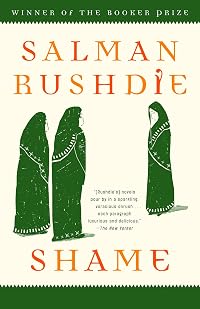
Shame
by Salman Rushdie
On This Page
Description
The novel that set the stage for his modern classic, The Satanic Verses, Shame is Salman Rushdie's phantasmagoric epic of an unnamed country that is "not quite Pakistan." In this dazzling tale of an ongoing duel between the families of two men-one a celebrated wager of war, the other a debauched lover of pleasure-Rushdie brilliantly portrays a world caught between honor and humiliation-"shamelessness, shame: the roots of violence." Shame is an astonishing story that grows more timely by the day.Tags
Recommendations
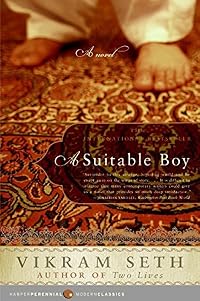
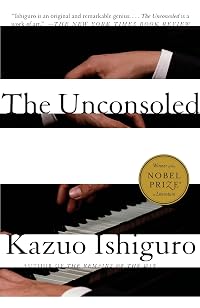
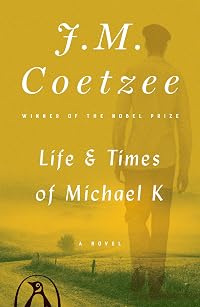
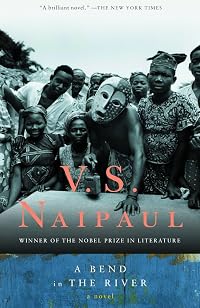
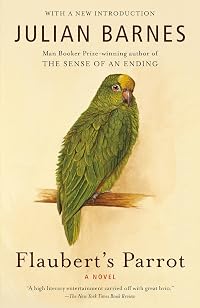
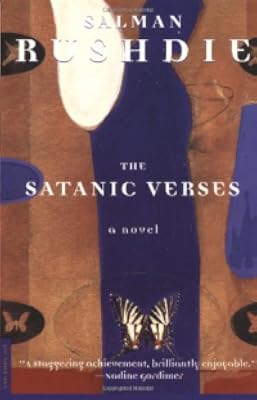
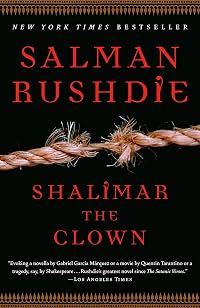
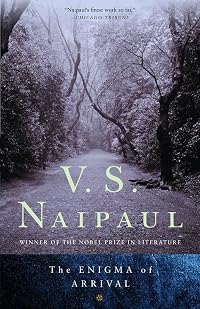
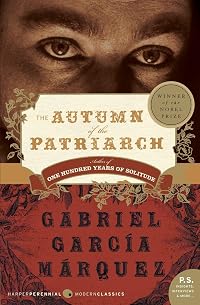
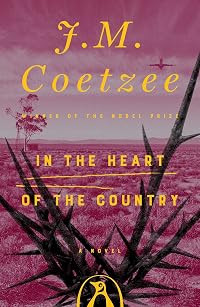

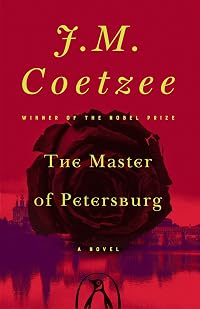
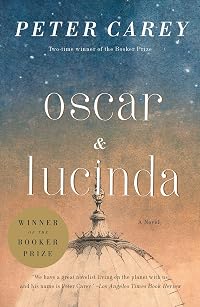
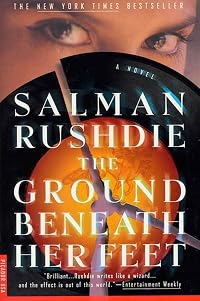
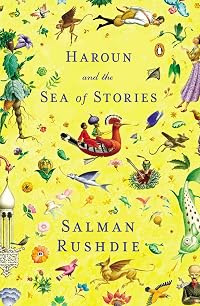
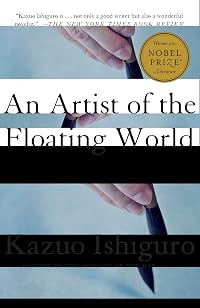
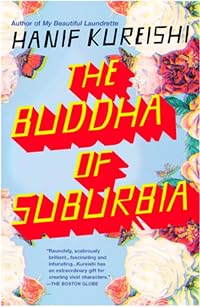
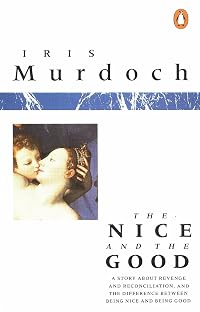
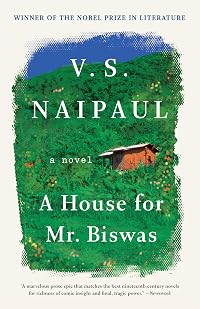
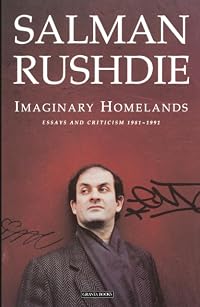
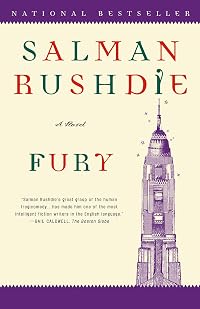


Member Recommendations
CGlanovsky Real-world political events thinly veiled in a magic realist style.
Member Reviews
This review of Shame also appears in my blog entry for 29 March 2008 at http://karenvanuska.livejournal.com/
There are writers whose ego bakes into their novels and forms a blackened crust that can't be dislodged from otherwise excellent stories. Shame, Rushdie's first novel after Midnight's Children, wears such a crust. Who could blame Rushdie for believing he was anything but completely deserving of being annointed Allah's Gift to Literature? No three groups are more eager to find a new Allah -- publishers, book critics, and readers. And let's face it, the force of Rushdie's voice coming off the page evokes the same response as watching fireworks -- each new display makes you want to go Aahhh, Oohhh, Whoooaaa until finally you settle show more into silent admiration and give up trying to figure out which display was more wondrous. That voice deserves to be read and to have an audience applauding it.
Shame's cast of characters -- the three mothers, Omar, Raza Hyder, Iskander Harappa, Good News, Sufiya, Rani, to name but a few -- thrum with the good, the bad and the ugly of life. From one page to another you applaud them, you laugh at them, you laugh with them, you weep with them, or, saddest of all, you weep for them when they are so beaten they can't even weep for themselves. It's quite a ride we take through Pakistani history and it'll take Satanice Verses, my next book, to dislodge this vivid world from my thoughts.
But always, there'll be the crust of ego stuck to Shame. Perhaps if I hadn't read War and Peace (yes, I'm still not done comparing every book to War and Peace -- woe to all books in my path this year), Rushdie's narrator wouldn't have maddened me so. Omniscient narrators that balance humility and wisdom are worthy of respect, but not so ones that are too self-indulgent. I can almost here Rushdie: "I'm a great post-modernist writer, now. I can make myself as the narrator and my presence will make the story even better." Poppycock! (Love that word!) Here's the place (pg. 115) where I completely lost my patience with the Rushdie ego:
"Not so long ago, in the East End of London, a Pakistani father murdered his only child, a daughter, because by making love to a white boy she had brought such dishonour upon her family that only her blood could wash away the stain ... The story appalled me when I heard it, appalled me in a fairly obciou say. I had recently become a father myself and was therefore newly capable of estimating how colossal a force would be required to make a man turn a knife-blad against his own flesh and blood. But even more appalling was my realization that, like the interviewed friends etc., I, too, found myself understanding the killer. The news did not seem alien to me."
What the hell was this doing in the novel? This sounds like a blurb for those fake Q&A's on the publicity sheets enclosed by publishers in their Advanced Readers Copies. "Tell me, Mr. Rushdie, what made you want to write a story about shame?" "Well, you see, Jane...Not so long ago, in the East end of London ... blah blah blah ..."
The only good thing to be said here is that Rushdie kept his ego in the backseat for the latter half of Shame. It was almost as if he realized this was a violent intrusion, an act of the little man coming out from behing the curtain and deflating all the magic, and that it had done both him and his novel great shame. Too bad a fine editor hadn't stepped forward to whisper in his ear that even the great can stumble and wouldn't the novel be that much better if we just .... show less
There are writers whose ego bakes into their novels and forms a blackened crust that can't be dislodged from otherwise excellent stories. Shame, Rushdie's first novel after Midnight's Children, wears such a crust. Who could blame Rushdie for believing he was anything but completely deserving of being annointed Allah's Gift to Literature? No three groups are more eager to find a new Allah -- publishers, book critics, and readers. And let's face it, the force of Rushdie's voice coming off the page evokes the same response as watching fireworks -- each new display makes you want to go Aahhh, Oohhh, Whoooaaa until finally you settle show more into silent admiration and give up trying to figure out which display was more wondrous. That voice deserves to be read and to have an audience applauding it.
Shame's cast of characters -- the three mothers, Omar, Raza Hyder, Iskander Harappa, Good News, Sufiya, Rani, to name but a few -- thrum with the good, the bad and the ugly of life. From one page to another you applaud them, you laugh at them, you laugh with them, you weep with them, or, saddest of all, you weep for them when they are so beaten they can't even weep for themselves. It's quite a ride we take through Pakistani history and it'll take Satanice Verses, my next book, to dislodge this vivid world from my thoughts.
But always, there'll be the crust of ego stuck to Shame. Perhaps if I hadn't read War and Peace (yes, I'm still not done comparing every book to War and Peace -- woe to all books in my path this year), Rushdie's narrator wouldn't have maddened me so. Omniscient narrators that balance humility and wisdom are worthy of respect, but not so ones that are too self-indulgent. I can almost here Rushdie: "I'm a great post-modernist writer, now. I can make myself as the narrator and my presence will make the story even better." Poppycock! (Love that word!) Here's the place (pg. 115) where I completely lost my patience with the Rushdie ego:
"Not so long ago, in the East End of London, a Pakistani father murdered his only child, a daughter, because by making love to a white boy she had brought such dishonour upon her family that only her blood could wash away the stain ... The story appalled me when I heard it, appalled me in a fairly obciou say. I had recently become a father myself and was therefore newly capable of estimating how colossal a force would be required to make a man turn a knife-blad against his own flesh and blood. But even more appalling was my realization that, like the interviewed friends etc., I, too, found myself understanding the killer. The news did not seem alien to me."
What the hell was this doing in the novel? This sounds like a blurb for those fake Q&A's on the publicity sheets enclosed by publishers in their Advanced Readers Copies. "Tell me, Mr. Rushdie, what made you want to write a story about shame?" "Well, you see, Jane...Not so long ago, in the East end of London ... blah blah blah ..."
The only good thing to be said here is that Rushdie kept his ego in the backseat for the latter half of Shame. It was almost as if he realized this was a violent intrusion, an act of the little man coming out from behing the curtain and deflating all the magic, and that it had done both him and his novel great shame. Too bad a fine editor hadn't stepped forward to whisper in his ear that even the great can stumble and wouldn't the novel be that much better if we just .... show less
The novel that set the stage for his modern classic, The Satanic Verses, Shame is Salman Rushdie’s phantasmagoric epic of an unnamed country that is “not quite Pakistan.” In this dazzling tale of an ongoing duel between the families of two men–one a celebrated wager of war, the other a debauched lover of pleasure–Rushdie brilliantly portrays a world caught between honor and humiliation–“shamelessness, shame: the roots of violence.” Shame is an astonishing story that grows more timely by the day.
Key words: post-colonial, novel, India,
Key words: post-colonial, novel, India,
Shame is an undesired sperm that impregnates human psychic with acute guilt and discomfort to procreate a shameless fiend amid continual cerebral labor pains. Molded on a fictionalized caricature of Pakistan’s opinionated and influential communal strata it incubates the embryonic mesh of brutality resulting in social and personal turmoil.
Rushdie along with his emotive quandary constantly appears to be a lost child meandering on the South Asian political-cultural perimeter. With Satanic Verses and Midnight’s Children being his two precious manuscripts, Shame lingers on the threshold of allegorical restrains.
Oh! This book isn’t awful, if that’s what you are thinking. I presume I was more than a decade late in reading Rushdie’s show more Shame. The book would have appalled my wits then as an adolescent luxuriating in a cushy life. However as a seasoned 30-yr old parasite clinching on the edge of cynical propaganda it was more on the lines of serving a tepid cup of tea with maybe a dry toast. show less
Rushdie along with his emotive quandary constantly appears to be a lost child meandering on the South Asian political-cultural perimeter. With Satanic Verses and Midnight’s Children being his two precious manuscripts, Shame lingers on the threshold of allegorical restrains.
Oh! This book isn’t awful, if that’s what you are thinking. I presume I was more than a decade late in reading Rushdie’s show more Shame. The book would have appalled my wits then as an adolescent luxuriating in a cushy life. However as a seasoned 30-yr old parasite clinching on the edge of cynical propaganda it was more on the lines of serving a tepid cup of tea with maybe a dry toast. show less
Shame is the third novel by Salman Rushdie. The narrator tells us novel is and is not about Pakistan. The main characters are Omar Khayyam Shakil (who represents shamelessness), Raza Hyder (read Zia-ul-Haq), his daughter Sufiya Zinobia (who represents shame), Iskander Harappa (read Zulfikar Ali Bhutto) and his daughter Arjumand Harappa, the virgin Ironpants (read Benazir Bhutto). Once again written in magical realism, the plot loosely follows events leading up to the reign of Bhutto and then the coup by Zia. A political novel, it sent me off to Wikipaedia to fill in my sorely-lacking background knowledge of these events in Pakistan. Not the epic length of Midnight’s children or of later novels, it is filled with satire, cynical show more intrigue and black comedy. Rushdie, as always, demonstrates his mastery of language and keeps the reader engaged to the last line. show less
I've read a couple of Rushdie books before, the Satanic Verses, and The Moor's Last Sigh. I would rate both of them higher than this one. All the same, this is a good book, it is written as well as the other two, and doesn't lack any of the idiosyncratic Rushdie flair and drama in the writing. I think it is just perhaps because it is not quite as romantic, or balanced as the other two books, it is not as enjoyable to read. The book is fairly miserable all in all, not in a really depressing way, but it is dark, political, and will not be to everyones taste. I did enjoy reading it though, and it has a lot to it's credit, if you've read any Rushdie before then you will appreciate how he describes everything so fantastically, and makes show more things seem real and unreal at the same time. I would recommend this to fans of the author, but if you've not read any of his before then you should try one of the previously mentioned titles first, as they are in my opinion better reads. This book was shorter than the other two, but the plot is fully realised and he gets a lot out of the ideas in the length of the book. show less
A thoroughly fascinating work of art. Family dynasty and cultural upheaval. Political machinations and societal norms.
I would rate this novel higher, but something about it seemed off to me. Despite that, I found his writing style terribly appealing and it was a fairly riveting read. I mean to read more of Rushdie.
Members
- Recently Added By
Published Reviews
". . . a lively, amusing and exasperating work . . . The false starts, loose ends and general extravagance of the tale can become irritating. . . . And yet the book in its own peculiar fashion works."
added by GYKM
Lists

The Guardian's 1000 Novels Everyone Must Read
1,005 works; 551 members

1001 Books You Must Read Before You Die
1,448 works; 1,136 members

Magic Realism
371 works; 52 members

Booker Prize
491 works; 62 members
20th Century Literature
1,161 works; 54 members

1,001 BYMRBYD Concensus
723 works; 27 members

Man Booker Prize Longlist 1983
6 works; 1 member

Top 50 Favourite Books
50 works; 2 members

Books Read in 2016
4,666 works; 199 members
Books Read in 2015
3,299 works; 129 members

Booker Prize Shortlist: Titles Not Yet Read
161 works; 4 members
Author Information

86+ Works 70,085 Members
Salman Rushdie was born in India on June 19, 1947. He was raised in Pakistan and educated in England. His novels include Grimus, Shame, The Satanic Verses, Haroun and the Sea of Stories, The Moor's Last Sigh, The Ground Beneath Her Feet, Fury, Shalimar the Clown, The Enchantress of Florence, Luka and the Fire of Life, and The Golden House. His show more non-fiction works include Joseph Anton, Imaginary Homelands, The Jaguar Smile, and Step across This Line. He also wrote a collection of short stories entitled East, West. He has received numerous awards including the Whitbread Prize for Best Novel twice, the James Tait Black Prize, the French Prix du Meilleur Livre Étranger, the Booker Prize in 1981 for Midnight's Children, and the 2014 PEN/Pinter Prize. (Bowker Author Biography) show less
Some Editions
Awards and Honors
Awards
Distinctions
Series
Belongs to Publisher Series
Work Relationships
Is contained in
Common Knowledge
- Canonical title*
- Schaamte
- Original title
- Shame
- Original publication date
- 1983
- People/Characters
- Omar; Raza Hyder; Iskander Harappa; Good News; Sufiya; Rani
- Important places
- Pakistan; Middle East
- Dedication
- For Sameen
- First words
- In the remote border town of Q., which when seen from the air resembles nothing so much as an ill-proportioned dumb-bell, there once lived three lovely, and loving, sisters.
- Original language*
- Engels
- Disambiguation notice
- This LT work incorrectly uses a German ISBN of Rushdie's 2001 novel, Fury. Please do not combine it with Fury
*Some information comes from Common Knowledge in other languages. Click "Edit" for more information.
Classifications
Statistics
- Members
- 2,638
- Popularity
- 7,145
- Reviews
- 17
- Rating
- (3.76)
- Languages
- 19 — Bulgarian, Czech, Danish, Dutch, English, Finnish, French, German, Hebrew, Hungarian, Italian, Lithuanian, Norwegian (Bokmål), Polish, Portuguese, Romanian, Spanish, Swedish, Turkish
- Media
- Paper, Audiobook, Ebook
- ISBNs
- 60
- ASINs
- 21