On This Page
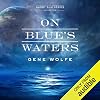
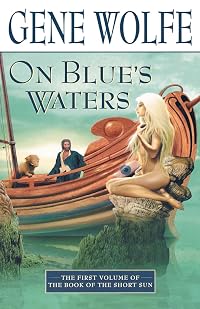
Description
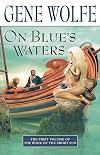
On Blue's Watersis the start of a major new work by Gene Wolfe, the first of three volumes that comprise The Book of the Short Sun, which takes place in the years after Wolfe's four-volume Book of the Long Sun. Horn, the narrator of the earlier work, now tells his own story. Though life is hard on the newly settled planet of Blue, Horn and his family have made a decent life for themselves. But Horn is the only one who can locate the great leader Silk, and convince him to return to Blue and show more lead them all to prosperity. So Horn sets sail in a small boat, on a long and difficult quest across the planet Blue in search of the now legendary Patera Silk. The story continues in In Green's JunglesandReturn to the Whorl. "By any standard, Wolfe's beautifully composed, meditative, thrilling, and tricky-beyond-belief 'science fantasy' is a work of the highest art."--The Washington Post Book World show lessTags
Recommendations





Member Reviews
When I finished Wolfe's Exodus from the Long Sun, I expressed the opinion that he had rushed finishing off that book so that he could start on this, the first in a trilogy entitled The Book of the Short Sun as a direct (or direct-ish) sequel to the earlier series. And certainly now reading On Blue's Waters bears that out. We are re-introduced to Horn, Patera Silk's pupil, twenty years after he and his wife Nettle settled on Blue, one of the two planets that were the destination of the starship The Whorl in the preceding series. Horn is approached to undertake a journey to try to find Patera Silk and bring him to Blue, for the good of all. The novel recounts Horn's journey to the city of Pajarocu, where it is said that there is a working show more lander so that he may return to the Whorl and find Silk.
Along the way, he meets characters from the previous books, as well as new acquaintances. But the stories these characters tell are unreliable, as is Horn's narrative itself. For the story is recounted in flashback from a future where the narrator, who we assume is Horn, is recounting the story of Horn's journey whilst acting as ruler of the city of Gaon. And who is his intended audience? Not those whom Horn said, for one thing.
I found the setting remarkable, and different; the writing is rich, but has a deceptive simplicity. Certainly, I found this a more rewarding read than the latter parts of the Book of the Long Sun. We are introduced to one of Horn's sons, Sinew; to a siren-like woman, Seawrack; and to a shape-shifting, vampiric creature, an inhumu, who makes an uneasy alliance with Horn and in turn is treated by Horn as an adopted son, if only for their shared safety.
This series does not appear to have received UK publication, which I find to be a damning indictment of the publishing trade and of some genre readers. show less
Along the way, he meets characters from the previous books, as well as new acquaintances. But the stories these characters tell are unreliable, as is Horn's narrative itself. For the story is recounted in flashback from a future where the narrator, who we assume is Horn, is recounting the story of Horn's journey whilst acting as ruler of the city of Gaon. And who is his intended audience? Not those whom Horn said, for one thing.
I found the setting remarkable, and different; the writing is rich, but has a deceptive simplicity. Certainly, I found this a more rewarding read than the latter parts of the Book of the Long Sun. We are introduced to one of Horn's sons, Sinew; to a siren-like woman, Seawrack; and to a shape-shifting, vampiric creature, an inhumu, who makes an uneasy alliance with Horn and in turn is treated by Horn as an adopted son, if only for their shared safety.
This series does not appear to have received UK publication, which I find to be a damning indictment of the publishing trade and of some genre readers. show less
On Blue's Waters is the first volume of Gene Wolfe's Book of the Short Sun trilogy, the concluding part of the 'Solar Cycle' that began with the publication of the Book of the New Sun in 1980. As such, and as a more-or-less direct sequel to the earlier Book of the Long Sun, this really isn't the place for those new to Wolfe to begin. Indeed, it's a rather more difficult work than either the New Sun or Long Sun books - difficult enough that my first attempt to start it a year or two ago was unsuccessful. I'm certainly glad that I tried again, though, as once I got further into it I found I enjoyed it as much as the previous entires in the cycle.
The protagonist and narrator of The Book of the Short Sun is Horn, the former pupil and show more biographer of Patera Silk from the Long Sun books. Those books were ultimately revealed to be Horn and his wife Nettle's account of their final few months on the generational starship called the Whorl, and the short Sun books tells the story of Horn's life on the alien world they and their fellow colonists later settled and called Blue. Yet while Horn's account of Silk's life was reasonably linear, the narrative of On Blue's Waters is a far more fractured affair.
There are two major plot lines, describing two very different times in Horn's life. The first is an account by Horn of the journey he made to the town of Pajarocu in search of a way to return to the Whorl in an attempt to bring back his mentor Silk to the town of New Viron. This account, written some time after the event, and addressed variously to Nettle, their children or unknown future readers, is - at least at first - the main plot of the novel. The second plot line describes Horn's current circumstances as he pens that account, living as the reluctant ruler of the town of Gaon, far from his old home with Nettle and his family. This latter plot is by no means merely a frame for the previous narrative, though initially it may seem as such. Horn-the-narrator is as much a character of the novel as Horn-the-traveller, and as the novel progresses we learn more and more about his present life, and discover many tantalising hints as to how he reached it. The non-linear aspect of the plot doesn't end there, either: while Horn's account of his journey to Pajarocu is basically chronological, he makes no effort to reveal things to the reader only as he learned them. As a result, major characters are discussed and mourned before ever appearing on screen (indeed, several of the characters Horn mentions in the text have still yet to appear as the book ends) and several plot twists and revelations are foreshadowed or simply stated outright well before they happen. And about a third of the way into the book we learn that we are not in fact, reading the literal text that Horn wrote while in Gaon, but a version that has been read and edited by his children, an unknown length of time after the original was set down.
Unreliable narrators are, of course, nothing new to readers of Gene Wolfe. In this volume, that unreliability manifests itself in a number of ways. While Horn promises to give an honest account of his travels to find Silk, he continually glosses over or skips certain things (unsurprisingly, perhaps, as Horn is an extremely grey character with plenty of reason not to dwell on his past). The later narrative in Gaon is even more prone to this phenomenon - long stretches of time often pass between Horn writing his account, during which pretty monumental events occur that are never really explained or explored. And - perhaps simply because this is a Gene Wolfe book - it was difficult for me to believe some of the claims Horn made about the other characters (his view of how two of the book's major characters feel about him, in particular). Whether or not this is in fact intentional remains to be seen, I suppose.
While The Book of the Short Sun is primarily focused on Horn's literal and spiritual journeys, it would be remiss of me not to at least mention some of the other characters and concepts on display. Several characters return from the previous Book of the Long Sun to make at least cameo appearances (and the text strongly suggests that many more will do so during the next two volumes), chief among them Matera Marble/Rose and her granddaughter Mucor. Curiously, few of the other 'chems' - as the inhabitants of the Whorl knew their robotic shipmates - seem to have travelled to Blue, yet the vampiric inhumi, only minor creatures in that work, play a much more prominent role here, as do the 'Neighbors', the vanished former inhabitants of Blue. And several new characters join Horn on his quest, including the one-armed, water-breathing Seawrack; his eldest son, Sinew, and his adopted 'son' Krait.
As I said at the beginning of this review, this was my second attempt at getting into the book. Now that I have done so, I'm anxious to read the next two volumes: if for no other reason than that there's so much going on here that I'm worried too long a wait could cause me to lose track of it all. Of course, if I do forget too many details, I can always reread this book ... and that, I suspect, would be no bad thing at all.
I definitely recommend this series to anybody who has read the Long Sun books. This is as good as anything I've ever read by Gene Wolfe - and what more praise could you need? show less
The protagonist and narrator of The Book of the Short Sun is Horn, the former pupil and show more biographer of Patera Silk from the Long Sun books. Those books were ultimately revealed to be Horn and his wife Nettle's account of their final few months on the generational starship called the Whorl, and the short Sun books tells the story of Horn's life on the alien world they and their fellow colonists later settled and called Blue. Yet while Horn's account of Silk's life was reasonably linear, the narrative of On Blue's Waters is a far more fractured affair.
There are two major plot lines, describing two very different times in Horn's life. The first is an account by Horn of the journey he made to the town of Pajarocu in search of a way to return to the Whorl in an attempt to bring back his mentor Silk to the town of New Viron. This account, written some time after the event, and addressed variously to Nettle, their children or unknown future readers, is - at least at first - the main plot of the novel. The second plot line describes Horn's current circumstances as he pens that account, living as the reluctant ruler of the town of Gaon, far from his old home with Nettle and his family. This latter plot is by no means merely a frame for the previous narrative, though initially it may seem as such. Horn-the-narrator is as much a character of the novel as Horn-the-traveller, and as the novel progresses we learn more and more about his present life, and discover many tantalising hints as to how he reached it. The non-linear aspect of the plot doesn't end there, either: while Horn's account of his journey to Pajarocu is basically chronological, he makes no effort to reveal things to the reader only as he learned them. As a result, major characters are discussed and mourned before ever appearing on screen (indeed, several of the characters Horn mentions in the text have still yet to appear as the book ends) and several plot twists and revelations are foreshadowed or simply stated outright well before they happen. And about a third of the way into the book we learn that we are not in fact, reading the literal text that Horn wrote while in Gaon, but a version that has been read and edited by his children, an unknown length of time after the original was set down.
Unreliable narrators are, of course, nothing new to readers of Gene Wolfe. In this volume, that unreliability manifests itself in a number of ways. While Horn promises to give an honest account of his travels to find Silk, he continually glosses over or skips certain things (unsurprisingly, perhaps, as Horn is an extremely grey character with plenty of reason not to dwell on his past). The later narrative in Gaon is even more prone to this phenomenon - long stretches of time often pass between Horn writing his account, during which pretty monumental events occur that are never really explained or explored. And - perhaps simply because this is a Gene Wolfe book - it was difficult for me to believe some of the claims Horn made about the other characters (his view of how two of the book's major characters feel about him, in particular). Whether or not this is in fact intentional remains to be seen, I suppose.
While The Book of the Short Sun is primarily focused on Horn's literal and spiritual journeys, it would be remiss of me not to at least mention some of the other characters and concepts on display. Several characters return from the previous Book of the Long Sun to make at least cameo appearances (and the text strongly suggests that many more will do so during the next two volumes), chief among them Matera Marble/Rose and her granddaughter Mucor. Curiously, few of the other 'chems' - as the inhabitants of the Whorl knew their robotic shipmates - seem to have travelled to Blue, yet the vampiric inhumi, only minor creatures in that work, play a much more prominent role here, as do the 'Neighbors', the vanished former inhabitants of Blue. And several new characters join Horn on his quest, including the one-armed, water-breathing Seawrack; his eldest son, Sinew, and his adopted 'son' Krait.
As I said at the beginning of this review, this was my second attempt at getting into the book. Now that I have done so, I'm anxious to read the next two volumes: if for no other reason than that there's so much going on here that I'm worried too long a wait could cause me to lose track of it all. Of course, if I do forget too many details, I can always reread this book ... and that, I suspect, would be no bad thing at all.
I definitely recommend this series to anybody who has read the Long Sun books. This is as good as anything I've ever read by Gene Wolfe - and what more praise could you need? show less
Retro Thursday, you cry? Well, I've studiously avoided anything to do with Blue/Green/Whorl for years, out of a deep-seated but legitimate terror that I'd discover Patera Silk had actually died, either at the end of Long Sun or in the intervening time.
He might well die in Green or Whorl (though I doubt it for Green, otherwise have a third book?) but at least so far, he appears not to have in Blue, since he's somewhat contactable; I can therefore finish the series.
Gene Wolfe's writing is, as ever, fluid and thoughtful; it reads less complex than previous narratives which makes me sad (he apparently felt the need to tone this down over time.) However it does suit Horn's style a little better, this being intended as "pure" Horn without show more Nettle's input, as we had in Long Sun. (One gets the impression that Nettle was extremely clever).
I am always, as ever, amazed by Wolfe's confidence. He doesn't rush, and has no trace of Authorial Anxiety (a real thing). He doesn't force action out of a fear that readers will get bored. It goes at the pace he sets, in the direction he wants, and no faster or further than that. We are so often accustomed in books to authors chivying us along - look here, follow that, note this - that I think we are increasingly unused to just being allowed to sit back and consider events. show less
He might well die in Green or Whorl (though I doubt it for Green, otherwise have a third book?) but at least so far, he appears not to have in Blue, since he's somewhat contactable; I can therefore finish the series.
Gene Wolfe's writing is, as ever, fluid and thoughtful; it reads less complex than previous narratives which makes me sad (he apparently felt the need to tone this down over time.) However it does suit Horn's style a little better, this being intended as "pure" Horn without show more Nettle's input, as we had in Long Sun. (One gets the impression that Nettle was extremely clever).
I am always, as ever, amazed by Wolfe's confidence. He doesn't rush, and has no trace of Authorial Anxiety (a real thing). He doesn't force action out of a fear that readers will get bored. It goes at the pace he sets, in the direction he wants, and no faster or further than that. We are so often accustomed in books to authors chivying us along - look here, follow that, note this - that I think we are increasingly unused to just being allowed to sit back and consider events. show less
I've all of the volumes of Wolfe's "Book of the New Sun," but none of the "Book of the Long Sun," which I believe is really intended to be read before this book (and its sequels).
I did intend on sometime getting around to the Long Sun. However, this one was on a birthday wishlist, so it got bumped up! And - it is an excellent book.
The story is science-fantasy - in a far future, humanity has left the artificial world known as the Whorl, and has recolonized two planets, Green and Blue. On the earthlike Blue,
humanity faces both social disorder and the threat of the vampire-like inhumi, invading from Green. The narrator, a man named Horn, is recruited by some powerful individuals to seek out the missing religious(?) leader Silk, and return show more him to a place where he may galvanize society as a figurehead. A complex and adventurous journey ensues, but the really interesting aspect of the novel is its structure. It's in the form of a memoir written by Horn. He is not a professional writer, and as he sets down his story, in a rather meandering, prone-to-tangents style, we learn, simultaneously, what happened to him in the past, and what is currently happening to him. It's a book of clues and gradual
revelations... and a story of character.
Highly recommended. show less
I did intend on sometime getting around to the Long Sun. However, this one was on a birthday wishlist, so it got bumped up! And - it is an excellent book.
The story is science-fantasy - in a far future, humanity has left the artificial world known as the Whorl, and has recolonized two planets, Green and Blue. On the earthlike Blue,
humanity faces both social disorder and the threat of the vampire-like inhumi, invading from Green. The narrator, a man named Horn, is recruited by some powerful individuals to seek out the missing religious(?) leader Silk, and return show more him to a place where he may galvanize society as a figurehead. A complex and adventurous journey ensues, but the really interesting aspect of the novel is its structure. It's in the form of a memoir written by Horn. He is not a professional writer, and as he sets down his story, in a rather meandering, prone-to-tangents style, we learn, simultaneously, what happened to him in the past, and what is currently happening to him. It's a book of clues and gradual
revelations... and a story of character.
Highly recommended. show less
Challenging--but as brilliant as it gets: (...)
The Book of the Short Sun will be one of the finest reading experiences of your life... if you can get through the thing. The difficulty in extracting those rewards out of the text is considerable and not to be lightly discounted. Reading these books will require supreme effort. Willing readers will have to be intensely interested with how individuals relate to historical and semi-mythical figures, religion, and their own personality as influenced by these themes. These books are about as far as you can get from the popular concept of "space opera" and thrilling, "page-turning" fiction. An analogy to Moby Dick is probably very appropriate as that work due to the very slow pacing, the show more introspection, and the great literary symbols stomping through the setting reified and alive. Any scholar of literature should be deeply fascinated by these books.
WHY YOU SHOULD PASS:
There is no shame in not reading these books. They are terribly difficult and an exercise in stamina though we feel most people should at least try once. If you have attempted Shakespeare and been turned back because of the language; if you have attempted Moby Dick or novels by Henry James only to be turned away by the lack of progression in the plot; if you have attempted James Joyce's Ulysses but been baffled by the interior monologue, then Short Sun is probably going to daunt you as well. But we feel the rewards of this book are equal to those giants in literature.
(...) show less
The Book of the Short Sun will be one of the finest reading experiences of your life... if you can get through the thing. The difficulty in extracting those rewards out of the text is considerable and not to be lightly discounted. Reading these books will require supreme effort. Willing readers will have to be intensely interested with how individuals relate to historical and semi-mythical figures, religion, and their own personality as influenced by these themes. These books are about as far as you can get from the popular concept of "space opera" and thrilling, "page-turning" fiction. An analogy to Moby Dick is probably very appropriate as that work due to the very slow pacing, the show more introspection, and the great literary symbols stomping through the setting reified and alive. Any scholar of literature should be deeply fascinated by these books.
WHY YOU SHOULD PASS:
There is no shame in not reading these books. They are terribly difficult and an exercise in stamina though we feel most people should at least try once. If you have attempted Shakespeare and been turned back because of the language; if you have attempted Moby Dick or novels by Henry James only to be turned away by the lack of progression in the plot; if you have attempted James Joyce's Ulysses but been baffled by the interior monologue, then Short Sun is probably going to daunt you as well. But we feel the rewards of this book are equal to those giants in literature.
(...) show less
This is the first book in 'The Book of the Short Sun', which follows 'The Book of the Long Sun'. I found the first 70 or so pages slow going, as they assumed a knowledge of the characters and setting that were in the previous series. However, it began to be interesting, and then became compelling. The story is told in flashbacks and digressions, with the narrator making retractions and corrections as he goes, which appeals to my love of an unreliable narrator.
The planet has gods and goddesses, even sirens, and feudal kingdoms and vampires -- all with a rather science fiction flavor to them. It's a rich and strange place, where I was often confused, but fascinated.
The planet has gods and goddesses, even sirens, and feudal kingdoms and vampires -- all with a rather science fiction flavor to them. It's a rich and strange place, where I was often confused, but fascinated.
What can I say, Gene Wolfe is brilliant. 5 stars all the way.
Members
- Recently Added By
Lists

Favorite Science Fiction
457 works; 224 members
Author Information

316+ Works 43,743 Members
Gene Wolfe was born in New York City on May 7, 1931. He dropped out of Texas A&M University during his junior year and was drafted into the Army to fight in the Korean War. After the war, he received a degree in mechanical engineering from the University of Houston. He worked as an industrial engineer for Procter and Gamble, where he developed the show more machine that cooks the dough used to make Pringles potato chips. He was an editor of the trade journal Plant Engineering from 1972 to 1984 before retiring to become a full-time writer. He wrote more than 30 books during his lifetime including The Fifth Head of Cerberus, Peace, The Book of the New Sun, and The Land Across. He received the Campbell Memorial Award, the Edward E. Smith Memorial Award, the Locus Award four times, and the Nebula Award and the World Fantasy Award two times each. In 1996, he was given the World Fantasy Award for Lifetime Achievement. He was inducted into the Science Fiction Hall of Fame in 2007 and was named a Grand Master by the Science Fiction and Fantasy Writers of America in 2012. He died after a long battle with heart disease on April 14, 2019 at the age of 87. (Bowker Author Biography) show less
Awards and Honors
Series


Work Relationships
Is contained in
Common Knowledge
- Canonical title
- On Blue's Waters
- Original publication date
- 1999
- Dedication
- Respectfully dedicated to
Roy and Matt - First words
- It is worthless, this old pen case I brought from Viron.
- Last words
- (Click to show. Warning: May contain spoilers.)I should have been more careful, but what if I had been? What then?
Classifications
Statistics
- Members
- 732
- Popularity
- 38,812
- Reviews
- 11
- Rating
- (4.09)
- Languages
- English, Polish
- Media
- Paper, Audiobook, Ebook
- ISBNs
- 5
- ASINs
- 4