On This Page
Description
Frederick, the poet mouse, stores up something special for the long cold winter.Tags
Recommendations






Member Reviews
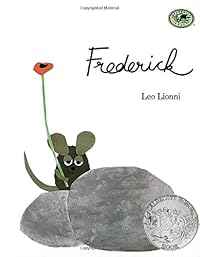
While his siblings gather food stores for the winter ahead, little Frederick the mouse sits and dreams, seemingly not busy at all. In reality however, he is gathering the sounds and sights around him, and the memory of the warm sun - all things he will use to comfort and enchant his family, when the food runs out during the long winter...
Originally published in 1967 and awarded a Caldecott Honor in 1968, Frederick is one of those childhood classics that I never got around to as a child. Although long familiar with author/artist Leo Lionni's name - we have an entire shelf devoted to his books at work - I had never before today actually picked up one of his stories. I'm glad that I finally have, as I found this to be a charming show more picture-book, pairing a gentle, thoughtful tale about the importance of creativity and imagination with lovely collage-style illustrations. The story here is like an answer to that classic Aesopic fable of The Ants and the Grasshopper, and argues that there is more than one kind of work that is important. Read in that way, I greatly appreciated it.
That said, a part of me couldn't help but think that the narrative here only works if one reads Frederick and his murine compatriots as a society in miniature, rather than as a family. If there were a human farming family, for instance, and one of the children liked sports, while the other liked art, I doubt the parents would excuse the art-loving child from doing their part of the farm chores. Similarly, in many families, members with a diverse range of interests and occupations regularly help out with household tasks, regardless of whether they feel a natural aptitude for the work before them. Will child readers take this as I think it was meant, as an allegory about different kinds of work having value within the larger society? Or will they take the other message (however unintentional), that some should be excused from doing their share of communal work, whether in the family or class? I'm honestly not sure.
Perhaps I'm overthinking the issue, and have been influenced by my distaste for the more recent trend (exemplified by titles like Iggy Peck, Architect), in which children are encouraged to think that they are too special to join in whatever the group is doing, or to follow the rules. In the end, I really did enjoy Frederick, and plan to track down more of Lionni's work. That said, little doubts of the kind described above, would not be quashed as I read it. show less
Originally published in 1967 and awarded a Caldecott Honor in 1968, Frederick is one of those childhood classics that I never got around to as a child. Although long familiar with author/artist Leo Lionni's name - we have an entire shelf devoted to his books at work - I had never before today actually picked up one of his stories. I'm glad that I finally have, as I found this to be a charming show more picture-book, pairing a gentle, thoughtful tale about the importance of creativity and imagination with lovely collage-style illustrations. The story here is like an answer to that classic Aesopic fable of The Ants and the Grasshopper, and argues that there is more than one kind of work that is important. Read in that way, I greatly appreciated it.
That said, a part of me couldn't help but think that the narrative here only works if one reads Frederick and his murine compatriots as a society in miniature, rather than as a family. If there were a human farming family, for instance, and one of the children liked sports, while the other liked art, I doubt the parents would excuse the art-loving child from doing their part of the farm chores. Similarly, in many families, members with a diverse range of interests and occupations regularly help out with household tasks, regardless of whether they feel a natural aptitude for the work before them. Will child readers take this as I think it was meant, as an allegory about different kinds of work having value within the larger society? Or will they take the other message (however unintentional), that some should be excused from doing their share of communal work, whether in the family or class? I'm honestly not sure.
Perhaps I'm overthinking the issue, and have been influenced by my distaste for the more recent trend (exemplified by titles like Iggy Peck, Architect), in which children are encouraged to think that they are too special to join in whatever the group is doing, or to follow the rules. In the end, I really did enjoy Frederick, and plan to track down more of Lionni's work. That said, little doubts of the kind described above, would not be quashed as I read it. show less
This book is charming, delightful and message driven!
When fall approaches the family of mice who live in the cracks and crannies of the large grey stone wall, begin the process of preparing for the long, cold winter.
While they toil, Frederick sits on the rocks and meditates. All work and toil day and night except for Frederick. When asked why he doesn't help, he replies that he is working--he is gathering sun rays for the cold dark winter.
As he sits on the rocks, he tells his fellow mice he is gathering colors for the long winter days.
As the hibernation into the cold rocks begins and the snow blows across the field, the family becomes cold and does not feel like interacting.
Now, Frederick's work comes in handy as he paints mental images show more for them of colors
And he talks of sunshine and warmth
The images are cute, and while this isn't one of my favorite Caldecott's to date, I like the way in which the author wove a tale of the importance of the artist with a soul of sunshine to share.
I admit, personally, I grow weary of the Fredericks, who don't help with the chores.
I have little patience for the talkers and not the doers.
Lionni's message is mindful of the importance of the dreamers and the artists who provide color and warmth. show less
When fall approaches the family of mice who live in the cracks and crannies of the large grey stone wall, begin the process of preparing for the long, cold winter.
While they toil, Frederick sits on the rocks and meditates. All work and toil day and night except for Frederick. When asked why he doesn't help, he replies that he is working--he is gathering sun rays for the cold dark winter.
As he sits on the rocks, he tells his fellow mice he is gathering colors for the long winter days.
As the hibernation into the cold rocks begins and the snow blows across the field, the family becomes cold and does not feel like interacting.
Now, Frederick's work comes in handy as he paints mental images show more for them of colors
And he talks of sunshine and warmth
The images are cute, and while this isn't one of my favorite Caldecott's to date, I like the way in which the author wove a tale of the importance of the artist with a soul of sunshine to share.
I admit, personally, I grow weary of the Fredericks, who don't help with the chores.
I have little patience for the talkers and not the doers.
Lionni's message is mindful of the importance of the dreamers and the artists who provide color and warmth. show less
This is a sweet book, and yet it leaves something to be desired for me. It's the story of five mice. Four of them work to save food for the winter, but Frederick, the fifth mouse, doesn't help. When the winter stores of food are gone, Frederick brings color and poetry into the lives of the other hungry mice. What?! I don't get that this is a good message, although I love the illustrations and the cute pictures of the mice.
Frederick is a sweet story about a mouse that is different from the rest of his family. He does not toil and work to gather typical supplies for the winter, but A-typical supplies such as "sun light" and "colors." This book may not be clear for very young readers, yet it accesses the reader's imagination for why we have seasons and their importance. I felt connected to this story because at times, when I can't measure up with the typical "supplies" of this life, it is hard for me to be confident in my "A-typical" supplies. This book is encouraging for all ages, yet has a deeper meaning for an older audience.
My favorite Leo Lionni so far is probably the story about Frederick, the poet mouse, naturally misunderstood and unappreciated by his fellow mice. "Frederick, why don't you work?", they asked. "I do work," said Frederick. "I gather sunrays for the cold dark winter days."
So, all summer he sat there, gathering sunrays, and colors, and words. And then, when in the midst of winter "he told them of the blue periwinkles, the red poppies in the yellow wheat, and the green leaves of the berry bush, they saw the colors as clearly as if they had been painted in their minds." And the words, ooh! "Who scatters snowflakes? Who melts the ice? Who spoils the weather? Who makes it nice? Who grows the four-leaf clovers in June? Who dims the daylight? show more Who lights the moon?" Never have I come across a more lyrical mouse than Frederick.
Lesson: What is the point of striving to stay alive if our life is void of beauty, poetry, art ... ? show less
So, all summer he sat there, gathering sunrays, and colors, and words. And then, when in the midst of winter "he told them of the blue periwinkles, the red poppies in the yellow wheat, and the green leaves of the berry bush, they saw the colors as clearly as if they had been painted in their minds." And the words, ooh! "Who scatters snowflakes? Who melts the ice? Who spoils the weather? Who makes it nice? Who grows the four-leaf clovers in June? Who dims the daylight? show more Who lights the moon?" Never have I come across a more lyrical mouse than Frederick.
Lesson: What is the point of striving to stay alive if our life is void of beauty, poetry, art ... ? show less
I thought this book and I loved the drawings and how they went along with the words.This book highlights the importance of creativity, imagination, and the different ways we all contribute to our communities and I loved it.
Frederick seems like he is not helping his mouse family prepare for winter. But when the cold, dark nights come, Frederick has more to contribute than they realized.
A nice antidote to the fable of the ants and the grasshopper. Frederick does contribute to the society, even if his contribution doesn’t look the same as everyone else’s. Really nice artwork that looks like cut paper.
A nice antidote to the fable of the ants and the grasshopper. Frederick does contribute to the society, even if his contribution doesn’t look the same as everyone else’s. Really nice artwork that looks like cut paper.
Members
- Recently Added By
Published Reviews
ThingScore 100
I guess I can't really imagine who doesn't want to know the story of Frederick. I think it's a really important fable, I suppose, about doing the thing you can do in the circumstances you're in. The other mice are quite judgemental towards Frederick in the first half of the book, and they keep saying, you know, 'Aren't you going to do something useful, aren't you going to help us gather in the show more corn?', and he's really definite, he's never aggressive or defensive, he's just really definite that, no, this is what he does. He's gathering colours so that they'll have them in the winter. He's gathering words so that they'll have poems in the winter. He's gathering light so they'll have light in the dark.
(BBC Sounds, starting at 12.00). show less
(BBC Sounds, starting at 12.00). show less
added by Cynfelyn
A publicação de Frederico[1] (2004), uma fábula de Leo Lionni que recria, com laivos de modernidade, o texto clássico de A Cigarra e a Formiga, também revela as potencialidades que este tipo de estrutura narrativa revela em edições contemporâneas. Neste caso concreto, Frederico, o protagonista, encarnará a figura do poeta como um elemento fundamental na sociedade, uma vez que as suas show more criações não só enchem de beleza e de alegria a vida dos outros, como desempenham um papel tão crucial como os próprios alimentos. De alguma forma, assiste-se, no caso concreto deste texto, a uma subversão da fábula tradicional, uma vez que a figura da cigarra, cantora e dançarina, despreocupada em relação ao futuro, é agora transformada num ratinho que se inspira no sol e nas cores de Verão (e na observação da beleza da paisagem natural que o rodeia) para recriar as palavras e, de alguma forma, o mundo. Os leitores já não encontrarão uma cigarra cujo amor pelas artes é castigado, mas a defesa de que todas as actividades humanas, realizadas com empenho e paixão, são úteis para a sociedade, uma vez que o trabalho de Frederico é reconhecido e elogiado por todos, incluindo aqueles que, no início, tinham alguma dificuldade em compreender a sua singularidade. | Ana Margarida Ramos show less
added by RitaCirne
Lists

Caldecott Honor Books
296 works; 23 members

EEK! A Mouse ::: Best Children's Books
95 works; 13 members

Best children's picture books
377 works; 85 members

1001 Children's Books You Must Read Before You Grow Up
774 works; 101 members

Favorite Animal Fiction
359 works; 156 members

Mensa for Kids Excellence in Reading Award Program (Grades K-3)
64 works; 6 members
Honey For a Child's Heart
1,152 works; 25 members

Brightly Beaming Curriculum Books
281 works; 8 members

Picture Book Library
49 works; 7 members

Books with a Character's Name as the Title
129 works; 9 members

Romalda Spalding's Writing Road To Reading
213 works; 3 members

Recommended Reading List
219 works; 1 member

Written and Illustrated By
805 works; 1 member

Favorite Picture Books
479 works; 160 members

Children's Picture Books
188 works; 1 member

Books discovered on LibraryThing
256 works; 36 members

Books Read in 2022
5,164 works; 111 members

Books Read in 2023
5,547 works; 145 members

A Smorgasbord of Culinary Fiction
221 works; 94 members

Open Book 2021
17 works; 2 members

Books We Loved As Children
603 works; 252 members
Author Information

127+ Works 58,347 Members
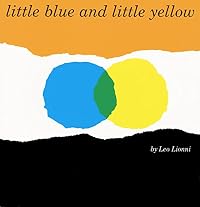
Leo Lionni was born in Amsterdam on May 5, 1910. He attended the University of Zurich and also earned a doctorate in Economics from the University of Genoa in 1935. He taught himself to draw by visiting museums. After marrying Nora Maffi in 1931, Lionni moved to Milan, Italy, where he became known as a painter. In 1939 he moved to Philadelphia and show more began working in advertising design. Lionni held several positions in the artistic field including artistic director and design director. He also served as president of the American Institute of Graphic Arts. Around 1960 Lionni moved back to Italy. His first of over forty children's books was Little Blue and Little Yellow. Other titles include Inch by Inch, Frederick, Swimmy, and Alexander and the Wind-up Mouse, all of which won a Caldecott Honor. In addition, he received the American Institute of Graphic Arts Gold Medal in 1984. Lionni died on October 11, 1999 at his home in Tuscany, Italy at the age of 89. (Bowker Author Biography) show less
Some Editions
Awards and Honors
Awards
Distinctions
Notable Lists
Series

Belongs to Publisher Series
Step Into Reading (Step 3)
Work Relationships
Is contained in
Has the adaptation
Has as a teacher's guide
Common Knowledge
- Canonical title*
- Federico
- Original title
- Frederick
- Original publication date
- 1968
- People/Characters*
- rato Frederico; irmão ratos
- First words
- All along the meadow where the cows grazed and the horses ran, there was an old stone wall.
- Last words
- (Click to show. Warning: May contain spoilers.)Frederick blushed, took a bow, and said shyly, "I know it."
*Some information comes from Common Knowledge in other languages. Click "Edit" for more information.
Classifications
Statistics
- Members
- 7,082
- Popularity
- 1,654
- Reviews
- 253
- Rating
- (4.13)
- Languages
- 17 — Chinese, Danish, Dutch, English, Finnish, French, German, Greek, Italian, Japanese, Korean, Norwegian (Bokmål), Norwegian, Portuguese, Romanian, Spanish, Turkish
- Media
- Paper, Audiobook, Ebook
- ISBNs
- 92
- UPCs
- 1
- ASINs
- 21