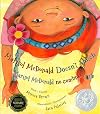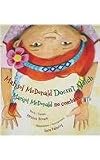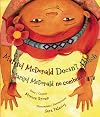
Marisol McDonald Doesn't Match / Marisol McDonald no combina
by Monica Brown
On This Page
Description
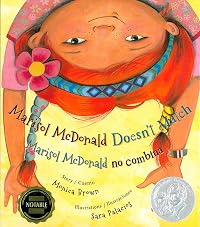
Marisol McDonald, a biracial, nonconformist, soccer-playing pirate-princess with brown skin and red hair, celebrates her uniqueness.Tags
Recommendations





Member Reviews
Marisol McDonald doesn't match ("Me llamo Marisol McDonald y no combino"). At least, that's what everyone tells her. She has brown skin but red hair, wears mismatched clothing, eats PB&J burritos, and combines English and Spanish, print and cursive. Marisol is happy with herself the way she is, but when a classmate challenges her ("you couldn't match if you wanted to!") she tries...but the glum expression on her face shows that, while it might please other people, it doesn't make her feel good. Fortunately, a teacher writes her a kind note ("I like you just the way you are") and Marisol's confidence and joy is restored. When she goes with her family to the pound to pick out a puppy, she finds a perfectly mismatched show more one.
Peruvian-Scottish-American Marisol reminds me a bit of Clementine: she is uniquely herself, and perfect that way.
Bilingual text is in English and Spanish; read either or both. show less
Peruvian-Scottish-American Marisol reminds me a bit of Clementine: she is uniquely herself, and perfect that way.
Bilingual text is in English and Spanish; read either or both. show less
I absolutely love this book and the messages that come from it. The illustrations were vibrant throughout the book, which were pleasing to the eye. Her red hair and tan skin were pronounced just enough to notice. Each page matched exactly what the words were saying such as Marisol's outfits that were mismatched. Another reason I really enjoyed this book are the characters. Marisol was a typical elementary student, who fell victim of conforming to her classmates. This is a very realistic situation that many young students may relate to. The day that Marisol decided to match, and had the worst day ever, was my favorite part. I also love the involvement of the teacher character in this story. Being an elementary education major, seeing how show more this character positively influenced Marisol, was a great feeling and inspiring. Through the actions of all the characters, the big idea of this book is staying true to yourself. Marisol mismatched, and loved every part of it.On the day she mismatched, it was clear to her teacher that Marisol was off. It did not take the teacher long to realize what was bothering her. The teacher hand wrote Marisol a note, encouraging her to stay mismatched and happy. Immediately, Marisol became her happy self again. The feelings from this book were very positive, and definitely worth the read. show less
I really enjoyed reading this book. The main message is to love yourself for who you are, and that being different is special and unique. One reason I loved this book is because it has every word in English and in Spanish. The first page in the book says "My Name is Marisol McDonald, and I don't match" and right under that, it says "Me llamo es Marisol McDonald, y no combino". I think it is great that the book displays all the text in both languages, so the children can learn another language as they read, and if they get stuck then they can just refer back to the language they know, or to the pictures. The other reason I really enjoyed this book was because of the message. Children shouldn't feel the need to change themselves just to show more satisfy others. In the book, at the end of the year the teacher writes Marisol a note that says "I like you just the way you are". This book teaches them that being different is something to celebrate, not something to be ashamed of. show less
I really enjoyed reading this book, especially seeing the addition of Spanish text in this story. I liked this story because of the presentation of the character Marisol, who provides a relatable personality for readers, as well as the book’s encouragement for readers to broaden their perspective. Marisol McDonald Doesn't Match is about a little girl who has grown up in a Hispanic-Scottish household which provides a great background of multicultural characters. I really like that this book introduces a child of two very different backgrounds. This shows readers both that if they come from multiple ethnicities that they’re story is one they can read about as well as those who have not been exposed to multicultural characters have the show more opportunity to read about one. The inclusion of Spanish text is also really encouraging to see as it adapts the book for English language learners as well as bi-lingual readers. In addition, it also exposes children to the Spanish language and shows them that some books are written in languages other than English. The fact that Marisol also likes to speak both Spanish and English provides another relatable connection for the reader. Marisol is a really unique character in her ability to stand out and be herself. One of her defining features is that she doesn’t “match” and this is portrayed both in her style and personality as well as in her ethnicity. As her cousin points out her “skin is brown like [his] and [her] hair is the color of carrots,”. Marisol proudly replies that her hair is actually the “color of fire” showing her satisfaction in her uniqueness. When her brother points out that her “pants don’t match that shirt-they clash,” Marisol replies that she loves her outfit and thinks they look great together! This shows Marisol’s confidence in herself. The big picture of this story is to be proud of who you are. Even when Marisol feels insecure in front of her friends about not matching, she learns that it is better to be yourself and be happy with who you are than to try to change yourself and be someone else. This provides a great background for any reader to be able to accept their background and where they come from. Marisol teaches us all a good lesson on being proud of yourself even when others think you “don’t match”. show less
Marisol is different, everyone tells her. Marisol likes to wear polka dotted shirts and striped pants. Marisol has brown skin and red hair and freckles. Marisol likes to eat peanut butter and jelly on burritos. Marisol speaks Spanish and English. Marisol no combina; Marisol doesn’t match.
I loved reading this book in Spanish to my bilingual children at school and seeing how many of them identify with Marisol. I identified with Marisol, too, growing up with a Catholic mom from a city in the North and a Baptist dad from the country in the South, always feeling like I don’t match, but never really caring. I admired Marisol’s courage in creating fun new ideas from tired old ones.
“My teacher, Ms. Apple, doesn’t like the way I sign show more my name. ‘Marisol McDonald,’ she says, ‘this doesn’t match! At school we learn to print and use cursive, but not at the same time.’
But I like the way Marisol McDonald looks.” show less
I loved reading this book in Spanish to my bilingual children at school and seeing how many of them identify with Marisol. I identified with Marisol, too, growing up with a Catholic mom from a city in the North and a Baptist dad from the country in the South, always feeling like I don’t match, but never really caring. I admired Marisol’s courage in creating fun new ideas from tired old ones.
“My teacher, Ms. Apple, doesn’t like the way I sign show more my name. ‘Marisol McDonald,’ she says, ‘this doesn’t match! At school we learn to print and use cursive, but not at the same time.’
But I like the way Marisol McDonald looks.” show less
I really enjoyed the book Marisol McDonald Doesn’t Match by Monica Brown for a few different reasons. One of the qualities of the book that really stuck out to me and made me like this book even more was the fact that it was written in both English and Spanish. This is really beneficial to help students feel like they can connect to this particular story on more than one level. I also liked this book because of the illustrations. The entire story was very colorful and the illustrator used a wide variety of media in order to depict the illustrations. For example, they additionally used newspaper print on some of the artwork in the book. Overall, I think the big idea or message of this book is that it is okay to be different as long as show more you love who you are. show less
I loved this book because it was bilingual. Using both Spanish and English to tell the story was authentic because the main character was dealing with her different identities, and it also validates Spanish as a language in an English classroom. I also really enjoyed this book because of the illustrations. Sara Palacios used mixed medium by incorporating pieces of newspaper in the pictures. This went with the theme of "mismatching" but it also showed how a little mismatch can also be pretty and cohesive. I also loved how the book embraced things both American and Latino students can relate to, like burritos as a normal lunch for Latino families, but it was PB&J like American families. The lesson of this book was to be true to yourself, show more everyone is unique and it is best to embrace these differences, as Marisol learned! show less
Members
- Recently Added By
Lists

Children's picture books with kids of color
129 works; 15 members

75 Books for Literacy Block: Fall 2016
75 works; 2 members
Author Information

25 Works 6,728 Members
All Editions
Awards and Honors
Awards
Distinctions
Common Knowledge
- Canonical title
- Marisol McDonald Doesn't Match / Marisol McDonald no combina
Classifications
Statistics
- Members
- 989
- Popularity
- 26,595
- Reviews
- 170
- Rating
- (4.54)
- Languages
- English, Spanish
- Media
- Paper, Ebook
- ISBNs
- 8
- ASINs
- 6