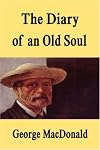
Diary of an Old Soul
by George MacDonald
On This Page
Description
Renowned Scottish fiction writer, poet, and minister George MacDonald gained literary acclaim for his creative reinvention of age-old fairy tales. Among the many writers who cited MacDonald as a key influence were G.K. Chesterson, W.H. Auden, C.S. Lewis, J.R.R. Tolkien, and Madeleine L'Engle. In this volume of verse, MacDonald offers a poem for every day of the year; each is intended to prompt introspection and prayerful contemplation..
Tags
Recommendations















Member Reviews
I started reading these one a night, but ended up reading them in several large chunks, mostly due to their nature. Often, several days or even months would feel like a long poem or train of thought. I would get caught up in their poignant beauty and palatable truth. Each prayer was short, only a few lines, but compact with ideas to ruminant upon. I had many that struck me hard, but my favorite prayers are as follows:
July 17
I cannot tell why this day I am ill;
But I well because it is they will –
Which is to make me pure and right like thee.
Not yet I need escape – ‘tis bearable
Because thou knowest. And when harder things
Shall rise and gather, and overshadow me,
I shall have comfort in thy strengthening
June 20
But now the Spirit show more and I are on in this –
My hunger now is after righteousness;
My spirit hopes in God to set me free
From the low self loathed of higher me
Great elder brother of my second birth
Dear o’er all names but one, in heaven or earth
Teach me all day to love eternally
May 27
So bound in selfishness am I, so chained,
I know it must be glorious to be free
But know not what, full-fraught, the word doth mean;
By loss on loss I have several gained
Wisdom enough my slavery to see;
But liberty, pure, absolute, serene
No freest-visioned slave has ever seen.
February 2
The worst power of an evil mood is this –
It makes the bastard self seem in the right,
Self, self the end, the goal of human bliss.
But if the Christ-self in us be the might
Of saving God, why should I spend my force
With a dark thing to reason of the light -
Not push it rough aside, and hold obedient course? show less
July 17
I cannot tell why this day I am ill;
But I well because it is they will –
Which is to make me pure and right like thee.
Not yet I need escape – ‘tis bearable
Because thou knowest. And when harder things
Shall rise and gather, and overshadow me,
I shall have comfort in thy strengthening
June 20
But now the Spirit show more and I are on in this –
My hunger now is after righteousness;
My spirit hopes in God to set me free
From the low self loathed of higher me
Great elder brother of my second birth
Dear o’er all names but one, in heaven or earth
Teach me all day to love eternally
May 27
So bound in selfishness am I, so chained,
I know it must be glorious to be free
But know not what, full-fraught, the word doth mean;
By loss on loss I have several gained
Wisdom enough my slavery to see;
But liberty, pure, absolute, serene
No freest-visioned slave has ever seen.
February 2
The worst power of an evil mood is this –
It makes the bastard self seem in the right,
Self, self the end, the goal of human bliss.
But if the Christ-self in us be the might
Of saving God, why should I spend my force
With a dark thing to reason of the light -
Not push it rough aside, and hold obedient course? show less
Summary: A new edition of MacDonald’s extended devotional poem, with seven line stanzas for each day of the year.
In 1880, George MacDonald, the prolific fantasy writer, published a work he titled A Book of Strife in the Form of a Diary of an Old Soul. He intended the book as a gift to friends, assuming the cost of publication. As historian Timothy Larsen notes in the Introduction, devotional works were common during this time, supplementing daily Bible readings with spiritual reflections. What MacDonald did was write an extended poem broken into 365 seven line stanzas. Opposite the poems, he provided a blank page for the reader to write his or her own reflections, which would become part of the work.
The New Edition
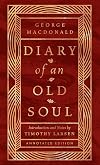
IVP Academic has show more just published a new edition of this work. Unlike later versions, this edition preserves the interleaving of blank pages with the poem with one to three stanzas on a page with a blank page opposite. Wheaton historian Timothy Larsen, drawing upon the resources of the Marion E. Wade Center, provides an introduction to the life, context, and content of The Diary. He also lightly annotates the work, mainly defining unusual words and giving context for some allusions. I appreciated the unobtrusive character of the notes. They did not distract from the text. The IVP edition is 4.25 x 7 inches in size, with a cloth binding and bookmark ribbon, ideal for devotional use.
The Poem
The original first part of MacDonald’s title gives us a clue to the character of the poem. MacDonald portrays the strife of the soul against sin, spiritual inertia, and the vicissitudes of life, in order to love God as one would desire. This is not for lack of his intimacy with God but because of it. That intimacy is evident in these lines from January 5:
My soul breathes only in thy infinite soul;
I breathe, I think, I love, I live but thee.
Oh breathe, oh think--O Love, live into me;
Unworthy is my life till all divine,
Till thou see in me only what is thine.
The poem does not follow the liturgical year. MacDonald was from a Low Church background. He makes an exception only for Christmas, which he loved. Rather, his poems sometimes follow the circumstances of his own life: the memory of a lost child, the loss of a home due to straitened finances, or even a rainy, gloomy spring.
Given the extended poem nature of the work, consecutive stanzas are often thematically related. The stanzas for August 21-23, for example, focus on our forgetfulness of God. He observes how often our thoughts are upon other things than God. While he recognizes that this reflects his own finitude, he does not want to fall into sin. Rather, he longs to never stray far from God though not always conscious of God.
The verses remind us of God’s utter sufficiency and our utter dependence upon him in every moment, in our living, aging, and dying. This verse, from August 6 is a good example:
O Father, thou art my eternity.
Not on the clasp Of consciousness--on thee
My life depends; and I can well afford
All to forget, so thou remember, Lord.
In thee I rest; in sleep thou dost me fold,
In thee I labour; still in thee, grow old;
And dying, shall I not find in thee, my Life, be bold?
Using The Diary
Unlike my reading for this review, The Diary is best read one stanza a day. That said, be aware of the stanzas before and after. Timothy Larsen suggests his own practice of reading and re-reading each day’s reading. To this I would add turning your reading into prayers. And use the blank pages to crystallize your own thoughts and impressions. Just as in our reading of scripture, some passages will resonate more deeply at a given time. I suspect one may come back to this in another year and connect with a very different set of verses.
Even in my initial read-through, MacDonald caught my attention at numerous points. On December 23, for example, he speaks of the loneliness of God. That’s one I want to think about further! What makes The Diary so good is that MacDonald gives voice to all the seasons of our spiritual journey, not just the exalted times. In doing so, he often provides words for us in the times our own words fail us. What a gift this must have been to his friends!
____________________
Disclosure of Material Connection: I received a complimentary copy of this book from the publisher for review. show less
In 1880, George MacDonald, the prolific fantasy writer, published a work he titled A Book of Strife in the Form of a Diary of an Old Soul. He intended the book as a gift to friends, assuming the cost of publication. As historian Timothy Larsen notes in the Introduction, devotional works were common during this time, supplementing daily Bible readings with spiritual reflections. What MacDonald did was write an extended poem broken into 365 seven line stanzas. Opposite the poems, he provided a blank page for the reader to write his or her own reflections, which would become part of the work.
The New Edition
IVP Academic has show more just published a new edition of this work. Unlike later versions, this edition preserves the interleaving of blank pages with the poem with one to three stanzas on a page with a blank page opposite. Wheaton historian Timothy Larsen, drawing upon the resources of the Marion E. Wade Center, provides an introduction to the life, context, and content of The Diary. He also lightly annotates the work, mainly defining unusual words and giving context for some allusions. I appreciated the unobtrusive character of the notes. They did not distract from the text. The IVP edition is 4.25 x 7 inches in size, with a cloth binding and bookmark ribbon, ideal for devotional use.
The Poem
The original first part of MacDonald’s title gives us a clue to the character of the poem. MacDonald portrays the strife of the soul against sin, spiritual inertia, and the vicissitudes of life, in order to love God as one would desire. This is not for lack of his intimacy with God but because of it. That intimacy is evident in these lines from January 5:
My soul breathes only in thy infinite soul;
I breathe, I think, I love, I live but thee.
Oh breathe, oh think--O Love, live into me;
Unworthy is my life till all divine,
Till thou see in me only what is thine.
The poem does not follow the liturgical year. MacDonald was from a Low Church background. He makes an exception only for Christmas, which he loved. Rather, his poems sometimes follow the circumstances of his own life: the memory of a lost child, the loss of a home due to straitened finances, or even a rainy, gloomy spring.
Given the extended poem nature of the work, consecutive stanzas are often thematically related. The stanzas for August 21-23, for example, focus on our forgetfulness of God. He observes how often our thoughts are upon other things than God. While he recognizes that this reflects his own finitude, he does not want to fall into sin. Rather, he longs to never stray far from God though not always conscious of God.
The verses remind us of God’s utter sufficiency and our utter dependence upon him in every moment, in our living, aging, and dying. This verse, from August 6 is a good example:
O Father, thou art my eternity.
Not on the clasp Of consciousness--on thee
My life depends; and I can well afford
All to forget, so thou remember, Lord.
In thee I rest; in sleep thou dost me fold,
In thee I labour; still in thee, grow old;
And dying, shall I not find in thee, my Life, be bold?
Using The Diary
Unlike my reading for this review, The Diary is best read one stanza a day. That said, be aware of the stanzas before and after. Timothy Larsen suggests his own practice of reading and re-reading each day’s reading. To this I would add turning your reading into prayers. And use the blank pages to crystallize your own thoughts and impressions. Just as in our reading of scripture, some passages will resonate more deeply at a given time. I suspect one may come back to this in another year and connect with a very different set of verses.
Even in my initial read-through, MacDonald caught my attention at numerous points. On December 23, for example, he speaks of the loneliness of God. That’s one I want to think about further! What makes The Diary so good is that MacDonald gives voice to all the seasons of our spiritual journey, not just the exalted times. In doing so, he often provides words for us in the times our own words fail us. What a gift this must have been to his friends!
____________________
Disclosure of Material Connection: I received a complimentary copy of this book from the publisher for review. show less
How to review the diary of a soul? Limited research shows this book of poems was originally "privately printed," its original title A Book of Strife, in the form of the Diary of an Old Soul. I doubt MacDonald ever expected more than his family to read this work, much less review it. In these verses, he wrestles (strives?) with himself, with God or his understanding of Him, with the imperfectness of the world around him and the heart within him. Ultimately he holds onto the promises that someday this world and his soul will be redeemed perfectly. The poetry is beautiful, always. The musings and feelings put forth are raw, searching, hurt, unguarded, and worth the time it takes to soak them in.
Yes, some of it is difficult to decipher, but show more not through any flaw of the poet. I had to reread some passages, and careful attention to punctuation (not only line breaks) helped me as well. Though it does appear (from a few of the verses in "December," especially the 25th) that MacDonald wrote a verse a day for a year, the themes often carry through several consecutive days. "September" is one complete thought. My recommendation is to read not a day at a time but a month at a time.
To give the prospective reader a taste of the beauty and honesty found herein, a few quotes follow.
p. 35 ~ "Let my soul talk to Thee in ordered words,
O King of kings, O Lord of only lords!
When I am thinking Thee within my heart
From the broken reflex be not far apart.
The troubled water, dim with upstirred soil
Makes not the image which it can yet spoil
Come nearer, Lord, and smooth the wrinkled coil."
p. 54 ~ "Afresh I seek Thee. Lead me--once more I pray--
Even should it be against my will, Thy way.
Let me not feel Thee foreign any hour,
Or shrink from Thee as an estranged power.
Through doubt, through faith, through bliss, through stark dismay,
Through sunshine, wind, or snow, or fog, or shower,
Draw me to Thee Who art my only day."
p. 70,1 ~ "Master, Thou workest with such common things--
Low souls, weak hearts, I mean--and hast to use,
Therefore, such common means and rescuings,
That hard we find it, as we sit and muse,
To think Thou workest in us verily:
Bad sea-boats we, and manned with wretched crews--
That doubt the Captain, watch the storm-spray flee." show less
Yes, some of it is difficult to decipher, but show more not through any flaw of the poet. I had to reread some passages, and careful attention to punctuation (not only line breaks) helped me as well. Though it does appear (from a few of the verses in "December," especially the 25th) that MacDonald wrote a verse a day for a year, the themes often carry through several consecutive days. "September" is one complete thought. My recommendation is to read not a day at a time but a month at a time.
To give the prospective reader a taste of the beauty and honesty found herein, a few quotes follow.
p. 35 ~ "Let my soul talk to Thee in ordered words,
O King of kings, O Lord of only lords!
When I am thinking Thee within my heart
From the broken reflex be not far apart.
The troubled water, dim with upstirred soil
Makes not the image which it can yet spoil
Come nearer, Lord, and smooth the wrinkled coil."
p. 54 ~ "Afresh I seek Thee. Lead me--once more I pray--
Even should it be against my will, Thy way.
Let me not feel Thee foreign any hour,
Or shrink from Thee as an estranged power.
Through doubt, through faith, through bliss, through stark dismay,
Through sunshine, wind, or snow, or fog, or shower,
Draw me to Thee Who art my only day."
p. 70,1 ~ "Master, Thou workest with such common things--
Low souls, weak hearts, I mean--and hast to use,
Therefore, such common means and rescuings,
That hard we find it, as we sit and muse,
To think Thou workest in us verily:
Bad sea-boats we, and manned with wretched crews--
That doubt the Captain, watch the storm-spray flee." show less
Ratings
Members
- Recently Added By
Author Information

384+ Works 38,928 Members
George MacDonald was born on December 10, 1824 in Huntley, Aberdeenshire, Scotland. He attended University in Aberdeen in 1840 and then went on to Highbury College in 1848 where he studied to be a Congregational Minister, receiving his M. A. After being a minister for several years, he became a lecturer in English literature at Kings College in show more London before becoming a full-time writer. He wrote fiction, non-fiction, and poetry. In 1955, he wrote his first important original work, a long religious poem entitled Within and Without. He is best known for his fantasy novels Phantastes, The Princess and the Goblin, At the Back of the North Wind, and Lilith and fairy tales including The Light Princess, The Golden Key, and The Wise Woman. In 1863, he published David Eiginbrod, the first of a dozen novels that were set in Scotland and based on the lives of rural Scots. He died on September 18. 1905. (Bowker Author Biography) show less
Common Knowledge
- Alternate titles
- A Book of Strife in the Form of The Diary of an Old Soul
- Original publication date
- 1880
- Dedication
- Sweet friends, receive my offering, You will find against each worded page a white page set: -- This is the mirror of each friendly mind reflecting that. In this book we are met. Make it, dear hearts, of worth to you indee... (show all)d: -- Let your white page be ground, my print be seed, growing to golden ears, that faith and hope shall feed.
- First words
- Lord, what I once had done with youthful might, had I been from the first true to the truth, grant me, now old, to do -- with better sight, and humbler heart, if not the brain of youth; So wilt thou, in thy gentleness and rut... (show all)h, lead back thy old soul, by the pain of pain, round to his best -- young eyes and heart and brain.
- Quotations
- Too eager I must not be to understand.
How should the work the master goes about
Fit the vague sketch my compasses have planned?
I am his house--for him to go in and out.
He builds me now--and if I cannot see
A... (show all)t any time what he is doing with me,
‘Tis that he makes the house for me too grand.
. . . His royal thoughts require many a stair,
Many a tower, many an outlook fair,
Of which I have no thought . . . - Publisher's editor
- Boyd, Jon
Classifications
Statistics
- Members
- 401
- Popularity
- 77,773
- Reviews
- 3
- Rating
- (4.17)
- Languages
- English
- Media
- Paper, Ebook
- ISBNs
- 45
- ASINs
- 11