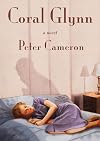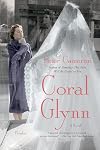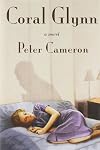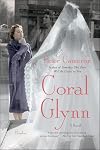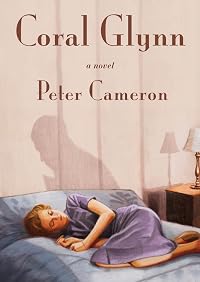
Coral Glynn
by Peter Cameron
On This Page
Description
Nursing an elderly cancer patient in an isolated English countryside manse in 1950, Coral interacts with a disgruntled housekeeper and her charge's sexually torn and war-ravaged son until a series of random events culminates in a complicated marriage.Tags
Recommendations




































Member Recommendations
Member Reviews
Peter Cameron’s novel is about people who believe they are out of options and act, or fail to act, out of desperation. In 1950, a young private nurse named Coral Glynn arrives at Hart House in the remote English countryside to care for elderly Edith Hart, who is dying of cancer. Also at Hart House are Major Clement Hart, Mrs. Hart’s middle-age son, who was injured in the recent war, and a surly cook and housekeeper named Mrs. Prence. When Mrs. Hart dies, Clement, faced with a life of solitude, decides that Coral represents his only chance at happiness and asks her to marry him. Coral, utterly alone in the world, having endured an emotionally barren childhood and who was raped at her previous place of employment, comes with issues of show more her own, mostly having to do with trust and self-worth. With great ambivalence, motivated primarily by the bleak prospects her own future hold out to her, she agrees to become Clement’s wife and the mistress of the house. But there has been a gruesome murder in the picturesque forest behind Hart House, a place where Coral was known to take frequent walks, and she comes under suspicion. Rather than see her arrested, Clement helps her flee. She ends up in London, where she tries to put the murder, Major Hart, and the emotional turmoil she suffered behind her. She builds a new life and meets new people. But the past is never far behind, and two years later when Clement tracks her down, she is forced to settle things once and for all. The novel is short, intricately plotted and fast-paced, and though it seems at times to be composed in a kind of narrative shorthand, it is exquisitely written and emotionally complex. Coral is a fascinating but curiously docile creature whose habit of thinking poorly of herself lands her in hot water more than once. It is only when she learns to assert herself with greater confidence that she begins the process of turning her life around. One of Peter Cameron’s great strengths in his fiction is his ability to inhabit the minds of disparate characters and convincingly convey their desires and motivations to the reader, and in this regard the novel is an undoubted success. Even if a couple of plot elements seem a tad sketchy, Coral Glynn remains an emotionally satisfying and solid entertainment. show less
The word "odd" is used over 50 times in this novel, and it is perhaps the word that best describes it; it is full of odd personalities and odd relationships; nonetheless, it is an enjoyable read.
In 1950, a twenty-something private duty nurse, Coral Glynn, takes a job looking after an elderly woman at Hart House, an isolated English manor house. A relationship develops between Coral and Major Clement Hart, her patient's son, but all does not go smoothly.
The book is a novel of manners cum gothic tale. It has the remote, gloomy house with a suffocating atmosphere. The master of the house is brooding and damaged. All of the characters seem like lost souls who go from misunderstanding to misunderstanding because of their painful politeness. show more Rectitude and a lack of confidence prevent people from speaking up to express half-acknowledged emotions or to clarify situations. Hidden motives abound, and the reader is often left wondering about the reasons for a character's behaviour. Some actions are never explained: How was Clement wounded? Why doesn't Clement speak to his dying mother? Why did Coral's predecessors leave their nursing jobs so quickly?
Coral is not a typical heroine; she is timid, weak, lonely, unemotional, sober, and repressed. (Most of the other main characters possess many of these same qualities.) Coral is annoyingly passive; she seems to drift into situations and then panics and flees. She is totally lacking in introspection. At one point she goes to the cinema and a complete stranger puts his hand on her knee: "He kept his eyes focused on the screen, as if the parts of his body were separate, his hand a small country at the outskirts of a large empire that enjoys, simply because of its distance from the capital, the sort of autonomy that is merely a result of negligence." This describes Coral; her behaviour seems totally removed from thought. She is suspected of theft and murder because of her reticence to speak up. At one point, Coral says, "'I just don't know what to think . . . You cannot . . . expect me to know what to think or say. It's all such a muddle.'" She does move from muddle to muddle, another favourite word in the book. Despite being able to identify several of Coral's traits, in the end the reader will still find her to be enigmatic. Sometimes she seems so vague as hardly to exist. She herself needs visual proof that she exists: "She looked back through the cafe window at her table, which had not yet been cleared, and the remnants of her meal remained there as blatant as evidence: she was a person in the world. She existed . . ."
This description might not seem like a recommendation, but the book is oddly appealing. Don't let my befuddled review discourage you; you may, like me, find it worthy of a re-read. show less
In 1950, a twenty-something private duty nurse, Coral Glynn, takes a job looking after an elderly woman at Hart House, an isolated English manor house. A relationship develops between Coral and Major Clement Hart, her patient's son, but all does not go smoothly.
The book is a novel of manners cum gothic tale. It has the remote, gloomy house with a suffocating atmosphere. The master of the house is brooding and damaged. All of the characters seem like lost souls who go from misunderstanding to misunderstanding because of their painful politeness. show more Rectitude and a lack of confidence prevent people from speaking up to express half-acknowledged emotions or to clarify situations. Hidden motives abound, and the reader is often left wondering about the reasons for a character's behaviour. Some actions are never explained: How was Clement wounded? Why doesn't Clement speak to his dying mother? Why did Coral's predecessors leave their nursing jobs so quickly?
Coral is not a typical heroine; she is timid, weak, lonely, unemotional, sober, and repressed. (Most of the other main characters possess many of these same qualities.) Coral is annoyingly passive; she seems to drift into situations and then panics and flees. She is totally lacking in introspection. At one point she goes to the cinema and a complete stranger puts his hand on her knee: "He kept his eyes focused on the screen, as if the parts of his body were separate, his hand a small country at the outskirts of a large empire that enjoys, simply because of its distance from the capital, the sort of autonomy that is merely a result of negligence." This describes Coral; her behaviour seems totally removed from thought. She is suspected of theft and murder because of her reticence to speak up. At one point, Coral says, "'I just don't know what to think . . . You cannot . . . expect me to know what to think or say. It's all such a muddle.'" She does move from muddle to muddle, another favourite word in the book. Despite being able to identify several of Coral's traits, in the end the reader will still find her to be enigmatic. Sometimes she seems so vague as hardly to exist. She herself needs visual proof that she exists: "She looked back through the cafe window at her table, which had not yet been cleared, and the remnants of her meal remained there as blatant as evidence: she was a person in the world. She existed . . ."
This description might not seem like a recommendation, but the book is oddly appealing. Don't let my befuddled review discourage you; you may, like me, find it worthy of a re-read. show less
A very atmospheric read (which I read at the same time as listening to the radio play of Ladies In Retirement, which was very similar in some ways). I didn't feel a tremendous amount of connection to any of the characters, particuarly in the first 3/4 of the book. Too much passive voice? Passive action? Action that didn't make a whole lot of sense to me? Anyhoo, a pretty book but a little too shallow, all around.
Coral Glynn is a character that things happen to and around, which strikes me as odd for a title character, for most of the book, she is at the whim of available positions (for in home nursing care) and is fairly powerless in personal situations. She struggles to make decisions and then seems to make them rashly. I found I was as uncertain of her as she was of herself. Some lovely writing.
In post-war England, Coral Glynn arrives in a remote country-house to nurse a dying woman. While there, she encounters an odds-and-sods cast of characters who each contribute to the books sense of menace. Part gothic romance, part Agatha Christie, and part psychological study of a young woman unsure of her place in the world.
The war is over, it is 1950 and Coral comes to the English countryside to nurse a dying woman. There is a sense of melancholia that permeates this novel, a desolation, as so many things after the war have changed. Coral meets the son of the household, a man who lost part of his leg in the war. The ways in which we find love and how we can convince ourselves to make do, make a choice when no others are available are forefront of this novel. A childhood game gone wrong, sends Coral to London and it is there that she at last finds herself and than finds happiness. Good atmospheric read.
I enjoyed this novel, but it was a bit too literary for me. Loneliness is the theme here. And Cameraon does a great job creating characters who are book club discussable. I'm glad I read it, I'd certainly recommend it, but it felt a bit above my normal reading tastes.
Members
- Recently Added By
Lists

Books Read in 2016
4,666 works; 199 members

Books Read in 2017
4,249 works; 130 members
Author Information

21+ Works 3,026 Members
Some Editions
Common Knowledge
- Canonical title
- Coral Glynn
- Original title
- Coral Glynn
- Original publication date
- 2012
- Dedication
- For Florent
- First words
- That spring—the spring of 1950—had been particularly wet.
Classifications
Statistics
- Members
- 219
- Popularity
- 149,076
- Reviews
- 15
- Rating
- (3.26)
- Languages
- 5 — Dutch, English, German, Italian, Spanish
- Media
- Paper, Audiobook, Ebook
- ISBNs
- 13
- ASINs
- 3