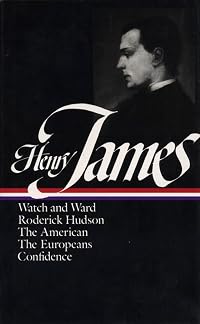
Novels: 1871-1880
by Henry James
On This Page
Description
Five novels dramatize the interaction of Americans with more sophisticated Europeans.Tags
Recommendations



Member Reviews
The amount of pleasure you are likely to derive from this collection of Henry James’s first five novels depends largely on your tolerance for reading about the awkward mating rituals—failing more often than they succeed—among that class of people who seem to have nothing other to do than to travel from one fashionable watering hole to another and to visit each other for tea. These variations on a theme are played over an ostinato of the clash of the New World encountering the Old (and vice versa).
Your enjoyment will also depend on your taste for stately nineteenth-century prose. These novels are not yet in the fully ornate style that James went on to refine. They do however already reflect his sensitivity for the slightest nuances show more of tone in social intercourse. There are many fine passages of dialogue, interior monologue, description, and the occasional intrusions of an ironically detached narrator.
James’s first novel, Watch and Ward, opens for instance with a virtuoso passage describing the protagonist in a long series of antithetical phrases. To that extent, James is already James. In addition, the constellation of characters is “Jamesian”: the marriageable young woman surrounded by three suitors.
The plot is a variant of the Pygmalion legend. Roger Lawrence, whose failures as a suitor bring him to the point of foreswearing marriage, takes in an orphan girl. Before long, he sets out to mold her into the perfect wife. He succeeds beyond expectation (hence the two rivals for her affections). Kind, loyal, noble Roger wins out over them in the end. How satisfactory this conclusion seems might vary from reader to reader. For me, the ending couldn’t surmount the creepiness in the situation. The best of the book, I felt, was chapter 9, when Nora, after refusing Roger’s proposal, then learning that his benevolence had all been to shape her into his suitable mate, reacts with revulsion and flees to New York. Good for her, I thought. Once she’s there, however, the reality of life as a penniless, unescorted young woman in the city hits home, the two alternative suitors prove unsuitable, and [spoiler alert!] Nora falls into Roger’s arms as if by default.
James half-disowned the novel, waiting seven years before bringing out what had appeared as a serial in book form, by which time he had published his next two novels. He never published it in his adopted home, England, and it was long out of print in the U.S. I doubt this was because of the passages of barely-suppressed eroticism; it may have been that, as James’s skill as a novelist increased, he sensed that the conclusion wasn’t satisfactory.
There’s something of Pygmalion in the second novel, Roderick Hudson, as well. This time, however, the noble benefactor isn’t out to remold a young girl. Instead, he takes a young sculptor under his wing, sponsoring a tour of Europe and a studio so that this raw genius can realize his potential. Here’s the next spoiler alert: It doesn’t end well. But I doubt you suspected it would. Along the way, we’re treated to extended dialogue about the life of an artist between Roderick, the sculptor, and Rowland, the benefactor. That their names share the first initial allows us to fantasize that they can also be seen as two halves of a divided personality — the bourgeois art-lover and the genius artist. It’s interesting—perhaps revealing—that it is the half represented by Rowland, the well-meaning, ineffectual, eternal bachelor who seems more the Henry James avatar in this tale than does the artist, Roderick.
Overshadowing both, however, is Christina Light. Befitting her name, she is so luminescent that she nearly runs away with the book. It’s no surprise that James reprised her character as protagonist in a novel all her own, The Princess Cassamassima.
The third novel, The American, was the one that drew me in the most completely at first. The protagonist is once again an American in Europe, but in this case, mention is made of his conscious break with his earlier life of (seemingly effortless) wealth-creation to sample and profit from European culture. The result is a straightforward confrontation between two disparate worlds — brash, optimistic, energetic and clueless America and prideful, poverty-stricken, aristocratic Europe. The hopes of the American founder on the intransigence of the family of the woman he courts. Somehow the plot seems to founder at that point as well. Nevertheless, there are wonderfully atmospheric passages throughout. The book is also unusual in that Christopher’s “twin,” another American in Paris, whom he doesn’t seem to like particularly, is locked in an unhappy marriage, the first time such a constellation isn’t merely alluded to in a James novel, but depicted.
The Europeans, the fourth novel, is the first one set exclusively in the U.S., ironically, given the title. The brother and sister pair referred to however are Americans by nationality, yet have spent nearly their entire lives overseas. Circumstances force them to seek their fortune in the New World, but the quest is only successful for one of them. For the other, the sister, her “failure” is not so much for lack of opportunity, but rather her recognition that she is out of her element. She returns to the world she knows, even though it means living in reduced circumstances.
The fifth novel, Confidence, returns to Europe for its setting. It’s a mixed bag. Some of the dialogue seems stilted, although the protagonist, Bernard, seems fascinated by it. On the other hand, the words spoken by two of the characters, Blanche and Captain Lovelock, are tours-de-force. Inscribed as monologues, they subtly evoke the interjections that others might contribute to the conversation. While the novel is told from Bernard’s point-of-view, and thus he is the nominal protagonist, this seems to me to be true only on the surface. The center of the book is definitely the strong, tactful (to the point of inscrutable), and insightful Angela Vivian. Angela knows it, too, proclaiming more than once how stupid men are. She and her mother, however, set all to rights, so that at the end we have, unusually for James, not one, but two successful matches.
While none of the novels are perfect, I still give the collection five stars because there is so much delightful reading to be found here. show less
Your enjoyment will also depend on your taste for stately nineteenth-century prose. These novels are not yet in the fully ornate style that James went on to refine. They do however already reflect his sensitivity for the slightest nuances show more of tone in social intercourse. There are many fine passages of dialogue, interior monologue, description, and the occasional intrusions of an ironically detached narrator.
James’s first novel, Watch and Ward, opens for instance with a virtuoso passage describing the protagonist in a long series of antithetical phrases. To that extent, James is already James. In addition, the constellation of characters is “Jamesian”: the marriageable young woman surrounded by three suitors.
The plot is a variant of the Pygmalion legend. Roger Lawrence, whose failures as a suitor bring him to the point of foreswearing marriage, takes in an orphan girl. Before long, he sets out to mold her into the perfect wife. He succeeds beyond expectation (hence the two rivals for her affections). Kind, loyal, noble Roger wins out over them in the end. How satisfactory this conclusion seems might vary from reader to reader. For me, the ending couldn’t surmount the creepiness in the situation. The best of the book, I felt, was chapter 9, when Nora, after refusing Roger’s proposal, then learning that his benevolence had all been to shape her into his suitable mate, reacts with revulsion and flees to New York. Good for her, I thought. Once she’s there, however, the reality of life as a penniless, unescorted young woman in the city hits home, the two alternative suitors prove unsuitable, and [spoiler alert!] Nora falls into Roger’s arms as if by default.
James half-disowned the novel, waiting seven years before bringing out what had appeared as a serial in book form, by which time he had published his next two novels. He never published it in his adopted home, England, and it was long out of print in the U.S. I doubt this was because of the passages of barely-suppressed eroticism; it may have been that, as James’s skill as a novelist increased, he sensed that the conclusion wasn’t satisfactory.
There’s something of Pygmalion in the second novel, Roderick Hudson, as well. This time, however, the noble benefactor isn’t out to remold a young girl. Instead, he takes a young sculptor under his wing, sponsoring a tour of Europe and a studio so that this raw genius can realize his potential. Here’s the next spoiler alert: It doesn’t end well. But I doubt you suspected it would. Along the way, we’re treated to extended dialogue about the life of an artist between Roderick, the sculptor, and Rowland, the benefactor. That their names share the first initial allows us to fantasize that they can also be seen as two halves of a divided personality — the bourgeois art-lover and the genius artist. It’s interesting—perhaps revealing—that it is the half represented by Rowland, the well-meaning, ineffectual, eternal bachelor who seems more the Henry James avatar in this tale than does the artist, Roderick.
Overshadowing both, however, is Christina Light. Befitting her name, she is so luminescent that she nearly runs away with the book. It’s no surprise that James reprised her character as protagonist in a novel all her own, The Princess Cassamassima.
The third novel, The American, was the one that drew me in the most completely at first. The protagonist is once again an American in Europe, but in this case, mention is made of his conscious break with his earlier life of (seemingly effortless) wealth-creation to sample and profit from European culture. The result is a straightforward confrontation between two disparate worlds — brash, optimistic, energetic and clueless America and prideful, poverty-stricken, aristocratic Europe. The hopes of the American founder on the intransigence of the family of the woman he courts. Somehow the plot seems to founder at that point as well. Nevertheless, there are wonderfully atmospheric passages throughout. The book is also unusual in that Christopher’s “twin,” another American in Paris, whom he doesn’t seem to like particularly, is locked in an unhappy marriage, the first time such a constellation isn’t merely alluded to in a James novel, but depicted.
The Europeans, the fourth novel, is the first one set exclusively in the U.S., ironically, given the title. The brother and sister pair referred to however are Americans by nationality, yet have spent nearly their entire lives overseas. Circumstances force them to seek their fortune in the New World, but the quest is only successful for one of them. For the other, the sister, her “failure” is not so much for lack of opportunity, but rather her recognition that she is out of her element. She returns to the world she knows, even though it means living in reduced circumstances.
The fifth novel, Confidence, returns to Europe for its setting. It’s a mixed bag. Some of the dialogue seems stilted, although the protagonist, Bernard, seems fascinated by it. On the other hand, the words spoken by two of the characters, Blanche and Captain Lovelock, are tours-de-force. Inscribed as monologues, they subtly evoke the interjections that others might contribute to the conversation. While the novel is told from Bernard’s point-of-view, and thus he is the nominal protagonist, this seems to me to be true only on the surface. The center of the book is definitely the strong, tactful (to the point of inscrutable), and insightful Angela Vivian. Angela knows it, too, proclaiming more than once how stupid men are. She and her mother, however, set all to rights, so that at the end we have, unusually for James, not one, but two successful matches.
While none of the novels are perfect, I still give the collection five stars because there is so much delightful reading to be found here. show less
Read Confidence and enjoyed it very much.
"Watch and ward", "Roderick Hudson", "The American", "The Europeans", "Confidence"
Ratings
Members
- Recently Added By
Lists

Books I've Read More Than Once
602 works; 49 members

Books I want to read
25 works; 3 members
Author Information

1,061+ Works 87,953 Members
All Editions
Series
Belongs to Publisher Series
Library of America (013)
Work Relationships
Common Knowledge
- Canonical title
- Novels: 1871-1880
- Original title
- Novels 1871–1880: Watch and Ward, Roderick Hudson, The American, The Europeans, Confidence
- Original publication date
- 1983-11-15
- Publisher's editor
- Stafford, William T.
- Disambiguation notice
- This is an omnibus unique to the Library of America; therefore, all CK facts apply to this publication only.
Classifications
Statistics
- Members
- 486
- Popularity
- 62,407
- Reviews
- 4
- Rating
- (3.85)
- Languages
- English
- Media
- Paper, Ebook
- ISBNs
- 4