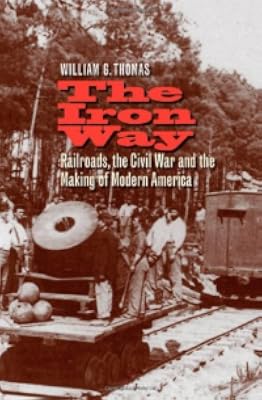
The Iron Way: Railroads, the Civil War, and the Making of Modern America
by William G. Thomas III
On This Page
Description
"Beginning with Frederick Douglass's escape from slavery in 1838 on the railroad, and ending with the driving of the golden spike to link the transcontinental railroad in 1869, this book charts a critical period of American expansion and national formation, one largely dominated by the dynamic growth of railroads and telegraphs. William G. Thomas brings new evidence to bear on railroads, the Confederate South, slavery, and the Civil War era, based on groundbreaking research in digitized show more sources never available before. The Iron Way revises our ideas about the emergence of modern America and the role of the railroads in shaping the sectional conflict. Both the North and the South invested in railroads to serve their larger purposes, Thomas contends. Though railroads are often cited as a major factor in the Union's victory, he shows that they were also essential to the formation of "the South" as a unified region. He discusses the many--and sometimes unexpected--effects of railroad expansion and proposes that America's great railroads became an important symbolic touchstone for the nation's vision of itself. Please visit the Railroads and the Making of Modern America website at http://railroads.unl.edu"-- show lessTags
Recommendations












Member Reviews
While I wouldn't quite say that this book revolutionized my thinking about the development of Ante Bellum America, this book greatly strengthens the argument that the coming of the railroad was as revolutionary for the Old South as it was for the North, and was the accelerant for bringing to fruition a potential new nation, whereas previous threats of secession fell short. This being the case, the prime Federal war aim had to be the waging of a "network" war that would cut apart the sinews binding the Confederacy together, thus aborting the birth of the new nation. Ending with the completion of the Union Pacific at Promontory, Thomas returns to his point that there was nothing more modern in nineteenth-century terms than the railroads, show more because they symbolized a modernity based on freedom of movement (both people and information), the mastery of technology and the conquest of nature. The irony of the Union Pacific is that it was essentially built by the Credit Mobilier Company, which had essentially been created to build a trans-continental railroad favorable to southern interests. There is much food for thought to be had here. show less
Ratings
Members
- Recently Added By
Lists

Books I Would Like to Acquire
20 works; 1 member
Author Information
7 Works 235 Members
Common Knowledge
- Important events
- American Civil War (1861 | 1865)
Classifications
Statistics
- Members
- 68
- Popularity
- 460,058
- Reviews
- 1
- Rating
- (3.83)
- Languages
- English
- Media
- Paper, Ebook
- ISBNs
- 4
- ASINs
- 1