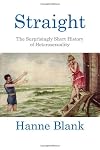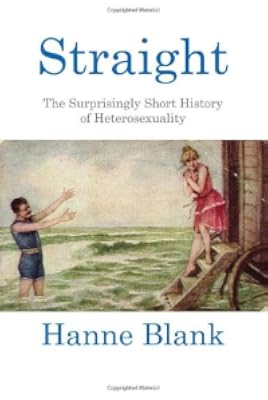
Straight: The Surprisingly Short History of Heterosexuality
by Hanne Blank 
On This Page
Description
It's surprising that the term "heterosexuality" is less than 150 years old and that heterosexuality's history has never before been written, given how obsessed we are with it. In Straight, independent scholar Hanne Blank delves deep into the contemporary psyche as well as the historical record to chronicle the realm of heterosexual relations--a subject that is anything but straight and narrow. Consider how Catholic monasticism, the reading of novels, the abolition of slavery, leisure time, show more divorce, and constipation of the bowels have all at some time been labeled enemies of the heterosexual state. With an extensive historical scope and plenty of juicy details and examples, Straight provides a fascinating look at the vagaries, schisms, and contradictions of what has so often been perceived as an irreducible fact of nature. show lessTags
Recommendations

Member Reviews
Straight takes on the – in the words of the author – surprisingly short history of heterosexuality from the 19th century to the present. While one might think that the history extends further back, Blank notes that the term was first coined in the late 19th century, was popularized by Krafft-Ebing and Freud, encompassed a number of cultural ideas and finally became part of the doxa, the generally known information. Blank starts her discussion of the limiting idea of heterosexuality by talking about her own relationship with her partner. Because of a variety of intersex conditions, it is hard to say that “male” and “female” are static, easily defined conditions. Are sexes determined by genes? Hormones? Socially defined show more gender? Then there’s the difference between sexual attractions and behavior. Heterosexuality is generally defined as “normal” sexuality, but what “abnormal” sexuality is has always differed from time and place. The idea that heterosexuality is a construct rather than a scientific fact, and that it is often quite limiting and discriminatory, is an idea that recurs frequently.
There’s less specific scientific information compared to the other Blank book I read, Virgin, but I was more familiar with the period and topics covered in this book and thought Blank’s analysis of social trends was informative. She covers the period where the term heterosexual first appeared – when the West was moving away from Catholic concepts of sin and sexual acts - not separate identities - to ideas of normal vs. deviant. The rise of the city, the popularization of scientific concepts and jargon and fears of degeneration contributed to the rise of heterosexuality. Freud had a lasting effect and Blank is obviously critical of him as seen in the way she relates his ideas. The concept of sexual identities was given more fuel by the work of Kinsey and Masters and Johnson and the push for equality by various groups in the mid-20th century.
The development of the trappings of heterosexuality is described in the next chapters. Marriage moved from an economic partnership centered around children to an (theoretically) equal partnership based on true love and personal and sexual fulfillment with children optional and planned. There was a lot of interesting information presented in this section – the development of dating culture, the rash of sexual help manuals for married couples and the gradual elevation of the orgasm as the defining measurement of sex. In the end, Blank concludes that the concept of heterosexuality cannot include all the advances in technology, biology, psychology and the overall complexity of human behavior. As examples she points to the rise of gay culture, homophobic politicians who are outed, and court cases involving transgender individuals. Blank’s ideas about the uselessness of heterosexuality might seem extreme but she nicely and succinctly covers all the limitations of the concept. I didn’t agree with her conclusion that studies on homosexuality didn’t have much use and really shouldn’t be done – even if only because prohibitions on studying something are worrisome. While I found this book to be more generalized and big-picture compared to Virgin, it was a worthwhile read. Since I’d read some books and taken classes on the subject before, much of the information wasn’t new but the analysis and examination of multiple trends and influences was helpful. The book was short and very readable as well as humorous. show less
There’s less specific scientific information compared to the other Blank book I read, Virgin, but I was more familiar with the period and topics covered in this book and thought Blank’s analysis of social trends was informative. She covers the period where the term heterosexual first appeared – when the West was moving away from Catholic concepts of sin and sexual acts - not separate identities - to ideas of normal vs. deviant. The rise of the city, the popularization of scientific concepts and jargon and fears of degeneration contributed to the rise of heterosexuality. Freud had a lasting effect and Blank is obviously critical of him as seen in the way she relates his ideas. The concept of sexual identities was given more fuel by the work of Kinsey and Masters and Johnson and the push for equality by various groups in the mid-20th century.
The development of the trappings of heterosexuality is described in the next chapters. Marriage moved from an economic partnership centered around children to an (theoretically) equal partnership based on true love and personal and sexual fulfillment with children optional and planned. There was a lot of interesting information presented in this section – the development of dating culture, the rash of sexual help manuals for married couples and the gradual elevation of the orgasm as the defining measurement of sex. In the end, Blank concludes that the concept of heterosexuality cannot include all the advances in technology, biology, psychology and the overall complexity of human behavior. As examples she points to the rise of gay culture, homophobic politicians who are outed, and court cases involving transgender individuals. Blank’s ideas about the uselessness of heterosexuality might seem extreme but she nicely and succinctly covers all the limitations of the concept. I didn’t agree with her conclusion that studies on homosexuality didn’t have much use and really shouldn’t be done – even if only because prohibitions on studying something are worrisome. While I found this book to be more generalized and big-picture compared to Virgin, it was a worthwhile read. Since I’d read some books and taken classes on the subject before, much of the information wasn’t new but the analysis and examination of multiple trends and influences was helpful. The book was short and very readable as well as humorous. show less
A light, quick read. Like Blank's previous cultural history, Virgin, this book is full of fascinating anecdotes, some of which you're likely to know about if you've spent much time involved in gender or sexuality studies. The book combines broad strokes of history with these anecdotes and details smoothly and readable, and like Virgin, ought to be accessible to the general reader.
Like Blank, I have been in relationships that might - or might not - be definable as heterosexual, and so I have a personal investment in her unraveling of the term and its history. I found her eventually conclusion (is this a spoiler? can you spoil nonfiction?) - "this too shall pass" - hopeful and reassuring.
One negative note - I found some of Blank's show more language choices when discussing transgendered individuals strange, such as the footnote where she briefly observes that "the horrific rape and murder of Brandon Teena" demonstrates her point that "women who are perceived to be overly sexual, or too sexual in the wrong ways - meaning, especially, ways that do not focus on conventional feminine receptivity - are still likely to be shamed, ostracized, and punished." (n 27, p 179; p 143). I don't disagree that the example of Brandon Teena (whose life, as Blank notes, has been dramatized in the movie Boys Don't Cry) demonstrates the brutality that those who violate gender norms often face, or that Teena's rape and murder was due to the revelation that he was not cisgendered - that he was perceived by his murderers as a woman pretending to be a man. But Blank here seems to identify Teena as a woman, against his self-presentation.
This is a small detail, but it did mar an otherwise enjoyable read for me. show less
Like Blank, I have been in relationships that might - or might not - be definable as heterosexual, and so I have a personal investment in her unraveling of the term and its history. I found her eventually conclusion (is this a spoiler? can you spoil nonfiction?) - "this too shall pass" - hopeful and reassuring.
One negative note - I found some of Blank's show more language choices when discussing transgendered individuals strange, such as the footnote where she briefly observes that "the horrific rape and murder of Brandon Teena" demonstrates her point that "women who are perceived to be overly sexual, or too sexual in the wrong ways - meaning, especially, ways that do not focus on conventional feminine receptivity - are still likely to be shamed, ostracized, and punished." (n 27, p 179; p 143). I don't disagree that the example of Brandon Teena (whose life, as Blank notes, has been dramatized in the movie Boys Don't Cry) demonstrates the brutality that those who violate gender norms often face, or that Teena's rape and murder was due to the revelation that he was not cisgendered - that he was perceived by his murderers as a woman pretending to be a man. But Blank here seems to identify Teena as a woman, against his self-presentation.
This is a small detail, but it did mar an otherwise enjoyable read for me. show less
Being a series of refelections (not really a "history") on the concept and practice of heterosexuality since the emergence of the term during the nineteenth century. The first third of the book is by far the best, and would have made a fine keynote article in an intellectual monthly two generations ago when they still were willing to feature extended articles. The author is an innovative thinker who will present and juxtapose concepts in a way which will allow even veteran readers in gender to think of them in new ways.
Unfortunately, as is often the case with big thinkers, her net is sometimes cast with a little more enthusiasm than rigor, leading her to howlers such as maintaining that conventional carnal relations are the only form show more of sexual activity which has been universally approved throughout history. Try telling that to the many who have been punished, and not infrequently executed or lynched, throughout history for indulging in that act. One could nudge her assertion a little closer to the truth by adding words such as "within marriage" or "between members of the same tribe/nation/race", but even then "grudging acceptance" would be a better term than "approval". This sort of occasional bypass of common sense, a certain disorganized feel, and quite a bit more information on her friends' opinions and her own sex life than I really needed to know keep this on the "flawed masterpiece" shelf. show less
Unfortunately, as is often the case with big thinkers, her net is sometimes cast with a little more enthusiasm than rigor, leading her to howlers such as maintaining that conventional carnal relations are the only form show more of sexual activity which has been universally approved throughout history. Try telling that to the many who have been punished, and not infrequently executed or lynched, throughout history for indulging in that act. One could nudge her assertion a little closer to the truth by adding words such as "within marriage" or "between members of the same tribe/nation/race", but even then "grudging acceptance" would be a better term than "approval". This sort of occasional bypass of common sense, a certain disorganized feel, and quite a bit more information on her friends' opinions and her own sex life than I really needed to know keep this on the "flawed masterpiece" shelf. show less
This excellently written book looks into the history of "heterosexuality" as a Thing in and of itself. In so doing, Blank touches on may related issues, such as theories of male and female sexuality, the history of marriage, and many more. While I suppose these could be considered tangential, they also enrich and inform the overall points, and for me have put many things into a context of which I was previously unaware.
It is not exclusively about "straight"; in exploring how this concept came to be, and to be accepted, Blank touches on many other sexual realms; none would be possible without the others.
Do read the footnotes; while some are just cites, others have additional enriching commentary.
Very recommended, for anyone interested in show more how our cultural narrative of sex came to be, and how it can impact us. show less
It is not exclusively about "straight"; in exploring how this concept came to be, and to be accepted, Blank touches on many other sexual realms; none would be possible without the others.
Do read the footnotes; while some are just cites, others have additional enriching commentary.
Very recommended, for anyone interested in show more how our cultural narrative of sex came to be, and how it can impact us. show less
Interesting enough; not as enjoyable as any of the works I'm familiar with that the author referenced, but it contained some excellent writing. The end notes in particular were a joy.
This isn't a "bad" book per se, but it's curiously pointless. While Blank sets out to limn the history of heterosexuality as a concept, what she really ends up doing at great length and to little new effect, is to write about the legal and social concepts of marriage (companionate and otherwise) and the cultural history of dating. None of this is fresh, none of this has not been done dozens of times before decades before, most more thoroughly and from a more deeply informed historical and/or philosophical perspective. None of this illuminates our current understanding of what's "heterosexual" and what's "homosexual". In fact, beyond the brief personal revelations that open and close the volume, there's virtually nothing here I haven't show more read many, many times over.
I guess I just can't imagine who's the audience for this book. Anyone seriously interested in the subject of sexuality, sexual/gender identity, and the history of how society and individuals assign labels is not going to find anything fresh, interesting, or particularly useful here. And those who aren't especially interested or knowledgeable are probably not going to read or seek out this book. Sooo? show less
I guess I just can't imagine who's the audience for this book. Anyone seriously interested in the subject of sexuality, sexual/gender identity, and the history of how society and individuals assign labels is not going to find anything fresh, interesting, or particularly useful here. And those who aren't especially interested or knowledgeable are probably not going to read or seek out this book. Sooo? show less
Learned a lot - we are full of ourselves, yes?
Members
- Recently Added By
Published Reviews
"Heterosexuality is historically constituted,’ she concludes, ‘and for now we believe in it. And this, too, shall pass."
added by nyjbooks
Lists

Beacon Press
39 works; 1 member

LQW Research Reading List
75 works; 1 member
Author Information

12+ Works 1,178 Members
Hanne Blank is a writer, historian, and public speaker whose work has been featured everywhere from Boston magazine to Penthouse
Hanne Blank is a LibraryThing Author, an author who lists their personal library on LibraryThing.
Common Knowledge
- Original publication date
- 2012-01-31
- Dedication
- For Malcolm
- First words
- Every time I go to the doctor, I end up questioning my sexual orientation.
- Last words
- (Click to show. Warning: May contain spoilers.)And this, too, shall pass.
- Blurbers
- Diamond, Lisa M.; Bronski, Michael; Kipnis, Laura; Katz, Jonathan Ned
- Canonical DDC/MDS
- 306.76409
- Canonical LCC
- HQ23.B56
Classifications
- Genres
- Nonfiction, History, Sexuality and Gender Studies, Sociology, General Nonfiction, LGBTQ+
- DDC/MDS
- 306.76409 — Society, government, & culture Social sciences, sociology & anthropology Social Behavior - Dating, Marriage, Divorce Sexual relations Sexual orientation, transgender identity, intersexuality Heterosexuality
- LCC
- HQ23 .B56 — Social sciences The family. Marriage, Women and Sexuality The Family. Marriage. Women Sexual life Sexual behavior and attitudes. Sexuality
- BISAC
Statistics
- Members
- 300
- Popularity
- 106,579
- Reviews
- 8
- Rating
- (4.03)
- Languages
- English, Turkish
- Media
- Paper, Ebook
- ISBNs
- 5
- ASINs
- 2