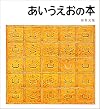
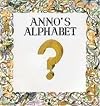
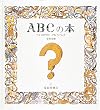
Anno's Alphabet
by 安野 光雅
On This Page
Description
Each letter of the alphabet accompanies a full-page picture puzzle of an object whose name begins with that letter: anvil, bicycle, etc.Tags
Recommendations















Member Reviews
If you can still find a copy of this book, buy it, it's a gem, as are most of his books.
They are artistic, secretive, complex yet deceptively simple, certainly not the typical "learn the alphabet" book you get for school.I bought a copy simply for my own pleasure in the clever pictures - both of the main letter and the surrounds. It is not, repeat not, a book for small children.
They are artistic, secretive, complex yet deceptively simple, certainly not the typical "learn the alphabet" book you get for school.I bought a copy simply for my own pleasure in the clever pictures - both of the main letter and the surrounds. It is not, repeat not, a book for small children.
it's a totally amazing book. I love it. Here's the rub: the children I have read it to are not nearly as fascinated as I am. I think it is - unbelievably - too subtle for most children.
Anno’s Alphabet: An Adventure in Imagination and George Shannon’s Tomorrow’s Alphabet are two distinct types of alphabet books. Anno’s book, at first glance, is a beautifully illustrated simple word-picture alphabet book, whereas Shannon’s book includes a riddle component. Anno depicts each letter as if fashioned out of wood, with images of woodworking tools appearing in the opening pages preceding the title page. In each image that represents a letter (i.e., a kangaroo for the letter “K”), there is at least a wooden detail within the object pictured. But if one looks closely at the intricate monochromatic borders that decorate each page, one can find at least one object that also begins with that letter, and sometimes show more more (on the “K” page there is a king, key, knife and knot “hidden” inside the border). The fine, detailed handling of letters, borders and representational images are quite appealing. A key at the end notes all the objects hidden in the borders. A Boston Globe-Horn Book Award (Picture Book) 1975. Preschool-7 (for the hidden imagery).
In comparison, Tomorrow’s Alphabet requires the reader to predict what each letter stands for, based on a given clue. For example, “A is for seed” is followed by “tomorrow’s apple.” The letter is always the same color the alphabetically matched word (“A” and the word “apple,” etc.), to further clarify the connection. It’s an engaging concept, and I have successfully used this book for kindergartners and first graders. First graders are a perfect target grade. However, some pairs are too obscure (“F is for wheat—tomorrow’s flour”) and the book’s layout is problematic. Both set-up (“D is for puppy” and answer (“tomorrow’s dog”) are on the same 2-page spread, so I have had to bend back half the book to not display the answer when posing the challenge. Donald Crews’ illustrations are mostly clear and adequate. No awards could be found.
Anno, M. (1975). Anno's alphabet: An adventure in imagination. New York: Crowell.
Shannon, G., & Crews, D. (1995). Tomorrow's alphabet. New York: Greenwillow Books. show less
In comparison, Tomorrow’s Alphabet requires the reader to predict what each letter stands for, based on a given clue. For example, “A is for seed” is followed by “tomorrow’s apple.” The letter is always the same color the alphabetically matched word (“A” and the word “apple,” etc.), to further clarify the connection. It’s an engaging concept, and I have successfully used this book for kindergartners and first graders. First graders are a perfect target grade. However, some pairs are too obscure (“F is for wheat—tomorrow’s flour”) and the book’s layout is problematic. Both set-up (“D is for puppy” and answer (“tomorrow’s dog”) are on the same 2-page spread, so I have had to bend back half the book to not display the answer when posing the challenge. Donald Crews’ illustrations are mostly clear and adequate. No awards could be found.
Anno, M. (1975). Anno's alphabet: An adventure in imagination. New York: Crowell.
Shannon, G., & Crews, D. (1995). Tomorrow's alphabet. New York: Greenwillow Books. show less
Each letter of the alphabet is accompanied by a picture of an object whose first letter is the same. For example a picture of a bicycle represents the letter B; a picture of a clock accompanies the letter C, etc.
As a reader I enjoyed looking at the picture and trying to figure out all the different things Anno put in each picture that matched the letter. I spent quite a bit of time studying each border. I wonder if each border is drawn with a flower or plant design that matches the letter.
As a teacher I would have this book out for students to examine during their free time. Although there are no words, the book promotes students’ critical thinking and vocabulary. What can you find in the book? If you were to make your own alphabet show more book, what kinds of pictures would you draw? Have students create their own alphabet books. show less
As a reader I enjoyed looking at the picture and trying to figure out all the different things Anno put in each picture that matched the letter. I spent quite a bit of time studying each border. I wonder if each border is drawn with a flower or plant design that matches the letter.
As a teacher I would have this book out for students to examine during their free time. Although there are no words, the book promotes students’ critical thinking and vocabulary. What can you find in the book? If you were to make your own alphabet show more book, what kinds of pictures would you draw? Have students create their own alphabet books. show less
Ah - G is for Gun! Eeek! Love the Escher like wooden letter shapes. Amazing that M is in the mirror. V is for violin shaped like a V. Hmm I have bigger impressions of yacht - my kids would say that's a boat. Is Z really a zebra? he he
This book is appropriate for the grades pre-k and kindergarten because it illustrates the letters of the alphabet. The letter is on the left side of the page and a picture that begins with the letter is on the right side. The pictures are old fashioned. For example for the letter T is represented by a typewriter and the letter S is represented by an old scale. Each picture is simple yet very detailed. The book will probably help children connect the letter to the picture.
Uses in classroom:
- Have children guess what the illustration is and after I would have the class repeat the word several times. Then I would have children say what the first letter of the word is.
- Some of the pictures are of older inventions so I can teach children show more when and for what they were used for.
- I would have children pick their favorite letter or the first letter of their first name and draw a picture of themselves or any object that starts with that letter. show less
Uses in classroom:
- Have children guess what the illustration is and after I would have the class repeat the word several times. Then I would have children say what the first letter of the word is.
- Some of the pictures are of older inventions so I can teach children show more when and for what they were used for.
- I would have children pick their favorite letter or the first letter of their first name and draw a picture of themselves or any object that starts with that letter. show less
Each letter of the alphabet is represented by objects that some young readers will recognize and others will require adult assistance. This book can be found on the shelves of many children's libraries, and yet some of the pictures will not readily be identifiable by a child in today's environment. With repetition, and the assistance of an adult, all objects can be learned and restated.
Members
- Recently Added By
Lists

Wordless Books
157 works; 14 members
Author Information

78+ Works 8,955 Members
Awards and Honors
Awards
Notable Lists
Common Knowledge
- Canonical title
- Anno's Alphabet
- Original publication date
- 1974
Classifications
- Genres
- Children's Books, Picture Books
- DDC/MDS
- 745.6 — Arts & recreation Drawing & decorative arts Decorations & Handicrafts / Calligraphy Calligraphy, illumination, heraldic design
- LCC
- PZ7 .A5875 .A — Language and Literature Fiction and juvenile belles lettres Fiction and juvenile belles lettres Juvenile belles lettres
Statistics
- Members
- 422
- Popularity
- 72,878
- Reviews
- 10
- Rating
- (4.05)
- Languages
- Chinese, English, Japanese
- Media
- Paper
- ISBNs
- 7
- ASINs
- 5