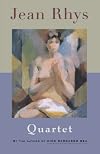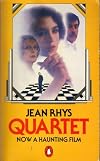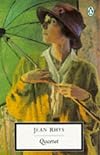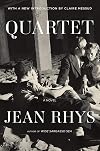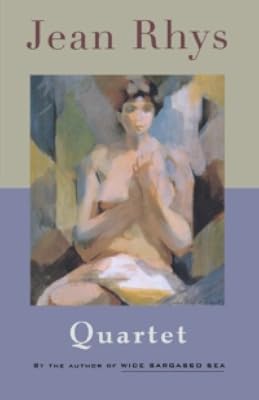
Quartet
by Jean Rhys
On This Page
Description
A young expat in Paris is caught between her lover and his wife in this autobiographical novel by the author of Wide Sargasso Sea. Set in the bohemian café society of 1920s Paris, Quartet tells the story of Marya Zelli, a young woman who finds herself alone and adrift when her art dealer husband is arrested. On his insistence, she goes to live with a friendly English couple. But when Marya becomes entangled in the intimate lives of her hosts, she has no way out. And the desperate situation show more turns explosive when her husband is released from prison. Jean Rhys's debut novel, Quartet, won international acclaim when it was originally published in 1928. It is loosely based on her extramarital affair with Ford Madox Ford, which took place while her then-husband Jean Lenglet was in prison. show lessTags
Recommendations



















Member Reviews
My second Jean Rhys novel and, like the first (Voyage in the Dark), I found this to be unrelentingly dark in a captivating way. Like Russell Banks--I know, a strange comparison--you can feel the tragedy ahead almost from the first page, but you are made to believe--along with the characters--that there is no other way this could have gone. Gave me a truly horrible picture of Ford Madox Ford but, oh well...maybe someday I will read his version of events.
"Life was like that. Here you are, it said, and then immediately afterwards. Where are you?"
The second book set in France during the first half of the 20th century that I’ve read this past month, the other one being [b:Black Docker|123756|Black Docker (African Writers Series)|Ousmane Sembène|https://i.gr-assets.com/images/S/compressed.photo.goodreads.com/books/1677791464l/123756._SX50_.jpg|119163] by Ousmane Sembène. Both are first novels, both focus on characters at the margins of society, and both drew from the personal lives of their writers. Where Sembène focused on a Black immigrant man in France, Rhys focuses on a poor and down and out (white) immigrant woman.
Marya finds herself in a dire situation when her Polish husband, show more Stephan, is arrested by French authorities and is left with no income and could basically become homeless, when an English couple offers her their home to stay in while she’s in this fiasco. She soon finds out that the husband wants to have an affair, and the wife will put up with and even (falsely) encourage this as long as it doesn’t disrupt her marriage. Both pulling at and using the emotionally broken woman who seeks escape from her depressing reality in drink.
It’s incredible that this was published in 1928. The psychological probing into the power dynamics of relationships between men and women reminded me of early Doris Lessing (which is really all the Lessing I’ve read so far), only Rhys work is tighter in form and clearer in language. It’s just marvellous and completely absorbs the reader into the tribulations of a financially dependent woman in a downward spiral.
This was truly a depressing book. It wasn’t intended as my first Rhys read, [b:Wide Sargasso Sea|25622780|Wide Sargasso Sea|Jean Rhys|https://i.gr-assets.com/images/S/compressed.photo.goodreads.com/books/1453021061l/25622780._SY75_.jpg|142647] was meant to be my first one, but a brief biography I’d read of Jean Rhys made me interested in her life and work and tracing her literary and philosophical development through the years, and so I decided to read the books in order of publication. Only I’ve found out too late that this was her first novel but not her first book, as she had a collection of short stories published a year before this that I’m yet to read. Learning that this book was inspired by Rhys’s affair with the writer Ford Madox Ford, his wife Stella Bowen and her husband Jean Lenglet rounding up the real quartet, adds more sadness to this book. show less
The second book set in France during the first half of the 20th century that I’ve read this past month, the other one being [b:Black Docker|123756|Black Docker (African Writers Series)|Ousmane Sembène|https://i.gr-assets.com/images/S/compressed.photo.goodreads.com/books/1677791464l/123756._SX50_.jpg|119163] by Ousmane Sembène. Both are first novels, both focus on characters at the margins of society, and both drew from the personal lives of their writers. Where Sembène focused on a Black immigrant man in France, Rhys focuses on a poor and down and out (white) immigrant woman.
Marya finds herself in a dire situation when her Polish husband, show more Stephan, is arrested by French authorities and is left with no income and could basically become homeless, when an English couple offers her their home to stay in while she’s in this fiasco. She soon finds out that the husband wants to have an affair, and the wife will put up with and even (falsely) encourage this as long as it doesn’t disrupt her marriage. Both pulling at and using the emotionally broken woman who seeks escape from her depressing reality in drink.
It’s incredible that this was published in 1928. The psychological probing into the power dynamics of relationships between men and women reminded me of early Doris Lessing (which is really all the Lessing I’ve read so far), only Rhys work is tighter in form and clearer in language. It’s just marvellous and completely absorbs the reader into the tribulations of a financially dependent woman in a downward spiral.
This was truly a depressing book. It wasn’t intended as my first Rhys read, [b:Wide Sargasso Sea|25622780|Wide Sargasso Sea|Jean Rhys|https://i.gr-assets.com/images/S/compressed.photo.goodreads.com/books/1453021061l/25622780._SY75_.jpg|142647] was meant to be my first one, but a brief biography I’d read of Jean Rhys made me interested in her life and work and tracing her literary and philosophical development through the years, and so I decided to read the books in order of publication. Only I’ve found out too late that this was her first novel but not her first book, as she had a collection of short stories published a year before this that I’m yet to read. Learning that this book was inspired by Rhys’s affair with the writer Ford Madox Ford, his wife Stella Bowen and her husband Jean Lenglet rounding up the real quartet, adds more sadness to this book. show less
A shocking tale from Paris in the Nineteen twenties. Marya finds herself bereft of support when her Polish husband is imprisoned for fraud. Life without money and little prospects beyond her own erotic potential drive her into the role of mistress to the married Mr. Heider (a cariacature of Ford Madox Ford in fact). She is used because she becomes dependent on him for money and subsistence while her worthless husband (Stephan) awaits release after a year's custody.
The writing is taut; the mood is taut with worry and despair. The ending is chilling and reinforces the sad fact that a woman without ways and means is fair game for cynical misuse and societal disregard.
Read this book.
The writing is taut; the mood is taut with worry and despair. The ending is chilling and reinforces the sad fact that a woman without ways and means is fair game for cynical misuse and societal disregard.
Read this book.
Quartet was Jean Rhys’s first novel, coming a year after a collection of short stories she had produced with some help from writer Ford Maddox Ford. It is the first of four novels which are said to be highly autobiographical. Rhys’s unhappy love affairs and her time living in Paris seem to have influenced her writing. Around the time that Rhys was writing Quartet – she was living in Paris with Ford Maddox Ford and his common-law-wife (as it was then termed) Stella Bowen. The couple are fictionalised here in the characters of the Heidlers.
Marya Zelli is a young Englishwoman, married to Stephan, a Pole, the two are, superficially at least happy, Stephen ekes out a living for the two of them in Paris somehow. They live a disorganised show more kind of life, Marya never asking questions to which she may not want the answers, never questioning where their small amount of money comes from. Despite being twenty-eight – Marya frequently seems much younger.
“Stephan was secretive and a liar, but he was a very gentle and expert lover. She was the petted, cherished child, the desired mistress, the worshipped, perfumed goddess. She was all these things to Stephan – or so he made her believe.”
When Stephen is arrested, and then imprisoned for theft, Marya is left penniless, with no way of making a living, and it appears no one to help her. H J and Lois Heidler are a well to do couple, they are keen to take Marya under their wing, inviting her to move in with them. Marya is unsure, reluctant – she appeals to her husband on visiting day, he tells her to take them up on their offer. Marya is a woman who frequently seems unable to make decisions for herself, everything she does in this novel is directed by one of the other three people in the quartet of the title. readingrhys
Soon after going to live with the Heidlers, Heidler makes advances to Marya, and she finds herself becoming more and more drawn to him, almost despite herself. Strangely, Lois Heidler is completely complicit in her husband’s pursuit of Marya. Marya is alone, penniless, with no resources she is torn between wanting to flee the peculiar and unsettling situation she finds herself in, and the knowledge that she has nothing else.
“ ‘I’ve realised, you see, that life is cruel and horrible to unprotected people. I think life is cruel. I think people are cruel.’ All the time she spoke she was thinking: ‘Why should I tell her all this?’ But she felt impelled to go on. ‘I may be completely wrong, of course, but that’s how I feel. Well, I’ve got used to the idea of facing cruelty. One can, you know. The moment comes when even the softest person doesn’t care a damn any more; and that’s a precious moment. One oughtn’t to waste it. You’re wonderfully kind, but if I come to stay with you it’ll only make me soft and timid and I’ll have to start getting hard all over again afterwards. I don’t suppose,’ she added hopelessly, ‘that you understand what I mean a bit.”
Marya is trapped into this ménage à trois, a victim of the society in which she lived. A society where women with no money and no husband or family are prey to the wealthy and or disreputable, who may not have their best interests at heart. Marya considers her lot alongside that of the prostitutes, she appears accepting of the idea of her body, and sex as being her only asset, not once does she consider any other possible way of living.
Marya becomes Heidler’s mistress, he and Lois direct everything she does. They advise her to leave Stephen to not visit him in prison. Yet, Marya does visit her unreliable husband, every week but one, for the entire year he is locked up. Marya knows that when Stephan is released he will be expelled from Paris, and now she is becoming increasingly dependent upon Heidler – needing him, in a way that suits him perfectly. The Heidlers are manipulative and unpleasant, their motives difficult to understand – perhaps they’re not important. Marya is helpless, incapable of changing her course, listless and depressed, she is also hard to sympathise with.
“He was still looking steadily at her. His eyes were clear, cool and hard, but something in the depths of them flickered and shifted. She thought: ‘He’d take any advantage he could — fair or unfair. Caddish he is.’ Then as she stared back at him she felt a great longing to put her head on his knees and shut her eyes. To stop thinking. Stop the little wheels in her head that worked incessantly. To give in and have a little peace. The unutterably sweet peace of giving in.”
In this novel Jean Rhys shows herself a master of imagery and place, the world of 1920’s Paris is brilliantly recreated, a world of café bars, restaurants and Paris streets in winter. The whole novel is wonderfully cinematic. There’s a mood, matching the dark heart of this novel which is intimately poignant and quite disturbing. The ending shocked me, there’s a pessimistic realism to it that made absolute sense however – I’ll say no more than that.
Quartet is a wonderful first novel, beautifully written and atmospheric, I was forced to read it quite slowly for various reasons, I’m rather glad I did. show less
Marya Zelli is a young Englishwoman, married to Stephan, a Pole, the two are, superficially at least happy, Stephen ekes out a living for the two of them in Paris somehow. They live a disorganised show more kind of life, Marya never asking questions to which she may not want the answers, never questioning where their small amount of money comes from. Despite being twenty-eight – Marya frequently seems much younger.
“Stephan was secretive and a liar, but he was a very gentle and expert lover. She was the petted, cherished child, the desired mistress, the worshipped, perfumed goddess. She was all these things to Stephan – or so he made her believe.”
When Stephen is arrested, and then imprisoned for theft, Marya is left penniless, with no way of making a living, and it appears no one to help her. H J and Lois Heidler are a well to do couple, they are keen to take Marya under their wing, inviting her to move in with them. Marya is unsure, reluctant – she appeals to her husband on visiting day, he tells her to take them up on their offer. Marya is a woman who frequently seems unable to make decisions for herself, everything she does in this novel is directed by one of the other three people in the quartet of the title. readingrhys
Soon after going to live with the Heidlers, Heidler makes advances to Marya, and she finds herself becoming more and more drawn to him, almost despite herself. Strangely, Lois Heidler is completely complicit in her husband’s pursuit of Marya. Marya is alone, penniless, with no resources she is torn between wanting to flee the peculiar and unsettling situation she finds herself in, and the knowledge that she has nothing else.
“ ‘I’ve realised, you see, that life is cruel and horrible to unprotected people. I think life is cruel. I think people are cruel.’ All the time she spoke she was thinking: ‘Why should I tell her all this?’ But she felt impelled to go on. ‘I may be completely wrong, of course, but that’s how I feel. Well, I’ve got used to the idea of facing cruelty. One can, you know. The moment comes when even the softest person doesn’t care a damn any more; and that’s a precious moment. One oughtn’t to waste it. You’re wonderfully kind, but if I come to stay with you it’ll only make me soft and timid and I’ll have to start getting hard all over again afterwards. I don’t suppose,’ she added hopelessly, ‘that you understand what I mean a bit.”
Marya is trapped into this ménage à trois, a victim of the society in which she lived. A society where women with no money and no husband or family are prey to the wealthy and or disreputable, who may not have their best interests at heart. Marya considers her lot alongside that of the prostitutes, she appears accepting of the idea of her body, and sex as being her only asset, not once does she consider any other possible way of living.
Marya becomes Heidler’s mistress, he and Lois direct everything she does. They advise her to leave Stephen to not visit him in prison. Yet, Marya does visit her unreliable husband, every week but one, for the entire year he is locked up. Marya knows that when Stephan is released he will be expelled from Paris, and now she is becoming increasingly dependent upon Heidler – needing him, in a way that suits him perfectly. The Heidlers are manipulative and unpleasant, their motives difficult to understand – perhaps they’re not important. Marya is helpless, incapable of changing her course, listless and depressed, she is also hard to sympathise with.
“He was still looking steadily at her. His eyes were clear, cool and hard, but something in the depths of them flickered and shifted. She thought: ‘He’d take any advantage he could — fair or unfair. Caddish he is.’ Then as she stared back at him she felt a great longing to put her head on his knees and shut her eyes. To stop thinking. Stop the little wheels in her head that worked incessantly. To give in and have a little peace. The unutterably sweet peace of giving in.”
In this novel Jean Rhys shows herself a master of imagery and place, the world of 1920’s Paris is brilliantly recreated, a world of café bars, restaurants and Paris streets in winter. The whole novel is wonderfully cinematic. There’s a mood, matching the dark heart of this novel which is intimately poignant and quite disturbing. The ending shocked me, there’s a pessimistic realism to it that made absolute sense however – I’ll say no more than that.
Quartet is a wonderful first novel, beautifully written and atmospheric, I was forced to read it quite slowly for various reasons, I’m rather glad I did. show less
‘Quartet’ is the first, slim, novel by ‘Wide Sargasso Sea’ author Jean Rhys. Published in 1928 it is its very different from its famous older sister which was not published until 1968. Semi-autobiographical, ‘Quartet’ tells the story of Marya, marooned without money in Paris after her chancer husband Stephan is jailed for theft. It is a novel about loneliness and vulnerability and where that can lead.
Marya is taken under the wing of the English couple, the Heidlers. They are spoken of as a unit, he is referred to as HJ, his wife is Lois. It is Lois who persuades Marya to move into the spare bedroom at their studio. HJ, she tells Marya, likes to ‘help people.’ But as days pass, Marya is drawn into their emotional and show more sexual influence. Not an accurate judge of character, Marya is let down but seems incapable of getting away. Visits to her husband in prison are fleeting and unsatisfactory, husband and wife face their own dilemmas and deal with them alone.
This is a melancholy story told beautifully. Marya is intelligent but weak, recognising she is trapped but unable, or unwilling, to extricate herself. ‘You see, I’m afraid the trouble with me is that I’m not hard enough. I’m a soft, thin-skinned sort of person and I’ve been frightened to death these last days.’ She tells her own story but there is often an observational feel almost as if she is standing to the side, commentating about someone playing herself. Some acute observations of other people are really just her transferring her own condition, her own sensibilities onto someone else.
I read the Penguin Modern Classics edition with an excellent introduction by Katie Owen, which sets this novel in the context of Rhys’ bibliography.
[Borrowed from my local library]
Read more of my book reviews at http://www.sandradanby.com/book-reviews-a-z/ show less
Marya is taken under the wing of the English couple, the Heidlers. They are spoken of as a unit, he is referred to as HJ, his wife is Lois. It is Lois who persuades Marya to move into the spare bedroom at their studio. HJ, she tells Marya, likes to ‘help people.’ But as days pass, Marya is drawn into their emotional and show more sexual influence. Not an accurate judge of character, Marya is let down but seems incapable of getting away. Visits to her husband in prison are fleeting and unsatisfactory, husband and wife face their own dilemmas and deal with them alone.
This is a melancholy story told beautifully. Marya is intelligent but weak, recognising she is trapped but unable, or unwilling, to extricate herself. ‘You see, I’m afraid the trouble with me is that I’m not hard enough. I’m a soft, thin-skinned sort of person and I’ve been frightened to death these last days.’ She tells her own story but there is often an observational feel almost as if she is standing to the side, commentating about someone playing herself. Some acute observations of other people are really just her transferring her own condition, her own sensibilities onto someone else.
I read the Penguin Modern Classics edition with an excellent introduction by Katie Owen, which sets this novel in the context of Rhys’ bibliography.
[Borrowed from my local library]
Read more of my book reviews at http://www.sandradanby.com/book-reviews-a-z/ show less
I wish I could put my finger on why I like Jean Rhys' books so much. On the face of it, her protagonists are unsympathetic to me: weak women who can't seem to get their acts together. But...but...but...I am haunted by her writing in a way that I am not by most writers'. Jean Rhys was a powerful writer -- I get the feeling that most people either love or hate her work.
Quartet is a roman a clef detailing her own relationship with Ford Madox Ford. He gave her a start, publishing her first collection of short stories, but it's clear from this book that she felt manipulated and used by him. Her description of Ford (H.J. Heidler in the book) is brutal, but she doesn't spare herself (as Marya Zelli) either.
Marya Zelli's life is a train wreck show more -- like most of Rhys' protagonists, she is pathetic and pitiable, and yet Rhys' writing kept me so spellbound that I couldn't stop reading. This is a powerful profile of a woman falling under the weight of her own choices and circumstances, seemingly without the strength to pull herself up. show less
Quartet is a roman a clef detailing her own relationship with Ford Madox Ford. He gave her a start, publishing her first collection of short stories, but it's clear from this book that she felt manipulated and used by him. Her description of Ford (H.J. Heidler in the book) is brutal, but she doesn't spare herself (as Marya Zelli) either.
Marya Zelli's life is a train wreck show more -- like most of Rhys' protagonists, she is pathetic and pitiable, and yet Rhys' writing kept me so spellbound that I couldn't stop reading. This is a powerful profile of a woman falling under the weight of her own choices and circumstances, seemingly without the strength to pull herself up. show less
The style is awkward and, though the storyline seemed from what I read cohesive, the content is often random and occasionally repetitious. I can't be bothered to give examples of any of the problems but if you come upon Quartet in a second-hand bookshop leafing through it should soon reveal the awkwardness at least.
I'd not known that this was a roman a clef; to be very charitable, perhaps Rhys's feelings about Ford Madox Ford so overwhelmed her that her authorial judgement was compromised. If you find yourself in the mood to try a book by a minor novelist whom you've not read before you mightn't want to cast your hopes high: for me, Rhys was even more disappointing than Colette.
I'd not known that this was a roman a clef; to be very charitable, perhaps Rhys's feelings about Ford Madox Ford so overwhelmed her that her authorial judgement was compromised. If you find yourself in the mood to try a book by a minor novelist whom you've not read before you mightn't want to cast your hopes high: for me, Rhys was even more disappointing than Colette.
Members
- Recently Added By
Lists

1001 Books You Must Read Before You Die
1,448 works; 1,134 members

Top Five Books of 2014
1,064 works; 398 members

Dishonourable Mentions of 2014
80 works; 23 members
Reading LIst
648 works; 1 member
Author Information

37+ Works 16,473 Members
Jean Rhys, 1890 - 1979 Writer Jean Rhys was born in Roseau, Dominica, West Indies. Her father was a Welsh doctor and her mother was a Dominican Creole. Her heritage deeply influenced her life as well as her writing. At seventeen, her father sent her to England to attend the Perse School, Cambridge and the Royal Academy of Dramatic Art in London. show more Unfortunately, she was forced to abandon her studies when her father died. Rhys worked as a chorus girl and ghostwrote a book on furniture. During World War I, she volunteered in a soldier canteen and, in 1918, worked in a pension office. In 1919, she went to Holland and married the French-Dutch journalist and songwriter Jean Langlet. They had two children, a daughter and a son who died as an infant. She began writing under the patronage of Ford Madox Ford. Her husband was sentenced to prison for illegal financial transactions. Her affair ended badly with Ford, and her marriage ended in divorce. In 1934, she married Leslie Tilden Smith who died in 1945. Two years later, she married Max Hamer who died in 1966. Rhys lived many years in the West Country, most often in great poverty. In 1927, Rhys' first collection of stories, "The Left Bank and Other Stories," was published. Her first novel, "Quartet" (1928), is considered to be an account of her affair with Ford Madox Ford told through Marya, a young English woman. In "Voyage in the Dark" (1934), the character is a young chorus girl involved with an older lover. She has also written "Good Morning, Midnight" (1939) and "Sleep It Off Lady" (1976) and the internationally acclaimed "Wide Sargasso Sea" (1960). Rhys was made a CBE in 1978 and received the W.H. Smith Award, the Royal Society of Literature Award and an Arts Council Bursart. Rhys died on May 14, 1979 in Exeter. In the same year, her unfinished autobiography "Smile Please" appeared. (Bowker Author Biography) show less
Some Editions
Awards and Honors
Notable Lists
Series
Belongs to Publisher Series
Work Relationships
Is contained in
Has the adaptation
Common Knowledge
- Original title
- Postures
- Alternate titles
- Quartet
- Original publication date
- 1928; 1929 (US as "Quartet") (US as "Quartet")
- People/Characters
- H. J. Heidler / Ford Madox Ford (It may be significant that Heidler is a German name of which Hitler is a local variant.); Marya Zelli
- Important places
- Paris, France
- Related movies
- Quartet (1981 | IMDb)
- Epigraph
- ...Beware
Of good Samaritans - walk to the right
Or hide thee by the roadside out of sight
Or greet them with the smile villains wear.
R.C. Dunning - First words
- It was about half-past five on an October afternoon when Marya Zelli came out of the Cafe Lavenue, which is a dignified and comparatively expensive establishment on the Boulevard du Montparnasse.
- Last words
- (Click to show. Warning: May contain spoilers.)The taxi rattled on towards the Gare de Lyon.
- Original language
- English
Classifications
Statistics
- Members
- 757
- Popularity
- 37,170
- Reviews
- 13
- Rating
- (3.65)
- Languages
- 9 — Danish, Dutch, English, Finnish, French, German, Spanish, Swedish, Turkish
- Media
- Paper, Audiobook, Ebook
- ISBNs
- 34
- ASINs
- 9