On This Page
Description
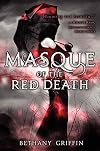
In this twist on Edgar Allen Poe's gothic short story, a wealthy teenaged girl who can afford a special mask to protect her from the plague that decimated humanity in the mid-1800s, falls in love, becomes caught up in a conspiracy to overthrow an oppressive government, and faces the threat of a new plague.Tags
Recommendations









Member Reviews
"In the meantime it was folly to grieve, or to think."
Inspired by Edgar Allen Poe's short story of the same name, Bethany Griffin imagines a world decimated by the plague in Masque of the Red Death. Seventeen-year-old Araby Worth knows too well the horrors of the Weeping Sickness; she lost her twin brother Finn to the disease several years ago, and still blames herself for his death. Their father, the scientist Dr. Worth, designed a mask that filters out the disease; but Araby accidentally claimed the prototype, which was meant for the frail Finn. The masks acclimate to their owners, so that sharing or trading is impossible. Before his father could make a second mask, Finn contracted the plague and died. Dr. Worth saved humanity, but show more was unable to keep his own family safe.
Araby now spends her days sleeping and her nights getting high in the Debauchery District. She considered suicide, once, but was rescued by her neighbor April. Now best friends, the two belong to the privileged class. High up in the penthouses of the Akkadian Towers, the two are sheltered from much of the poverty and violence below. And while they're lucky enough to afford masks - a whole collection of them, actually - no one in this world remains untouched by the Weeping Sickness.
While she has resigned herself to life, Araby has taken a vow to eschew those things her brother will never experience: a first kiss. Learning to swordfight. Traveling the world. As romance and political intrigue seep through the walls she's built around herself, Araby finds her resolve tested: first by Will, the dark and mysterious tester at the Debauchery Club, and then by April's brother Elliott, who has rebellion on the brain.
Elliot loves the city, and cannot bear to see it destroyed by his uncle, Prince Prospero. While the city crumbles, the Prince lives a life of luxury in his castle outside the city. The Prince has exploited the plague to serve his own political purposes; he has "made an industry out of death and disease." Through a little kidnapping and hostage-taking, the prince has placed nearly all of the city's scientists under his authoritative thumb. The filters to the masks are manufactured solely at the castle, so that the prince alone controls sickness and health. Likewise, when Dr. Worth sought to fix what he saw as a malfunction in the masks, the Prince prohibited him from doing so: "He was pleased that the poor couldn't steal them from the faces of the rich." Class warfare at its deadliest.
As if this landscape isn't dire enough, there's a new - even deadlier - sickness sweeping through the city: the Red Death. Not even the masks can keep it at bay.
Dark and macabre, Griffin's Masque of the Red Death is a worthy successor to Poe's "The Masque of the Red Death." (In many ways, the book can be read as a sequel to story, as Prince Pospero's infamous masquerade ball is just commencing as the book ends. The second installment of the duology, Dance of the Red Death, will presumably focus on the events of the ball.)
While the exact setting of the story remains vague, clues point to mid-nineteenth century Europe (western) or America (East coast). The guards brandish muskets; the women sport whale bone corsets, and traditionally favored long skirts (that is, until the plague necessitated the showing of skin for transparency and quick diagnoses); and coal-powered steam carriages and boats replaced horse-drawn carriages once all the horses succumbed to the plague. There's a little bit of a steampunk vibe here (particularly in Kent's flying machine), as well as shades of alternate history. It's a refreshing change of pace from the futuristic, post-apocalyptic science fiction I normally read.
A high school English teacher, Griffin's writing is masterful: rich in detail and feeling, lavish, and highly evocative. The juxtaposition of unimaginable wealth and opulence with crippling poverty and decay is palpable, like a vise squeezing your heart until it threatens to pop. And Araby (not to mention supporting characters April, Elliott, and Will) is a wonderfully complex character. We see her evolve from a twin racked by survivor's guilt to a more complete, whole person. Instead of denying herself happiness as recompense for Finn's death, she begins to open herself to the possibility that she should live for Finn, to honor his memory. Such a beautiful and heartwarming metamorphosis, this.
Masque of the Red Death is one of those books that just holds you captive and demands to be read. (Three hours past your bedtime? Uh-uh, sorry. Haven't eaten all day? Too bad. Gotta pee like a wild mustang? JUST A FEW MORE LINES OKAY!) Not only that, but it also inspired me to revisit Poe, which I haven't read in many years; quite possibly not since high school. I'm excited but not a little nervous for the sequel, which received mixed reviews. Fingers, crossed.
This one's definitely a must for: admirers of Edgar Allen Poe; fans of the Victorian era; those fascinated by plagues throughout history; readers who love great ya dystopias and imaginative world building.
http://www.easyvegan.info/2014/04/14/masque-of-the-red-death-by-bethany-griffin/ show less
Inspired by Edgar Allen Poe's short story of the same name, Bethany Griffin imagines a world decimated by the plague in Masque of the Red Death. Seventeen-year-old Araby Worth knows too well the horrors of the Weeping Sickness; she lost her twin brother Finn to the disease several years ago, and still blames herself for his death. Their father, the scientist Dr. Worth, designed a mask that filters out the disease; but Araby accidentally claimed the prototype, which was meant for the frail Finn. The masks acclimate to their owners, so that sharing or trading is impossible. Before his father could make a second mask, Finn contracted the plague and died. Dr. Worth saved humanity, but show more was unable to keep his own family safe.
Araby now spends her days sleeping and her nights getting high in the Debauchery District. She considered suicide, once, but was rescued by her neighbor April. Now best friends, the two belong to the privileged class. High up in the penthouses of the Akkadian Towers, the two are sheltered from much of the poverty and violence below. And while they're lucky enough to afford masks - a whole collection of them, actually - no one in this world remains untouched by the Weeping Sickness.
While she has resigned herself to life, Araby has taken a vow to eschew those things her brother will never experience: a first kiss. Learning to swordfight. Traveling the world. As romance and political intrigue seep through the walls she's built around herself, Araby finds her resolve tested: first by Will, the dark and mysterious tester at the Debauchery Club, and then by April's brother Elliott, who has rebellion on the brain.
Elliot loves the city, and cannot bear to see it destroyed by his uncle, Prince Prospero. While the city crumbles, the Prince lives a life of luxury in his castle outside the city. The Prince has exploited the plague to serve his own political purposes; he has "made an industry out of death and disease." Through a little kidnapping and hostage-taking, the prince has placed nearly all of the city's scientists under his authoritative thumb. The filters to the masks are manufactured solely at the castle, so that the prince alone controls sickness and health. Likewise, when Dr. Worth sought to fix what he saw as a malfunction in the masks, the Prince prohibited him from doing so: "He was pleased that the poor couldn't steal them from the faces of the rich." Class warfare at its deadliest.
As if this landscape isn't dire enough, there's a new - even deadlier - sickness sweeping through the city: the Red Death. Not even the masks can keep it at bay.
Dark and macabre, Griffin's Masque of the Red Death is a worthy successor to Poe's "The Masque of the Red Death." (In many ways, the book can be read as a sequel to story, as Prince Pospero's infamous masquerade ball is just commencing as the book ends. The second installment of the duology, Dance of the Red Death, will presumably focus on the events of the ball.)
While the exact setting of the story remains vague, clues point to mid-nineteenth century Europe (western) or America (East coast). The guards brandish muskets; the women sport whale bone corsets, and traditionally favored long skirts (that is, until the plague necessitated the showing of skin for transparency and quick diagnoses); and coal-powered steam carriages and boats replaced horse-drawn carriages once all the horses succumbed to the plague. There's a little bit of a steampunk vibe here (particularly in Kent's flying machine), as well as shades of alternate history. It's a refreshing change of pace from the futuristic, post-apocalyptic science fiction I normally read.
A high school English teacher, Griffin's writing is masterful: rich in detail and feeling, lavish, and highly evocative. The juxtaposition of unimaginable wealth and opulence with crippling poverty and decay is palpable, like a vise squeezing your heart until it threatens to pop. And Araby (not to mention supporting characters April, Elliott, and Will) is a wonderfully complex character. We see her evolve from a twin racked by survivor's guilt to a more complete, whole person. Instead of denying herself happiness as recompense for Finn's death, she begins to open herself to the possibility that she should live for Finn, to honor his memory. Such a beautiful and heartwarming metamorphosis, this.
Masque of the Red Death is one of those books that just holds you captive and demands to be read. (Three hours past your bedtime? Uh-uh, sorry. Haven't eaten all day? Too bad. Gotta pee like a wild mustang? JUST A FEW MORE LINES OKAY!) Not only that, but it also inspired me to revisit Poe, which I haven't read in many years; quite possibly not since high school. I'm excited but not a little nervous for the sequel, which received mixed reviews. Fingers, crossed.
This one's definitely a must for: admirers of Edgar Allen Poe; fans of the Victorian era; those fascinated by plagues throughout history; readers who love great ya dystopias and imaginative world building.
http://www.easyvegan.info/2014/04/14/masque-of-the-red-death-by-bethany-griffin/ show less
I’ve got some mixed feelings about Masque of the Red Death. On the one hand, it’s this beautiful, decaying steampunk world. This is a retelling, as you may have guessed, of Edgar Allan Poe’s “Masque of the Red Death” short story. It’s takes this devastating contagion and casts a spotlight on the masked faces of the selfish upper class dancing while the city burns, essentially.
But I think… I think I wanted this book to be something it wasn’t, which resulted in my explaining away a lot of it. Trying to make excuses. Trying to make it a better book than it was.
More than anything, I think Masque of the Red Death spent too much time telling me about the world Telling me Araby’s past. Telling me how she felt about Will or show more Elliott. This type of writing creates a bland palate, rather than richly painting a world that the reader can fall into. The richness of this plague-ridden steampunk work? There’s a lot of blank imagery I filled in with my own imagination. Even as we are told that there are mutant bats and the city is crumbling, we aren’t really shown the city.
Part of this is because we spend so much time in Araby’s thoughts. She’s not allowed to develop as a character and make a mark on the story, because she is constantly being held up as a resource to one of the other characters. Araby is less Araby and more… Finn’s sister. April’s friend. Elliott’s resource. Will’s provider. Her father’s daughter. Never is she left to develop herself and show what she wants or she feels, because Araby’s asides are caught in one of the flattest love triangles I’ve ever seen, and in memories of her family.
I’m not sure how best to address this greyscale presentation of the story. On one hand, things moved along just fine, but on the other hand… I kept asking myself, “Why?” Why did Elliott care about her, why was it so easy for her to do things. Why did people keep saving this otherwise unremarkable girl. Araby just… didn’t fit in this world. As a protagonist, she wasn’t very interesting, because she very rarely shared any opinions or passion.
While the trajectory of the story was fairly easy to guess, so little is revealed about it. It’s relatively cliche, although I wasn’t quite expecting the evolution of the Red Death itself. I felt like a lot more could have been developed to show the grotesquery of the world and that Araby herself could have reached for more information or to put things into motion. A lot of time was spent on Finn, the deceased twin who ultimately had no part to play in the story outside the impression he left on Araby and her parents. And while grief and mourning is important, his use never felt like that… just an obstacle to the love story. Ultimately, he ended up being an obstacle to the story in general, because he stole so much screen time for so little reward.
As a whole, Masque of the Red Death was an interesting mood read. There’s a volcano of potential waiting to erupt, edges of a story not quite refined enough to capture the reader. I love that this is a Poe retelling and I would read other ones like it, but not with any sense of urgency. It’s a good quick, casual read, but nothing to get overly excited about. One of those books you read, are fascinated by a few pretty passages, and then forget. show less
But I think… I think I wanted this book to be something it wasn’t, which resulted in my explaining away a lot of it. Trying to make excuses. Trying to make it a better book than it was.
More than anything, I think Masque of the Red Death spent too much time telling me about the world Telling me Araby’s past. Telling me how she felt about Will or show more Elliott. This type of writing creates a bland palate, rather than richly painting a world that the reader can fall into. The richness of this plague-ridden steampunk work? There’s a lot of blank imagery I filled in with my own imagination. Even as we are told that there are mutant bats and the city is crumbling, we aren’t really shown the city.
Part of this is because we spend so much time in Araby’s thoughts. She’s not allowed to develop as a character and make a mark on the story, because she is constantly being held up as a resource to one of the other characters. Araby is less Araby and more… Finn’s sister. April’s friend. Elliott’s resource. Will’s provider. Her father’s daughter. Never is she left to develop herself and show what she wants or she feels, because Araby’s asides are caught in one of the flattest love triangles I’ve ever seen, and in memories of her family.
I’m not sure how best to address this greyscale presentation of the story. On one hand, things moved along just fine, but on the other hand… I kept asking myself, “Why?” Why did Elliott care about her, why was it so easy for her to do things. Why did people keep saving this otherwise unremarkable girl. Araby just… didn’t fit in this world. As a protagonist, she wasn’t very interesting, because she very rarely shared any opinions or passion.
While the trajectory of the story was fairly easy to guess, so little is revealed about it. It’s relatively cliche, although I wasn’t quite expecting the evolution of the Red Death itself. I felt like a lot more could have been developed to show the grotesquery of the world and that Araby herself could have reached for more information or to put things into motion. A lot of time was spent on Finn, the deceased twin who ultimately had no part to play in the story outside the impression he left on Araby and her parents. And while grief and mourning is important, his use never felt like that… just an obstacle to the love story. Ultimately, he ended up being an obstacle to the story in general, because he stole so much screen time for so little reward.
As a whole, Masque of the Red Death was an interesting mood read. There’s a volcano of potential waiting to erupt, edges of a story not quite refined enough to capture the reader. I love that this is a Poe retelling and I would read other ones like it, but not with any sense of urgency. It’s a good quick, casual read, but nothing to get overly excited about. One of those books you read, are fascinated by a few pretty passages, and then forget. show less
Masque of the Red Death is based on Edgar Allan Poe’s short story of the same name, in which a group of wealthy individuals seclude themselves at masquerade in an attempt to evade a mysterious plague, but ultimately fail. In Bethany Griffin’s novel, this masquerade ball is replaced by the Debauchery District, where the wealthy residents of a crumbling city seek escapism from pervasive death and decay. Here masks are not worn merely as ornament, but as respirators to prevent inhalation of the disease.
Among these wealthy club patrons is Araby Worth, whose father invented the titular masks. Araby can be a frustrating protagonist, especially at the beginning of the story. She is clearly suffering with depression and trauma, which is show more actually handled very well here. While this does explain many of her self-destructive actions, others seem a result of pure thoughtlessness and stupidity. Araby takes drugs from a stranger without knowing the contents, allows her friend to go off on her own at the club, and aids a purported revolutionary without questioning anything about him. She is well developed, however; characterization is definitely a strong point of the novel.
There is a love triangle, but it too is very well done and surprisingly tolerable. First is Will, a club employee who works to support his two younger siblings. Rather than going from zero to “true love,” Will and Araby act on their mutual feelings by showing they care for each other. Will looks after Araby following one of her self-destructive nights at the club, and Araby helps Will care for his younger brother and sister. Will’s family also highlights the inequality between rich and poor in this society, another thing the novel does well.
In the other corner is Elliott, brother of Araby’s friend and club partner April. Elliott is an idealist who hopes to reform society by rebelling against his uncle, the mysterious Prince Prospero. While Araby admires his ideals as well as feels attraction toward him, she recognizes he can be cold, calculating, and a bit of a jerk. Both Elliott and Will are well-drawn characters with good and bad points, and Araby’s mixed feelings come off as genuine.
The biggest weakness of the novel lies in the world building. The city is unnamed, and the setting is hard to pin down in both time and location. Characters travel by steam engine, yet have skyscrapers, elevators, air filter systems, and a clear understanding of disease. The handling of the disease itself is unfortunately a big problem; if the plague is as deadly and airborne as depicted, a mask alone will probably offer little protection. The wealthy also tend to expose their skin in an attempt to show their lack of disease lesions, which is of course one of the stupider things to do when disease is rampant. People are tested for infection upon entry into a building, but are in no way disinfected or disinfested in any way. Just because one is not sick does not mean he or she is not carrying any pathogens.
There is lots of promise in the political intrigue and family drama, as well as in the well drawn characters. While it is not made clear how this world became the way it is, there are hints toward answers to come. Here’s hoping Bethany Griffin delivers in the sequel.
Also at http://lisally.wordpress.com/
A review copy was provided through Goodreads.com First Reads program. show less
Among these wealthy club patrons is Araby Worth, whose father invented the titular masks. Araby can be a frustrating protagonist, especially at the beginning of the story. She is clearly suffering with depression and trauma, which is show more actually handled very well here. While this does explain many of her self-destructive actions, others seem a result of pure thoughtlessness and stupidity. Araby takes drugs from a stranger without knowing the contents, allows her friend to go off on her own at the club, and aids a purported revolutionary without questioning anything about him. She is well developed, however; characterization is definitely a strong point of the novel.
There is a love triangle, but it too is very well done and surprisingly tolerable. First is Will, a club employee who works to support his two younger siblings. Rather than going from zero to “true love,” Will and Araby act on their mutual feelings by showing they care for each other. Will looks after Araby following one of her self-destructive nights at the club, and Araby helps Will care for his younger brother and sister. Will’s family also highlights the inequality between rich and poor in this society, another thing the novel does well.
In the other corner is Elliott, brother of Araby’s friend and club partner April. Elliott is an idealist who hopes to reform society by rebelling against his uncle, the mysterious Prince Prospero. While Araby admires his ideals as well as feels attraction toward him, she recognizes he can be cold, calculating, and a bit of a jerk. Both Elliott and Will are well-drawn characters with good and bad points, and Araby’s mixed feelings come off as genuine.
The biggest weakness of the novel lies in the world building. The city is unnamed, and the setting is hard to pin down in both time and location. Characters travel by steam engine, yet have skyscrapers, elevators, air filter systems, and a clear understanding of disease. The handling of the disease itself is unfortunately a big problem; if the plague is as deadly and airborne as depicted, a mask alone will probably offer little protection. The wealthy also tend to expose their skin in an attempt to show their lack of disease lesions, which is of course one of the stupider things to do when disease is rampant. People are tested for infection upon entry into a building, but are in no way disinfected or disinfested in any way. Just because one is not sick does not mean he or she is not carrying any pathogens.
There is lots of promise in the political intrigue and family drama, as well as in the well drawn characters. While it is not made clear how this world became the way it is, there are hints toward answers to come. Here’s hoping Bethany Griffin delivers in the sequel.
Also at http://lisally.wordpress.com/
A review copy was provided through Goodreads.com First Reads program. show less
I really enjoyed this book. I was a bit cautious because any time there is a title with the word “death” in it I become aware that death just might occur. It does, but thankfully not to any of our main characters. It starts off following our near suicidal, drug addicted heroine (he he) into a club with her best friend where she promptly takes a drug called oblivion and passes out. I know many people probably can’t stand Araby because they’ll see her put in that same role of whiny self pitying girl and while I see where they are coming from in putting her in that place, I think they are missing what else she has to offer. I found her utterly fascinating. The bond between twins is profound (or so I’ve heard) and to lose a twin show more is like losing half of yourself and I can completely see why she denies herself things he wouldn’t experience and blame herself for what happened. The event of her brother’s death devastated the family and alienated her from her parents in a way that seemed completely believable to me. I know she was weak in the beginning, but I enjoyed seeing her grow and fight with her addiction to stay clean in order to keep a clear head while trying to help the needy people. I loved her compassion.
Now for the guys…..I’ll go ahead and state now that I am Team Will. Yes, I know he does something unforgivable, but he has a reason that even our heroine can’t argue with. Plus he is a change from the typical pushy, high-handed male characters that pervade YA right now ::coughs:: Edward Cullen ::clears throat:: He’s sweet and caring and reminds me a bit of Alec from Forbidden. Elliot on the other hand was cocky, high-handed, insincere, and completely loveable. Though I prefer Will, I can definitely see Elliott’s appeal. I really liked him as a character, I just think Araby belongs with Will. That’s how this series is going to end dammit!
The world is also amazing. I’ve said before that I’ve become obsessed with dystopian novels and that still holds true. I loved reading about this insane world where a mystery plague had killed all the horses and a great many people. A world where the act of kissing was the most intimate thing possible because that required removing your mask. A steampunk dystopian love story with rebellion and a bit of humor, what more do I need? Oh and the dress. Holy fuck the dresses.
I worship Bethany Griffin for describing these amazing garments in detail. Much like our world, it is the norm to show as much skin as possible, only this fashion craze is inspired by the desire to show the world that your skin is free of the puss sores and bruises that are signs of the deadly plague. The dresses are pretty much like this, take and 18th century dress, remove the petticoats and take scissors to the bottom and cut it up (in jagged, uneven lines) to above the knee. Or at least, that was my interpretation of them. Either way, I bow at your feet.
The writing was well done and I couldn’t put it down. I literally started this book at 8 one night just to get started and stayed up until well past midnight until I was literally falling asleep on it trying to finish it and rushed home from work the next day to get back to it. I love it so much.
Complaints…um, well it’s the dreaded love triangle, but it wasn’t as bad as some. It also has a horrid cliffhanger, but I guess I’m becoming immune to the anger that normally follows them. Beyond those 2 hang-ups, it was amazing and you should go read it now. Seriously walk away from your laptop, get in your car, drive to your local bookstore, and buy it now….or your local library if that have it. show less
Now for the guys…..I’ll go ahead and state now that I am Team Will. Yes, I know he does something unforgivable, but he has a reason that even our heroine can’t argue with. Plus he is a change from the typical pushy, high-handed male characters that pervade YA right now ::coughs:: Edward Cullen ::clears throat:: He’s sweet and caring and reminds me a bit of Alec from Forbidden. Elliot on the other hand was cocky, high-handed, insincere, and completely loveable. Though I prefer Will, I can definitely see Elliott’s appeal. I really liked him as a character, I just think Araby belongs with Will. That’s how this series is going to end dammit!
The world is also amazing. I’ve said before that I’ve become obsessed with dystopian novels and that still holds true. I loved reading about this insane world where a mystery plague had killed all the horses and a great many people. A world where the act of kissing was the most intimate thing possible because that required removing your mask. A steampunk dystopian love story with rebellion and a bit of humor, what more do I need? Oh and the dress. Holy fuck the dresses.
I worship Bethany Griffin for describing these amazing garments in detail. Much like our world, it is the norm to show as much skin as possible, only this fashion craze is inspired by the desire to show the world that your skin is free of the puss sores and bruises that are signs of the deadly plague. The dresses are pretty much like this, take and 18th century dress, remove the petticoats and take scissors to the bottom and cut it up (in jagged, uneven lines) to above the knee. Or at least, that was my interpretation of them. Either way, I bow at your feet.
The writing was well done and I couldn’t put it down. I literally started this book at 8 one night just to get started and stayed up until well past midnight until I was literally falling asleep on it trying to finish it and rushed home from work the next day to get back to it. I love it so much.
Complaints…um, well it’s the dreaded love triangle, but it wasn’t as bad as some. It also has a horrid cliffhanger, but I guess I’m becoming immune to the anger that normally follows them. Beyond those 2 hang-ups, it was amazing and you should go read it now. Seriously walk away from your laptop, get in your car, drive to your local bookstore, and buy it now….or your local library if that have it. show less
Dear Every Author Who Wants to Write a Love Triangle: Read this book. Learn. This is how a love triangle's SUPPOSED to work.
So first off, we'll talk about Araby who has one of the coolest names I've seen in a book in a while. I really liked Araby. She was a good narrator and she did develop a bit. I think I would've liked her more if she'd been shallower in the beginning and was able to develop more, but I liked her. She kept the story going and she was interesting to read about.
But really, my favorite part of Masque of the Red Death is the ROMANCE. Sweet Jesus guys, do you know how excited a real, good love triangle makes me? Because, let's be honest, people claim there's a love triangle in like 75% of the YA books but there's clearly show more NOT. We all know who they girl's going to end up with, whether it be Bella and Edward or Clary and Jace or Elizabeth and Darcy or Katniss and Peeta. No. NOT love triangles. The answer is clear from the beginning, no matter who you favor, and you're just going to have to accept it. Obviously, those books aren't real love triangles, no matter what ANYONE TRIES TO TELL YOU. But Bethany Griffin does it RIGHT. Elliott and Will are both good choices. Araby has feelings for both of them and they both have feelings with her and I really don't know who she's going to end up with. I don't know who I want her to end up with. And that, my dear friends, is the best love triangle you can ask for.
So...yeah.
The rest of the story? Did you read that summary and read about how fan-effing-tastic it sounds? Masque of the Red Death does not disappoint. The world is really well built and fascinating. It's DYSTOPIAN and HISTORICAL FICTION and it makes my inner fangirl type ALL THE CAPS LOCK because it's so well done and fascinating and original and slkghjelkhjslhg.
Bethany Griffin is a fantastic author with a story like nothing I've ever read and the swooning romance and the two equally yummy and wonderful boys and a main character who's strong and different and guys...guys. Do not ignore this book, do not ignore this author. A gorgeous cover and a fantastic summary are just the beginning. show less
So first off, we'll talk about Araby who has one of the coolest names I've seen in a book in a while. I really liked Araby. She was a good narrator and she did develop a bit. I think I would've liked her more if she'd been shallower in the beginning and was able to develop more, but I liked her. She kept the story going and she was interesting to read about.
But really, my favorite part of Masque of the Red Death is the ROMANCE. Sweet Jesus guys, do you know how excited a real, good love triangle makes me? Because, let's be honest, people claim there's a love triangle in like 75% of the YA books but there's clearly show more NOT. We all know who they girl's going to end up with, whether it be Bella and Edward or Clary and Jace or Elizabeth and Darcy or Katniss and Peeta. No. NOT love triangles. The answer is clear from the beginning, no matter who you favor, and you're just going to have to accept it. Obviously, those books aren't real love triangles, no matter what ANYONE TRIES TO TELL YOU. But Bethany Griffin does it RIGHT. Elliott and Will are both good choices. Araby has feelings for both of them and they both have feelings with her and I really don't know who she's going to end up with. I don't know who I want her to end up with. And that, my dear friends, is the best love triangle you can ask for.
So...yeah.
The rest of the story? Did you read that summary and read about how fan-effing-tastic it sounds? Masque of the Red Death does not disappoint. The world is really well built and fascinating. It's DYSTOPIAN and HISTORICAL FICTION and it makes my inner fangirl type ALL THE CAPS LOCK because it's so well done and fascinating and original and slkghjelkhjslhg.
Bethany Griffin is a fantastic author with a story like nothing I've ever read and the swooning romance and the two equally yummy and wonderful boys and a main character who's strong and different and guys...guys. Do not ignore this book, do not ignore this author. A gorgeous cover and a fantastic summary are just the beginning. show less
So I had heard a lot of great things about this book for so long and that cover was so amazing I bought it. Thing is, it joined all the other books I bought and sat on my shelf for awhile. Then Halloween came along and I knew I had to read this every book to get in the spirit. I'm so glad I did because I really enjoyed this!
I'm not sure how many of the people who read this have read the original story [b:The Masque of the Red Death|204779|The Masque of the Red Death|Edgar Allan Poe|https://d202m5krfqbpi5.cloudfront.net/books/1172667858s/204779.jpg|15568908] by [a:Edgar Allan Poe|4624490|Edgar Allan Poe|https://d202m5krfqbpi5.cloudfront.net/authors/1315307900p2/4624490.jpg], but I strong recommend you do. It's not that you'd have a hard show more time understanding this novel otherwise, but I just think it adds to the story. I'm impressed by how the author wove the original story in and stretched it to cover two books. The main "party" which was my favorite part of the book is the majority of the second book, or so I hear, so I wasn't sure how the pacing would be but it was flawless.
The only reason I gave this four stars was because in the beginning I had a hard time with the MC attitude and her drug use. The drug use was unexpected and difficult in the beginning. I did appreciate her growing from it though. I know everyone has something they prefer not o read about, and drug use is mine. There is a personal/family issue as the reason, but through no fault of the author I almost abandoned this book because I didn't know how heavy the drug use would be. Fortunately it contained very little substance abuse/addict behavior. Just enough, actually as any more and I would've abandoned it.
I love how I completely changed teams from Will to Elliott by the end. Although I'm not a fan of love triangles, this one wasn't totally barf-worthy.. I can't wait to read the sequel!
You need to read this book! It was a lot of fun and definitely something different from what I've been reading in YA lately. One of the best retellings I've ever read. show less
I'm not sure how many of the people who read this have read the original story [b:The Masque of the Red Death|204779|The Masque of the Red Death|Edgar Allan Poe|https://d202m5krfqbpi5.cloudfront.net/books/1172667858s/204779.jpg|15568908] by [a:Edgar Allan Poe|4624490|Edgar Allan Poe|https://d202m5krfqbpi5.cloudfront.net/authors/1315307900p2/4624490.jpg], but I strong recommend you do. It's not that you'd have a hard show more time understanding this novel otherwise, but I just think it adds to the story. I'm impressed by how the author wove the original story in and stretched it to cover two books. The main "party" which was my favorite part of the book is the majority of the second book, or so I hear, so I wasn't sure how the pacing would be but it was flawless.
The only reason I gave this four stars was because in the beginning I had a hard time with the MC attitude and her drug use. The drug use was unexpected and difficult in the beginning. I did appreciate her growing from it though. I know everyone has something they prefer not o read about, and drug use is mine. There is a personal/family issue as the reason, but through no fault of the author I almost abandoned this book because I didn't know how heavy the drug use would be. Fortunately it contained very little substance abuse/addict behavior. Just enough, actually as any more and I would've abandoned it.
I love how I completely changed teams from Will to Elliott by the end. Although I'm not a fan of love triangles, this one wasn't totally barf-worthy.. I can't wait to read the sequel!
You need to read this book! It was a lot of fun and definitely something different from what I've been reading in YA lately. One of the best retellings I've ever read. show less
The world in Masque of the Red Death is being destroyed by a plague called the Weeping Sickness. Because the air is foul and contaminated, everyone who can afford one wears a mask that covers half his/her face to keep out the sickness. Araby Worth lives in a pastiche of New Orleans and Paris in the fin de siecle. There are carriages and corsets, but this is no Gilded Age. The sickness killed the horses, so everyone relies on steam to power their carriages and machines (yes, this is a steampunk novel). In order to prove a person doesn't have the sickness, tattered clothing exposing as much skin as possible is worn. Inexplicably, dramatic glittery makeup and tattoos abound, despite the pseudo-historical premise. Young women of the upper show more classes go clubbing and inject drugs to pass the time and forget the horror and death all around them.
Araby, the daughter of the scientist who created the masks, goes where she wants whenever she wishes. She spends her evenings at the Debauchery Club with her friend April, niece of Prince Prospero (the villain in this tale). Though the people suffer, the Prince does nothing but send out his soldiers, killing any infected persons. Prospero feasts in his castle, safely behind his walls (this is where the Poe influence comes in). One night, the bouncer at the club finds Araby in a drugged stupor, and decides to help her. The two grow close over the story, as Araby finally finds something to goad her out of her sadness and self-hatred. Since Araby's brother died of the sickness, she has had nothing to live for, preferring to wander through existence in a drug-induced haze. The bouncer, Will, has two younger siblings for whom Araby begins to care, and she tries to help the family, who live in the lower city, the disease-ridden, dangerous part of the city.
But what Young Adult novel is complete without a love triangle? Will pursues Araby, but so does Eliott, the nephew of the Prince (April's brother). Eliott wants to use Araby to get to her father's inventions and medicines, as Eliott is planning a rebellion against the Prince. Araby is just bored and gullible enough to fall in with Eliott's plans. I should probably mention that Eliott is also Araby's drug dealer, so they have some prior acquaintance. Helping Eliott endangers Araby, who now becomes a target of the Prince and of the rival rebel faction gaining power in the city. And to make things worse, a new plague is hitting the city, the Red Death (more Poe!). Araby will have to decide whether to become a part of the world and accept her place in it, or die screaming.
There is some interesting world building in this novel: the city, the sickness, the steampunk elements. For some reason, turn-of-the-century girls have become bright-haired goths, and the young men are tattooed rakes. No one is chaperoned, and despite the terrible sickness killing people daily (publicly), parents don't seem to take much care of their children. Young people do what they please, where they please, mostly at clubs, and stagger home drunk at dawn. This doesn't seem like realistic behavior, but hey, it's alternate history. It takes time for the city to come alive for the reader - the author slowly builds atmosphere and effect throughout the 336 pages, finally creating a vivid world by the end of the first installment. The action sequences are entertaining, and the dystopia/Poe mashup is an intriguing concept.
The characterization, however, falls short of the novel's promise. Araby is a zombie for much of the novel, she's a drug addict, and she's very naive. Dangerously naive. She has to be rescued several times by other characters with more common sense. Araby allows herself to become a pawn in Eliott's rebellion, with little benefit. And for someone who spends her nights in Debauchery, she's remarkably bland. She is neither fun-loving nor exciting. She's more cautious than her friend April, but both do remarkably stupid things. While some of her motivation is provided (the dead brother), the rest of Araby is a void.
Will is equally vague. All we learn about him is that he loves his family, and he's caring enough not to leave Araby passed out at the club. We know little else about him. That said, he's far more pleasant than Eliott. Love interest #2 is rakish, manipulative, cold, and (as I've pointed out), a drug dealer. He fancies himself a rebel poet, and uses Araby to achieve his ends. Eliott is one of those alpha male aggressor heroes that populate romance novels and many young adult books. He's pushy sexually, and he alienates Araby from her family. He's not a very nice person, but he's so broody and handsome that we're not supposed to care. Eliott fully admits that while he is fond of Araby, he would not hesitate to sacrifice her for his cause. Somehow Araby finds all this compelling, so she goes along with it, and we're treated to another 200 pages of her conflicted feelings for the two men.
The novel would have been stronger with more supporting characters and fewer potential lovers. All young adult novels these days seem to require 3 books and 2 love interests, but the formula is getting really tired. Hopefully Araby will decide to become a real character in the next installment, rather than be pulled along by the fellas. By the end of the first volume there are several potential supporting characters introduced, and they may have bigger roles in subsequent volumes. show less
Araby, the daughter of the scientist who created the masks, goes where she wants whenever she wishes. She spends her evenings at the Debauchery Club with her friend April, niece of Prince Prospero (the villain in this tale). Though the people suffer, the Prince does nothing but send out his soldiers, killing any infected persons. Prospero feasts in his castle, safely behind his walls (this is where the Poe influence comes in). One night, the bouncer at the club finds Araby in a drugged stupor, and decides to help her. The two grow close over the story, as Araby finally finds something to goad her out of her sadness and self-hatred. Since Araby's brother died of the sickness, she has had nothing to live for, preferring to wander through existence in a drug-induced haze. The bouncer, Will, has two younger siblings for whom Araby begins to care, and she tries to help the family, who live in the lower city, the disease-ridden, dangerous part of the city.
But what Young Adult novel is complete without a love triangle? Will pursues Araby, but so does Eliott, the nephew of the Prince (April's brother). Eliott wants to use Araby to get to her father's inventions and medicines, as Eliott is planning a rebellion against the Prince. Araby is just bored and gullible enough to fall in with Eliott's plans. I should probably mention that Eliott is also Araby's drug dealer, so they have some prior acquaintance. Helping Eliott endangers Araby, who now becomes a target of the Prince and of the rival rebel faction gaining power in the city. And to make things worse, a new plague is hitting the city, the Red Death (more Poe!). Araby will have to decide whether to become a part of the world and accept her place in it, or die screaming.
There is some interesting world building in this novel: the city, the sickness, the steampunk elements. For some reason, turn-of-the-century girls have become bright-haired goths, and the young men are tattooed rakes. No one is chaperoned, and despite the terrible sickness killing people daily (publicly), parents don't seem to take much care of their children. Young people do what they please, where they please, mostly at clubs, and stagger home drunk at dawn. This doesn't seem like realistic behavior, but hey, it's alternate history. It takes time for the city to come alive for the reader - the author slowly builds atmosphere and effect throughout the 336 pages, finally creating a vivid world by the end of the first installment. The action sequences are entertaining, and the dystopia/Poe mashup is an intriguing concept.
The characterization, however, falls short of the novel's promise. Araby is a zombie for much of the novel, she's a drug addict, and she's very naive. Dangerously naive. She has to be rescued several times by other characters with more common sense. Araby allows herself to become a pawn in Eliott's rebellion, with little benefit. And for someone who spends her nights in Debauchery, she's remarkably bland. She is neither fun-loving nor exciting. She's more cautious than her friend April, but both do remarkably stupid things. While some of her motivation is provided (the dead brother), the rest of Araby is a void.
Will is equally vague. All we learn about him is that he loves his family, and he's caring enough not to leave Araby passed out at the club. We know little else about him. That said, he's far more pleasant than Eliott. Love interest #2 is rakish, manipulative, cold, and (as I've pointed out), a drug dealer. He fancies himself a rebel poet, and uses Araby to achieve his ends. Eliott is one of those alpha male aggressor heroes that populate romance novels and many young adult books. He's pushy sexually, and he alienates Araby from her family. He's not a very nice person, but he's so broody and handsome that we're not supposed to care. Eliott fully admits that while he is fond of Araby, he would not hesitate to sacrifice her for his cause. Somehow Araby finds all this compelling, so she goes along with it, and we're treated to another 200 pages of her conflicted feelings for the two men.
The novel would have been stronger with more supporting characters and fewer potential lovers. All young adult novels these days seem to require 3 books and 2 love interests, but the formula is getting really tired. Hopefully Araby will decide to become a real character in the next installment, rather than be pulled along by the fellas. By the end of the first volume there are several potential supporting characters introduced, and they may have bigger roles in subsequent volumes. show less
Members
- Recently Added By
Lists

Books Read in 2017
4,249 works; 129 members
Author Information

5 Works 1,442 Members
Series

Common Knowledge
- Original publication date
- 2012-04-24
- Publisher's editor
- Mihalick, Martha
Classifications
Statistics
- Members
- 757
- Popularity
- 36,941
- Reviews
- 101
- Rating
- (3.64)
- Languages
- English, German
- Media
- Paper, Audiobook, Ebook
- ISBNs
- 17
- ASINs
- 2