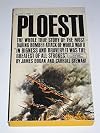
Ploesti: The Great Ground-Air Battle of 1 August 1943
by James Dugan, Carroll Stewart
On This Page
Description
On August 1, 1943, an enormous armada of America B-24 Liberator bombers roared at nearly treetop level over the peaceful farms and villages of Romania. This mission was Operation Tidal Wave. Its target'the taproot of German might,? Hitler's giant oil refineries at Ploesti. Hundreds of U.S. airmen had volunteered for the mission despite warnings that half might not return. In thirty minutes, more firepower was exchanged than in two Gettysburgs, and five men earned the Medal of Honor. Ploesti show more presents a vivid reconstruction of a dramatic and controversial mission. show lessTags
Recommendations
















Member Recommendations

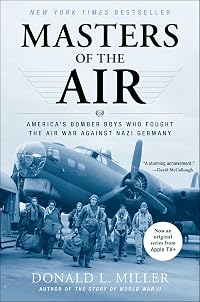
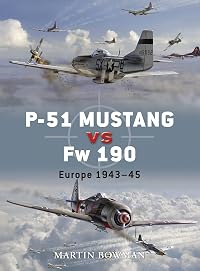
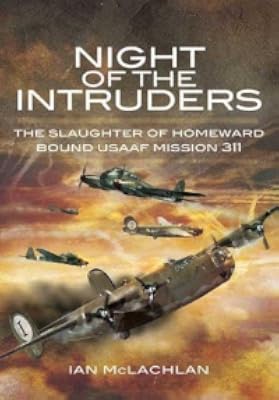
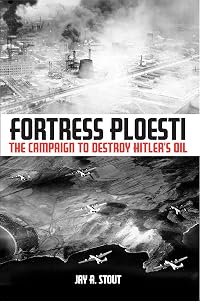
alco261 Black Sunday, Ploesti by Hill and Ploesti by Dugan and Stewart compliment each other.
Member Reviews
Ploesti is the history of the 1 August 1943 ground-air battle in the skies over the Romanian oil fields. Both of the authors were involved with the units that took place in the battle at the time it occurred. Dugan was with the 8th Air Force Photo & Newsreel Section and Stewart was a public relations officer with the Traveling Circus. Both men knew many of the individuals who flew that day and in the years following the action they circulated questionnaires written in English and German as well as conducted hundreds of personal interviews with the survivors. The end result is a book that does an excellent job of conveying to the reader an understanding of the battle from the abstract level of the planning to the assembly and training of show more the units designated to execute to raid to the actions of single planes and the personnel who manned and cared for them.
The book traces the origin of the idea of the raid from the first attempts of the Halverson mission in 1942 (a thirteen plane raid – 12 made the target – none lost – damage minor) to the concept of a single large strike to destroy the refineries and deny oil to the Reich. After describing the tactical situation the book shifts its focus to the low level training (repeated practice runs with wooden bombs on a plat of the refinery complex laid out on a plateau in the desert south of Benghazi). An entire chapter is devoted to the preparations immediately before and leading up to the day of battle.
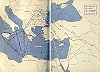
The chapters that follow describe the unit-by-unit liftoff, the inbound flight, the loss of the lead navigator in the bomber “Wongo Wongo” , landfall, the wrong turn at Targoviste, and then a chapter describing each of the separate attacks on the various refineries in the Ploesti area. The chapters following the attack details unit and individual plane/personnel experiences on the return flight and the plight and misadventures of those raiders who became POW’s. The next to last chapter gives a brief description of the multiple high level raids against Ploesti that commenced in 1944 and the last chapter describes the liberation of the POW’s from the 1943 raid.
I think the book has stood the test of time and, for me, it reads as well today as it did when I first read it back in 1962. It is worth noting that it was the spark that ignited author Michael Hill’s interest in the battle. That interest found expression in his two books – The Desert Rats: The 98th Bomb Group and the August 1943 Ploesti Raid and Black Sunday Ploesti. (Hill makes specific reference to this book in the forward to Black Sunday Ploesti).
If you have any interest in the history of aerial combat I think you will find this book a worthwhile read. show less
The book traces the origin of the idea of the raid from the first attempts of the Halverson mission in 1942 (a thirteen plane raid – 12 made the target – none lost – damage minor) to the concept of a single large strike to destroy the refineries and deny oil to the Reich. After describing the tactical situation the book shifts its focus to the low level training (repeated practice runs with wooden bombs on a plat of the refinery complex laid out on a plateau in the desert south of Benghazi). An entire chapter is devoted to the preparations immediately before and leading up to the day of battle.
The chapters that follow describe the unit-by-unit liftoff, the inbound flight, the loss of the lead navigator in the bomber “Wongo Wongo” , landfall, the wrong turn at Targoviste, and then a chapter describing each of the separate attacks on the various refineries in the Ploesti area. The chapters following the attack details unit and individual plane/personnel experiences on the return flight and the plight and misadventures of those raiders who became POW’s. The next to last chapter gives a brief description of the multiple high level raids against Ploesti that commenced in 1944 and the last chapter describes the liberation of the POW’s from the 1943 raid.
I think the book has stood the test of time and, for me, it reads as well today as it did when I first read it back in 1962. It is worth noting that it was the spark that ignited author Michael Hill’s interest in the battle. That interest found expression in his two books – The Desert Rats: The 98th Bomb Group and the August 1943 Ploesti Raid and Black Sunday Ploesti. (Hill makes specific reference to this book in the forward to Black Sunday Ploesti).
If you have any interest in the history of aerial combat I think you will find this book a worthwhile read. show less
Ratings
Members
- Recently Added By
Author Information
9+ Works 526 Members
4 Works 89 Members
Common Knowledge
- Original publication date
- 1962; 1962 (First Printing ∙ by Random House ∙ Inc. ∙ New York) (First Printing ∙ by Random House ∙ Inc. ∙ New York)
- People/Characters
- B-24 bomber
- Important places
- Ploesti, Romania
- Important events
- World War II; Ploesti Raid ( 1943-08-01)
- Epigraph
- He who owns the oil will own the world, for he will rule the sea by means of the heavy oils, the air by means of the ultra-refined oils, and the land by means of petrol and the illumination oils. And, in addition to these, he... (show all) will rule his fellow men in an economic sense, by reason of the fantastic wealth he will derive from the oil. Henri Berenger, 1921
In Tsarist times a game of courage called Kukushka was played late at night in garrisons in Caucasia and Siberia. Two officers stood in adjoining rooms with an open door between. One had a pistol, the other had not. At a sign... (show all)al the lights were extinguished. The unarmed player opened the contest by dashing toward the door, yelling "Kukushka!" The rules permitted him to go through it straight or diagonally, left or right, crouching or leaping. His opponet's problem was to shoot him as he came through the door. - Othmar Gurtner, The Myth of the Eigerwald - First words
- During the middle years of World War II the United States Army Air Forces carried on a determined and bloody bombing offensive against on of the most vital, distant and deadly industrial targets in Hitler's Europe, the oil re... (show all)fineries at a city called Ploesti, in the kingdom of Romania. The campaign against Ploesti, which Winston Churchill called "the taproot of German might," ...
- Quotations
- From the book flap, 1962 edition:
On August 1, 1943, a roaring armada of American Liberator bombers swept low across the peaceful farms and villages of Romania. They had penetrated more than a thousand miles into enemy te... (show all)rritory without a fighter escort. Their target was the "Taproot of German Might"--Hitler's giant oil refineries at Ploesti.
Hundreds of U.S. airmen volunteered for the mission despite warnings that half might not return.
Flying lower than the refineries' smokestacks, they attacked through flames and explosions which often engulfed their planes, for Ploesti boasted the heaviest anti-aircraft concentration in Europe.
In thirty minutes, more fire power was exchanged than in two Gettysburgs, and five men won the Medal of Honor.
The big bombers which came through were blackened by oil smoke. Some even had cornstalks sticking in their bomb-bay doors. The crippled ships were engaged in three major air battles trying to fight their way home to Africa.
This vivid and masterful reconstruction of the great mission--from the day it was first conceived to its unique aftermath--is based on hundreds of interviews as well as unpublished diaries by both Americans and Germans. The Ploesti low-level raid was the best-prepared mission in the history of aerial warfare, yet this book reveals secrets of the German defenses and events hitherto unknown even by U.S. Intelligence.
Here, too, is the complete story of what the participants went through in the contagion of heroism that was Ploesti--from the ex-missionary who dropped the first bomb, to the German who set about disarming live bombs while the battle still raged.
The reader will meet "the air defense genius of the war"--until now almost entirely unknown; a princess who saved a downed air crew, and a queen who protected a fallen Texan; a gunner who made a 75-foot jump from a falling plane and lived; ten "combat virgins" who flew five miles enveloped in flame to crash their target; and he will also learn of the fantastic events that befell on hundred Americans who became prisoners of war.
Ploesti is the definitive story, told in terms of the people involved, of the most fascinating and controversial air battle in World War II.
The above text is NOT a quotation from the book itself.
In the morning the Bulgars brought in a burned man with bandaged head and hands. He was Stanley Horine, the tail gunner from Prince Charming, who had reported the plight of The Witch, bringing the gallant Captain Gunn back to... (show all) his doom. somehow Horine had bailed out of a ship spiraling down in flames. He was the only survivor. In the crew of many a crashed plane there was this tithe of one living man.
K for King, with an engine afire, hedgehopped through twenty separate fighter attacks. Flight engineer William J. Murphy, Jr., cut off the gas on the flaming engine, pilot Miller feathered the prop, co-pilot Hodge recovered t... (show all)he ship, and tail gunner C.J. Ducote dueled warily with a Romanian plane that clung to him like a glider on a short tow. The Gypsy would not break off until he had learned how to deal with a bomber that refused to come off the ground and fight. The Romanian crept closer. When he came within a hundred yards, Ducote buried fifty rounds in him. The Romanian resorted to the textbook for high fighting. He peeled off, presented his armored belly to the rear gunner, and dived. "The next instant the woods for three blocks around were on fire," said Ducote. - Last words
- (Click to show. Warning: May contain spoilers.)He smiled and said, "At no time did the Germans ever question me about nuclear fission."
- Blurbers
- Toland, John; Simpson, Albert F.
Classifications
Statistics
- Members
- 90
- Popularity
- 356,010
- Reviews
- 1
- Rating
- (4.33)
- Languages
- English, French, Italian
- Media
- Paper
- ISBNs
- 3
- ASINs
- 8