
Spiritual Quests: The Art and Craft of Religious Writing
by William Knowlton Zinsser
The Writer's Craft
On This Page
Description
Eight American writers from different points of the religious compass discuss how their work is nourished by spiritual concerns and how they try to use those lessons and intuitions in their literature and poetry. The contributors are David Bradley, Frederick Buechner, Allen Ginsberg, Mary Gordon, Hillel Levine, Hugh Nissenson, Jaroslav Pelikan, and Patricia Harnpl. Together, as William Zinsser notes in his introduction, these writers are on "a pilgrimage to find the source of their faith as show more individuals and their strength as artists". show lessTags
Recommendations







Member Reviews
This book is the manicured transcript of an event in New York City in the 1980s. This seminar featured six prominent writers influenced by different faith traditions. They spoke on how their religious beliefs/practices changed the way they wrote. By commenting on a practice as timeless as writing, this account captures much of religious writers’ sentiments towards their craft.
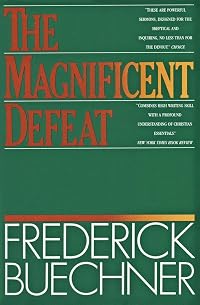
All of these six speeches were interesting. They covered faith traditions as disparate as Roman Catholicism, Protestantism, Christian Orthodoxy, African-American Methodism, Judaism, and meditative religions. I especially enjoyed the thoughts shared by two of my literary heroes, Frederick Buechner and Jaroslav Pelikan. I will share my reflections on their show more reflections below.
Buechner has published in the genres of fiction, theology, and memoir. His clarity at seeing religious practice in life captured my attention as a sixteen year old. I especially appreciate his honesty and his circuitous optimism. He is obviously well schooled, and having converted as an adult, he approaches faith as a peculiarity. Faith always seems like an external object to him and something that he wants to carefully bring evermore within. To borrow phraseology from another author, he is always a resident alien in the Christian world.
Pelikan is a well-known scholar of early Christian history. He writes with precision and conveys his message from his erudition. In this work, he describes the autobiographical nature of scholarship in the lives of Augustine of Hippo, John Henry Newman, and Boethius. Of course, as with all scholars, Pelikan is ultimately speaking of his own experiences and capabilities. He shares how they and he have found writing on religious themes to be nourishing to their souls.
This work is especially relevant to those who produce religious texts professionally – pastors, teachers, and (of course) writers. Despite its age, its messages are fresh to the contemporary reader. I wonder what Zinsser, a great teacher of modern writing, would have done were he offered to hold this seminar in 2020 instead of 1988. Who would he bring on board to relate their experiences? What traditions would garner the most attention? Zinsser has since deceased, and we will never know. Fortunately, these transcripts remain to guide us in our writing and lives today. show less
All of these six speeches were interesting. They covered faith traditions as disparate as Roman Catholicism, Protestantism, Christian Orthodoxy, African-American Methodism, Judaism, and meditative religions. I especially enjoyed the thoughts shared by two of my literary heroes, Frederick Buechner and Jaroslav Pelikan. I will share my reflections on their show more reflections below.
Buechner has published in the genres of fiction, theology, and memoir. His clarity at seeing religious practice in life captured my attention as a sixteen year old. I especially appreciate his honesty and his circuitous optimism. He is obviously well schooled, and having converted as an adult, he approaches faith as a peculiarity. Faith always seems like an external object to him and something that he wants to carefully bring evermore within. To borrow phraseology from another author, he is always a resident alien in the Christian world.
Pelikan is a well-known scholar of early Christian history. He writes with precision and conveys his message from his erudition. In this work, he describes the autobiographical nature of scholarship in the lives of Augustine of Hippo, John Henry Newman, and Boethius. Of course, as with all scholars, Pelikan is ultimately speaking of his own experiences and capabilities. He shares how they and he have found writing on religious themes to be nourishing to their souls.
This work is especially relevant to those who produce religious texts professionally – pastors, teachers, and (of course) writers. Despite its age, its messages are fresh to the contemporary reader. I wonder what Zinsser, a great teacher of modern writing, would have done were he offered to hold this seminar in 2020 instead of 1988. Who would he bring on board to relate their experiences? What traditions would garner the most attention? Zinsser has since deceased, and we will never know. Fortunately, these transcripts remain to guide us in our writing and lives today. show less
Ratings
Members
- Recently Added By
Author Information

34+ Works 10,844 Members
William Knowlton Zinsser (October 7, 1922 - May 12, 2015) was an American writer, editor, literary critic, and teacher. He began his career as a journalist for the New York Herald Tribune, where he worked as a feature writer, drama editor, film critic and editorial writer. Throughout the 1970s, Zinsser taught writing at Yale University. He wrote show more 18 books, including On Writing Well, which is in its 17th edition. Zinsser died at the age of 92 in Manhattan on May 12, 2015. (Bowker Author Biography) show less
Series

Common Knowledge
- Canonical title
- Spiritual Quests: The Art and Craft of Religious Writing
Classifications
- Genres
- Fiction and Literature, Religion & Spirituality
- DDC/MDS
- 808.0662 — Literature & rhetoric Literature, rhetoric & criticism Rhetoric and collections of literary texts from more than two literatures Rhetoric and anthologies By Type Of Writing Writing non-fiction (by topic) Religious writing
- LCC
- BR44 .S63 — Philosophy, Psychology and Religion Christianity Christianity
Statistics
- Members
- 75
- Popularity
- 421,794
- Reviews
- 1
- Rating
- (3.88)
- Languages
- English
- Media
- Paper
- ISBNs
- 2

