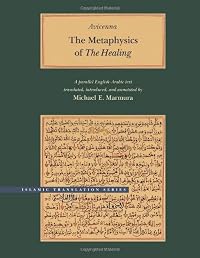
The Metaphysics of The Healing (Brigham Young University - Islamic Translation Series)
by Avicenna
On This Page
Description
Avicenna, the most influential of Islamic philosophers, produced The Healing as his magnum opus on his religious and political philosophy. Now translated by Michael Marmura, The Metaphysics is the climactic conclusion to this towering work. Through Marmura’s skill as a translator and his extensive annotations, Avicenna’s touchstone of Islamic philosophy is more accessible than ever before. In The Metaphysics, Avicenna examines the idea of existence, and his investigation into the cause show more of all things leads him to a meditation on the nature of God. From this discussion, Avicenna develops a theory of divine causation that synthesizes Neoplatonic, Aristotelian, and Islamic ideas. Within this emanative scheme, Avicenna establishes some of the basic ideas of his religious and political philosophy, as he discusses the divine attributes, divine providence, the hereafter, and the ideal “virtuous” city with its philosopher-prophet as the human link between the terrestrial and heavenly realms. With this edition, The Metaphysics can now be better seen as one of the most masterful works of classical Islamic philosophy. show lessTags
Recommendations





































Member Reviews
By far one of the most profound medieval philosophers. A master of Arabic thought and provides an extremely compelling argument for universals. A must-read for the idea of universals.
Ratings
Members
- Recently Added By
Author Information

138+ Works 453 Members
The most famous of the philosopher-scientists of Islam, Abu Ali al-Husayn ibn-Abd Allah ibn-Sina, known in the West as Avicenna, was born in Bukhara, Persia, and died in Hamadan. After a long period of wandering through Persia, he became the court physician of Shams al-Dawlah in Hamadan and composed the Kitab ash-shifa (The Book of Healing), a show more vast philosophical and scientific encyclopedia, and the Canon of Medicine, among the most famous books in the history of medicine. Avicenna was a Neoplatonic thinker whose influence was felt throughout the Christian West during the Middle Ages. Medieval thought reacted powerfully to the rediscovery, in the twelfth and thirteenth centuries, of the work of Aristotle, which had already been exercising the intellects of Islamic thinkers for some time. Hence, many of the doctrinal disputes that arose in Europe in the course of the late thirteenth and early fourteenth centuries reflect the opposing views of Arab thinkers, notably those of Averroes and Avicenna. Avicenna's thought had developed out of a variety of sources. In addition to Plato there were influences of Stoic logic and earlier Islamic theological philosophers. One of Avicenna's more important beliefs was that God is the Necessary Existent, the necessary ground from which all existent things proceed. In themselves, he argued, nothing that exists does so necessarily; that is, it may or may not be. Everything that exists must therefore have a cause, and the chain of such causality would be an infinite regression without God, the one necessary being. God is thus the cause of all existence and of all things being as they are. This necessitarian limitation provoked a severe reaction among western thinkers, who saw it as a limitation placed on God's freedom. (Bowker Author Biography) show less
Series
Belongs to Publisher Series
Classifications
Statistics
- Members
- 72
- Popularity
- 437,637
- Reviews
- 1
- Rating
- (4.00)
- Languages
- Arabic, English
- Media
- Paper
- ISBNs
- 1