On This Page
Description
Working at an animal testing laboratory to pay her way through college, Zoe discovers that she is pregnant at the same time the world is shattered by an apocalyptic viral outbreak that wipes out everyone she loves and genetically mutates humanity's survivors.Tags
Recommendations




Member Reviews
The apocalypse, for Zoe Marshall, starts very mysteriously. One day, when she returns from her job as a janitor at Pope Pharmaceuticals, a jar waits inside her locked apartment. While it looks innocuous enough, the terrible sense of foreboding it inspires drives her to therapy where she discusses the possible opening of the jar as if it were a dream with a therapist who, if things weren't going downhill fast, she could have a relationship with that goes beyond the professional. Unfortunately, romance is the last thing on Zoe's mind because people are dying, and the ones who aren't are changing in disturbing ways. Even as the human race dwindles, Zoe discovers a hope inside herself that sends her on a perilous journey across the world.
show more
White Horse is a promising debut and start to a post-apocalyptic trilogy that has a winning main character fighting against all but impossible odds who is determined to maintain the goodness in her humanity despite its near extinction around her. Zoe's first-person narration features a distinctive voice that is seasoned with unexpected dark humor born of desperation. Despite the constant danger and struggle, Adams' novel doesn't give way to the soul-sucking hopelessness that runs rampant in books like Cormac McCarthy's The Road, but it doesn't shy away from the terrifying realities of a world that is coming apart at the seams. Zoe's narration alternates between the past, revealing the slow downward spiral of civilization through sickness and war, and present, as she navigates the post-apocalyptic nightmare in search of the lover she has to believe is still alive.
White Horse is packed with vivid characters, disturbing visions of a planet in the throes of a slow apocalypse, and twists that readers won't see coming. Having the "stories" converge as Zoe's past meets up with her present is a perfect plot device for keeping the pages turning. Best of all, White Horse tempts you to read its sequels without the cruel ploy of a major cliffhanger on the last page. The ending manages to walk the very fine line of being fully satisfying while also keeping readers hungry for more.
If there's any downside to White Horse, it's the occasional overblown description. Sometimes it's a little over the top to say, "Smoke is a voluminous, billowing, high-fashion cloak framing the fire, enhancing its dangerous beauty," when a simple, "the smoke billowed" would more than suffice. Adams' propensity for dramatic metaphors might take some getting used to, but once the story picks up, they become considerably less glaring and often seems to be called for in a world where nothing is like it was, and everything seems dramatic. Ultimately, White Horse is a page turning thriller of a book that paints a terrifying picture of the future but leaves room for the hopeful possibility that goodness in humanity can still win out. show less
show more
White Horse is a promising debut and start to a post-apocalyptic trilogy that has a winning main character fighting against all but impossible odds who is determined to maintain the goodness in her humanity despite its near extinction around her. Zoe's first-person narration features a distinctive voice that is seasoned with unexpected dark humor born of desperation. Despite the constant danger and struggle, Adams' novel doesn't give way to the soul-sucking hopelessness that runs rampant in books like Cormac McCarthy's The Road, but it doesn't shy away from the terrifying realities of a world that is coming apart at the seams. Zoe's narration alternates between the past, revealing the slow downward spiral of civilization through sickness and war, and present, as she navigates the post-apocalyptic nightmare in search of the lover she has to believe is still alive.
White Horse is packed with vivid characters, disturbing visions of a planet in the throes of a slow apocalypse, and twists that readers won't see coming. Having the "stories" converge as Zoe's past meets up with her present is a perfect plot device for keeping the pages turning. Best of all, White Horse tempts you to read its sequels without the cruel ploy of a major cliffhanger on the last page. The ending manages to walk the very fine line of being fully satisfying while also keeping readers hungry for more.
If there's any downside to White Horse, it's the occasional overblown description. Sometimes it's a little over the top to say, "Smoke is a voluminous, billowing, high-fashion cloak framing the fire, enhancing its dangerous beauty," when a simple, "the smoke billowed" would more than suffice. Adams' propensity for dramatic metaphors might take some getting used to, but once the story picks up, they become considerably less glaring and often seems to be called for in a world where nothing is like it was, and everything seems dramatic. Ultimately, White Horse is a page turning thriller of a book that paints a terrifying picture of the future but leaves room for the hopeful possibility that goodness in humanity can still win out. show less
This is Book One of a post-apocalyptic trilogy for adults. It’s quite dark, and yet echoes of humanity shed occasional light on an otherwise bleak landscape. The story is told in alternating sections of “then” (before the apocalyptic events) and “now” – both in Zoe Marshall’s voice.
In “now,” ninety percent of the world’s population is dead, killed in part by a virus, the source for which we don’t learn until close to the end of the book. (The virus is called “White Horse” by a televangelist to label it as one of the four horses of the Apocalypse.)
"Then" begins with Zoe, one month away from age 31, underemployed as a janitor for Pope Pharmaceuticals while she re-evaluates what she wants out of her life. Her show more husband, Sam, died in a car crash five years earlier, and ever since then, she has been saving to go to college. But one day, she comes home to find that someone has put a heavy jar into her apartment, and the mystery of it terrifies her. She starts seeing a therapist, Nick Rose, at first telling him she has “dreamed” of this jar because she doesn’t want to sound crazy. Zoe and Nick both feel an attraction to one another, but the relationship possibilities are overshadowed by cataclysmic events in the outside world: a lethal virus is spreading; experimentation with the weather has gotten out of control and has led to war; and among the ten percent left alive, not all of them have survived in a human form.
In "Now" Zoe is on a journey across the world, trying to find someone, somewhere, with whom she has a connection, and struggling to maintain her hold on sanity and humanity in a world inhabited by dangerous and desperate deviations from normality.
Evaluation: This book alternates between lyrical and scary; horror and hope; exhilaration and despair. Zoe is brave, but not infallible, and her constant fear and inner struggles with morality versus the will to survive are all too understandable, even as they weaken her. The juxtaposition of the "then" and "now" sections is done in a quite clever manner, with striking parallels between the action in each part. It’s a bit like The Stand, a bit like The Passage, and a bit like The Road. But although there is brutality and tragedy, the memory of friendship and the possibility of love drive Zoe to keep going. And just when you think it will end in too facile a manner, the author throws you a great big curve. Can’t wait to read the next installments! show less
In “now,” ninety percent of the world’s population is dead, killed in part by a virus, the source for which we don’t learn until close to the end of the book. (The virus is called “White Horse” by a televangelist to label it as one of the four horses of the Apocalypse.)
"Then" begins with Zoe, one month away from age 31, underemployed as a janitor for Pope Pharmaceuticals while she re-evaluates what she wants out of her life. Her show more husband, Sam, died in a car crash five years earlier, and ever since then, she has been saving to go to college. But one day, she comes home to find that someone has put a heavy jar into her apartment, and the mystery of it terrifies her. She starts seeing a therapist, Nick Rose, at first telling him she has “dreamed” of this jar because she doesn’t want to sound crazy. Zoe and Nick both feel an attraction to one another, but the relationship possibilities are overshadowed by cataclysmic events in the outside world: a lethal virus is spreading; experimentation with the weather has gotten out of control and has led to war; and among the ten percent left alive, not all of them have survived in a human form.
In "Now" Zoe is on a journey across the world, trying to find someone, somewhere, with whom she has a connection, and struggling to maintain her hold on sanity and humanity in a world inhabited by dangerous and desperate deviations from normality.
Evaluation: This book alternates between lyrical and scary; horror and hope; exhilaration and despair. Zoe is brave, but not infallible, and her constant fear and inner struggles with morality versus the will to survive are all too understandable, even as they weaken her. The juxtaposition of the "then" and "now" sections is done in a quite clever manner, with striking parallels between the action in each part. It’s a bit like The Stand, a bit like The Passage, and a bit like The Road. But although there is brutality and tragedy, the memory of friendship and the possibility of love drive Zoe to keep going. And just when you think it will end in too facile a manner, the author throws you a great big curve. Can’t wait to read the next installments! show less
How to review White Horse? In all honesty it's one of the best books I've read this year, and yet anything I type here seems inadequate as to explain why I loved it so much. What is really striking about Alex Adams' story is how beautifully it walks the line between light and dark. The populace is dying. Everything that people once believed made them human is now gone, taken from them by a disease. Still, there is a glimmer of hope underneath it all. In Zoe I found one woman who, despite everything else, had the will to survive. Her hope radiates out, and helps light the way through this otherwise bleak story.
White Horse follows Zoe through chapters from "Then" and "Now". Although I normally dislike books that switch between past and show more present tense, it fits in White Horse perfectly. Zoe has gone from a simple custodian, to a nomad. Her past life and her present life are shown in stark contrast to one another, until they slowly merge closer and closer together. Seeking only to find her lost lover and hold on to what makes her human. Wandering through the dead cities, glimpsing the sad remains of humanity. Zoe's story is dark and dangerous. The story telling in White Horse is done in gorgeous prose, but it hardly masks the atrocities the world is suffering. Trust me, this isn't a story for the faint of heart.
The other characters in this story are just as well done as Zoe. Out of all of these, I feel like the one who needs the most introduction is "The Swiss". The exact opposite of everything that Zoe strives to hold on to, this is a villain who will make you want to tear the pages out of the book. You won't do it of course, because that would mean ruining the story, but you'll want to. Hope plays a big part in this story. Each time that Zoe makes it over an obstacle in her path, three more take their place. Yet, she never stops hoping.
White Horse ate me up inside. I read fervently, cringing at the descriptions of what the world had become, and yet ever hopeful that Zoe would accomplish what she set out to do. The last few chapters blew me away with their twists. The last few pages broke my heart. Alex Adams has written something that fits in the dystopian genre, and yet is infinitely better. I loved this book, and I'll be happy to admit that I am excited to see where this trilogy goes next. show less
White Horse follows Zoe through chapters from "Then" and "Now". Although I normally dislike books that switch between past and show more present tense, it fits in White Horse perfectly. Zoe has gone from a simple custodian, to a nomad. Her past life and her present life are shown in stark contrast to one another, until they slowly merge closer and closer together. Seeking only to find her lost lover and hold on to what makes her human. Wandering through the dead cities, glimpsing the sad remains of humanity. Zoe's story is dark and dangerous. The story telling in White Horse is done in gorgeous prose, but it hardly masks the atrocities the world is suffering. Trust me, this isn't a story for the faint of heart.
The other characters in this story are just as well done as Zoe. Out of all of these, I feel like the one who needs the most introduction is "The Swiss". The exact opposite of everything that Zoe strives to hold on to, this is a villain who will make you want to tear the pages out of the book. You won't do it of course, because that would mean ruining the story, but you'll want to. Hope plays a big part in this story. Each time that Zoe makes it over an obstacle in her path, three more take their place. Yet, she never stops hoping.
White Horse ate me up inside. I read fervently, cringing at the descriptions of what the world had become, and yet ever hopeful that Zoe would accomplish what she set out to do. The last few chapters blew me away with their twists. The last few pages broke my heart. Alex Adams has written something that fits in the dystopian genre, and yet is infinitely better. I loved this book, and I'll be happy to admit that I am excited to see where this trilogy goes next. show less
I had a certain idea of what this book was going to be like before I started reading it. I thought the blurb sounded interesting and it reminded me of daydreams I had when I was a teenager about a movie, the title of which I’ve long forgotten, of a man who was one of the very few left in the world after a catastrophe wipes out humanity. What would I do in those circumstances? Well, from the blurb, White Horse sounded like my childhood daydreams but after the first page I knew I’d never imagined anything like this.
Then it made me think of The Road by Cormac McCarthy, a book I was not very fond of. Fortunately I saw differences almost right away. Whereas in The Road, the idea of hope was conveyed with contempt, I sensed hope was the show more backbone of White Horse; every page is imbued with it even as events make it seem there’s nothing worth fighting for.
This novel is so rich in detail and imagination that every page brought new surprises. Sometimes I found myself rereading a paragraph to decipher what the author meant and then it would hit me a paragraph or page later – ah hah! But it’s so cleverly written that if there had not been an ‘aha’ moment it wouldn’t have mattered. That’s the way this book is – it infuses the culture of a new world order around the reader so well that its meaning sinks in without realization.
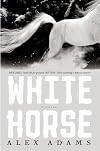
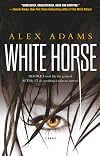
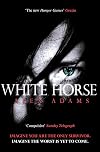
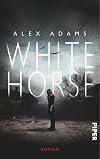
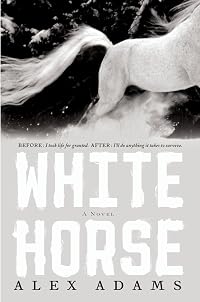
The main character is likeable so I rooted for her on every page. She’s brave, focused and honest. Even at the most cringe-worthy moments, it was difficult to put down. The only issue I would have with this book is the cover. Something about it gave me the idea that White Horse leans towards the YA genre. Wrong! Not YA at all. And of course the blurb does start off saying ‘thirty-year-old Zoe leads an ordinary life…’ which should dispel any the notion that it’s YA. But the cover threw me off.
I will go so far as to predict that this book will become a huge best-seller. It certainly deserves to be. show less
Then it made me think of The Road by Cormac McCarthy, a book I was not very fond of. Fortunately I saw differences almost right away. Whereas in The Road, the idea of hope was conveyed with contempt, I sensed hope was the show more backbone of White Horse; every page is imbued with it even as events make it seem there’s nothing worth fighting for.
This novel is so rich in detail and imagination that every page brought new surprises. Sometimes I found myself rereading a paragraph to decipher what the author meant and then it would hit me a paragraph or page later – ah hah! But it’s so cleverly written that if there had not been an ‘aha’ moment it wouldn’t have mattered. That’s the way this book is – it infuses the culture of a new world order around the reader so well that its meaning sinks in without realization.
The main character is likeable so I rooted for her on every page. She’s brave, focused and honest. Even at the most cringe-worthy moments, it was difficult to put down. The only issue I would have with this book is the cover. Something about it gave me the idea that White Horse leans towards the YA genre. Wrong! Not YA at all. And of course the blurb does start off saying ‘thirty-year-old Zoe leads an ordinary life…’ which should dispel any the notion that it’s YA. But the cover threw me off.
I will go so far as to predict that this book will become a huge best-seller. It certainly deserves to be. show less
Terrified and curious.
That's how Zoe says she feels about a recurring dream that she's been having; she's both terrified by and curious about how it plays out.
That's exactly the response that a number of readers will have to White Horse.
Alex Adams' debut novel contains a lot of conflicting emotions.
Falling in love is described as "'Great and terrible. Like Oz."
And when Zoe Marshall opens a fortune cookie, she finds "Welcome change." So ironic. "I read my fortune until I laugh. I laugh until I cry. I cry until I sleep."
The kind of change in Zoe's life is the unsettling sort. This is not the little white horse of Elizabeth Goudge's magic tale for children.
"A few months ago I was living a normal life, doing a whole lot of not much, and a show more couple weeks ago I was stopping a rape in progress so that a young woman might have a chance at survival."
White Horse is an infection. Humans who are infected with it mutate in unexpected ways.
Ninety percent of the infected people die. Of the remaining ten percent, five percent live on (immune maybe) and five percent mutate in a way which allows them to continue living, or, more accurately, surviving.
Because living just isn't what it once was.
Nothing is.
The book is populated with the kind of nearly-familiar language that reflects this new reality, and the structure mimics it as well.
The narrative, too, is structured in segments which begin either "Now" or "Then". Because of course that's how you would measure time.
Then, the world ran with money. Now, money is useless; a ticket can be purchased with a pint of blood.
Then, Zoe worked for Pope Pharmaceuticals. Now, she journeys towards an end that she has imagined for herself.
It's nearly always raining. Most days include a fight-to-the-death, which she hopes won't be her own. How likely it is that her destination has anything to offer other than the new reality she faces every day of her journey?
It doesn't matter how likely; what matters is that she still hopes.
The structure is somewhat complex; those readers who seek a straightforward chronological recounting might be frustrated by the literary back-and-forth-ing. Zoe is at the heart of the novel, her characterization developed through scenes and her inner thoughts, rather than through oblique narrative statements, but this is primarily a plot-driven novel that succeeds because the characterization remains strong.
Alex Adams adds to the suspense by pulling the reader across time sharply, establishing tenuous present-day alliances against the backdrop of other relationships that have, since, crumbled. She moves from scene-to-scene abruptly, so that the tension naturally rises exponentially.
The language is straightforward, with only the occasional figurative bit. "The clouds lift their petticoats for just a short time, long enough for the sun to dazzle us."
Throughout, the emphasis is on fast-paced prose -- some very short sentences, even some fragments, designed to keep the pages turning -- with a good bit of dialogue.
Raging and retching, gnawing and snarling, bruising and beating, hysteria and, yes, hope: White Horse is a horrifying gallop of a read.
(My full response to this novel is on Buried In Print: more quotes, more thoughts on the dystopic flavour herein.) show less
That's how Zoe says she feels about a recurring dream that she's been having; she's both terrified by and curious about how it plays out.
That's exactly the response that a number of readers will have to White Horse.
Alex Adams' debut novel contains a lot of conflicting emotions.
Falling in love is described as "'Great and terrible. Like Oz."
And when Zoe Marshall opens a fortune cookie, she finds "Welcome change." So ironic. "I read my fortune until I laugh. I laugh until I cry. I cry until I sleep."
The kind of change in Zoe's life is the unsettling sort. This is not the little white horse of Elizabeth Goudge's magic tale for children.
"A few months ago I was living a normal life, doing a whole lot of not much, and a show more couple weeks ago I was stopping a rape in progress so that a young woman might have a chance at survival."
White Horse is an infection. Humans who are infected with it mutate in unexpected ways.
Ninety percent of the infected people die. Of the remaining ten percent, five percent live on (immune maybe) and five percent mutate in a way which allows them to continue living, or, more accurately, surviving.
Because living just isn't what it once was.
Nothing is.
The book is populated with the kind of nearly-familiar language that reflects this new reality, and the structure mimics it as well.
The narrative, too, is structured in segments which begin either "Now" or "Then". Because of course that's how you would measure time.
Then, the world ran with money. Now, money is useless; a ticket can be purchased with a pint of blood.
Then, Zoe worked for Pope Pharmaceuticals. Now, she journeys towards an end that she has imagined for herself.
It's nearly always raining. Most days include a fight-to-the-death, which she hopes won't be her own. How likely it is that her destination has anything to offer other than the new reality she faces every day of her journey?
It doesn't matter how likely; what matters is that she still hopes.
The structure is somewhat complex; those readers who seek a straightforward chronological recounting might be frustrated by the literary back-and-forth-ing. Zoe is at the heart of the novel, her characterization developed through scenes and her inner thoughts, rather than through oblique narrative statements, but this is primarily a plot-driven novel that succeeds because the characterization remains strong.
Alex Adams adds to the suspense by pulling the reader across time sharply, establishing tenuous present-day alliances against the backdrop of other relationships that have, since, crumbled. She moves from scene-to-scene abruptly, so that the tension naturally rises exponentially.
The language is straightforward, with only the occasional figurative bit. "The clouds lift their petticoats for just a short time, long enough for the sun to dazzle us."
Throughout, the emphasis is on fast-paced prose -- some very short sentences, even some fragments, designed to keep the pages turning -- with a good bit of dialogue.
Raging and retching, gnawing and snarling, bruising and beating, hysteria and, yes, hope: White Horse is a horrifying gallop of a read.
(My full response to this novel is on Buried In Print: more quotes, more thoughts on the dystopic flavour herein.) show less
For the first 100 pages, White Horse was well on its way to being a five star read. That's not to say it didn't have problems, it did. * But the story was entertaining. The structure was highly effective. The tale of two girls, one blind, trying to make it in this post-apocalyptic landscape worked well. It was [b:The Road|6288|The Road|Cormac McCarthy|http://photo.goodreads.com/books/1320606344s/6288.jpg|3355573] meets [b:The Hunger Games|2767052|The Hunger Games (The Hunger Games, #1)|Suzanne Collins|http://photo.goodreads.com/books/1326003698s/2767052.jpg|2792775]. %
The next hundred pages the book dropped to a 4 for me. My patience was beginning to wane. Too many convenient events coming together. A fight, an explosion, a fight, an show more earthquake. The novel went from a reflective, but paranoid stroll along the desolated European countryside to an action-based novel moving much too fast.
In the last 100 pages, White Horse plummeted to three stars. Characters who were believable antagonists became larger than life nemeses. Shock for the sake of shock. Decapitations and raining cats in an attempt [?] to recreate [b:Kafka on the Shore|4929|Kafka on the Shore|Haruki Murakami|http://photo.goodreads.com/books/1165515991s/4929.jpg|6191072].
The novel's concluding pages could've dropped the book to a two had the beginning not been so strong. Everything conveniently wraps up (odd considering this is the first of a trilogy.) In the final pages, the story becomes ridiculous and cloying. I must credit the author for giving the story a nemesis that—when revealed—is a surprise. No one will see it coming. That's because it is so far from left field that it makes no sense. It's something you expect from a poor Star Trek novel.
I didn't have much expectation for White Horse, but I was blown away from the beginning. Though it had some juvenile writing, it had so much potential. I don't know what happened. It just fell apart. It was the story of a believable end of the world and then it became sci-fi melodrama. Unless someone reads the second book in the series and tells me it is a wonderful return to the opening chapters of White Horse I won't bother. What a sad end to a beautiful world.
* For the author's many talents in creating characters that resonate, using imagery that clarifies, creating a storyline that largely is entertaining, she has an issue with metaphors. A few work. Most of them do not. The first bad one was so jarring that I had to reread it three times to makes sure I'd read it right. He jerks me backwards and pulls me against him until his gut is a stuffed IHOP pancake bulging against my back. None that follow are as poor as this one, but there are many that should have been eliminated before the book saw print. ^
% Despite the publisher's attempt to sell White Horse as another Hunger Games this is not a YA novel. ^ show less
The next hundred pages the book dropped to a 4 for me. My patience was beginning to wane. Too many convenient events coming together. A fight, an explosion, a fight, an show more earthquake. The novel went from a reflective, but paranoid stroll along the desolated European countryside to an action-based novel moving much too fast.
In the last 100 pages, White Horse plummeted to three stars. Characters who were believable antagonists became larger than life nemeses. Shock for the sake of shock. Decapitations and raining cats in an attempt [?] to recreate [b:Kafka on the Shore|4929|Kafka on the Shore|Haruki Murakami|http://photo.goodreads.com/books/1165515991s/4929.jpg|6191072].
The novel's concluding pages could've dropped the book to a two had the beginning not been so strong. Everything conveniently wraps up (odd considering this is the first of a trilogy.) In the final pages, the story becomes ridiculous and cloying. I must credit the author for giving the story a nemesis that—when revealed—is a surprise. No one will see it coming. That's because it is so far from left field that it makes no sense. It's something you expect from a poor Star Trek novel.
I didn't have much expectation for White Horse, but I was blown away from the beginning. Though it had some juvenile writing, it had so much potential. I don't know what happened. It just fell apart. It was the story of a believable end of the world and then it became sci-fi melodrama. Unless someone reads the second book in the series and tells me it is a wonderful return to the opening chapters of White Horse I won't bother. What a sad end to a beautiful world.
* For the author's many talents in creating characters that resonate, using imagery that clarifies, creating a storyline that largely is entertaining, she has an issue with metaphors. A few work. Most of them do not. The first bad one was so jarring that I had to reread it three times to makes sure I'd read it right. He jerks me backwards and pulls me against him until his gut is a stuffed IHOP pancake bulging against my back. None that follow are as poor as this one, but there are many that should have been eliminated before the book saw print. ^
% Despite the publisher's attempt to sell White Horse as another Hunger Games this is not a YA novel. ^ show less
Dystopian/post-apocalyptic novels are all the rage the last few years. I suspect it's related in part to the economy and the sociopolitical landscape. The current world ain't what it was. Dystopian novels allow us to write through or read through the basic tension that underlies much of our lives now. Will I lose my job? What if I get sick? What happens if terrorists blow up What if Republicans take power and put women back in the kitchen with no rights? What if Democrats win and take away all our guns and use tax money to do it? What if someone kidnaps/hurts/murders my child? Is school safe? Is my house safe? What if I end up homeless? The list of modern anxiety is endless and much of it, rational or not, is based in part on the show more reality that we are shown every minute of every day in our living rooms, on our computers, on the radio - the 24-hour news cycle stoking the voyeurism, the anxiety, the fear.
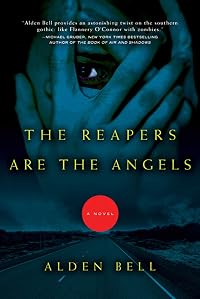
I'm hard on the post-apocalypse in fiction. I think it's Margaret Atwood's fault. I was in my early twenties when The Handmaid's Tale was published. It was the mid-eighties, Reagan ruled the roost and pro-life people were beginning to protest at abortion clinics - many of these protests became violent. The evangelical right was on the rise. It was a scary time for me and Ms. Atwood tapped into that anxiety - you could feel the potential for theocracy sliding beneath the surface of our politics. It's a brilliant book and difficult to top or even equal. In all that time only The Reapers Are the Angels by Alden Bell has truly satisfied my requirements. I'm adding White Horse to the list.
White Horse is not a young adult novel, although young adults might like it. It's a very adult novel centered around a pandemic, but more importantly the story of one woman's journey through the before, the during, and the after. It's a love story, and love is the motivating factor for Zoe's journey all across the map, but more importantly it's a novel of survival, of search for self and meaning, of the beauty of the journey, of compassion for humanity, of the possibility that lies at journey's end. Ms. Adams writes well and Zoe's voice sings through the death and the ugly and the search for beauty left untouched or begun anew. I loved this book - couldn't put it down. I hope you'll read it. You won't be sorry. show less
I'm hard on the post-apocalypse in fiction. I think it's Margaret Atwood's fault. I was in my early twenties when The Handmaid's Tale was published. It was the mid-eighties, Reagan ruled the roost and pro-life people were beginning to protest at abortion clinics - many of these protests became violent. The evangelical right was on the rise. It was a scary time for me and Ms. Atwood tapped into that anxiety - you could feel the potential for theocracy sliding beneath the surface of our politics. It's a brilliant book and difficult to top or even equal. In all that time only The Reapers Are the Angels by Alden Bell has truly satisfied my requirements. I'm adding White Horse to the list.
White Horse is not a young adult novel, although young adults might like it. It's a very adult novel centered around a pandemic, but more importantly the story of one woman's journey through the before, the during, and the after. It's a love story, and love is the motivating factor for Zoe's journey all across the map, but more importantly it's a novel of survival, of search for self and meaning, of the beauty of the journey, of compassion for humanity, of the possibility that lies at journey's end. Ms. Adams writes well and Zoe's voice sings through the death and the ugly and the search for beauty left untouched or begun anew. I loved this book - couldn't put it down. I hope you'll read it. You won't be sorry. show less
Members
- Recently Added By
Lists

Best Dystopias
280 works; 276 members

An End of the World Reading List
63 works; 4 members

SFF Down Under
59 works; 3 members

Animals in the Title
498 works; 11 members

Best Horse Stories or "Back in the Saddle Again"
82 works; 17 members

GoodReads Horror Choice Awards
160 works; 4 members
Author Information
17 Works 460 Members
Series

Common Knowledge
- Canonical title
- White Horse
- Original title
- White Horse
- Original publication date
- 2012-04-17
- People/Characters
- Nick Rose; Zoe Marshall; George Preston Pope
- Important places
- Italy; Greece
- Epigraph
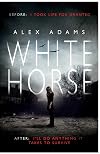
- Before: I took life for granted. After: I'll do anything to survive.
- Dedication
- I wrote this for you, Bill
- First words
- (Prologue) (Date: Then) Look at me: I don't want my therapist to think I'm crazy.
(Date: Now) When I wake the world is still gone.
Classifications
Statistics
- Members
- 316
- Popularity
- 101,021
- Reviews
- 32
- Rating
- (3.67)
- Languages
- English, German
- Media
- Paper, Audiobook, Ebook
- ISBNs
- 15
- ASINs
- 3