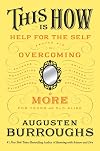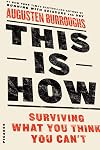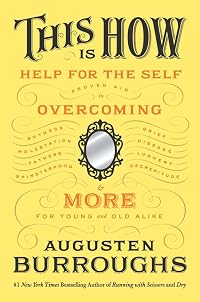
This Is How: Proven Aid in Overcoming Shyness, Molestation, Fatness, Spinsterhood, Grief, Disease, Lushery, Decrepitude & More. For Young and Old Alike.
by Augusten Burroughs
On This Page
Description
If you're fat and fail every diet, if you're thin but can't get thin enough, if you lose your job, if your child dies, if you are diagnosed with cancer, if you always end up with exactly the wrong kind of person, if you always end up alone, if you can't get over the past, if your parents are insane and ruining your life, if you really and truly wish you were dead, if you feel like it's your destiny to be a star, if you believe life has a grudge against you, if you don't want to have sex with show more your spouse and don't know why, if you feel so ashamed, if you're lost in life. If you have ever wondered, How am I aupposed to survive this?This is How.
. show less
Tags
Recommendations


Member Reviews
I really thought that this book was going to be highly overrated and frankly, going by the title, a little insensitive. Instead, it turned out to be one of the best books I've this year so far. Burroughs has a sensible, no-coddling approach to dealing with depression, mental health, and personal tragedy, and suggests practical actions as well as proper reflection and self-assessment.
It is well-documented that many readers find it difficult to separate the author from the main protagonist, particularly whena novel is narrated in the first-persone mode. If so, then it is to be expected that such readers will assume that in autobiographical fiction, the first person narrator is most likely the author, with varying degrees of historical accuracy. This dilemma drives most authors to varying degrees of anger and madness, but not Augusten Burroughs. In fact, Augusten Burroughs plays a fantastic trick on his readership.
Autobiographical fiction, sometimes called autofiction, is fiction based on or incorporating the author's own experience into the narrative. However, Augusten Burroughs novels and stories should perhaps show more better be characterized as "fictional autobiography", but not in the traditional sense of the description of the biography of a fictional character. Rather, Augusten Burroughs pretends to write about his own life, but the fictional persona that appears in his work under his own name is a fictional alter ego. Burroughs styles this persona as having a schizotypal personality disorder: as a result, readers are persuaded to believe that Augusten Burroughs has lived the life of a madman, growing up is a dysfunctional family of both parents being mad.
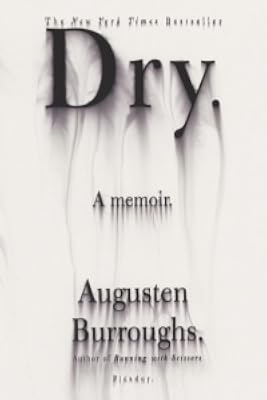
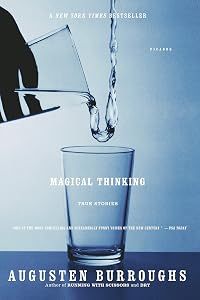
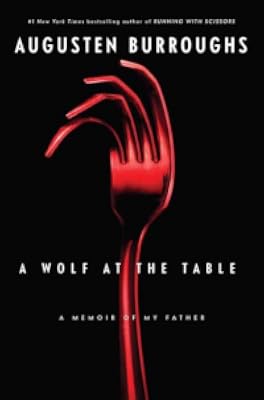
The fact that Augusten Burroughs works are madly popular is potentially worrisome, as it must be assumed that many readers cannot separate fact from fiction. While the collection of "short stories (some people characterize them as "essays") Magical Thinking is still mostly hilariously funny, his memoirs Running With Scissors. A memoir, Dry: A Memoir and A Wolf at the Table: A Memoir of My Father are generally passed of and believed to be autobiographical.
It will be curious to see how long Augusten Burroughs can keep up this pretense, and where his work will go in the future. For the time being, he has published a book which fits the bill and cleverly balanced on the same edge of autobiography, incorporating fictional elements from his previous works, while suggesting that the work is autobiographical. It is also very likely that This is how. Proven aid in overcoming shyness, molestation, fatness, spinsterhood, grief, disease, lushery, decrepitude & more. For young and old alike. is written as a bridge, to enable Burroughs a transition to a different type of fiction.
This is how. Proven aid in overcoming shyness, molestation, fatness, spinsterhood, grief, disease, lushery, decrepitude & more. For young and old alike. is styled as a self-help manual to overcome various mental conditions and psychological disorders. The self-help manual is a popular genre, not often used as a framework for fiction. In This is how, the autobiographical persona Augusten Burroughs claims to have overcome a number of his personality disorders, previously described in his autobiographical fiction. Thus, Burroughs reaches out a helping hand to readers with any type of mental problems.
This is how has its funny moments, but is not nearly as funny as earlier works. It is both a satire on contemporary society, the genre of self-help manuals and the whole well-being industry around it, and, one may surmise, the gullibility of some readers to believe in the autobiographical persona of Augusten Burroughs. Unlike "real" self-help manuals, This is how does not have a table of contents of an index, preventing readers from looking up particular problems or skipping to their own issue. Instead, readers have to go through the whole book.
Most of the disorders in This is how are 'real' or 'veritable', but a number are ludicrous. The first, "How to Ride an Elevator" is much on a par with some of the best stories in Magical Thinking, including razor-sharp dialogue:
She was looking at me with an expression of incredulity mixed with boldness. The highlights in her spiky hair had a greenish cast in the unflattering elevator lighting and her lipstick provided her with an upper lip that I saw she did not possess.
"I said, it's not that bad," and she gave me that frank, eye-brows up, let's-be-real-here, look. "Whatever it is that happened, it can't possibly be as bad as it looks on your face. How 'bout tring on a smile for size. And if you're all out, I've got one you can borrow."
My first thought was, "It's leaking out of me? People can see it?"
My second thought was, "Die, bitch." ( p. 2)
This is how is an enjoyable read, although towards the end, some guru-speak fatigue seeps in, and originality feels a bit stretched.
Augusten Burroughs has a very peculiar sense of humor that mixes the hilarious with the most horrific. This is how compares well with Magical Thinking, omitting some of the more morally objectionable issues of the novels and memoirs.
Augusten Burroughs seems to occupy quite a unique niche in American letters, that could perhaps be best characterized as postmodern satire. show less
Autobiographical fiction, sometimes called autofiction, is fiction based on or incorporating the author's own experience into the narrative. However, Augusten Burroughs novels and stories should perhaps show more better be characterized as "fictional autobiography", but not in the traditional sense of the description of the biography of a fictional character. Rather, Augusten Burroughs pretends to write about his own life, but the fictional persona that appears in his work under his own name is a fictional alter ego. Burroughs styles this persona as having a schizotypal personality disorder: as a result, readers are persuaded to believe that Augusten Burroughs has lived the life of a madman, growing up is a dysfunctional family of both parents being mad.
The fact that Augusten Burroughs works are madly popular is potentially worrisome, as it must be assumed that many readers cannot separate fact from fiction. While the collection of "short stories (some people characterize them as "essays") Magical Thinking is still mostly hilariously funny, his memoirs Running With Scissors. A memoir, Dry: A Memoir and A Wolf at the Table: A Memoir of My Father are generally passed of and believed to be autobiographical.
It will be curious to see how long Augusten Burroughs can keep up this pretense, and where his work will go in the future. For the time being, he has published a book which fits the bill and cleverly balanced on the same edge of autobiography, incorporating fictional elements from his previous works, while suggesting that the work is autobiographical. It is also very likely that This is how. Proven aid in overcoming shyness, molestation, fatness, spinsterhood, grief, disease, lushery, decrepitude & more. For young and old alike. is written as a bridge, to enable Burroughs a transition to a different type of fiction.
This is how. Proven aid in overcoming shyness, molestation, fatness, spinsterhood, grief, disease, lushery, decrepitude & more. For young and old alike. is styled as a self-help manual to overcome various mental conditions and psychological disorders. The self-help manual is a popular genre, not often used as a framework for fiction. In This is how, the autobiographical persona Augusten Burroughs claims to have overcome a number of his personality disorders, previously described in his autobiographical fiction. Thus, Burroughs reaches out a helping hand to readers with any type of mental problems.
This is how has its funny moments, but is not nearly as funny as earlier works. It is both a satire on contemporary society, the genre of self-help manuals and the whole well-being industry around it, and, one may surmise, the gullibility of some readers to believe in the autobiographical persona of Augusten Burroughs. Unlike "real" self-help manuals, This is how does not have a table of contents of an index, preventing readers from looking up particular problems or skipping to their own issue. Instead, readers have to go through the whole book.
Most of the disorders in This is how are 'real' or 'veritable', but a number are ludicrous. The first, "How to Ride an Elevator" is much on a par with some of the best stories in Magical Thinking, including razor-sharp dialogue:
She was looking at me with an expression of incredulity mixed with boldness. The highlights in her spiky hair had a greenish cast in the unflattering elevator lighting and her lipstick provided her with an upper lip that I saw she did not possess.
"I said, it's not that bad," and she gave me that frank, eye-brows up, let's-be-real-here, look. "Whatever it is that happened, it can't possibly be as bad as it looks on your face. How 'bout tring on a smile for size. And if you're all out, I've got one you can borrow."
My first thought was, "It's leaking out of me? People can see it?"
My second thought was, "Die, bitch." ( p. 2)
This is how is an enjoyable read, although towards the end, some guru-speak fatigue seeps in, and originality feels a bit stretched.
Augusten Burroughs has a very peculiar sense of humor that mixes the hilarious with the most horrific. This is how compares well with Magical Thinking, omitting some of the more morally objectionable issues of the novels and memoirs.
Augusten Burroughs seems to occupy quite a unique niche in American letters, that could perhaps be best characterized as postmodern satire. show less
I picked this up from my library's Lucky Day shelf and thought "Oh, I dig Burroughs. Can't wait to read his latest snarkful memoir!"
This is NOT a snarkful memoir. This is what it says on the front cover, a self-help book. My heart sank as I realized this, but I figured I'd wade in anyway in the interests of a snarkful review. Ha.
The only self-described self-help books I've ever liked have been by [a:Byron Katie|6374|Byron Katie|http://d.gr-assets.com/authors/1209392514p2/6374.jpg]. The rest are useless, warm and fuzzy and in my opinion at least, totally worthless. This book by Burroughs is not useless. Oh, I'm sure at least part of the reason I dug it so much is because much of it sounded like what I say to people who ask me for show more advice- but it's more than that. It's bleak, it's realistic, it's cauterizing, and it's clean. And helpful. Did I mention helpful? Yeah.
If you like your truth served up stark and caustic, this is the book for you. If you want to hear about how worthwhile you are, how you can do anything if you just dream big enough, how love conquers all, you should stay the hell away.
Wavering between 4 & 5 stars. Probably going to buy this and hand it out liberally to teenagers I love.
ETA: This is the gom jabbar of self-help books. show less
This is NOT a snarkful memoir. This is what it says on the front cover, a self-help book. My heart sank as I realized this, but I figured I'd wade in anyway in the interests of a snarkful review. Ha.
The only self-described self-help books I've ever liked have been by [a:Byron Katie|6374|Byron Katie|http://d.gr-assets.com/authors/1209392514p2/6374.jpg]. The rest are useless, warm and fuzzy and in my opinion at least, totally worthless. This book by Burroughs is not useless. Oh, I'm sure at least part of the reason I dug it so much is because much of it sounded like what I say to people who ask me for show more advice- but it's more than that. It's bleak, it's realistic, it's cauterizing, and it's clean. And helpful. Did I mention helpful? Yeah.
If you like your truth served up stark and caustic, this is the book for you. If you want to hear about how worthwhile you are, how you can do anything if you just dream big enough, how love conquers all, you should stay the hell away.
Wavering between 4 & 5 stars. Probably going to buy this and hand it out liberally to teenagers I love.
ETA: This is the gom jabbar of self-help books. show less
A forceful, opinionated rant in short paragraphs and short sentences, mostly attacking self-pity. Funny in bits and often moving, but I marvel that the book was published because it's not really anything that special.
p. 114: all of us are made not only of what we have but of what we lost.
p. 122. The past does not haunt us. We haunt the past.
p. 125 . . . you need a larger life. Something that can successfully compete with your past.
p. 114: all of us are made not only of what we have but of what we lost.
p. 122. The past does not haunt us. We haunt the past.
p. 125 . . . you need a larger life. Something that can successfully compete with your past.
I really enjoyed this book. It is actually helpful and not some sort of cynical mean spirited satire of self-help books. As readers with Burroughs' works can attest to, he has seen and experienced it all. Perhaps not "all" in the grand scheme of things but pretty damn close.
I especially like the chapter that dealt with hope. It was called How to Lose a Child. That one was incredibly thought-provoking and taught me some tidbit about history that I never knew: Ernest Shackleton and the Endurance. That almost made me cry as did that entire chapter.
Essentially, if you are looking for a book to hold your hand and sugarcoat everything, this is not the book for you. However, if you are looking for a book that is raw, honest, and straight up show more tells you that everything will not be okay, then pick up this book and enjoy. show less
I especially like the chapter that dealt with hope. It was called How to Lose a Child. That one was incredibly thought-provoking and taught me some tidbit about history that I never knew: Ernest Shackleton and the Endurance. That almost made me cry as did that entire chapter.
Essentially, if you are looking for a book to hold your hand and sugarcoat everything, this is not the book for you. However, if you are looking for a book that is raw, honest, and straight up show more tells you that everything will not be okay, then pick up this book and enjoy. show less
I really enjoyed this book. It is actually helpful and not some sort of cynical mean spirited satire of self-help books. As readers with Burroughs' works can attest to, he has seen and experienced it all. Perhaps not "all" in the grand scheme of things but pretty damn close.
I especially like the chapter that dealt with hope. It was called How to Lose a Child. That one was incredibly thought-provoking and taught me some tidbit about history that I never knew: Ernest Shackleton and the Endurance. That almost made me cry as did that entire chapter.
Essentially, if you are looking for a book to hold your hand and sugarcoat everything, this is not the book for you. However, if you are looking for a book that is raw, honest, and straight up show more tells you that everything will not be okay, then pick up this book and enjoy. show less
I especially like the chapter that dealt with hope. It was called How to Lose a Child. That one was incredibly thought-provoking and taught me some tidbit about history that I never knew: Ernest Shackleton and the Endurance. That almost made me cry as did that entire chapter.
Essentially, if you are looking for a book to hold your hand and sugarcoat everything, this is not the book for you. However, if you are looking for a book that is raw, honest, and straight up show more tells you that everything will not be okay, then pick up this book and enjoy. show less
I have not read many self-help books. Those that I did read were generally unhelpful, as their advice didn't apply to my problems. This book is different. Augusten Burroughs gives blunt and pragmatic advice on a wide variety of difficult topics, interspersed with autobiographical stories, statistics, and humorous observations.
If I have a complaint it is that the advice in "This is How" isn't easy to put into action. For instance, one recommendation for unhappily single peope is to vary their routine; going to new places and doing new things in order to expose themselves to new potential mates. If that sort of bold experimentation was easy for people who want a romantic partner, they probably wouldn't be lonely and single in the first show more place. Other advice about alcoholism, grief, and depression is sometimes so harsh that it is difficult to read. The author has been hard on himself, and he recommends the same from his readers.
Regardless, I recommend this book to anyone struggling with the problems listed on the cover who'd like some irreverent inspiration. show less
If I have a complaint it is that the advice in "This is How" isn't easy to put into action. For instance, one recommendation for unhappily single peope is to vary their routine; going to new places and doing new things in order to expose themselves to new potential mates. If that sort of bold experimentation was easy for people who want a romantic partner, they probably wouldn't be lonely and single in the first show more place. Other advice about alcoholism, grief, and depression is sometimes so harsh that it is difficult to read. The author has been hard on himself, and he recommends the same from his readers.
Regardless, I recommend this book to anyone struggling with the problems listed on the cover who'd like some irreverent inspiration. show less
Members
- Recently Added By
Author Information

16+ Works 34,769 Members
Some Editions
Awards and Honors
Notable Lists
Common Knowledge
- Original publication date
- 2012
- Blurbers
- Harper, Janice
Classifications
Statistics
- Members
- 723
- Popularity
- 39,414
- Reviews
- 40
- Rating
- (3.68)
- Languages
- English
- Media
- Paper, Audiobook, Ebook
- ISBNs
- 15
- ASINs
- 9