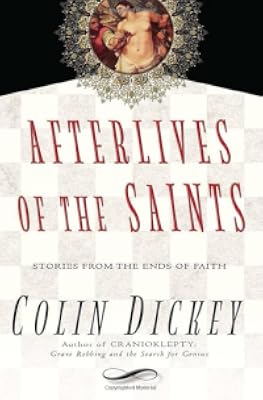
Afterlives of the Saints
by Colin Dickey
On This Page
Description
"Afterlives of the Saints is a woven gathering of groundbreaking essays that move through Renaissance anatomy and the Sistine Chapel, Borges' "Library of Babel," the history of spontaneous human combustion, the dangers of masturbation, the pleasures of castration, "and so forth" - each essay focusing on the story of a particular (and particularly strange) saint"--Tags
Recommendations



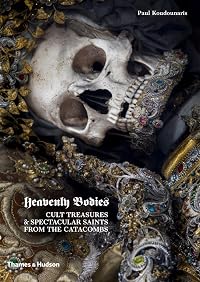


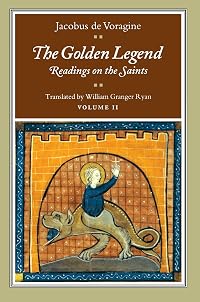
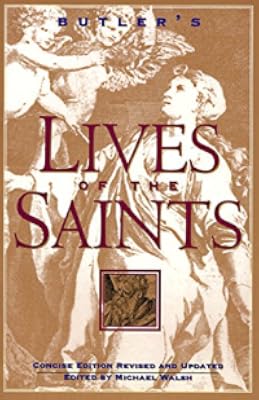






Member Recommendations
by anonymous user
Member Reviews
Colin Dickey's Afterlives of the Saints: Stories from the Ends of Faith (Unbridled Books, 2012) is a thought-provoking collection of stories and meditations about the lives and deeds of saints and how those lives and deeds come to gain different meaning(s) and interpretations over time.
As someone raised in a non-saint-based religion I've always been fascinated at the very idea of saints, and I was somewhat amused at the sections of Dickey's book about the early collections of saints' biographies (hagiographies) in which almost all the personal details were removed; the whole point of hagiography, Dickey writes, is that "the story is written to tell us not the facts about that person's life but rather how that person's life exemplifies show more the glory of God" (p. 19).
Obviously not a comprehensive overview of saints, Dickey's book concentrates on a few specific ones (those Dickey describes as "the ones who have spoken most to me over the years, either because of what they wrote, because of the art and literature they inspired, or because of the wide range of beliefs they encompassed" - pg. 20). He concludes with a section on a few people who aren't saints, but might have been.
Dickey considers his selected saints through in various ways: in the chapter on Mary Magdalene he compares typical imagery of the saint with a WWII-era Life photo of a woman peering at the skull of a Japanese soldier sent to her as a war trophy. From Borges to Caravaggio to Kafka, Dante to Chaucer to Van Gogh to "Blade Runner", Dickey explores how art, politics, religion, pop culture and literature have drawn on the examples of the saints in their own works.
Interesting too is Dickey's suggestion that much of the extreme behavior exhibited by those now considered saints would be seen as pathological conditions today, to be treated with medication and/or psychotherapy. They lived, he writes, at the extremes of humanity, a place hard for any modern person to reach. I'd have liked a bit more in this line as a conclusion, but even without that, this was a deeply interesting read. show less
As someone raised in a non-saint-based religion I've always been fascinated at the very idea of saints, and I was somewhat amused at the sections of Dickey's book about the early collections of saints' biographies (hagiographies) in which almost all the personal details were removed; the whole point of hagiography, Dickey writes, is that "the story is written to tell us not the facts about that person's life but rather how that person's life exemplifies show more the glory of God" (p. 19).
Obviously not a comprehensive overview of saints, Dickey's book concentrates on a few specific ones (those Dickey describes as "the ones who have spoken most to me over the years, either because of what they wrote, because of the art and literature they inspired, or because of the wide range of beliefs they encompassed" - pg. 20). He concludes with a section on a few people who aren't saints, but might have been.
Dickey considers his selected saints through in various ways: in the chapter on Mary Magdalene he compares typical imagery of the saint with a WWII-era Life photo of a woman peering at the skull of a Japanese soldier sent to her as a war trophy. From Borges to Caravaggio to Kafka, Dante to Chaucer to Van Gogh to "Blade Runner", Dickey explores how art, politics, religion, pop culture and literature have drawn on the examples of the saints in their own works.
Interesting too is Dickey's suggestion that much of the extreme behavior exhibited by those now considered saints would be seen as pathological conditions today, to be treated with medication and/or psychotherapy. They lived, he writes, at the extremes of humanity, a place hard for any modern person to reach. I'd have liked a bit more in this line as a conclusion, but even without that, this was a deeply interesting read. show less
I must admit, Afterlives of the Saints was not exactly what I thought it would be. The jacket copy on the advanced copies opens by mentioning "the strangest stories of the saints." I expected that Afterlives of the Saints would be a compendium of bizarre stories. Instead, Dickey uses these stories as a way to understand the reality of history, the way it is both more and less than a narrative of ultimately inevitable events. Certainly some of the stories of the saints he mentions are bizarre, but Dickey is more interested in the way that these saints interacted with either those who went before or those who came after than in ogling them for their strangeness.
 This review was written for LibraryThing Early Reviewers.
Engaging and thought provoking. Dickey here doesn't dwell in detail on the gruesome aspects of the lives of the saints he chronicles. He uses their lives of passionate extremism as an entry point to examine what their dedication, pursued in various ways, reveals about their humanity, and about ours. He draws together poetry, literature, history, art, myth, psychology to offer a generous, wide-ranging consideration of what the lives of the saints – individuals, as he says, “at the edge of humanity” – can tell us about human strengths, fears, desires, and needs.
Divided into five sections, this collection of essays, each of which features a particular saint but which range into a startlingly varied range of human experience, delves show more captivatingly into both the peculiar and the profound. Dickey is launched into subjects as diverse as the ambiguities of textless images, brutality in war, prostitution, pornography, anatomical illustration, castrati, and more, inspired by the stories of the saints he has collected over the years. From Saint Anthony's multitudes of demons Dickey winds up with Gustave Flaubert and masturbation, both directly (Flaubert wrote a biography of Anthony, dedicating four years of his life to writing it and four days of the lives of his two closest friends to listening to him read aloud his “great work,” and when he finished the reading his dear friend could only say, “We think you should throw it into the fire and never speak of it again.” Flaubert believed that his epilepsy was a result of his method of relieving the stress that his “Anthony” project brought on.) and indirectly (of Emma Bovary he notes, “Emma's crime is only secondarily adultery; her real transgression is her surrender to the madness of novels, to the endless production of virtual images that have no correlation with the reality around her.”) Somehow, by the end of the chapter he's drawn links between between fantasy, capitalism, and madness with at least a fair degree of coherence.
On a lighter note, the legend of Saint Barbara segues into the story of Charles Dickens's conflict with his critics over the plausibility of spontaneous human combustion, which concludes the life of a minor character in the novel Bleak House. As I said, Dickey covers quite a range of material!
I found this wonderfully entertaining, though sometimes his connections are pretty tenuous and speculative, and his perspective appears to be that of a charitable skeptic (this second point is not a criticism, just an observation). Also, the book's editing was carelessly done. Still, minor complaints aside, Afterlives of the Saints is stimulating fun. show less
Divided into five sections, this collection of essays, each of which features a particular saint but which range into a startlingly varied range of human experience, delves show more captivatingly into both the peculiar and the profound. Dickey is launched into subjects as diverse as the ambiguities of textless images, brutality in war, prostitution, pornography, anatomical illustration, castrati, and more, inspired by the stories of the saints he has collected over the years. From Saint Anthony's multitudes of demons Dickey winds up with Gustave Flaubert and masturbation, both directly (Flaubert wrote a biography of Anthony, dedicating four years of his life to writing it and four days of the lives of his two closest friends to listening to him read aloud his “great work,” and when he finished the reading his dear friend could only say, “We think you should throw it into the fire and never speak of it again.” Flaubert believed that his epilepsy was a result of his method of relieving the stress that his “Anthony” project brought on.) and indirectly (of Emma Bovary he notes, “Emma's crime is only secondarily adultery; her real transgression is her surrender to the madness of novels, to the endless production of virtual images that have no correlation with the reality around her.”) Somehow, by the end of the chapter he's drawn links between between fantasy, capitalism, and madness with at least a fair degree of coherence.
On a lighter note, the legend of Saint Barbara segues into the story of Charles Dickens's conflict with his critics over the plausibility of spontaneous human combustion, which concludes the life of a minor character in the novel Bleak House. As I said, Dickey covers quite a range of material!
I found this wonderfully entertaining, though sometimes his connections are pretty tenuous and speculative, and his perspective appears to be that of a charitable skeptic (this second point is not a criticism, just an observation). Also, the book's editing was carelessly done. Still, minor complaints aside, Afterlives of the Saints is stimulating fun. show less
For anyone who grew up Catholic, the classic LIVES OF THE SAINTS will be familiar. Full of lurid accounts of violent deaths endured (and often enthusiastically sought out) out of loyalty to Jesus, many of us remember in gory detail the stoneings, the deaths by arrows and fire, as well as the memorable St. Agnes, whose breasts were hacked off because she would not surrender her "virtue" to a knuckle-dragging suitor.
Colin Dickey has re-interpreted the meaning of 17 of these stories, inviting the reader to reconsider whether the ultimate sacrifice was truly made for Jesus, or perhaps whether it sprang from other motivations.
The most striking characteristic of Dickey's writing is that he, unlike so many of his predecessors in historical show more interpretation, considers the woman's point of view.
I recently attempted to read Homer's Iliad, because I realized I had never read it, and yet I considered myself well-read. Quite soon, as I read through it, I felt ill. The offhand way the Poet relates how the women were awarded to the warriors as the spoils of war totally nauseated me. I thought to myself, how is it that in all these years, i have never heard anyone complain about this?
In Colin Dickey I immediate recognized a kindred spirit and, dare I say it, a feminist! Even though in 138 pages (out of 236) he has not yet used the word "feminist." No matter. The man has analysis.
I highly recommend this book especially to any cultural Catholics. Terribly refreshing! show less
Colin Dickey has re-interpreted the meaning of 17 of these stories, inviting the reader to reconsider whether the ultimate sacrifice was truly made for Jesus, or perhaps whether it sprang from other motivations.
The most striking characteristic of Dickey's writing is that he, unlike so many of his predecessors in historical show more interpretation, considers the woman's point of view.
I recently attempted to read Homer's Iliad, because I realized I had never read it, and yet I considered myself well-read. Quite soon, as I read through it, I felt ill. The offhand way the Poet relates how the women were awarded to the warriors as the spoils of war totally nauseated me. I thought to myself, how is it that in all these years, i have never heard anyone complain about this?
In Colin Dickey I immediate recognized a kindred spirit and, dare I say it, a feminist! Even though in 138 pages (out of 236) he has not yet used the word "feminist." No matter. The man has analysis.
I highly recommend this book especially to any cultural Catholics. Terribly refreshing! show less
Although to many Catholics, the saints remain objects of veneration and worship, to many others they have become curious, mythical figures. Why do these holy beings appear half-naked and studded with arrows, like Saint Sebastian, or carrying a pair of eyes on a plate like Saint Lucy? In a series of essays, Colin Dickey examines several of the saints most prominent in art or with especially bizarre attributes in an attempt to understand what made these men and women so important in their day, and the influence they've had over the generations that followed in their footsteps.
Since I'm studying art history in school, some of these saints were extremely familiar to me. Saint Jerome appears in many Renaissance and Baroque paintings by some show more of Europe's greatest painters, but the emphasis is always on his asceticism and devotion to translating the Bible. The author here paints a very different picture of Jerome with his words – Jerome the librarian, carefully compiling and preserving information. In this single essay, he connects Jerome to the 20th century writer Jorge Luis Borges, Caravaggio, memento moris / “remember death” images in art, and the father of modern skepticism, Michel de Montaigne. But several of the other saints were quite obscure. Sure, Jerome is fairly recognizable, but how many people know of his female companion, Paula? Saint George remains the popular patron of England, but Saint Foy, despite her prankish nature, is largely forgotten.
I was greatly entertained by the evolution of several saints over the years. Saint Sebastian has found a new place in modern culture as an icon of homosexuality, and Saint Barbara has somehow become associated with artillery and explosions. Saint Lawrence met his end by being cooked alive on a giant grill; today he is the patron saint of barbeques and stand-up comedians.
There's nothing particularly religious about this book; it has a much more anthropological approach to the tales of the saints. The chapters sometimes ramble as the author moves from one idea to the next. But it's like a traveler hiking through the woods on a sunny day – the things you see along the way makes the essay worth the read. show less
Since I'm studying art history in school, some of these saints were extremely familiar to me. Saint Jerome appears in many Renaissance and Baroque paintings by some show more of Europe's greatest painters, but the emphasis is always on his asceticism and devotion to translating the Bible. The author here paints a very different picture of Jerome with his words – Jerome the librarian, carefully compiling and preserving information. In this single essay, he connects Jerome to the 20th century writer Jorge Luis Borges, Caravaggio, memento moris / “remember death” images in art, and the father of modern skepticism, Michel de Montaigne. But several of the other saints were quite obscure. Sure, Jerome is fairly recognizable, but how many people know of his female companion, Paula? Saint George remains the popular patron of England, but Saint Foy, despite her prankish nature, is largely forgotten.
I was greatly entertained by the evolution of several saints over the years. Saint Sebastian has found a new place in modern culture as an icon of homosexuality, and Saint Barbara has somehow become associated with artillery and explosions. Saint Lawrence met his end by being cooked alive on a giant grill; today he is the patron saint of barbeques and stand-up comedians.
There's nothing particularly religious about this book; it has a much more anthropological approach to the tales of the saints. The chapters sometimes ramble as the author moves from one idea to the next. But it's like a traveler hiking through the woods on a sunny day – the things you see along the way makes the essay worth the read. show less
This review was written for LibraryThing Early Reviewers.This was an interesting book examining the historical aspects of Catholic saints. Unfortunately, the author has chosen a difficult methodology to guide the reader through the essays. Dickey follows a Deconstructionist tour through the facts of sainted people and then develops their ‘afterlives’ as objects of catholic folklore as opposed to Roman Catholic pietistic devotion. Many had since become convoluted and almost antithetical to the model of virtue praised as reason for sainthood. Dickey has written a book on the quandary of popular religiosity. Many saints, according to Dickey, are self-contradicted by their own legendary exploits, which occur outside the official ecclesial culture of Roman Catholicism. The saint, and the show more present day world in which they partially inhabit therefore, are not a perfect fit and have to be approximated by the curious reader. Not given to definitive positive statements, Dickey states that "often, what is far more important than the saint is the story of the saint.'
(p. 166)
The over-arching theme of deconstructionist thought is that we can never actually know what people in bygone ages thought or understand their private motivations. We are each bound by our own time and space parameters which become unknowable to others as they are to us.
This book is Euro-centric (as are most Decontructionists) but gives a nod to the USA by including a section on a purported war-crime LIFE magazine photo. The posed photograph of an American woman with a skull of an Axis soldier is presented as an example of memento mori. There is also a section on the story of Santa Barbara which is also a city name in California.
Although the book has illustrations, the uncorrected proof copy I received had B&W pictures that detracted from the discussion that focused on them. The font style I found easy to read. The notes that appear at the conclusion of the book are just that, not actually endnotes per se. I say this because one of the entertaining rewards of reading an essayist is skimming their source material and how skillfully that is woven into the text. Dickey’s abbreviated notes curtail how widely read he is. Brevity is always a sign of a master craftsman but it’s always good to treat your readers to literature they might never see in their own research work.
I fear this work is might be too taxing on most general readers as it does not pay homage in the way that most people would expect in a book with saints in its title. Readers might be surprised to find essays dwelling on the cultural phenomena and physicality of some saints but little on their modeling of Christian virtues. The religious figure most referenced in this regard but omitted from the book is the image of Our Lady of Guadalupe (displayed in Mexico City) and how its meaning is multiplied according to whom is viewing it.
Afterlives of the Saints is a challenging effort of literary criticism, art history, philosophy of Deconstruction and I hope there are further pieces forthcoming from Dickey which incorporate Christian religious themes. Peter Brown is the writer most emulated for this sort of work, although Brown is a technically a historian and Dickey’s work is a mix of psychology, art history and literary theory.
Dickey lists his residence as Los Angeles, and his native area as San Francisco. There was a time when most SF Bay Area residents would not allow that to be publicly known. show less
(p. 166)
The over-arching theme of deconstructionist thought is that we can never actually know what people in bygone ages thought or understand their private motivations. We are each bound by our own time and space parameters which become unknowable to others as they are to us.
This book is Euro-centric (as are most Decontructionists) but gives a nod to the USA by including a section on a purported war-crime LIFE magazine photo. The posed photograph of an American woman with a skull of an Axis soldier is presented as an example of memento mori. There is also a section on the story of Santa Barbara which is also a city name in California.
Although the book has illustrations, the uncorrected proof copy I received had B&W pictures that detracted from the discussion that focused on them. The font style I found easy to read. The notes that appear at the conclusion of the book are just that, not actually endnotes per se. I say this because one of the entertaining rewards of reading an essayist is skimming their source material and how skillfully that is woven into the text. Dickey’s abbreviated notes curtail how widely read he is. Brevity is always a sign of a master craftsman but it’s always good to treat your readers to literature they might never see in their own research work.
I fear this work is might be too taxing on most general readers as it does not pay homage in the way that most people would expect in a book with saints in its title. Readers might be surprised to find essays dwelling on the cultural phenomena and physicality of some saints but little on their modeling of Christian virtues. The religious figure most referenced in this regard but omitted from the book is the image of Our Lady of Guadalupe (displayed in Mexico City) and how its meaning is multiplied according to whom is viewing it.
Afterlives of the Saints is a challenging effort of literary criticism, art history, philosophy of Deconstruction and I hope there are further pieces forthcoming from Dickey which incorporate Christian religious themes. Peter Brown is the writer most emulated for this sort of work, although Brown is a technically a historian and Dickey’s work is a mix of psychology, art history and literary theory.
Dickey lists his residence as Los Angeles, and his native area as San Francisco. There was a time when most SF Bay Area residents would not allow that to be publicly known. show less
This review was written for LibraryThing Early Reviewers.It was interesting to look at these saints from a different perspective than I'm used to. I've heard the stories of many of these saints throughout my life as a Catholic, but I never realized how truly bonkers they sounds. It's like Grimm's tales for absolutely religious (that's the best way I could say fanatic without the negative connotation).
Reading this I felt strong connections with much if Flannery O'Connor's work, particularly "A Temple of the Holy Ghost" and "Wise Blood." Both allude to modern-day people trying find a path to God much as the saints in these stories did.
Reading this I felt strong connections with much if Flannery O'Connor's work, particularly "A Temple of the Holy Ghost" and "Wise Blood." Both allude to modern-day people trying find a path to God much as the saints in these stories did.
Members
- Recently Added By
Lists

The Hermenautic Bookshelf
111 works; 7 members
Author Information

6+ Works 1,611 Members
Colin Dickey is the co-editor (with Nicole Antebi and Robby Herbst) of Failure! Experiments in Aesthetic and Social Practices. His fiction and nonfiction have appeared in Lapham's Quarterly, Cabinet, TriQuarterly, and The Santa Monica Review. A native of the San Francisco Bay Area, he now lives in Los Angeles.
Classifications
- Genres
- Nonfiction, Religion & Spirituality, General Nonfiction, History, Biography & Memoir
- DDC/MDS
- 270.092 — Religion History of Christianity History, geographic treatment, biography of Christianity History of Christianity Biography And History Biography
- LCC
- BR1710 .D53 — Philosophy, Psychology and Religion Christianity Christianity Biography
- BISAC
Statistics
- Members
- 74
- Popularity
- 427,005
- Reviews
- 15
- Rating
- (3.50)
- Languages
- English
- Media
- Paper, Ebook
- ISBNs
- 2
- ASINs
- 1