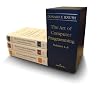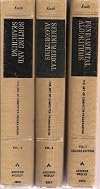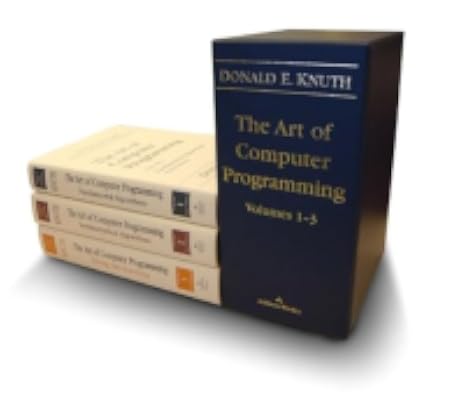
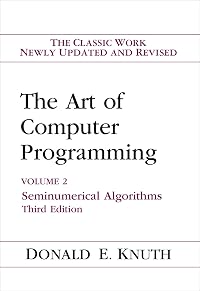
The Art of Computer Programming, Volumes 1-3 Boxed Set
by Donald E. Knuth
The Art of Computer Programming (Collections and Selections — Omnibus 1-3)
On This Page
Description
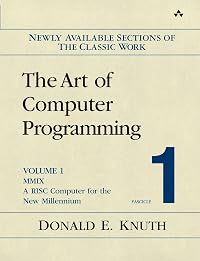
Offering a description of classical computer science, this multi-volume work is a useful resource in programming theory and practice for students, researchers, and practitioners alike. For programmers, it offers cookbook solutions to their day-to-day problems.Tags
Recommendations
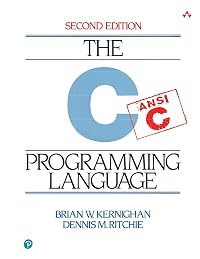
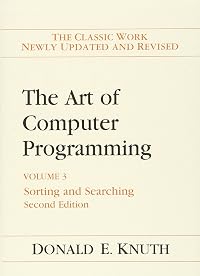
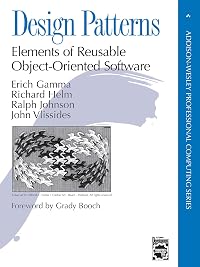
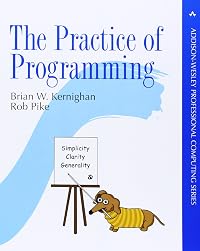
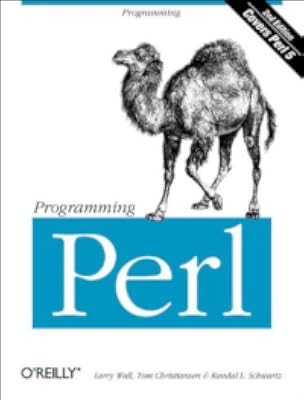
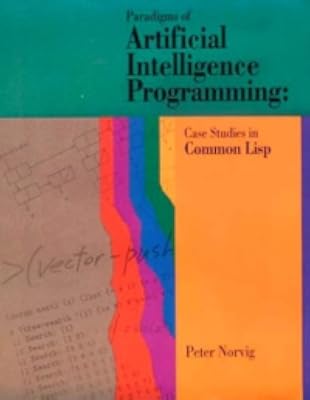
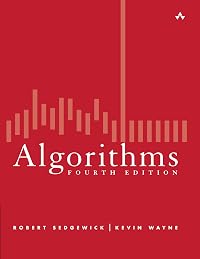

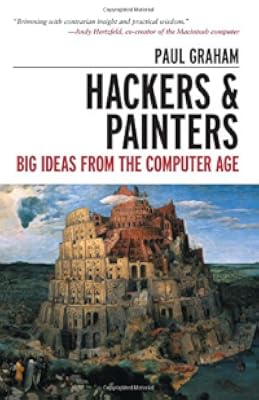

Member Recommendations
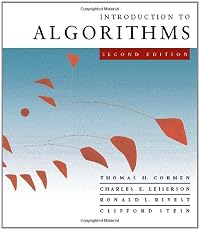
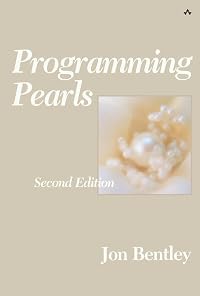
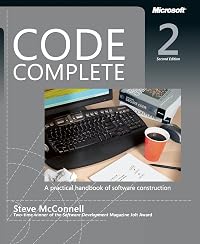
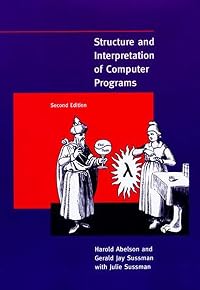
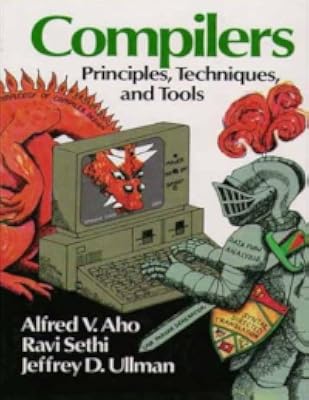
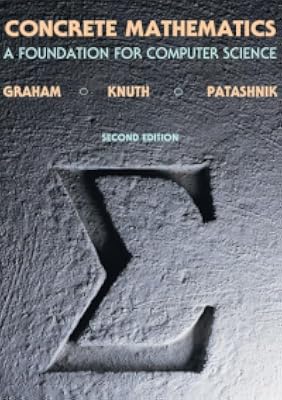
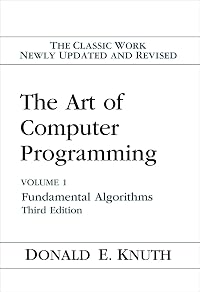
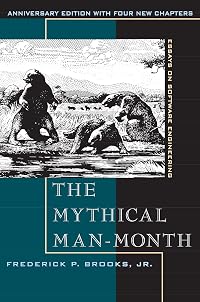
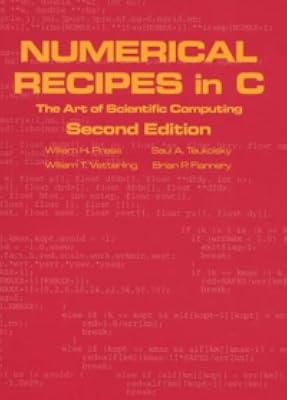
billmcn See this book for a shorter and more accessible but still mathematically rigorous overview of fundamental algorithms.
Member Reviews
"I thought that I was a perfectionist until I met Knuth." The previous sentence is from the renowned mathematician Fan Rong K Chung Graham and I think it also reflects the spirit of the masterpiece of Knuth, The Art of Computer Programming (TAOCP). Reading the book was pure intellectual indulgence and a striking experience for me. I'm not a computer scientist in the academic sense but rather a professional programmer with engineering and mathematics background so I don't think I can criticize the book at the level it deserves, I simply do not own that much technical breadth and depth. But I can easily say that this is one of the books which I can call a masterpiece without hesitation and unlike many other technical books I read, it show more broadened my horizons in fundamental aspects of computing science, such as randomness and relationships between superficially unrelated mathematical structures.
Some may think that this masterpiece is rather theoretical and not very applicable in daily programming tasks but did you also know that this book is mentioned in Mitnick's 'The Art of Intrusion: The Real Stories Behind the Exploits of Hackers, Intruders and Deceivers' where a group of hackers try to analyze some slot machines and one of them visits the library to learn more about the random number generation algorithms and picks up TAOCP?
I believe every programmer will find at least a few pages of pure hacker's delight in TAOCP and thus this book belongs to the shelf of every programmer. show less
Some may think that this masterpiece is rather theoretical and not very applicable in daily programming tasks but did you also know that this book is mentioned in Mitnick's 'The Art of Intrusion: The Real Stories Behind the Exploits of Hackers, Intruders and Deceivers' where a group of hackers try to analyze some slot machines and one of them visits the library to learn more about the random number generation algorithms and picks up TAOCP?
I believe every programmer will find at least a few pages of pure hacker's delight in TAOCP and thus this book belongs to the shelf of every programmer. show less
There's no doubt that this is a landmark publication in the field of computer science, but it's tough going. The material is only really suitable for an advanced undergrad or graduate student. A command of basic calculus, combinatorics, and probability is a prerequisite to many of the chapters. Also, you should already know a good deal about how computers work and how to program. This is not an introduction to any of those subjects.
Knuth's style is a little strange (geeky?) at times, but the presentation is well organized and well motivated. Also, his credentials are undisputable.
Unfortunately, I think the applicable material in these books is starting to show its age. The discussions don't always apply to a world of huge system show more memories, fast-and-cheap CPUs, etc.
With that said, reading these books and mastering the content would be a worthwhile accomplishment for any student of computer science. There are many footnotes to excellent papers. Even at over a thousand pages, Knuth does a good job showing you that these volumes are still just a starting point. show less
Knuth's style is a little strange (geeky?) at times, but the presentation is well organized and well motivated. Also, his credentials are undisputable.
Unfortunately, I think the applicable material in these books is starting to show its age. The discussions don't always apply to a world of huge system show more memories, fast-and-cheap CPUs, etc.
With that said, reading these books and mastering the content would be a worthwhile accomplishment for any student of computer science. There are many footnotes to excellent papers. Even at over a thousand pages, Knuth does a good job showing you that these volumes are still just a starting point. show less
Just seeing this title again brought back many memories of this being the "bible" of computer science back in my grad school days -- a very, very, very long time ago. Knuth's volumes were absolutely the "go to" books for many of our courses. Perhaps they's seem dated now, but still they'd provide a very solid foundation for anyone serious about programming / computing / software development / etc.
I'd be smarter after reading the material in these volumes, but I'd also be much older... From one of the gurus...Very, very in-depth. Done from a textbook POV, with explanations and many exercises. Examples and presentation can be awkward. Sedgewick's Algorithms in Java may be a better one to tackle.
An amazing work. Requires more concentration than I routinely muster, though, so I'm only making progress in fits and starts.
The mouseover to Randall's cartoon says:
'Dear Reader: Enclosed is a cheque for 98 cents. Using your work, I have proved this equals the amount you requested.'
Nick provides a proper review...http://www.goodreads.com/review/show/46996559
Oh. It's full of jokes, by the way. Just as well I didn't have my cup of tea in hand when I came upon this one:
4. [M50] Prove that when n is an integer, n > 2, the equation xn yn = zn has no solution in positive integers x, y, z. (NB the book was published in the 1960s.)
La bibbia dell'informatica, purtroppo non molto accessibile a causa della scelta dell'assembler come linguaggio per gli esempi...
Mar 4, 2009Italian
Members
- Recently Added By
Lists

Best Reference Books
53 works; 34 members

Books that changed the world
67 works; 64 members

The r/AskScience Reading List
159 works; 3 members
Author Information

81 Works 9,670 Members
Donald E. Knuth is known throughout the world for his pioneering work on algorithms and programming techniques, for his invention of the TEX and METAFONT systems for computer typesetting, and for his prolific and influential writing. Professor Emeritus of The Art of Computer Programming at Stanford University, he currently devotes full time to the show more completion of these fascicles and the seven volumes to which they belong. show less
Series

Classifications
- Genres
- Technology, Nonfiction, General Nonfiction
- DDC/MDS
- 005 — Computer science, information & general works Computer science, knowledge & systems Artificial Intelligence/Virtual Reality
- LCC
- QA76.6 — Science Mathematics Mathematics Instruments and machines Calculating machines Electronic computers. Computer science
- BISAC
Statistics
- Members
- 497
- Popularity
- 60,979
- Reviews
- 6
- Rating
- (4.59)
- Languages
- English, German, Polish
- Media
- Paper
- ISBNs
- 2
- UPCs
- 2
- ASINs
- 3