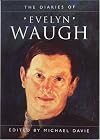
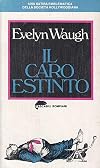
The Diaries of Evelyn Waugh
by Evelyn Waugh 
On This Page
Description
Evelyn Waugh kept a diary almost continuously from the age of seven until a year before his death in 1966, and extracts from the diaries caused sensation when they were published by in The Observer. Providing the background to the novels which made Waugh famous, these diaries are a sharp and baleful view of the social history of our times.Tags
Recommendations






















Member Reviews
Reread Vile Bodies recently, apropos of an interest in the Bright Young Things phenomenon, and found it so mean-spirited that I abandoned plan to reread rest of Waugh’s fiction. But I did pick up his diary and read it in sections, interspersed with his travel books, and found this a more rewarding experience. Waugh reveals himself as a bit of a shit, undeniably, and an alcoholic from early on, but with a vulnerable side which is not unattractive. And a lifelong dedication to his literary vocation. Certainly the diaries should be a must-read for fans of Waugh’s novels, but they have independent interest as a “portrait of the artist” and of course the literary and social circle in which he moved.
Ratings
Members
- Recently Added By
Published Reviews
He constructed for himself a coherent and highly rational world with clear religious, political and esthetic laws. It was a narrow, even a bigoted construction but, like Waugh's prose, it was a constant and authoritative reproach to the venality and disorder of his contemporaries, or of all but a tiny remnant--his honorable, amusing or wicked friends. The diaries are architect's notes on the show more construction and maintenance of this world; that was their value to Waugh. We have the novels, and so need them less. show less
added by John_Vaughan
Lists

Art of Reading
188 works; 5 members

In Our Time books
4,934 works; 2 members
Author Information

132+ Works 56,539 Members
Born in Hampstead and educated at Oxford University, Evelyn Waugh came from a literary family. His elder brother, Alec was a novelist, and his father, Arthur Waugh, was the influential head of a large publishing house. Even in his school days, Waugh showed sings of the profound belief in Catholicism and brilliant wit that were to mark his later show more years. Waugh began publishing his novels in the late 1920's. He joined the Royal Marines at the beginning of World War II and was one of the first to volunteer for commando service. In 1944 he survived a plane crash in Yugoslavia and, while hiding in a cave, corrected the proofs of one of his novels. Waugh's early novels, Decline and Fall (1927), Vile Bodies (1930), and A Handful of Dust (1934), established him as one of the funniest and most brilliant satirists the British had seen in years. He was particularly skillful at poking fun at the scramble for prominence among the upper classes and the struggle between the generations. He lived for a while in Hollywood, about which he wrote The Loved One (1948), a scathing attack on the United States's overly sentimental funeral practices. His greatest works, however, are Brideshead Revisited (1945), which has been made into a highly popular television miniseries, and the trilogy Sword of Honor (1965), composed of Men at Arms (1952), Officers and Gentlemen (1955), and The End of the Battle (1961). (Bowker Author Biography) show less
Evelyn Waugh has a Legacy Library. Legacy libraries are the personal libraries of famous readers, entered by LibraryThing members from the Legacy Libraries group.
All Editions
Work Relationships
Contains
Common Knowledge
- People/Characters
- Evelyn Waugh
- First words
- September, 1911; aged 7
My History
My name is Evelyn Waugh I go to Heath Mount school I am in the Vth Form, Our Form Master is Mr Stebbing. - Quotations
- Hiya Moll, you're the tops. You've got everything it takes, baby, and that goes for junior too. Look Moll, you put in a word for us slobs, right now and when we conk out.
(Waugh's 'vernacular' version of the 'Hail Mar... (show all)y' in reaction to the Roman Catholic Church's modernising Vatican II reforms, in his diary, September 1962). - Last words
- (Click to show. Warning: May contain spoilers.)Though I saw him seldom in late years, a deeply valued friend whom I shall miss bitterly.
Classifications
Statistics
- Members
- 294
- Popularity
- 108,932
- Reviews
- 1
- Rating
- (4.07)
- Languages
- English
- Media
- Paper
- ISBNs
- 7
- ASINs
- 11