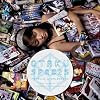
Otaku Spaces
by Patrick W. Galbraith
On This Page
Description
"Otaku Spaces sets out to explain the complicated subculture ofotaku through the stories ofotaku themselves...Galbraith and photographer Androniki Christodoulou allow theotaku subjects they feature to take control of their own narrative." -Wired.com Raw File "This is a terrain of contested meanings. And 'you' (the original meaning of the word otaku in Japanese) are entering it. Invite otaku into your home and heart, as they have invited you into theirs." -The Huffington Post "A peek into an show more otaku's bedroom or living space can be a bit of a surprise for the average person...Patrick W. Galbraith digs even deeper into the way otaku choose to decorate their surroundings, and the reasons why they choose to do so in the way that they do." -CNN "Geek Out!" "The book is certainly a beautiful object...There's such an intimate air to Christodoulou's photographs that you have to imagine what the subjects are hiding...But the interviews appeal, in the end, to our commonality: A few of the subjects gently point out that if people are honest with themselves, everyone is a little bitotaku about something." -The Stranger (Starred Review) "(Galbraith) clearly knows his stuff, and also has a genuine regard and respect for people that it would be easy to make fun of. Christodoulou has a real eye for capturing the essence of the otaku world, and the large-scale format (9" by 9") and high-quality color printing in this book show her work off to its best advantage. Even if you're not an otaku yourself, Galbraith and Christodoulou do such a good job of capturing the flavor of these subcultures that reading Otaku Spaces is the next best thing to a trip to Japan." -PopMatters Otaku--nerd, über-fan, obsessive collector. Since the 1980s, the term has been used to refer to fans of Japanese anime, manga, and video games. The word appeared with no translation on the cover of the premier issue ofWired magazine in 1993. Patrick W. Galbraith has produced a groundbreaking work of reportage that takes us beyond the stereotypes of "weird Japan" and into the private rooms of self-describedotaku. Interviews and more than fifty color photos reveal a seldom seen side of these reclusive Japanese collectors. They talk frankly about their collections of blow-up dolls, comic books, military paraphernalia, anime videos, and more. Galbraith follows the collectors to their favorite shops and shows how public space in Japan is starting to mimic the look and feel of theotaku's private room. He also interviews Japan's top cultural critics, helping to placeotaku culture in wider sociological and economic contexts. Galbraith broadens his interview focus even further to includeotaku from the United States and the United Kingdom, forcing those of us who live in any hyper-consumerist culture to admit that we can and do haveotaku tendencies. Patrick W. Galbraith--a self-describedotaku with the anime tattoos to prove it--is a PhD student at the University of Tokyo and the author ofThe Otaku Encyclopedia (Kodansha Limited). He also blogs at the popular Otaku2 and is widely considered one of the foremost American experts on Japan's pop culture. Androniki Christodoulou is a freelance photographer based in Tokyo, Japan. show lessTags
Recommendations







































Member Reviews
Part curiosity, part sociology, part anthropology, this book looks at the lives of a handful of people who identify themselves as otaku. Otaku may very cursorily be described as avid collectors and/or fans of anime, manga, technology, and a myriad other subjects. Each individual is interviewed by the author and accompanied by a photograph of them in their living space or 'otaku room'. Each interview is fascinating in its own way, teasing out how the individual sees themselves and their hobby. They range from housewives to intellectuals to young men living with their parents, but all share an almost obsessive drive to collect, consume, and collate. Praise to Galbraith and Christodoulou for their wide range of subjects. While certainly show more some nearly hopeless nerds are featured, we are shown the vast array of people who could fall under the otaku title, up to and including a champion kick-boxer and some fashion models. Accompanying the interviews are several short essays on the development of otaku culture, its commercial centers, and academic discussions of what it all means. I found show less
 This review was written for LibraryThing Early Reviewers.
Patrick W. Galbraith’s Otaku Spaces is a fascinating piece of sociology focusing on the world of Japanese otaku, people who are deeply devoted, some might say obsessed, fans of anime, manga and the subculture these are associated with. Otaku Spaces begins by attempting to understand just what an otaku is. Even for a Western fan of anime/manga this is an important part of the book. Althought anime and manga have become popular in the west the general connotation of “geek” it has taken on here is significantly different from the frequently pejorative use the term sees in Japan.
From here, taking up approximately 2/3s of the book, Galbraith presents interviews with numerous otaku, with photographs of parts of their frequently immense show more collections of (usually but not always) anime and manga related possessions, ranging from figurines to DVDs to hug pillows, costumes and beyond. These interviews are the heart of the book and are fascinating for their diversity and candidness. Most interesting is the number of people, of different ages, educations, sexes, professions, etc., who identify as otaku. These interviews lead the reader into an otherwise secret, and sometimes secretive, world. Included is a young man who literally lives in a closet in his parents’ house, surrounded by his collection, a few idols and a kickboxing champion.
Finally, there is a section about the places associated with otaku culture, such as Akihahara and parts of Shinjuku. These are places that hold shops, some of them quite famous, that cater specifically to otaku culture. The descriptions of these areas give the reader a feel for the culture that goes beyond private collections and awkward social graces.
Throughout Otaku Spaces are numerous photographs. While the otaku interviewed are present, it is, not surprisingly, their spaces that truly capture one’s interest. With the exception of the final third of the book, these are pictures of personal spaces. They are intimate and private, representing a glimpse into the life of an otaku that is otherwise invisible and therefore easily misunderstood and ignored.
As a piece of fieldwork, Otaku Spaces is excellent. One might complain that there is a distinct lack of conclusions made. The whole of the book is dedicated to describing otaku and their spaces. I think, however, this is the point. Otaku Spaces is not a dissertation, there is no thesis. Instead it is a presentation about an otherwise little-studied Japanese subculture, replete with its own technical terminology, social stratification and personal and public spaces. The reader is left to draw their own conclusions as to what it means to be an otaku. This is a poignant message, as each person interviewed is asked that very question, and each has their own, distinct answer.
Anyone with an interest in otaku culture, the sociology of subcultures, or anime and manga in general would do well to read this book. show less
From here, taking up approximately 2/3s of the book, Galbraith presents interviews with numerous otaku, with photographs of parts of their frequently immense show more collections of (usually but not always) anime and manga related possessions, ranging from figurines to DVDs to hug pillows, costumes and beyond. These interviews are the heart of the book and are fascinating for their diversity and candidness. Most interesting is the number of people, of different ages, educations, sexes, professions, etc., who identify as otaku. These interviews lead the reader into an otherwise secret, and sometimes secretive, world. Included is a young man who literally lives in a closet in his parents’ house, surrounded by his collection, a few idols and a kickboxing champion.
Finally, there is a section about the places associated with otaku culture, such as Akihahara and parts of Shinjuku. These are places that hold shops, some of them quite famous, that cater specifically to otaku culture. The descriptions of these areas give the reader a feel for the culture that goes beyond private collections and awkward social graces.
Throughout Otaku Spaces are numerous photographs. While the otaku interviewed are present, it is, not surprisingly, their spaces that truly capture one’s interest. With the exception of the final third of the book, these are pictures of personal spaces. They are intimate and private, representing a glimpse into the life of an otaku that is otherwise invisible and therefore easily misunderstood and ignored.
As a piece of fieldwork, Otaku Spaces is excellent. One might complain that there is a distinct lack of conclusions made. The whole of the book is dedicated to describing otaku and their spaces. I think, however, this is the point. Otaku Spaces is not a dissertation, there is no thesis. Instead it is a presentation about an otherwise little-studied Japanese subculture, replete with its own technical terminology, social stratification and personal and public spaces. The reader is left to draw their own conclusions as to what it means to be an otaku. This is a poignant message, as each person interviewed is asked that very question, and each has their own, distinct answer.
Anyone with an interest in otaku culture, the sociology of subcultures, or anime and manga in general would do well to read this book. show less
This review was written for LibraryThing Early Reviewers.A bit of an otaku myself, I was naturally interested in Otaku Spaces, written by Patrick W. Galbraith with photography by Androniki Christodoulou. I was very happy to be selected to receive a review copy of the book from the publisher Chin Music Press through LibraryThing's Early Reviewers program. I was also thrilled to be introduced to Chin Music Press. Originally established in Tokyo and now headquartered in Seattle, much of the publisher's catalog is devoted to Japan-related titles. Although I haven't read it yet, I know Galbraith as the author of The Otaku Encyclopedia: An Insider's Guide to the Subculture of Cool Japan. And while I am not personally familiar with Christodoulou's work, she is an award-winning photographer who has show more recently been focusing on traditional and contemporary Japanese culture and on otaku culture in particular. Otaku Spaces seemed like it was in good hands and so I was excited to have the opportunity to read it.
While there have been plenty of books and articles exploring the otaku phenomenon, there has been a tendency, as Galbraith points out in the introduction of Otaku Spaces, to "talk about them but not to them." Otaku Spaces changes that by including profiles and in depth interviews with nineteen people, most of whom self-identify as otaku, in an attempt to challenge the stereotypes fostered by popular culture. Otaku Spaces begins with an excellent introduction that briefly examines the origin of otaku culture and the history of the term itself. The introduction is followed by a brief glossary before Otaku Spaces turns to the real showpiece of the book, "Otaku Interviews and Portraits." Each profile is accompanied by a photograph of the individual posing with their collection. The next sections are the photographs and profiles of "Otaku Places" such as Akihabara and Ōsu, interviews with "The Experts," and additional "Supplementary Material."
Galbraith and Christodoulou interview a wide variety of otaku, from those interested in underground paraphernalia to those interested in pop culture collectibles. Otaku are commonly associated with anime and manga, which are certainly well represented in Otaku Spaces, but they can frequently be involved in other subject areas as well. Stereotypically speaking, otaku are usually thought to be male, but there are plenty of female fans included in Otaku Spaces as well. I was surprised to discover that I was actually already knew of some of the otaku interviewed for Otaku Spaces, such as the cross-playing champion kickboxer Nagashima "Jienotsu" Yūichiro. But for every otaku I already knew there were four or five that I was meeting for the first time. Otaku Spaces provides a wonderful opportunity for them to share their knowledge of and passion for the things that they love, whether that be calculators or video games or just about anything else.
While many of the questions that Galbraith and Christodoulou ask the interviewees are tailored to their specific interests or collections, there are several questions that they make a point to ask each individual. These include questions like "Are you an otaku?," "Will you continue to collect in the future?," and "What is the difference between an otaku and a collector?" among others. The answers vary from person to person, emphasizing the fact that there is really no one type of otaku but that they are all experts in their own way. They may not always agree, but that is a valuable lesson in and of itself. The otaku in Otaku Spaces are real people with real lives, proving that there is more to otaku than just stereotypes. Otaku Spaces is an enlightening and engaging volume. It's also a very attractive book with full color photography and simple infographics. Otaku Spaces is easy to recommend to anyone interested in otaku specifically or in Japanese pop culture in general.
Experiments in Manga show less
While there have been plenty of books and articles exploring the otaku phenomenon, there has been a tendency, as Galbraith points out in the introduction of Otaku Spaces, to "talk about them but not to them." Otaku Spaces changes that by including profiles and in depth interviews with nineteen people, most of whom self-identify as otaku, in an attempt to challenge the stereotypes fostered by popular culture. Otaku Spaces begins with an excellent introduction that briefly examines the origin of otaku culture and the history of the term itself. The introduction is followed by a brief glossary before Otaku Spaces turns to the real showpiece of the book, "Otaku Interviews and Portraits." Each profile is accompanied by a photograph of the individual posing with their collection. The next sections are the photographs and profiles of "Otaku Places" such as Akihabara and Ōsu, interviews with "The Experts," and additional "Supplementary Material."
Galbraith and Christodoulou interview a wide variety of otaku, from those interested in underground paraphernalia to those interested in pop culture collectibles. Otaku are commonly associated with anime and manga, which are certainly well represented in Otaku Spaces, but they can frequently be involved in other subject areas as well. Stereotypically speaking, otaku are usually thought to be male, but there are plenty of female fans included in Otaku Spaces as well. I was surprised to discover that I was actually already knew of some of the otaku interviewed for Otaku Spaces, such as the cross-playing champion kickboxer Nagashima "Jienotsu" Yūichiro. But for every otaku I already knew there were four or five that I was meeting for the first time. Otaku Spaces provides a wonderful opportunity for them to share their knowledge of and passion for the things that they love, whether that be calculators or video games or just about anything else.
While many of the questions that Galbraith and Christodoulou ask the interviewees are tailored to their specific interests or collections, there are several questions that they make a point to ask each individual. These include questions like "Are you an otaku?," "Will you continue to collect in the future?," and "What is the difference between an otaku and a collector?" among others. The answers vary from person to person, emphasizing the fact that there is really no one type of otaku but that they are all experts in their own way. They may not always agree, but that is a valuable lesson in and of itself. The otaku in Otaku Spaces are real people with real lives, proving that there is more to otaku than just stereotypes. Otaku Spaces is an enlightening and engaging volume. It's also a very attractive book with full color photography and simple infographics. Otaku Spaces is easy to recommend to anyone interested in otaku specifically or in Japanese pop culture in general.
Experiments in Manga show less
This review was written for LibraryThing Early Reviewers.First, a caveat: I read an unfinished advance review copy that was missing a whole bunch of photographs and some of the interviews, so the finished product may well differ (in probably positive ways) from what I got to read.
The sense that I've gotten over the past few years is that the word "otaku" has been undergoing some semantic drift, at least within North America. In the past, I'd have thought it odd to find someone to use the term for someone who wasn't into anime / manga / Japanese video games, but there's definitely been some broadening out of the term into other areas, to just mean a more generic obsessive fan of something. I've heard people refer to themselves as train otaku, or baking otaku. It's interesting, I think, to see show more a term of identification spread out like this, from a linguistics perspective. And of course, the sense of hyperspecialization, of really delving deeply into something, even as a hobby, fits the current culture, as well.
Perhaps this is a good time, then, to take a closer look at otaku lives and lifestyles in the land from which the term came. This is the point of Galbraith's book, I think - to look at what drives these people, to get a sense of their lives, and how they view being an otaku, what the meaning of it is to them. It's a pretty solid piece of ethnography, with good introductory essays talking about the context in which the word first came about in Japan and its initially more negative connotations (being associated in the mainstream consciousness largely through association to a serial-killing child molester will do that), along with interviews with a couple of Japanese academics who work on otaku subculture, and a list of common otaku hangouts in Japan and timelines of their evolution.
The heart of the book, though, is the interviews; while the finished copy will probably have more interviews, and more pictures of the spaces in which these otaku are living, the version I read still gives you a good sense of the similarities and differences between them. The focus is largely on those who are into anime, manga and games, particularly dating games or the like, with interviews both with those whose connection is largely through consumption (only reading, playing the games, buying figurines, etc.) and those who also create their own stuff (anime car designs, complex art designs, doujinshi, etc.). There's a pretty decent balance between male and female otaku, as well, and the ordering seems to provide counterpoints for some of the stories - the boy who's really into dating sims (but is kinda too shy to talk about it much), the girl who's into BL, etc.
But the interviews are really linked most by the obsession to collect and possess, to be surrounded and immersed in the things one enjoys. Otherwise, it's hard to link in the stories of, say, the Russian SF and old calculator otaku, or the occult and subculture otaku collecting motorcycle gang and cult memorabilia with the rest of the people in the book. There isn't really a clear set of definitions, either - some of the people interviewed view collectors and otaku as being the same, and others don't; some say you have to be into anime, and other don't. However, the attention to detail, the underlying desires, and the amount of money and time spent all seem to link up for most of the people involved; thus, you can see what really is the same, and what's different.
This book is probably more enjoyable in the full form, with all the photos and interviews, but it's an intriguing, if not mind-blowing, piece of anthropological work as is. At the least, you get a sense of the breadth of the types of people involved, as the term and the type of person spreads. show less
The sense that I've gotten over the past few years is that the word "otaku" has been undergoing some semantic drift, at least within North America. In the past, I'd have thought it odd to find someone to use the term for someone who wasn't into anime / manga / Japanese video games, but there's definitely been some broadening out of the term into other areas, to just mean a more generic obsessive fan of something. I've heard people refer to themselves as train otaku, or baking otaku. It's interesting, I think, to see show more a term of identification spread out like this, from a linguistics perspective. And of course, the sense of hyperspecialization, of really delving deeply into something, even as a hobby, fits the current culture, as well.
Perhaps this is a good time, then, to take a closer look at otaku lives and lifestyles in the land from which the term came. This is the point of Galbraith's book, I think - to look at what drives these people, to get a sense of their lives, and how they view being an otaku, what the meaning of it is to them. It's a pretty solid piece of ethnography, with good introductory essays talking about the context in which the word first came about in Japan and its initially more negative connotations (being associated in the mainstream consciousness largely through association to a serial-killing child molester will do that), along with interviews with a couple of Japanese academics who work on otaku subculture, and a list of common otaku hangouts in Japan and timelines of their evolution.
The heart of the book, though, is the interviews; while the finished copy will probably have more interviews, and more pictures of the spaces in which these otaku are living, the version I read still gives you a good sense of the similarities and differences between them. The focus is largely on those who are into anime, manga and games, particularly dating games or the like, with interviews both with those whose connection is largely through consumption (only reading, playing the games, buying figurines, etc.) and those who also create their own stuff (anime car designs, complex art designs, doujinshi, etc.). There's a pretty decent balance between male and female otaku, as well, and the ordering seems to provide counterpoints for some of the stories - the boy who's really into dating sims (but is kinda too shy to talk about it much), the girl who's into BL, etc.
But the interviews are really linked most by the obsession to collect and possess, to be surrounded and immersed in the things one enjoys. Otherwise, it's hard to link in the stories of, say, the Russian SF and old calculator otaku, or the occult and subculture otaku collecting motorcycle gang and cult memorabilia with the rest of the people in the book. There isn't really a clear set of definitions, either - some of the people interviewed view collectors and otaku as being the same, and others don't; some say you have to be into anime, and other don't. However, the attention to detail, the underlying desires, and the amount of money and time spent all seem to link up for most of the people involved; thus, you can see what really is the same, and what's different.
This book is probably more enjoyable in the full form, with all the photos and interviews, but it's an intriguing, if not mind-blowing, piece of anthropological work as is. At the least, you get a sense of the breadth of the types of people involved, as the term and the type of person spreads. show less
This review was written for LibraryThing Early Reviewers.http://lampbane.livejournal.com/643581.html
"The design of this book just kind of screams "puff piece" from the outset: large pages with large color photographs, a three-column layout for the text, lots of graphics in the margins, maybe an introductory paragraph that tries to contextualize the photographs and make it seem more intellectual than just "ooh pretty pictures." In short, it looks like a coffee table book, something you flip through when bored and show off to your friends rather than actually straight-up read.
That would be a wrong assumption. This book not only has a lot of text, it has footnotes. It talks about public vs. private space, the media gaze, and a bunch of other things I haven't heard uttered since I got my show more communications degree. Of course, that ultimately means I enjoyed those parts greatly, even if other people might have been lost.
[...]
I appreciated how it treated its subjects respectfully, and I enjoyed the diversity of subjects. The essays were a bit dense, but not terribly so, just a bit beyond what a normal person might expect of a book of this design and format. The section about otaku areas/neighborhoods could have been a bit more filled out, perhaps with more photographs of the exact things they were talking about (maybe more specific storefronts) and maps. [...]
The design had some oddities in it; there was a lot of white space, including entire blank pages which could have had more photographs on them and the little pictographs in each interview were about 50/50 with their usefulness, making them feel like space-fillers rather than as presenting any kind of information. I also disliked how they didn't necessarily correspond with the text on the page; it's distracting when a magazine uses a pull quote in an interview that actually appears on another page, and this wasn't any different. I also found the book somewhat hard to hold, but that's really a minor gripe considering the trade-off is that the size and shape is there to display the photographs better.
Overall, I thought this was an interesting read, a good overview of how the otaku scene has changed over the past decade, and a respectful look at its otaku subjects." show less
"The design of this book just kind of screams "puff piece" from the outset: large pages with large color photographs, a three-column layout for the text, lots of graphics in the margins, maybe an introductory paragraph that tries to contextualize the photographs and make it seem more intellectual than just "ooh pretty pictures." In short, it looks like a coffee table book, something you flip through when bored and show off to your friends rather than actually straight-up read.
That would be a wrong assumption. This book not only has a lot of text, it has footnotes. It talks about public vs. private space, the media gaze, and a bunch of other things I haven't heard uttered since I got my show more communications degree. Of course, that ultimately means I enjoyed those parts greatly, even if other people might have been lost.
[...]
I appreciated how it treated its subjects respectfully, and I enjoyed the diversity of subjects. The essays were a bit dense, but not terribly so, just a bit beyond what a normal person might expect of a book of this design and format. The section about otaku areas/neighborhoods could have been a bit more filled out, perhaps with more photographs of the exact things they were talking about (maybe more specific storefronts) and maps. [...]
The design had some oddities in it; there was a lot of white space, including entire blank pages which could have had more photographs on them and the little pictographs in each interview were about 50/50 with their usefulness, making them feel like space-fillers rather than as presenting any kind of information. I also disliked how they didn't necessarily correspond with the text on the page; it's distracting when a magazine uses a pull quote in an interview that actually appears on another page, and this wasn't any different. I also found the book somewhat hard to hold, but that's really a minor gripe considering the trade-off is that the size and shape is there to display the photographs better.
Overall, I thought this was an interesting read, a good overview of how the otaku scene has changed over the past decade, and a respectful look at its otaku subjects." show less
This review was written for LibraryThing Early Reviewers.The opening essay in Patrick Galbraith's OTAKU SPACES is a scholarly attempt to define the obsessive compulsion to collect, at least as it took form in Japan in the last decades of the 20th century. There's probably too much opinion in the essay, though.
The essay is followed by 19 interviews. About half of those interviewed say that are not even "otaku". Mostly the interviews are a waste of time, full of trivia and questions like, "what's your favorite store." This is not useful information. The interviews should have helped define the term, should have given clear examples that clarify why the book was written.
The book has a section on the sections of Japan where collectors congregate and consume. These mini essays are actually show more pretty well written, and provide some very interesting history. There seem to be parallels between these centers of otaku in Japan, and those in America. The San Diego Comic Convention started as a fanboy's paradise, for a small core of rabid collectors. Since then, it has become increasingly about movies. There are parallels, if I read these essays correctly, in the way,say, Osu, Nagoya has changed as the media popularized what was once a niche fascination
I wish there were more than just three photographs paperclipped into the book.These pictures are worth a thousand words. There's a picture of a chubby teen boy, sitting buddah like, surrounded by his astounding collection of toy cars. The kid is a completest: There is one shelf of just toy VW minivan models - one can count scores of them in various colors and configurations. And there must be, what, 60 shelves, each shelf with up to 50 toy cars, arranged by color and style. What compulsion. What drive, to have amassed such a collection. show less
The essay is followed by 19 interviews. About half of those interviewed say that are not even "otaku". Mostly the interviews are a waste of time, full of trivia and questions like, "what's your favorite store." This is not useful information. The interviews should have helped define the term, should have given clear examples that clarify why the book was written.
The book has a section on the sections of Japan where collectors congregate and consume. These mini essays are actually show more pretty well written, and provide some very interesting history. There seem to be parallels between these centers of otaku in Japan, and those in America. The San Diego Comic Convention started as a fanboy's paradise, for a small core of rabid collectors. Since then, it has become increasingly about movies. There are parallels, if I read these essays correctly, in the way,say, Osu, Nagoya has changed as the media popularized what was once a niche fascination
I wish there were more than just three photographs paperclipped into the book.These pictures are worth a thousand words. There's a picture of a chubby teen boy, sitting buddah like, surrounded by his astounding collection of toy cars. The kid is a completest: There is one shelf of just toy VW minivan models - one can count scores of them in various colors and configurations. And there must be, what, 60 shelves, each shelf with up to 50 toy cars, arranged by color and style. What compulsion. What drive, to have amassed such a collection. show less
This review was written for LibraryThing Early Reviewers.The word Otaku has a certain stereotype of the creepy obsessed anime fan living in a basement. The authors set out to go beyond this stereotype to show the real Otaku by connected them to the spaces they occupy. To do this, these spaces are photographed and various individuals form the Otaku community in Japan are interviewed. The
style of the book is easy to read but the gallery copy I received lacked most of the photographs. I assume these will be in the final product. The few pictures presents added another layer of depth to the interviews. I love the wide selection of individual featured who are
defined as Otaku. It does help if the reader have some very basic knowledge of Japan modern culture but a novice will not be lost.
style of the book is easy to read but the gallery copy I received lacked most of the photographs. I assume these will be in the final product. The few pictures presents added another layer of depth to the interviews. I love the wide selection of individual featured who are
defined as Otaku. It does help if the reader have some very basic knowledge of Japan modern culture but a novice will not be lost.
This review was written for LibraryThing Early Reviewers.Members
- Recently Added By
Published Reviews
Otaku Spaces Shows Off Collectors’ Riches
The new book Otaku Spaces sets out to explain the complicated subculture of otaku through the stories of otaku themselves. The Japanese word usually describes people (usually men) who are obsessed with certain forms of pop culture such as manga, anime and videogames. Like any subculture, however, otakus often feel misunderstood. They are often show more dismissed as geeks by outsiders, where those in the know might use the term more as a synonym for “expert.”
“When you talk to these guys you find out they often have full time jobs, they’re in touch with their families, they have girlfriends, and are actually very social,” says author Patrick W. Galbraith, a known otaku historian who just received a Ph.D. from the University of Tokyo and is now pursuing another Ph.D. at Duke.
Like nerd culture in the U.S., otaku has come into the mainstream through consumer spending. A report cited in the book claims otaku spend $2.5 billion a year on their hobbies — a figure that suggests there are more than just a few otaku hiding out in their rooms.
In addition to a negative association with being nerdy, otaku men in particular can carry the stigma of sexual deviancy. This is due in large part to a media-fueled frenzy about Tsutomu Miyazaki, a reclusive and socially awkward otaku collector who was arrested in 1989 for molesting, murdering and mutilating four young girls.
“The idea [for the book] was really to move away from the stereotypes,” says Galbraith.
To do this, Galbraith and photographer Androniki Christodoulou allow the otaku subjects they feature to take control of their own narrative. The entire front of the book is filled with portraits and personal interviews.
“[The portraits and interviews] were about giving a voice and a face back to the people who are talked about but not talked to,” Galbraith says.
Since the low point of the Miyazaki arrest, both the Japanese and global media have also helped build a more positive image of otaku by creating TV shows and websites that explore the culture and work to challenge the bias. In these portraits, for example, Christodoulou asked the otaku (both men and women) to strike some kind of pose that mimicked their collection. This mimicry, says Galbraith, was one way to undermine the traditional otaku stereotype by having fun with it.
“It was kind of an over-performance where the subjects said ‘I am otaku, look at me now,’” he says.
While otaku culture is mostly associated with private spaces, collectors have also created made a home away from home in the urban areas around the shops that cater to otaku culture. In cities around Japan, these shops tend to form nodes that provide a public space for a notoriously shut-in hobby. Along with related activities like cosplay, where people dress up like an anime or manga character, these nodes are making the otaku lifestyle visible, and accessible, to anyone.
“Considering how otaku were associated with the closed rooms and social failure of Miyazaki Tsutomu in the 1990s, associating otaku with open rooms and social success in the 2000s is nothing short of a paradigm shift,” Galbraith writes in the book.
That said, there is still a long way to go.
“There are not enough pages in the world to get through the complexity,” Galbraith says. “And unfortunately there is still a lingering polarization of the otaku image into good and bad. This does nothing to tell us about the real people who live between these stereotypes and out of sight. In the book we are confronted by actual people, who graciously share their private spaces and thoughts, and I hope that readers will try to understand them as fellow human beings.” show less
The new book Otaku Spaces sets out to explain the complicated subculture of otaku through the stories of otaku themselves. The Japanese word usually describes people (usually men) who are obsessed with certain forms of pop culture such as manga, anime and videogames. Like any subculture, however, otakus often feel misunderstood. They are often show more dismissed as geeks by outsiders, where those in the know might use the term more as a synonym for “expert.”
“When you talk to these guys you find out they often have full time jobs, they’re in touch with their families, they have girlfriends, and are actually very social,” says author Patrick W. Galbraith, a known otaku historian who just received a Ph.D. from the University of Tokyo and is now pursuing another Ph.D. at Duke.
Like nerd culture in the U.S., otaku has come into the mainstream through consumer spending. A report cited in the book claims otaku spend $2.5 billion a year on their hobbies — a figure that suggests there are more than just a few otaku hiding out in their rooms.
In addition to a negative association with being nerdy, otaku men in particular can carry the stigma of sexual deviancy. This is due in large part to a media-fueled frenzy about Tsutomu Miyazaki, a reclusive and socially awkward otaku collector who was arrested in 1989 for molesting, murdering and mutilating four young girls.
“The idea [for the book] was really to move away from the stereotypes,” says Galbraith.
To do this, Galbraith and photographer Androniki Christodoulou allow the otaku subjects they feature to take control of their own narrative. The entire front of the book is filled with portraits and personal interviews.
“[The portraits and interviews] were about giving a voice and a face back to the people who are talked about but not talked to,” Galbraith says.
Since the low point of the Miyazaki arrest, both the Japanese and global media have also helped build a more positive image of otaku by creating TV shows and websites that explore the culture and work to challenge the bias. In these portraits, for example, Christodoulou asked the otaku (both men and women) to strike some kind of pose that mimicked their collection. This mimicry, says Galbraith, was one way to undermine the traditional otaku stereotype by having fun with it.
“It was kind of an over-performance where the subjects said ‘I am otaku, look at me now,’” he says.
While otaku culture is mostly associated with private spaces, collectors have also created made a home away from home in the urban areas around the shops that cater to otaku culture. In cities around Japan, these shops tend to form nodes that provide a public space for a notoriously shut-in hobby. Along with related activities like cosplay, where people dress up like an anime or manga character, these nodes are making the otaku lifestyle visible, and accessible, to anyone.
“Considering how otaku were associated with the closed rooms and social failure of Miyazaki Tsutomu in the 1990s, associating otaku with open rooms and social success in the 2000s is nothing short of a paradigm shift,” Galbraith writes in the book.
That said, there is still a long way to go.
“There are not enough pages in the world to get through the complexity,” Galbraith says. “And unfortunately there is still a lingering polarization of the otaku image into good and bad. This does nothing to tell us about the real people who live between these stereotypes and out of sight. In the book we are confronted by actual people, who graciously share their private spaces and thoughts, and I hope that readers will try to understand them as fellow human beings.” show less
added by susieimage
Lists

Anime/Manga Studies
111 works; 3 members
Author Information
8+ Works 244 Members
Common Knowledge
- Important places
- Akihabara, Tokyo, Japan
Classifications
Statistics
- Members
- 43
- Popularity
- 689,281
- Reviews
- 11
- Rating
- (3.83)
- Languages
- English
- Media
- Paper
- ISBNs
- 1