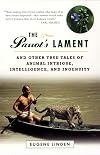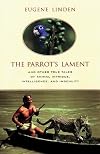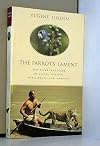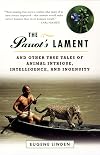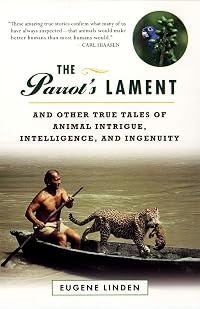
The Parrot's Lament and Other True Tales of Animal Intrigue, Intelligence, and Ingenuity
by Eugene Linden
On This Page
Description
Award-winning environmentalist and nature writer Eugene Linden offers a compelling case as he documents true stories from the next great frontier: the exploration of animal consciousness. That animals think, "talk," and feel has long been denied by the general scientific establishment. Yet zoo keepers, field biologists, and even pet owners everywhere know differently. More than two hundred separate anecdotes show how our furry and feathered next of kin experience and engage in strategy, show more deception, game-playing, humor, heroism, love, compassion, and even grief. Highly readable, this is a must-have volume for any animal lover. show lessTags
Recommendations




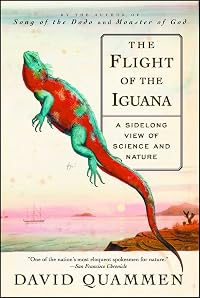

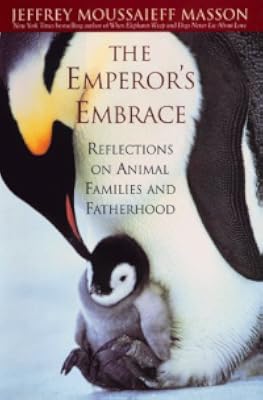
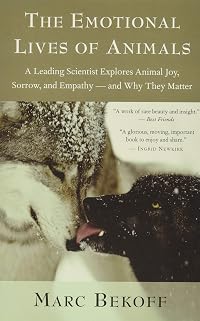
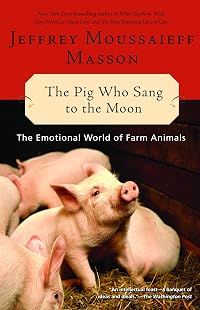

Member Reviews
I loved this book! I have talked about this book to friends and acquaintances more than perhaps any other (except maybe Linden's The Octopus and The Orangutan.) There are so many fascinating stories in it about the often overlooked capacity of animals (other than humans) to feel, express and act on their emotions. Linden struggles to avoid anthropomorphizing the animals whose stories of intelligence, compassion and communication he tells, but argues that such a struggle does not preclude recognizing these dimensions/abilities in our fellow creatures. Above all, Linden communicates a sense of wonder in exploring the worlds of beings whose existence is not as alien as we might think, nor as separate from humanity as some scientists would show more have us believe. show less
Reasonably scientific - doesn't pretend to be more than it is - but is much more than cute pet stories. If you're not convinced by this that animal intelligence needs to be investigated with a fresh eye and a new perspective, you probably think the moon landing was faked. ;)
Short, funny, with only a few easy paragraphs at the end of a real treatise about what intelligence really means in different species, and the implications for the progression of civilization and for the health of the biosphere.
Just a few thoughts;
All great apes can laugh. While a grin on a chimp may signify fear rather than pleasure, a laugh is a laugh."
"When the Los Angeles Zoo inaugurated a new chimp enclosure, one of the ways they [successfully] tested its show more security was to bring in an orangutan and see whether it could escape.... Marvin Jones says 'An orangutan will work and work at something until they get it. Chimps don't have that attention span.'"
"Saying that an animal has patience is saying that an animal has the chemical signals and neurological wiring to support patience. Attention span is not simply a function of temperament - otherwise cows would be way ahead of us."" show less
Short, funny, with only a few easy paragraphs at the end of a real treatise about what intelligence really means in different species, and the implications for the progression of civilization and for the health of the biosphere.
Just a few thoughts;
All great apes can laugh. While a grin on a chimp may signify fear rather than pleasure, a laugh is a laugh."
"When the Los Angeles Zoo inaugurated a new chimp enclosure, one of the ways they [successfully] tested its show more security was to bring in an orangutan and see whether it could escape.... Marvin Jones says 'An orangutan will work and work at something until they get it. Chimps don't have that attention span.'"
"Saying that an animal has patience is saying that an animal has the chemical signals and neurological wiring to support patience. Attention span is not simply a function of temperament - otherwise cows would be way ahead of us."" show less
I got hold of this book mainly for the intriguing cover of a cheetah nonchalantly sitting on a rowboat as a man ferries her and her cub across a body of water. I really wanted the hear the story of that image.
This book is chock full of so many anecdotes and stories about animals, their intelligence and their ability to reason about their surroundings. I was a little disappointed, however, to discover that the author mainly covered about Chimpanzees and parrots. (But mostly the chimps.) I had hoped for a wider array of animals. Perhaps rooks and blackbirds/crows? Or more about elephants. Squid?
Still, I greatly enjoyed reading the book and often found myself reading aloud to my roommate as I rapidly read through the entire book in a show more single sitting. Solid writing, engaging stories, and the explanation of the politics behind animal studies definitely made me think. What is the basis of intelligence? Of 'humanity'? Of a life that is self aware? show less
This book is chock full of so many anecdotes and stories about animals, their intelligence and their ability to reason about their surroundings. I was a little disappointed, however, to discover that the author mainly covered about Chimpanzees and parrots. (But mostly the chimps.) I had hoped for a wider array of animals. Perhaps rooks and blackbirds/crows? Or more about elephants. Squid?
Still, I greatly enjoyed reading the book and often found myself reading aloud to my roommate as I rapidly read through the entire book in a show more single sitting. Solid writing, engaging stories, and the explanation of the politics behind animal studies definitely made me think. What is the basis of intelligence? Of 'humanity'? Of a life that is self aware? show less
While wholly anecdotal, the stories are stunning. While including a fair number of zoo escapes, science writer Eugene Linden also presents documented accounts of "wild" animals exhibiting "thoughtful" behaviors.
The author notes that it is not a stretch to assume that fears, anxieties, and the occasional sense of triumph, predate our species. [25] Also, "a large part of life involves figuring out how to deal with the dominant species on this planet--humankind". [5] What Linden documents in interviews with trainers, hunters, and zoologists, is the individualism, the apparent "conscious" efforts, the acts of compassion, heroism, and love, which animals have displayed.
The author notes that it is not a stretch to assume that fears, anxieties, and the occasional sense of triumph, predate our species. [25] Also, "a large part of life involves figuring out how to deal with the dominant species on this planet--humankind". [5] What Linden documents in interviews with trainers, hunters, and zoologists, is the individualism, the apparent "conscious" efforts, the acts of compassion, heroism, and love, which animals have displayed.
Sooo interesting. The author says it's impossible to really know what's going on with somebody (someanimal) else, so arguing over what's intelligent and what's not is very difficult. So... let's just tell all these great true stories and see what impressions we're left with.
Unscientific. Definitely reads in emotion that is not present. It probably would have been ranked higher with me, except that several people in this book have relationships with animals that make me uncomfortable - interacting freely with large cats, dealing with orcas, etc.
Animals are much more human than we think they are!
Members
- Recently Added By
Lists

Recommended Nature Writing
346 works; 180 members

Best Books About Animals
143 works; 48 members

Favorite Animal Non-Fiction
293 works; 144 members
Author Information

18+ Works 1,079 Members
Award winning journalist Eugene Linden is the author of books, articles and essays about science, technology and the environment. He has written a thought provoking, insightful book, "The Future in Plain Sight: Nine Clues to the Coming Instability" (1998). In this book, Linden presents the thesis that rapid change is eminent and evident in climate show more conditions, the spread of infectious disease, volatile economic conditions, loss of biodiversity and other clues. The reader is then projected to 2050 as Linden presents the consequences of this instability. Somewhat of a doomsayer, the author's vision is not a pretty one: lethal plagues, deadly famine, catastrophic storms, economic collapse and more. But in the final analysis, some small hope is offered. "Over the millennia, humanity has proved to be an artful dodger of fate, a defier of limits, a surmounter of seemingly insurmountable obstacles, and a master escape artist from traps laid by nature. Only the very brave or fool hardy would assert flatly that our resourceful species has finally exhausted its bag of tricks. Still, it is very late in the game." Other books by Linden include "Apes, Men and Language" (1974), "The Alms Race: the Impact of American Voluntary Aid Abroad" (1976), "Affluence and Discontent: the Anatomy of Consumer Societies" (1979), and "Silent Partners: the Legacy of the Ape Language Experiments" (1986), a New York Times notable book. Linden has been writing for Time magazine since 1987. Some of his award winning cover stories are "Doomed" (1995) exploring endangered tigers, "Megacities" (1993), dealing with overpopulation and "The World's Last Eden" (1992) about rain forest destruction. The author is a frequent guest on radio and television shows from Firing Line to Good Morning America and a contributor to a wide range of periodicals from The Wall Street Journal to National Geographic. . (Bowker Author Biography) show less
Common Knowledge
- Canonical title
- The Parrot's Lament and Other True Tales of Animal Intrigue, Intelligence, and Ingenuity
- Original publication date
- 1988
Classifications
Statistics
- Members
- 278
- Popularity
- 116,100
- Reviews
- 7
- Rating
- (3.86)
- Languages
- English, French, Spanish
- Media
- Paper, Ebook
- ISBNs
- 8
- ASINs
- 4