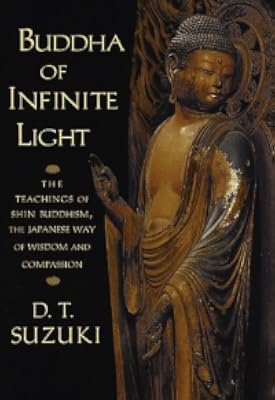
Buddha of Infinite Light
by Daisetz T. Suzuki
On This Page
Description
Shin is the uniquely Japanese flowering of the type of Buddhism known as "Pure Land." It originated in the thirteenth century with the charismatic and prophetic figure Shinran (1172-1263), whose interpretation of the traditional Pure Land teachings was extremely influential in his own lifetime and remain so today. In a period when Japanese Buddhism was dominated by an elitist monastic establishment, Shinran's Shin teaching became a way of liberation for all people, regardless of age, class, show more or gender. Although Shin is one of Japan's greatest religious contributions--and is still the most widely practiced form of Buddhism in Japan--it remains little known in the West. In this book, based on several lectures he gave in the 1950s, D. T. Suzuki illuminates the deep meaning of Shin and its rich archetypal imagery, providing a scholarly and affectionate introduction to this sometimes misunderstood tradition of Buddhist practice. show lessTags
Recommendations












Member Reviews
This book delves into the details of the Pure Land or Shin school of Buddhism that originated in India, moved on to China and was later perfected in Japan as the Shin school of thought.
Essentially meant for the layman, it shows how one can lead a spiritual life in the material world without being overwhelmed by it, like the lotus that manages to retain it's pristine beauty inspite of growing in muck and surrounded by a lot if it.
Essentially meant for the layman, it shows how one can lead a spiritual life in the material world without being overwhelmed by it, like the lotus that manages to retain it's pristine beauty inspite of growing in muck and surrounded by a lot if it.
This book delves into the details of the Pure Land or Shin school of Buddhism that originated in India, moved on to China and was later perfected in Japan as the Shin school of thought.
Essentially meant for the layman, it shows how one can lead a spiritual life in the material world without being overwhelmed by it, like the lotus that manages to retain it's pristine beauty inspite of growing in muck and surrounded by a lot if it.
Essentially meant for the layman, it shows how one can lead a spiritual life in the material world without being overwhelmed by it, like the lotus that manages to retain it's pristine beauty inspite of growing in muck and surrounded by a lot if it.
EL BUDA DE LA LUZ INFINITA
El shin es la única variedad japonesa del tipo de budismo conocido
como Tierra Pura. Su origen se remonta al siglo XIII y a la figura
carismática y profética de Shinran (1172-1263), cuya interpretación
de la doctrina y las enseñanzas tradicionales no sólo influyó
enormemente en su propio tiempo, sino que ha conservado su
fuerza incluso hasta nuestros días. En una época en que el budismo
japonés estaba dominado por una élite monástica, Shinran propuso
un camino de liberación que democratizó la doctrina y extendió su
influencia entre todas las capas de la población, sin distinción de edad,
clase o sexo. Aunque el shin es una de las grandes contribuciones religiosas
de Japón –y todavía es la show more forma de budismo más practicada en ese país--, es
aún muy poco conocida en Occidente. En este libro, basado en algunas
conferencias pronunciadas en los años cincuenta, D.T. Suzuki ilumina
los significados más profundos del shin, así como su rica imaginería
arquetípica, y logra una obra tan erudita como accesible, una valiosa
introducción a una de las prácticas budistas menos estudiadas pero,
a la vez, más importantes.
Daisetz Teitaro Suzuki (1879-1966) dedicó una buena parte de
sus esfuerzos investigadores a difundir el budismo en
Occidente. Es autor de más de treinta libros, entre los que des-
tacan Vivir el zen, La práctica del monje·zen, Budismo zen, el
ámbito del zen, Introducción al budismo zen o el zen y la cultura
japonesa, este último igualmente publicado por Paidós. show less
El shin es la única variedad japonesa del tipo de budismo conocido
como Tierra Pura. Su origen se remonta al siglo XIII y a la figura
carismática y profética de Shinran (1172-1263), cuya interpretación
de la doctrina y las enseñanzas tradicionales no sólo influyó
enormemente en su propio tiempo, sino que ha conservado su
fuerza incluso hasta nuestros días. En una época en que el budismo
japonés estaba dominado por una élite monástica, Shinran propuso
un camino de liberación que democratizó la doctrina y extendió su
influencia entre todas las capas de la población, sin distinción de edad,
clase o sexo. Aunque el shin es una de las grandes contribuciones religiosas
de Japón –y todavía es la show more forma de budismo más practicada en ese país--, es
aún muy poco conocida en Occidente. En este libro, basado en algunas
conferencias pronunciadas en los años cincuenta, D.T. Suzuki ilumina
los significados más profundos del shin, así como su rica imaginería
arquetípica, y logra una obra tan erudita como accesible, una valiosa
introducción a una de las prácticas budistas menos estudiadas pero,
a la vez, más importantes.
Daisetz Teitaro Suzuki (1879-1966) dedicó una buena parte de
sus esfuerzos investigadores a difundir el budismo en
Occidente. Es autor de más de treinta libros, entre los que des-
tacan Vivir el zen, La práctica del monje·zen, Budismo zen, el
ámbito del zen, Introducción al budismo zen o el zen y la cultura
japonesa, este último igualmente publicado por Paidós. show less
May 23, 2018Spanish
Ratings
Members
- Recently Added By
Author Information

151+ Works 6,998 Members
A student of the Zen master Shaku Soen, who addressed the 1893 World's Parliament of Religions held in Chicago, D. T. Suzuki did more to introduce Zen to Westerners than any other representative of that tradition. Shaku Soen sent the young Suzuki to America in 1897 to help Paul Carus translate the Chinese text the Dao De Jing. Suzuki remained in show more America for about a decade, working at Carus' Open Court Publishing Company outside Chicago. After Suzuki returned to Japan, he married an American woman, Beatrice Lane, in 1911, and they began publishing an English journal, The Eastern Buddhist, in 1921. During this time in Japan, Suzuki translated into Japanese a number of Swedenborgian texts. He traveled to China in 1934, and he went to London in 1936 to attend the World Congress of Faiths. Suzuki recognized that the West had much to offer the East, but like Swami Vivekananda, he was convinced that the East had much to offer the West in its religion and philosophy. On this basis he was motivated to write about Zen in English. Suzuki wrote about 30 books in English and many more in Japanese. Suzuki's first books in English were a translation of Ashvaghosha's Discourse on the Awakening of Faith in the Mahayana (1900) and Outlines of Mahayana Buddhism (1907). A practitioner of Rinzai Zen Buddhism, Suzuki, in his writings about the ultimate experience of satori and the meditative use of koans, made Zen terms almost household words in the United States. In the early part of the twentieth century, Suzuki devoted himself to the propagation of Zen via his writings. After World War II he became a noted lecturer on Zen at American and European universities. That Suzuki's work was effective can be seen in the fact that Zen was picked up in the 1950s by California beatniks, producing what was termed Beat Zen. From that time on, Americans increasingly began to go to Japan to study Zen, and more Zen masters began to come to the United States to teach. The earliest institutions devoted to the practice of Zen in America were established in San Francisco in 1928, in Los Angeles in 1929, and in New York City in 1931. Zen centers remain an important part of the American urban scene, and several of them have established rural Zen retreat centers. (Bowker Author Biography) show less
Classifications
- Genres
- Religion & Spirituality, Nonfiction
- DDC/MDS
- 294.3926 — Religion Other religions Dharmic religions Buddhism Buddhism - Branches and schools Mahayana Buddhism Pure Land Buddhism
- LCC
- BQ8718.7 .S89 — Philosophy, Psychology and Religion Buddhism Buddhism Modifications, schools, etc. Special modifications, sects, etc. Pure Land Buddhism
- BISAC
Statistics
- Members
- 104
- Popularity
- 311,874
- Reviews
- 3
- Rating
- (3.88)
- Languages
- Dutch, English, Spanish
- Media
- Paper, Ebook
- ISBNs
- 6
- ASINs
- 1