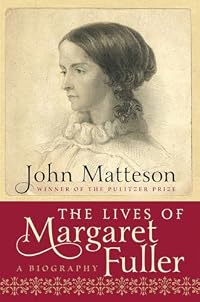
The Lives of Margaret Fuller: A Biography
by John Matteson
On This Page
Description
An account of the brilliant writer and a fiery social critic Margaret Fuller (1810-1850) who became the leading female figure in the transcendentalist movement, wrote a celebrated column of literary and social commentary for Horace Greeley's newspaper, and served as the first foreign correspondent for an American newspaper. Amid all these strivings and achievements, she authored the first great work of American feminism: Woman in the Nineteenth Century.Tags
Recommendations








Member Reviews
Margaret Fuller (1810-50) was the only woman to be included in the Concord circle of Ralph Waldo Emerson, Henry David Thoreau and Nathaniel Hawthorne. The author of the groundbreaking "Woman in the Nineteenth Century" and a war correspondent for the New York Tribune, Fuller returned home from her adventures in Italy only to drown 250 yards from the shore of her native land. She is a natural choice for biographers wanting to latch onto both a serious and sensational subject -- and several biographers have done so in recent years.
But as John Matteson shows in "The Lives of Margaret Fuller," it was not always so. By the early 20th century, Fuller had been largely forgotten. Even academics -- who can keep a reputation alive by teaching show more writers into the literary canon -- ignored her because she was a one-book author, and because much of her impact derived from a charismatic personality so powerful that when she died Emerson said he had lost his audience.
Right after her death her fellow writers assembled a volume devoted to her memory that was a surprise bestseller, eclipsed only by the publication of "Uncle Tom's Cabin" in 1852. But the kind of mostly pious, inspirational tributes that led to the proliferation of Margaret Fuller clubs in the decades after her death had played itself out by the 1920s, when scholars of all kinds were canonizing great writers, not great personalities.
Flash forward 50 years to the 1970s, with the revival of the women's movement and the desire in academia to revise the canon to give voice to the writings of women the male-dominated academy had discounted. Suddenly Fuller's writing and cultural influence became empowering -- to use a favorite academic word. And the culmination of this trend is surely Matteson's masterful biography, with chapter titles that emphasize the reasons his protean subject is likely to remain in the forefront of efforts to explore and dissect the American psyche: "Prodigy," "Misfit," "Apostle," "Conversationalist," "Ecstatic Editor," "Seeker of Utopia," "Advocate," "Lover and Critic," "Internationalist," "Inamorata," "Revolutionary," "Victim."
Pulitzer Prize winner Matteson expresses his significant debts to other biographers who have emphasized many of the "lives" that Fuller led as she was quite consciously breaking the mold her society wished to construct for women. His writing seems to derive palpable energy from Fuller's own dynamism. He does not downplay her arrogance and other faults, but in the end he discovers a Fuller that is startlingly modern in her contradictions and commitments. show less
But as John Matteson shows in "The Lives of Margaret Fuller," it was not always so. By the early 20th century, Fuller had been largely forgotten. Even academics -- who can keep a reputation alive by teaching show more writers into the literary canon -- ignored her because she was a one-book author, and because much of her impact derived from a charismatic personality so powerful that when she died Emerson said he had lost his audience.
Right after her death her fellow writers assembled a volume devoted to her memory that was a surprise bestseller, eclipsed only by the publication of "Uncle Tom's Cabin" in 1852. But the kind of mostly pious, inspirational tributes that led to the proliferation of Margaret Fuller clubs in the decades after her death had played itself out by the 1920s, when scholars of all kinds were canonizing great writers, not great personalities.
Flash forward 50 years to the 1970s, with the revival of the women's movement and the desire in academia to revise the canon to give voice to the writings of women the male-dominated academy had discounted. Suddenly Fuller's writing and cultural influence became empowering -- to use a favorite academic word. And the culmination of this trend is surely Matteson's masterful biography, with chapter titles that emphasize the reasons his protean subject is likely to remain in the forefront of efforts to explore and dissect the American psyche: "Prodigy," "Misfit," "Apostle," "Conversationalist," "Ecstatic Editor," "Seeker of Utopia," "Advocate," "Lover and Critic," "Internationalist," "Inamorata," "Revolutionary," "Victim."
Pulitzer Prize winner Matteson expresses his significant debts to other biographers who have emphasized many of the "lives" that Fuller led as she was quite consciously breaking the mold her society wished to construct for women. His writing seems to derive palpable energy from Fuller's own dynamism. He does not downplay her arrogance and other faults, but in the end he discovers a Fuller that is startlingly modern in her contradictions and commitments. show less
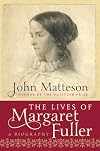
"A brilliant writer and fiery social critic, Margaret fuller Paran 18 10–18 50) was the most talented – and most provocative – woman of her time. Outspoken and quick – witted, idealistic and adventurous, she spent her life continually reinventing herself. The leading female figure in the transcendentalist movement, she authored the first great work of American feminism. She joined the fight for Italian independence and reported on the struggle while nursing the wounded within range of enemy cannons. . . . [The author] gives us an arresting portrait of this multi-faceted and enigmatic figure." - from book cover
so detailed; a lot to learn in here
Ratings
Members
- Recently Added By
Author Information

5+ Works 699 Members
John Matteson was awarded the Pulitzer Prize for Biography for Eden's Outcasts and the Ann M. Sperber Prize for The Lives of Margaret Fuller. Distinguished Professor of English at John Jay College of Criminal Justice, he lives in the Bronx.
Awards and Honors
Awards
Common Knowledge
- People/Characters
- Margaret Fuller
- Important events
- Transcendentalism
Classifications
- Genres
- Biography & Memoir, Literature Studies and Criticism, Fiction and Literature
- DDC/MDS
- 818.309 — Literature & rhetoric American literature in English American miscellaneous writings in English Middle 19th Century 1830-61
- LCC
- PS2506 .M38 — Language and Literature American literature American literature Individual authors 19th century
- BISAC
Statistics
- Members
- 129
- Popularity
- 252,397
- Reviews
- 3
- Rating
- (3.68)
- Languages
- English
- Media
- Paper, Ebook
- ISBNs
- 2
- ASINs
- 2