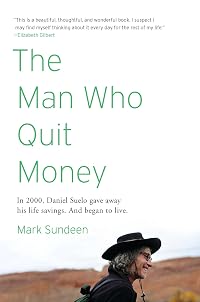
The Man Who Quit Money
by Mark Sundeen
On This Page
Description
Traces the path and philosophy of Daniel Suelo, who left his entire life savings of thirty dollars in a phone booth in 2000 and has lived a happy, fulfilled life in the caves of Utah without earning or spending money since that time.Tags
Recommendations








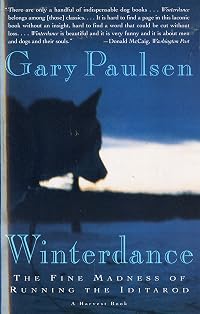
Member Recommendations
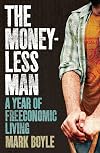
by anonymous user
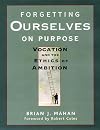
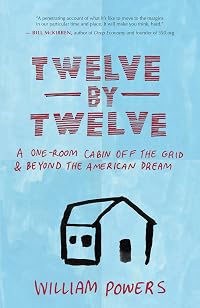
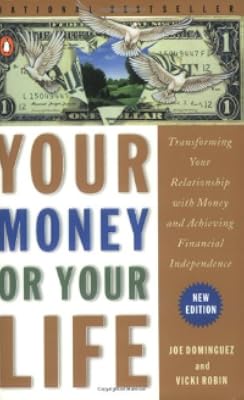
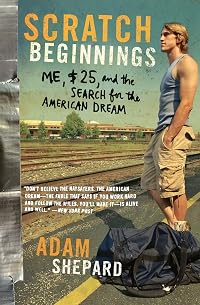
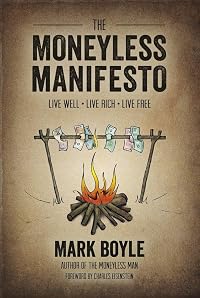
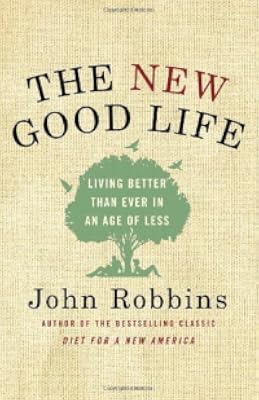
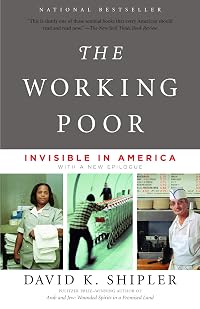
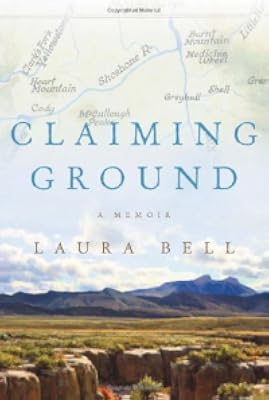
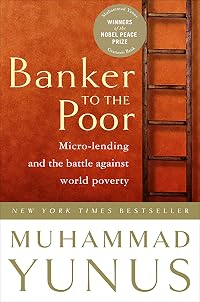
anonymous user Brian Mahan and his book Forgetting Ourselves on Purpose appear in Sundeen's book about Suelo.
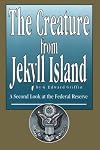
anonymous user Griffin's book features in Sundeen's tale about Suelo.
RiversideReader Both Daniel Suelo and Peace Pilgrim chose alternate lifestyles without money. They found joy and a profound release from the pressures of society. Both joyfully embraced their own spiritualism.
Member Reviews
Sundeen writes in a way that captures your interest. I kept telling myself "only one more chapter" but couldn't stop reading. His telling of this tale about Suelo is not so much a biography (although it is that) as a travelogue of the life and experience of Suelo. There are no straight paths here from point A to point B, they wind around and branch off (much like the life that Suelo has lived). Sundeen liberally sprinkles the life story of Suelo with the history of Moab Utah and other places he's been to, interesting facts about the flora and fauna of the desert, examples of others who have or have tried to live as Suelo does, interviews with those who have come in contact with Suelo, bits of Americana, and thoughts from various show more philosophers, religious figures, psychologists, ecologists, transcendentalists, etc. He weaves a rich tale to show us the humble but abundant life of Suelo, a man who with joy, love, spirituality, and bravery chooses to live an authentic life in the midst of too-inauthentic, intolerant, American capitalist culture. show less
When it comes up in conversation about the US being a "free country" I like to point out that if one were to break with money completely -- no earning or spending of any kind, one can expect to be dead or in jail in weeks. That is, we live in a regulated economy, not a free country.
Now comes a bio, written by a friend, or someone that took up that challenge and succeeded in quitting money. His social security report lists an impressive column of zeroes in income. Ultimately, as he relies on dumpster diving, discards, handouts, and library internet access is that this is an "exception that proves the rule." Like a parasite (and meaning to disrespect), he relies on the money economy if only by being a camp follower and hanger on.
What show more makes this interesting and even fascinating is the journey he took from career and family life to end up here, along the way crafting his own philosophy based on a syncretic personal religion drawing on Jesus' example, The Sermon on the Mount, Buddhism, and more. show less
Now comes a bio, written by a friend, or someone that took up that challenge and succeeded in quitting money. His social security report lists an impressive column of zeroes in income. Ultimately, as he relies on dumpster diving, discards, handouts, and library internet access is that this is an "exception that proves the rule." Like a parasite (and meaning to disrespect), he relies on the money economy if only by being a camp follower and hanger on.
What show more makes this interesting and even fascinating is the journey he took from career and family life to end up here, along the way crafting his own philosophy based on a syncretic personal religion drawing on Jesus' example, The Sermon on the Mount, Buddhism, and more. show less
The fascinating story of a man who for the past thirteen years has managed to live self-sufficiently and quite contentedly without money and with just a few used castoff possessions he scavenged. Most people would probably not enjoy the lifestyle he lives but his story will challenge you to think about your own choices. How much of what you have is beyond what you need? What emotional and spiritual gains would you get from divesting yourself of material possessions? What is our complicity in sustaining a consumer economy that thrives on excess, exploitation, obsolescence, and waste? Those are just a few of the provocative questions this book will make you ponder.
The parts detailing Daniel's ideological journey, his travels in Alaska and other countries, and his lifestyle in Moab were interesting and enjoyable, but I wish the book contained a bit more of those and not such an overabundance of quotations from other religious/philosophical sources. The quotations as chapter introductions were appropriate and well considered, but the multitude of additional ones, especially in the final wrap-up ended up being a bit much considering the book's 260-page length. Definitely a conversation-starting book to stick in your backpack during your next camping/hiking/cycling adventure vacation week in Canyonlands though.
Daniel Suelo's life is truly inspiring. This book had me taking notes and pausing often to seriously consider the role money plays in our society. I can see this being a book I re-read often throughout my life.
Not what I expected from the cover. I was looking to read about the mechanics of living without money, and about what exactly Suelo's life is like. Instead I got a well-researched but pedestrian chronicle of a fundamentalist Christian's upbringing and philosophy with a side of living without money. At the end of the book, I just don't care. Not even a little bit.
Daniel Suelo is on a spiritual path to not take anything and live off the land. He lives in the canyons of Moab, Utah dumpster diving, volunteering at shelters, foraging and his old rafting guide Mark Sundeen tells this riviting story of a man who chooses an alternate way of life.
Members
- Recently Added By
Author Information
6+ Works 461 Members
Common Knowledge
- People/Characters
- Daniel Suelo; Daniel James Shellabarger; Dick Shellabarger; Laurel Shellabarger; Melony Gilles; Tim Frederick (show all 19); Damian Nash; Jerry Banks; Conrad Sorenson; Butch Cassidy; Edward Abbey; Leslie Howes; Mel Scully; Adjan Sumeto; Michael Friedman; Dalai Lama; Brer Erschadi; Heila Habibi; Brian Mahan
- Important places
- Moab, Utah, USA; Boulder, Colorado, USA; Fruita, Colorado, USA; Bangkok, Thailand; Tibet; India (show all 7); Quito, Ecuador
- Epigraph
- Do not worry about your life, what you will eat or drink; or about your body, what you will wear. Is not life more important than food, and the body more important than clothes? Look at the birds of the air; they do not sow ... (show all)or reap or store away in the barns, and yet your Heavenly Father feeds them ... Who of you by worrying can add a single hour to his life?-- Jesus
Let us live happily, then, though we call nothing our own! We shall be like the bright gods, feeding on happiness!
-- Buddha
Home is anywhere I'm living, if its sleeping on some vacant bench in City Square
-- Merle Haggard - Dedication
- For Cedar,
who gave me the kernels anyway - First words
- In the first year of the twenty-first century, a man standing by a highway in the middle of America pulled from his pocket his life savings -- thirty dollars -- laid it inside a phone booth, and walked away.
- Quotations
- I'm employed by the universe. Since everywhere I go is the universe, I am always secure. Life has flourished for billions of years like this. I never knew such security before I gave up money. Wealth is what we are dependent ... (show all)upon for security. My wealth never leaves me. Do you think Bill Gates is more secure than I?
When I was a kid I thought I'd be a missionary to the heathens, but now I think maybe it's okay to be a missionary, but to the Christians, because they're the ones who need it, because they don't believe their own religion.
Then I found my liberation. I resigned myself to hell. Yes. I decided I'd rather be in hell with Gandhi, Martin Luther King, Vivekananda, Ramakrishna, Mother Teresa, Buddha, Kabir, Rumi, Peace Pilgrim and, yes, with Jesus H... (show all)imself, than to be in heaven with the torturous fundamentalist mentality that thinks itself right and everybody else wrong. I decided I'd rather be in hell for love than to be in heaven for bigotry. - Last words
- (Click to show. Warning: May contain spoilers.)One must imagine Suelo happy.
- Blurbers
- Greider, William; McKibben, Bill
Classifications
Statistics
- Members
- 270
- Popularity
- 119,387
- Reviews
- 12
- Rating
- (3.71)
- Languages
- English, Korean
- Media
- Paper, Audiobook, Ebook
- ISBNs
- 5
- ASINs
- 1