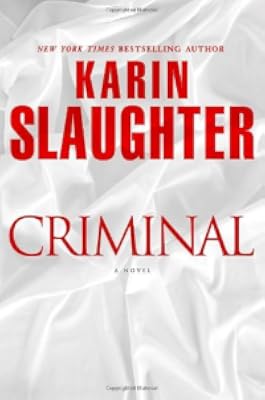
On This Page
Description
A Georgia Bureau of Investigation search into a shocking crime from 1975 poses unprecedented personal and professional challenges for top agent Will Trent, who encounters threats against his life and everything he thought he understood about his past.Tags
Recommendations



















Member Reviews
This story, part of the Will Trent/Sara Linton series, begins in 1974 Atlanta, and alternates between that time period and the present. In 1974 we meet young Amanda Wagner, as well as young Evelyn Mitchell, Faith's mother and the focus of the last book of the series, Fallen. Georgia Bureau of Investigation agent, Will Trent, is ordered not to investigate the disappearance of a female college student, which only tends to pique his curiosity more. He learns that his immediate supervisor, Amanda Wagner, has been withholding information from him. His father, a convicted killer, was released from prison two months ago. Will has only seen pictures of his father, his trial taking place when Will was only a child. But as disturbed as he is show more knowing his father is out of prison, he's more alarmed by the apparent similarities between the missing students and the women his father killed.
I loved this book and it was one of my favorites. That being said, I don't recommend anyone read it who is not already familiar with these characters. The very in-depth back story of Amanda and Evelyn is probably of more interest to long time fans who already know Amanda. The author has devoted a great deal of time to filling in the blank spots of the main character. I was also filled with nothing but sympathy for the pioneering women of the 1970s who tried to break into jobs formerly held only by men. As a woman of the same generation who did something similar, I almost wept remembering some of that treatment.
I've recently been rereading the Will Trent/Sara Linton series in audio and think the books keep getting better and better. I had to laugh at some of the incidents in this book, especially during the 1974 parts. There is a lot of violence in this book, especially toward the women who are killed, but I think the author does a great job of making you sympathetic to the main characters. She knows how to construct a good crime story filled with characters who are flawed and damaged, as well as evil. I'm looking forward to the next book of the series, Unseen. show less
I loved this book and it was one of my favorites. That being said, I don't recommend anyone read it who is not already familiar with these characters. The very in-depth back story of Amanda and Evelyn is probably of more interest to long time fans who already know Amanda. The author has devoted a great deal of time to filling in the blank spots of the main character. I was also filled with nothing but sympathy for the pioneering women of the 1970s who tried to break into jobs formerly held only by men. As a woman of the same generation who did something similar, I almost wept remembering some of that treatment.
I've recently been rereading the Will Trent/Sara Linton series in audio and think the books keep getting better and better. I had to laugh at some of the incidents in this book, especially during the 1974 parts. There is a lot of violence in this book, especially toward the women who are killed, but I think the author does a great job of making you sympathetic to the main characters. She knows how to construct a good crime story filled with characters who are flawed and damaged, as well as evil. I'm looking forward to the next book of the series, Unseen. show less
Read for Review
Overall Rating: 5.00
Story Rating: 5.00
Character Rating: 5.00
Audio Rating: 4.00 (not part of the overall rating)
First thought when finished: That ending was just about perfect! That is exactly how I like my thrillers to end: one last turn right after you think you have it all figured out!
What I thought of the case: In Criminal Karin Slaughter leverages probably one of my least favorite plot tricks but makes it work in a way that blew me away: dual time lines (present and past). In the beginning I wasn't sure if I was going to like it but for this story it worked brilliantly. The modern-day case was reminiscent of the older case. Both of these cases were personal for
Will and Amanda so it added a layer of intensity. I show more enjoyed watching the timeline from the past unfold because it held so many layers: the roles of women in law enforcement in the 1970s, prejudices, friendships, and the thrill of figuring out your first major case. The things that Amanda and Evelyn went through to work the case were crazy scary and probably pretty close to an accurate portrayal of the 1970s. I kept wanting the story to flip back to that timeline whenever we were in the present. I wasn't as invested the case from the present day, other than to see how it unfolded with the case from the 1970s.
What I thought of the characters: This is my first Karin Slaughter book so I did not know anything about any of the characters in Criminal: Will, Sara, and Amanda. That being said, I felt immediately drawn to Amanda's story. I felt she was amazingly complicated and the job really defines her. I think learning about how hard she fought for where she was is what really made me go "WOW". I did enjoy Will and Sara too. I will be picking up the backlist in order to learn more about all of these characters. There is probably volumes I don't know and I can't wait to explore.
What I thought of the Audio: Narrated by Kathleen Early at running time of 15 hrs and 35 mins the audio of Criminal was very well done. I felt the pacing, emotions, and characters were all done in a way that never felt forced or rushed. I had a bit of a problem in the beginning with Will's "voice" but that quickly went away as the story progressed. Technically I did not have any problems with the ending of tracks and moving on to the next one. Criminal was a very good audio production overall.
Final Thoughts: If you are like me and never checked out Karin Slaughter, I am telling you to now! Criminal was a fantastic book! show less
Overall Rating: 5.00
Story Rating: 5.00
Character Rating: 5.00
Audio Rating: 4.00 (not part of the overall rating)
First thought when finished: That ending was just about perfect! That is exactly how I like my thrillers to end: one last turn right after you think you have it all figured out!
What I thought of the case: In Criminal Karin Slaughter leverages probably one of my least favorite plot tricks but makes it work in a way that blew me away: dual time lines (present and past). In the beginning I wasn't sure if I was going to like it but for this story it worked brilliantly. The modern-day case was reminiscent of the older case. Both of these cases were personal for
Will and Amanda so it added a layer of intensity. I show more enjoyed watching the timeline from the past unfold because it held so many layers: the roles of women in law enforcement in the 1970s, prejudices, friendships, and the thrill of figuring out your first major case. The things that Amanda and Evelyn went through to work the case were crazy scary and probably pretty close to an accurate portrayal of the 1970s. I kept wanting the story to flip back to that timeline whenever we were in the present. I wasn't as invested the case from the present day, other than to see how it unfolded with the case from the 1970s.
What I thought of the characters: This is my first Karin Slaughter book so I did not know anything about any of the characters in Criminal: Will, Sara, and Amanda. That being said, I felt immediately drawn to Amanda's story. I felt she was amazingly complicated and the job really defines her. I think learning about how hard she fought for where she was is what really made me go "WOW". I did enjoy Will and Sara too. I will be picking up the backlist in order to learn more about all of these characters. There is probably volumes I don't know and I can't wait to explore.
What I thought of the Audio: Narrated by Kathleen Early at running time of 15 hrs and 35 mins the audio of Criminal was very well done. I felt the pacing, emotions, and characters were all done in a way that never felt forced or rushed. I had a bit of a problem in the beginning with Will's "voice" but that quickly went away as the story progressed. Technically I did not have any problems with the ending of tracks and moving on to the next one. Criminal was a very good audio production overall.
Final Thoughts: If you are like me and never checked out Karin Slaughter, I am telling you to now! Criminal was a fantastic book! show less
I was hooked on Karin Slaughter's writing from the first book, Blindsighted. The first six books were set in Grant County and featured the local sheriff and his wife, the local coroner. They're excellent crime/mystery books, with great plots and wonderful characters. In fact, it is the characters themselves that draw me back, over and over again.
Things move in real time in Slaughter's books. Her writing has segued to focus on another character from the Grant County books - Georgia Bureau of Investigation detective Will Trent. Slaughter's latest book Criminal is the seventh in the Trent series.
The question always arises with series books - can you read them as stand alones? Well, yes you could, but in my opinion you'd be missing out on show more some really great reading and a lot of backstory if you didn't start earlier on in the series.
In Criminal, a local college student goes missing and although this would normally fall into Will's lap, his boss Amanda pulls him off the case. The case bears marked similarities to a case from forty years ago - the case that launched Amanda's career. And both have blood ties to Will.....
Slaughter employs a great past and present narrative. In Criminal, we are finally get answers to the question of Will's murky past and his boss Amanda's interest in his life. And best of all, we get to know Amanda a whole lot better. I also really enjoyed Amanda's partner Evelyn. Although we know her in the present day books, the 1970's Evelyn had me laughing out loud, gasping at the treatment female officers were shown and cheering the pair of them on. Slaughter brings the 1970's to life, with attitudes and lifestyles faithfully reproduced.
The plotting is intricate, believable and gripping. Faint readers, be warned - the crimes are graphic. Crime fiction aficionados - this is a must read series. show less
Things move in real time in Slaughter's books. Her writing has segued to focus on another character from the Grant County books - Georgia Bureau of Investigation detective Will Trent. Slaughter's latest book Criminal is the seventh in the Trent series.
The question always arises with series books - can you read them as stand alones? Well, yes you could, but in my opinion you'd be missing out on show more some really great reading and a lot of backstory if you didn't start earlier on in the series.
In Criminal, a local college student goes missing and although this would normally fall into Will's lap, his boss Amanda pulls him off the case. The case bears marked similarities to a case from forty years ago - the case that launched Amanda's career. And both have blood ties to Will.....
Slaughter employs a great past and present narrative. In Criminal, we are finally get answers to the question of Will's murky past and his boss Amanda's interest in his life. And best of all, we get to know Amanda a whole lot better. I also really enjoyed Amanda's partner Evelyn. Although we know her in the present day books, the 1970's Evelyn had me laughing out loud, gasping at the treatment female officers were shown and cheering the pair of them on. Slaughter brings the 1970's to life, with attitudes and lifestyles faithfully reproduced.
The plotting is intricate, believable and gripping. Faint readers, be warned - the crimes are graphic. Crime fiction aficionados - this is a must read series. show less
I have been addicted to the Will Trent series ever since LT sent me an Early Reviewer copy of Broken. Will is such a fascinating character and even though there are big events for him in Criminal, he doesn't feel like the main character. In fact, this episode is very much Amanda's book, in the way that Fallen was Faith's book. Amanda Wagner has never been my favorite. I think she's a difficult character to love and here, through many flashbacks, we find out why that is so - mainly, carrying the burden of being her father's daughter and struggling for acceptance and respect at work. We learn that Amanda is much more important in Will's story than just being his boss. So, that part was interesting, but I didn't find myself enjoying the show more flashbacks themselves. Parts of this book were difficult to read as a woman and I'm sure Slaughter wrote it that way on purpose to draw attention to the conditions of the time. I mostly enjoyed the modern-day sections where Slaughter reveals huge chunks of Will's history. After parceling out scraps to us in past books, this one feels almost like a gluttony. And the ending - it's quite a jaw-dropper. Enjoy! show less
I have been slowly savoring this series. I really like Will Trent's character, Georgia Bureau of Investigation agent, super smart - he just can't read, which he's turned into a plus in that he pays attention to so many details the others miss because he's always looking for clues. He grew up an orphan and was constantly told he was stupid not knowing until many years later that he has dyslexia. By which time he'd graduated from college and been recruited into the GBI by his boss, Amanda Wagner, who knows his secret and seems to be always trying to make him pay for it.
This installment gives you the full story on Will's upbringing along with a fascinating murder mystery. It answers so many questions I've had up until this point about Will show more and Amanda. Plus we get to see how Will's new relationship with Sara Linton is developing and what's to be done about Will's wife, Angie. For a fan of the series this was a win all the way around.
My only sticking point through this book I found is that Will's dyslexia seemed to be downplayed. All the interesting tricks he's developed over the years to cover and compensate for his disability weren't really mentioned and, in fact, just the opposite. He takes a long time to type his reports? He uses voice recognition software. He was reading a book? He has always hated reading and finds no pleasure in it. I really liked this aspect of Will and the facet of his character that it brings out with his ability to overcome all challenges and adds such a vulnerability that just makes you want to take him home. I'm interested to see how this continues to be addressed in future books. show less
This installment gives you the full story on Will's upbringing along with a fascinating murder mystery. It answers so many questions I've had up until this point about Will show more and Amanda. Plus we get to see how Will's new relationship with Sara Linton is developing and what's to be done about Will's wife, Angie. For a fan of the series this was a win all the way around.
My only sticking point through this book I found is that Will's dyslexia seemed to be downplayed. All the interesting tricks he's developed over the years to cover and compensate for his disability weren't really mentioned and, in fact, just the opposite. He takes a long time to type his reports? He uses voice recognition software. He was reading a book? He has always hated reading and finds no pleasure in it. I really liked this aspect of Will and the facet of his character that it brings out with his ability to overcome all challenges and adds such a vulnerability that just makes you want to take him home. I'm interested to see how this continues to be addressed in future books. show less
Karin Slaughter's newest novel Criminal is aptly titled. That one word encompasses not only a definition of the main perpetrator,(although there are plenty of other appropriate and stronger words to describe him), but also infers a skewed look at how different groups of people, whether racially, class, or gender were treated.
The story opens modern day with the disappearance of a college student, which Will Trent's boss Amanda Wagner orders him to stay away from. Trying to juggle a new relationship with Dr. Sara Linton, and working a normal shift at the airport, busting perverts, Will is only too happy to oblige. But when Amanda arrives at a run down building, once housing an orphanage Will called home, while he's sharing with Sara a show more piece of his past, she lets slip that his father has made parole.
From here the author leads the reader back into the past when Amanda was a college student and fledgling cop struggling for acceptance and individuality. Segregation was in its infancy as was the women's movement and Amanda didn't question her role or proper place, until she began asking questions that no one wanted to answer. Beginning with the death of a prostitute, and the disappearances of other girls known to her, Amanda and her partner Ellen embark on a focused quest to resolve those questions, discovering cover-ups, good-ol'-boy politics, and numerous barriers along the way.
Points of view change as quickly as the story line, jumping from the past to the present, but it's handled deftly with the skill of a well-rehearsed juggler mesmerizing the audience while the two time lines converge.
Overall it's still the characters that draw me back into Karin's world, a world filled with loss, love, heartbreak and hope. What one makes out of the circumstances we're thrown into and the sustaining thread of winning against all odds.
If you don't pick up this series, it's Criminal. show less
The story opens modern day with the disappearance of a college student, which Will Trent's boss Amanda Wagner orders him to stay away from. Trying to juggle a new relationship with Dr. Sara Linton, and working a normal shift at the airport, busting perverts, Will is only too happy to oblige. But when Amanda arrives at a run down building, once housing an orphanage Will called home, while he's sharing with Sara a show more piece of his past, she lets slip that his father has made parole.
From here the author leads the reader back into the past when Amanda was a college student and fledgling cop struggling for acceptance and individuality. Segregation was in its infancy as was the women's movement and Amanda didn't question her role or proper place, until she began asking questions that no one wanted to answer. Beginning with the death of a prostitute, and the disappearances of other girls known to her, Amanda and her partner Ellen embark on a focused quest to resolve those questions, discovering cover-ups, good-ol'-boy politics, and numerous barriers along the way.
Points of view change as quickly as the story line, jumping from the past to the present, but it's handled deftly with the skill of a well-rehearsed juggler mesmerizing the audience while the two time lines converge.
Overall it's still the characters that draw me back into Karin's world, a world filled with loss, love, heartbreak and hope. What one makes out of the circumstances we're thrown into and the sustaining thread of winning against all odds.
If you don't pick up this series, it's Criminal. show less
CRIMINAL by Karin Slaughter: Her recent mysteries, featuring Will Trent of the GBI, are set in Atlanta, which is loads of fun for me. My only complaint about her books is that the violence is so extreme. More creative and horrifying torture methods than I'm really looking for. Doesn't anyone just shoot or stab or strangle without some sick, seriously disturbing abuse? But this is not usually a huge part of the narrative, so I read her anyway for the depiction of Atlanta, the excellent mysteries, and the believable, interesting cops.
Many series start to lose steam and eventually plod along formulaically, but CRIMINAL is Slaughter's best to date. Will Trent has a troubled past and an odd relationship with Amanda, and Slaughter hasn't show more rushed to share every detail of his background. This installment is particularly revelatory as far as Will goes, but it's unexpectedly enlightening concerning the racist/sexist history of Atlanta, particularly in the police world. Slaughter has clearly done her research on both the legal/organizational details and the general atmosphere and attitudes of the time.
"The federal Law Enforcement Assistance Association grant that had created the Atlanta police sex crimes division required all teams to be comprised of three-officer units that were racially and sexually integrated. These rules were seldom followed, because white women could not ride alone with black men, black women - at least the ones who wanted to keep their reputations - did not want to ride with black men, and none of the blacks wanted to ride with any man who was white."
That matter-of-fact paragraph sets the tone for a divided police department in which female police officers are laughed at, groped, and sent into danger as a prank. Seeing Amanda in this context gives the reader a full picture of her that we've never had before. Suddenly her tough-as-nails don't-give-a-shit attitude is completely understandable. She's a character who has always intrigued me, but I never thought I would find her sympathetic. Amanda's partner, Evelyn, is married with a child, which adds another dimension to the treatment of women:
"Bill and I agreed that we shouldn't keep a loaded gun in the house because of the baby."
Words clogged Amanda's throat. She screamed, "Your gun isn't loaded!"
"Well..." Evelyn dug her fingers into the back of her hair. "It worked out, right?" She let out a strained laugh. "Sure, it worked out. We're both fine. We're both just fine." She looked down at the pimp again.
Evelyn's decision to return to the force after having a baby is viewed as utterly bizarre. Slaughter works in other details about attitudes toward women in 1970s Atlanta that are not specific to policing: Women can't open checking accounts, apply for a credit card, or even rent an apartment without cosigning by a husband or father.
The racial division in the forcibly integrated police force is equally fascinating/horrifying:
There were pockets all over the city where the radios had little or no reception, but that wasn't the problem. A black officer was calling for backup, which meant the white officers were blocking the transmission by clicking the buttons on their mics. In the next hour, a white officer would call for help and the blacks would do the same. And then someone with the Atlanta Journal or Constitution would write an article wondering about the recent spike in crime."
It's a wonder that any crimes were solved in this era at all. The 1970s murders are only solved because Amanda and Evelyn ignore the harassment and abuse from the male officers in charge and place themselves in danger to seek out the culprit. Amanda's father would have kept her in line, but he has been temporarily relieved of his lofty position due to racially fueled politics. He has been in the force since Klan affiliation had been compulsory for all Atlanta Police Department members. Amanda is conflicted about carrying on her investigation with Evelyn, but the fact that the murder victims are girls and no one else cares about them spurs her on. The 1970s investigation is told in parallel with a related present-day murder investigation, and the mystery is complex and interesting. Will and Amanda's relationship is finally explained, and the revelations make me more eager to read the next installment in the series.
Source disclosure: I purchased this book. show less
Many series start to lose steam and eventually plod along formulaically, but CRIMINAL is Slaughter's best to date. Will Trent has a troubled past and an odd relationship with Amanda, and Slaughter hasn't show more rushed to share every detail of his background. This installment is particularly revelatory as far as Will goes, but it's unexpectedly enlightening concerning the racist/sexist history of Atlanta, particularly in the police world. Slaughter has clearly done her research on both the legal/organizational details and the general atmosphere and attitudes of the time.
"The federal Law Enforcement Assistance Association grant that had created the Atlanta police sex crimes division required all teams to be comprised of three-officer units that were racially and sexually integrated. These rules were seldom followed, because white women could not ride alone with black men, black women - at least the ones who wanted to keep their reputations - did not want to ride with black men, and none of the blacks wanted to ride with any man who was white."
That matter-of-fact paragraph sets the tone for a divided police department in which female police officers are laughed at, groped, and sent into danger as a prank. Seeing Amanda in this context gives the reader a full picture of her that we've never had before. Suddenly her tough-as-nails don't-give-a-shit attitude is completely understandable. She's a character who has always intrigued me, but I never thought I would find her sympathetic. Amanda's partner, Evelyn, is married with a child, which adds another dimension to the treatment of women:
"Bill and I agreed that we shouldn't keep a loaded gun in the house because of the baby."
Words clogged Amanda's throat. She screamed, "Your gun isn't loaded!"
"Well..." Evelyn dug her fingers into the back of her hair. "It worked out, right?" She let out a strained laugh. "Sure, it worked out. We're both fine. We're both just fine." She looked down at the pimp again.
Evelyn's decision to return to the force after having a baby is viewed as utterly bizarre. Slaughter works in other details about attitudes toward women in 1970s Atlanta that are not specific to policing: Women can't open checking accounts, apply for a credit card, or even rent an apartment without cosigning by a husband or father.
The racial division in the forcibly integrated police force is equally fascinating/horrifying:
There were pockets all over the city where the radios had little or no reception, but that wasn't the problem. A black officer was calling for backup, which meant the white officers were blocking the transmission by clicking the buttons on their mics. In the next hour, a white officer would call for help and the blacks would do the same. And then someone with the Atlanta Journal or Constitution would write an article wondering about the recent spike in crime."
It's a wonder that any crimes were solved in this era at all. The 1970s murders are only solved because Amanda and Evelyn ignore the harassment and abuse from the male officers in charge and place themselves in danger to seek out the culprit. Amanda's father would have kept her in line, but he has been temporarily relieved of his lofty position due to racially fueled politics. He has been in the force since Klan affiliation had been compulsory for all Atlanta Police Department members. Amanda is conflicted about carrying on her investigation with Evelyn, but the fact that the murder victims are girls and no one else cares about them spurs her on. The 1970s investigation is told in parallel with a related present-day murder investigation, and the mystery is complex and interesting. Will and Amanda's relationship is finally explained, and the revelations make me more eager to read the next installment in the series.
Source disclosure: I purchased this book. show less
Members
- Recently Added By
Published Reviews
Is Karin Slaughter always this long-winded? At 436 pages, her 12th novel, Criminal, reads about 150 pages too many, and in several passages, it becomes painfully clear that Slaughter has jammed into the narrative every scrap of research she could drag up on subjects that might not deserve such scrupulous examination. Not that the garrulousness means readers should ignore Criminal. Even when show more Slaughter is way too wordy, she’s still entirely readable.
As with earlier novels, Criminal takes place in Slaughter’s native Georgia, specifically in Atlanta. The action covers two alternating time periods, 1974-75 and the present. The two are connected by the plot and by a handful of characters. All of the latter fall into one of three categories: members of the Atlanta Police Department and the Georgia Bureau of Investigation; murder victims, mostly young prostitutes; and, the smallest and most tantalizing category, the killer, a spectacularly heinous fellow who isn’t conclusively identified until very late in the book.
Out of this mix, it’s a cop named Amanda Wagner who holds the plot on course. In the book’s 1970s passages, she’s a rookie APD officer with an intuitively sharp sleuthing touch. Amanda also carries the burden of a bullying father who happens to be a senior member of both the Atlanta cops and the Ku Klux Klan. Forty years later, having survived daddy, Amanda is a 60ish senior officer with the GBI. Her investigative instincts remain intact, but she’s added an intellectual rationale for her policing moves. That, and a gift for keeping secrets, make her essential in assuring that Slaughter’s scattergun approach to the narrative produces a reasonably coherent resolution.
Still, Slaughter’s insistence on sharing with readers her massive research stands as a barrier against total enjoyment of Criminal. The author’s Acknowledgments let us know we’re in for a history of the Atlanta Police Department, but did we need whole chapters to convince us that the ATP of the 1970s may have been the most racist and sexist organization in the history of policing?
True enough, one intriguing nugget of irony emerges from the ton of Atlanta cop research. When Amanda Wagner’s daddy sends his KKK robes to the dry cleaner’s shop for laundering, who restores them to their pristine white? Answer: the shop’s black employees. show less
As with earlier novels, Criminal takes place in Slaughter’s native Georgia, specifically in Atlanta. The action covers two alternating time periods, 1974-75 and the present. The two are connected by the plot and by a handful of characters. All of the latter fall into one of three categories: members of the Atlanta Police Department and the Georgia Bureau of Investigation; murder victims, mostly young prostitutes; and, the smallest and most tantalizing category, the killer, a spectacularly heinous fellow who isn’t conclusively identified until very late in the book.
Out of this mix, it’s a cop named Amanda Wagner who holds the plot on course. In the book’s 1970s passages, she’s a rookie APD officer with an intuitively sharp sleuthing touch. Amanda also carries the burden of a bullying father who happens to be a senior member of both the Atlanta cops and the Ku Klux Klan. Forty years later, having survived daddy, Amanda is a 60ish senior officer with the GBI. Her investigative instincts remain intact, but she’s added an intellectual rationale for her policing moves. That, and a gift for keeping secrets, make her essential in assuring that Slaughter’s scattergun approach to the narrative produces a reasonably coherent resolution.
Still, Slaughter’s insistence on sharing with readers her massive research stands as a barrier against total enjoyment of Criminal. The author’s Acknowledgments let us know we’re in for a history of the Atlanta Police Department, but did we need whole chapters to convince us that the ATP of the 1970s may have been the most racist and sexist organization in the history of policing?
True enough, one intriguing nugget of irony emerges from the ton of Atlanta cop research. When Amanda Wagner’s daddy sends his KKK robes to the dry cleaner’s shop for laundering, who restores them to their pristine white? Answer: the shop’s black employees. show less
added by VivienneR
Lists

READ in 2023
244 works; 1 member
Author Information

104+ Works 59,805 Members
Karin Slaughter was born in Georgia on January 6, 1971. In 2001, she published her first novel, Blindsighted, which made the Dagger Award shortlist for Best Thriller Debut. She is the author of the Grant County series and the Will Trent series. Her stand-alone novels include Cop Town, Pretty Girls, and Pieces of Her. (Bowker Author Biography)
Some Editions
Awards and Honors
Distinctions
Series


Belongs to Publisher Series
Work Relationships
Common Knowledge
- Canonical title
- Criminal
- Original title
- Criminal [English]
- Original publication date
- 2012-07-03
- People/Characters
- Sara Linton; Will Trent; Amanda Wagner; Evelyn Mitchell; Duke Wagner
- Important events*
- Verrat, Korruption, Hass
- Dedication
- to Kate --
editor, friend. - First words
- August 15, 1974
LUCY BENNETT
A cinnamon brown Oldsmobile Cutlass crawled up Edgewood Avenue, the windows, lowered, the driver hunched down in his seat. - Last words*
- (Click to show. Warning: May contain spoilers.)Het verdwenen flesje Max Factor-nagellak.
- Blurbers
- Connelly, Michael; Child, Lee
- Original language
- English
*Some information comes from Common Knowledge in other languages. Click "Edit" for more information.
Classifications
Statistics
- Members
- 1,396
- Popularity
- 16,962
- Reviews
- 60
- Rating
- (4.07)
- Languages
- 12 — Czech, Danish, Dutch, English, Finnish, French, German, Italian, Polish, Russian, Spanish, Swedish
- Media
- Paper, Audiobook, Ebook
- ISBNs
- 59
- ASINs
- 16