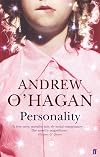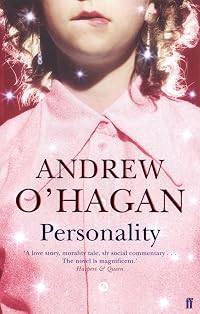
Personality
by Andrew O'Hagan
On This Page
Description
Growing up on the Scottish Isle of Bute, Maria Tambini is a young girl with dreams of escape from her Italian immigrant family. When her amazing singing voice wins her a talent show at the tender age of thirteen, she is whisked off to London and instant stardom. But even as Maria is celebrating her greatest success, she is waging a hidden battle against her own body, and becoming in the process a living exhibit in the modern drama of celebrity. Can she be saved by love? Or will she be show more consumed by an obsessive celebrity culture, family lies, and by her number-one fan? This stunning novel is a rich portrait of an immigrant community and a tragic tale of the hidden costs of celebrity. show lessTags
Recommendations









Member Reviews
Personality is a fast read, perhaps because readers are so familiar with this type of story: the career development of young pop stars. Each generation has its own, and in each generation, some of these youthful celebreties derail, under the pressure of a sky-rocketing career to stardom.
In Andrew O'Hagan's novel Personality, the prodigy is called Maria. After winning a talent show on television, she is propelled onto the stage and the novel describes her incredible career till the pinnacle of success and the vertigo that she experiences with such fast ascension. However, the novel is not much about Maria. Although she is the main protagonist, the novel does not focus on her, but rather describes the people around her. This indirect show more approach creates estrangement in the reader, and the course of the story is not always clear. Although the story is told in chronological order, there seem to be gaps.
While Personality is a story of success, the story is depersonalized, to focus more on the phenomenon, and less on the individual performer. As is the lives of other pop stars, Maria encounters some typical developments at pitfalls of that type of career, such as an episode in which she is plagued by anorexia nervosa and the danger of obsessive fans.
However, although Maria is somewhat on the background, the novel does seek to establish common ground in terms of the type of personality that is needed to be successful, to succeed and to withstand the pressure and danger. In the case of Maria, it seems that her stamina and resilience are as much a feature of her individual personality, as well as a trait in her family background, coming from a struggling Italian immigrant family. Both her talent and to sing and her talent to survive run in the family.
Andrew O'Hagan based Personality on a real story, but this is not apparent to readers of the novel, and neither relevant. Parts of the novel were less interesting, and the story seems to be a bit long and drawn out. However, other parts are described vividly, leaving a strong impression, particularly the enrapturing climax. show less
In Andrew O'Hagan's novel Personality, the prodigy is called Maria. After winning a talent show on television, she is propelled onto the stage and the novel describes her incredible career till the pinnacle of success and the vertigo that she experiences with such fast ascension. However, the novel is not much about Maria. Although she is the main protagonist, the novel does not focus on her, but rather describes the people around her. This indirect show more approach creates estrangement in the reader, and the course of the story is not always clear. Although the story is told in chronological order, there seem to be gaps.
While Personality is a story of success, the story is depersonalized, to focus more on the phenomenon, and less on the individual performer. As is the lives of other pop stars, Maria encounters some typical developments at pitfalls of that type of career, such as an episode in which she is plagued by anorexia nervosa and the danger of obsessive fans.
However, although Maria is somewhat on the background, the novel does seek to establish common ground in terms of the type of personality that is needed to be successful, to succeed and to withstand the pressure and danger. In the case of Maria, it seems that her stamina and resilience are as much a feature of her individual personality, as well as a trait in her family background, coming from a struggling Italian immigrant family. Both her talent and to sing and her talent to survive run in the family.
Andrew O'Hagan based Personality on a real story, but this is not apparent to readers of the novel, and neither relevant. Parts of the novel were less interesting, and the story seems to be a bit long and drawn out. However, other parts are described vividly, leaving a strong impression, particularly the enrapturing climax. show less
What to make of book whose protagonist isn’t the most interesting character? That’s the situation in Andrew O’Hagan’s Personality. The novel is primarily about the stress of fame on Maria, a child singer, as she grows out of a quiet childhood on a small island in Scotland to a demanding adulthood in London.
From the first chapter, which documents a body washing up on a beach during WWII, you know that the book is going to be about more than just Maria. It delves into the history of Scotland and the treatment of its Italian immigrants during the war (they were assumed to be Nazi sympathizers), the loss of a child, distrust, hidden family secrets and a whole bunch of other stuff before it even gets to Maria’s story.
At times show more during the early chapters, there is a “get to the story” feeling, but once the story comes it ends up being one of the less interesting of the book. Maria’s story of going from one show to another, dropping her family from her life, and struggling with anorexia and depression never changes. It simply serves as a weak backbone for stronger secondary stories.
What saves the book, and makes it one of the better novels I’ve read this year, is O’Hagan’s writing. His write with detail without getting bogged down. He accomplishes this by changing perspective and style. Everyone seems to have a say in their own short chapter or two. Styles include traditional narrative, newspaper clippings, TV interviews, and letters. The result is a very enjoyable book about not so enjoyable subjects. show less
From the first chapter, which documents a body washing up on a beach during WWII, you know that the book is going to be about more than just Maria. It delves into the history of Scotland and the treatment of its Italian immigrants during the war (they were assumed to be Nazi sympathizers), the loss of a child, distrust, hidden family secrets and a whole bunch of other stuff before it even gets to Maria’s story.
At times show more during the early chapters, there is a “get to the story” feeling, but once the story comes it ends up being one of the less interesting of the book. Maria’s story of going from one show to another, dropping her family from her life, and struggling with anorexia and depression never changes. It simply serves as a weak backbone for stronger secondary stories.
What saves the book, and makes it one of the better novels I’ve read this year, is O’Hagan’s writing. His write with detail without getting bogged down. He accomplishes this by changing perspective and style. Everyone seems to have a say in their own short chapter or two. Styles include traditional narrative, newspaper clippings, TV interviews, and letters. The result is a very enjoyable book about not so enjoyable subjects. show less
Ratings
Members
- Recently Added By
Lists

The Guardian's 1000 Novels Everyone Must Read
1,005 works; 550 members
Author Information

29+ Works 2,945 Members
Andrew O'Hagan was born in 1968 in Glasgow, Scotland. He studied at the University of Strathclyde. He is an Editor at Large for Esquire, London Review of Books and Critic at Large for T: The New York Times Style Magazine. He is a creative writing fellow at King's College London. He has worked as an editor and ghostwriter. He has twice been show more nominated for the Man Booker Prize. He was voted one of Granta's Best of Young British Novelists in 2003. He has won the Los Angeles Times Book Award and the E.M. Forster Award from the American Academy of Arts & Letters, made Honorary Doctor of Letters by University of Strathclyde in 2008, and was made Fellow of the Royal Society of Literature in 2010. His book awards include the 2000 Winifred Holtby Memorial Prize for Our Fathers, the 2003 James Tait Black Memorial Prize (fiction), for Personality, and the 2010 Glenfiddich Spirit of Scotland Award for Writing. His fiction includes Our Fathers, Personality, Be Near Me, The Life and Opinions of Maf the Dog, and of His Friend Marilyn Monroe, The Illuminations. His non-fiction includes The Missing and The Atlantic Ocean. He also has written short stories and book reviews. (Bowker Author Biography) show less
Awards and Honors
Awards
Notable Lists
Common Knowledge
- Original publication date
- 2004
Classifications
Statistics
- Members
- 190
- Popularity
- 171,940
- Reviews
- 2
- Rating
- (3.23)
- Languages
- 5 — Dutch, English, French, Italian, Spanish
- Media
- Paper, Ebook
- ISBNs
- 14
- ASINs
- 5