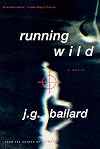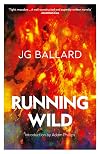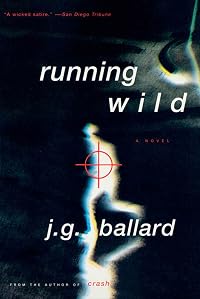
Running Wild
by J. G. Ballard
On This Page
Description
A high-security luxury housing estate in the Thames Valley is the setting for a disturbing outbreak of violence in this compelling reissued novella from the acclaimed author of Cocaine Nights and Super-Cannes.A high-security luxury housing estate in the Thames Valley is the setting for a disturbing outbreak of violence in this compelling reissued novella from the acclaimed author of Cocaine Nights and Super-Cannes.Pangbourne Village housing estate is exclusive, expensive and protected from show more the outside world by the very latest in security systems. It should be the perfect place to bring up a child. So why, in the space of ten minutes early one morning, were the thirty-two adult residents brutally murdered, and all thirteen children abducted? No kidnapper has ever come forward, and the police are mystified. It is only when psychiatrist Richard Greville is called in that the truth behind the massacre gradually becomes clear. show lessTags
Recommendations









Member Reviews
To read Ballard is something akin to being pummeled continuously, not very hard, but enough to wonder whether it's bad for you or not. Why then do I recommend you read this book? Why am I glad I read it myself? Because it's so fearless. And because it's too short to become depressing. It has a lovely lightness of wit that transforms the violence of the narrative into something new and startling, something to be paid attention to. It jars you from what you think you know. This is a rare kind of writing and it must be preserved and read and cherished. If you're new to Ballard--the closest approximation of the reading experience of one of his novels might be Nabokov at his most mordent, or Camus.
This brief book lacks subtlety but raises some interesting points: Can sociopathy be learned, or at least triggered? Can love exist, let alone thrive, without conflict? Is there such a thing as "happily ever after"?
The author claims, "In a totally sane society, madness is the only freedom." That glib statement seems to me insulting to people who struggle with mental health conditions.
A small quibble: There seems to be no explanation for the mysterious notches and marks left on baseboards and bed frames in the various homes.
The author claims, "In a totally sane society, madness is the only freedom." That glib statement seems to me insulting to people who struggle with mental health conditions.
A small quibble: There seems to be no explanation for the mysterious notches and marks left on baseboards and bed frames in the various homes.
The camera leaves the gatehouse and sets off along The Avenue, the tree-lined central drive of the estate. The handsome mansions sit above their ample front lawns, separated from each other by screens of ornamental shrubs and dry-stone walls. The light is flat but remarkably even, a consequence of the generous zoning densities (approx. two acres per house) and the absence of those cheap silver firs which cast their bleak shadows across the mock-Tudor facades of so many executive estates in the Thames Valley.
As well, though, there is an antiseptic quality about Pangbourne Village, as if these company directors, financiers and television tycoons have succeeded in ridding their private Parnassus of every strain of dirt and untidiness. show more Here, even the drifting leaves look as if they have too much freedom. Thirteen children once lived in these houses, but it is hard to visualize them at play.
The murders and kidnappings that take place an exclusive gated estate in the commuter belt of Southern England stun the whole country. When police psychiatrist Dr. Richard Greville starts investigating the mysterious murders and kidnappings at the Pangbourne Village estate, he realises that the policeman who shows him round the estate has a bizarre theory about what happened that morning, and slowly comes to agree with him. Neither of them, however, is keen to push this unpopular theory too strongly as the authorities appear willfully blind in their refusal to countenance it, ignoring even the strongest evidence pointing towards it such as the link between Mark Sanger's hobby of making box-kites and the strange contraption used to murder one of the security guards.
This unnerving novella is probably even more relevant now than when it was written, with helicopter parents filling every minute of their children's time with school-work and improving hobbies, too afraid to let them out of the house on their own. show less
As well, though, there is an antiseptic quality about Pangbourne Village, as if these company directors, financiers and television tycoons have succeeded in ridding their private Parnassus of every strain of dirt and untidiness. show more Here, even the drifting leaves look as if they have too much freedom. Thirteen children once lived in these houses, but it is hard to visualize them at play.
The murders and kidnappings that take place an exclusive gated estate in the commuter belt of Southern England stun the whole country. When police psychiatrist Dr. Richard Greville starts investigating the mysterious murders and kidnappings at the Pangbourne Village estate, he realises that the policeman who shows him round the estate has a bizarre theory about what happened that morning, and slowly comes to agree with him. Neither of them, however, is keen to push this unpopular theory too strongly as the authorities appear willfully blind in their refusal to countenance it, ignoring even the strongest evidence pointing towards it such as the link between Mark Sanger's hobby of making box-kites and the strange contraption used to murder one of the security guards.
This unnerving novella is probably even more relevant now than when it was written, with helicopter parents filling every minute of their children's time with school-work and improving hobbies, too afraid to let them out of the house on their own. show less
Read this today riding back from Chicago. There are nods to both the procedural form as well as a fairy tale. There is a massacare of all the adults at a gated community outside of Reading. All of the children are missing. A psychologist from the Home Office investigates the murder/kidnapping and explores the estate, itself a community of isolated sanity. The protagonist later concludes that within such, "madness is the only freedom." Ballard succeeds again in casting an eerie hue on the mechanisms of our civilization. Almsot 20 years old Running Wild anticipates the schism between the (virtual) hyperconnections of our lives and the physical barriers we erect for safety and integrity.
Running Wild is likely now to change anyone's life show more but it remains a sage cautionary tale, being germane to ongoing efforts at exclusivity. show less
Running Wild is likely now to change anyone's life show more but it remains a sage cautionary tale, being germane to ongoing efforts at exclusivity. show less
A quick read. The concept is interesting. I'm not sure if the twist was supposed to actually be a twist or not - my guess is no. I don't think the point of the book is the "surprise;" I think the point is the idea behind it. That the environment would inevitably produce this outcome, but that society was not prepared to deal with that and of course cannot accept it - and the same things may(will) continue to happen.
The format was also outstanding.
The format was also outstanding.
A very clever short novella, chilling and disturbing. I read it one sitting. I cannot possibly give away this beautiful Hutchinson 1st edition with illustrations by Janet Woolley, 1988.
Interesting but too short, when the end comes it does feel a little "Is that it?". Quite prescient with the rise in school shootings etc but not meaty enough to really satisfy.
Members
- Recently Added By
Lists

Books You Read During High School (For School)
301 works; 53 members

to get
244 works; 2 members
Author Information

290+ Works 37,661 Members
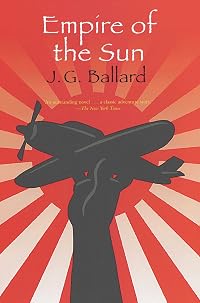
J. G. Ballard was born to British parents in Shanghai, China on November 15, 1930. While a child during World War II, he spent four years in a Japanese POW camp. This experience was the basis for the emotionally moving novel Empire of the Sun, which he adapted into a successful movie, directed by Steven Spielberg. Before becoming a full-time show more writer, he studied medicine at Cambridge University and served as a pilot in the British Royal Air Force. Ballard is best known for his science fiction writings. His early works were heavily influenced by surrealism. Most of his novels deal with death and destruction of the human spirit. Novels such as Crash, Concrete Island, and High Rise portray a society that is devolving into barbaric chaos. Crash was made into a movie by David Cronenberg in 1996. The Drowned World describes an apocalyptic society, with a hero that ushers in the destruction of the world. His novel Empire of the Sun was shortlisted for the Booker Prize and awarded the Guardian Fiction Prize and James Tait Black Memorial Prize for fiction. Empire of the Sun was filmed by Steven Spielberg in 1987, starring a young Christian Bale as Jim (Ballard). Ballard moved away from science fiction, but he is still considered one of the leading authors of the genre. He died on April 19, 2009 at the age of 78. (Bowker Author Biography) show less
Some Editions
Series
Belongs to Publisher Series
Common Knowledge
- Original publication date
- 1988-11
Classifications
Statistics
- Members
- 604
- Popularity
- 48,244
- Reviews
- 17
- Rating
- (3.57)
- Languages
- 9 — Dutch, English, French, German, Greek, Italian, Japanese, Spanish, Swedish
- Media
- Paper, Ebook
- ISBNs
- 29
- ASINs
- 6