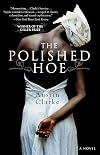
The Polished Hoe
by Austin Clarke
On This Page
Description
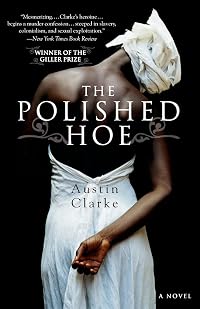
Winner of both the Giller Prize and the Commonwealth Writers' Prize, The Polished Hoe is acclaimed author Austin Clarke's masterpiece. On a Caribbean island in the 1950s, elderly Mary Gertrude Mathilda commits murder. As she explains herself to police, her story exposes the ugly underbelly of life on Caribbean plantations, with its slavery and brutality.Tags
Recommendations









Member Reviews
Before reading this novel I'd seen a number of other readers' comments about it being slow, boring, tedious, having no plot and so on. Which misses the point completely. This isn't a novel in which a plot is central, but about the course of an individual life, about relationships, history and, as it says on the back of the book, about the sacrifices which have to be made for survival.
The Polished Hoe, set in a lightly disguised Barbados, painstakingly teases apart the history of its central character, Mary-Mathilda, and the lifetime of exploitation and abuse she was put to by her mother in order to ensure her relative material prosperity. Indeed, one is hard-pressed to say whether May or Bellfeels, the Plantation manager, is more show more fundamentally guilty of the betrayal of Mary-Mathilda, whose voice, perceptions and experiences at the centre of Clarke's novel.
This is a novel without chapters, although it is divided into three lengthy sections, which means that there are few logical breaks in the narrative at which the reader may conveniently break. However I found that whenever I picked the book up again and started reading I always remembered exactly where in the speaker's reminiscences I'd laid it aside, and in a novel whose action is all reported at second hand and often from many years ago, it is a supreme achievement of the narrative and writing that each twist and digression is so memorable and vivid, offering firm anchors for the reader to latch onto.
Of all the novels I've read it reminds me most forcibly of Sandor Marai's Embers, also a novel in which two people sit through a night and talk about something which which has taken place and the circumstances surrounding it. In The Polished Hoe it is clear throughout the novel that something has happened earlier that evening but, although we have a fair idea fairly early on what that is, our surmise is not confirmed until the very end. In Embers what happened, or rather what didn't happen, took place more than half a lifetime ago and in that case it was an act which could have taken place but which didn't but which nevertheless tore two close friends irretrievably apart. In The Polished Hoe the reminiscences serve to draw back together the two childhood friends who had been separated by the different fates for which they were destined.
The Polished Hoe is shot through with a sustained, powerful yet subtle eroticism which weaves itself around and between Mary-Mathilda and Percy and as a piece of erotic writing it works very well indeed. On a more cynical note one could also see the events of the night in question as a wider seduction, or perhaps corruption is more appropriate, of Percy, the Crown-Sergeant, by Mary-Mathilda who, as it turns out, needs to compromise the policeman as much as she wishes to make up for lost time.
Not surprisingly, the history and legacy of slavery feature strongly in the novel in the form of the memories and testimony of Mary-Mathilda's grandmother and great grandmother as told by Mary-Mathilda by her mother, hence we appear to have four generations of oral history and testimony.
I am, however, not convinced that the history provided by Mary-Mathilda is reliable. We know from internal evidence in the novel that Mary-Mathilda was born c1897 and may therefore surmise that her mother was born c1870, her grandmother c1845 and her great-grandmother c1820. Mary-Mathilda's claim that her great-grandmother had come from somewhere in Africa seems somewhat unlikely since the slave trade was abolished throughout the Britsh Empire in 1807 (and the Royal Navy thereafter policed the Atlantic rigorously stamping out what trade remained taking slaves to the US) and slavery itself was outlawed throughout the Empire from 1834.
This is not to deny or denigrate the very real legacy of slavery in Barbados. Clearly the island's sugar economy had depended heavily on slavery in the past, but I think we are intended to see the poorly educated Mary-Mathilda as an unreliable narrator in this instance, which perhaps only serves to heighten the power of her account of her own experiences and life. show less
The Polished Hoe, set in a lightly disguised Barbados, painstakingly teases apart the history of its central character, Mary-Mathilda, and the lifetime of exploitation and abuse she was put to by her mother in order to ensure her relative material prosperity. Indeed, one is hard-pressed to say whether May or Bellfeels, the Plantation manager, is more show more fundamentally guilty of the betrayal of Mary-Mathilda, whose voice, perceptions and experiences at the centre of Clarke's novel.
This is a novel without chapters, although it is divided into three lengthy sections, which means that there are few logical breaks in the narrative at which the reader may conveniently break. However I found that whenever I picked the book up again and started reading I always remembered exactly where in the speaker's reminiscences I'd laid it aside, and in a novel whose action is all reported at second hand and often from many years ago, it is a supreme achievement of the narrative and writing that each twist and digression is so memorable and vivid, offering firm anchors for the reader to latch onto.
Of all the novels I've read it reminds me most forcibly of Sandor Marai's Embers, also a novel in which two people sit through a night and talk about something which which has taken place and the circumstances surrounding it. In The Polished Hoe it is clear throughout the novel that something has happened earlier that evening but, although we have a fair idea fairly early on what that is, our surmise is not confirmed until the very end. In Embers what happened, or rather what didn't happen, took place more than half a lifetime ago and in that case it was an act which could have taken place but which didn't but which nevertheless tore two close friends irretrievably apart. In The Polished Hoe the reminiscences serve to draw back together the two childhood friends who had been separated by the different fates for which they were destined.
The Polished Hoe is shot through with a sustained, powerful yet subtle eroticism which weaves itself around and between Mary-Mathilda and Percy and as a piece of erotic writing it works very well indeed. On a more cynical note one could also see the events of the night in question as a wider seduction, or perhaps corruption is more appropriate, of Percy, the Crown-Sergeant, by Mary-Mathilda who, as it turns out, needs to compromise the policeman as much as she wishes to make up for lost time.
Not surprisingly, the history and legacy of slavery feature strongly in the novel in the form of the memories and testimony of Mary-Mathilda's grandmother and great grandmother as told by Mary-Mathilda by her mother, hence we appear to have four generations of oral history and testimony.
I am, however, not convinced that the history provided by Mary-Mathilda is reliable. We know from internal evidence in the novel that Mary-Mathilda was born c1897 and may therefore surmise that her mother was born c1870, her grandmother c1845 and her great-grandmother c1820. Mary-Mathilda's claim that her great-grandmother had come from somewhere in Africa seems somewhat unlikely since the slave trade was abolished throughout the Britsh Empire in 1807 (and the Royal Navy thereafter policed the Atlantic rigorously stamping out what trade remained taking slaves to the US) and slavery itself was outlawed throughout the Empire from 1834.
This is not to deny or denigrate the very real legacy of slavery in Barbados. Clearly the island's sugar economy had depended heavily on slavery in the past, but I think we are intended to see the poorly educated Mary-Mathilda as an unreliable narrator in this instance, which perhaps only serves to heighten the power of her account of her own experiences and life. show less
Clarke's book is a difficult one to read and is certainly not for those looking for a quick escape with a happy ending. The action of the story takes place over a single night, but it covers years of the life on a small West Indian island that had it's beginnings in slavery. Mary-G is a black woman born to as a fourth generation slave on this island. Like her mother, grandmother and great-grandmother before her she worked in the fields for a white overseer on a sugar cane plantation. She also follows them in another area-that of a white man's plaything. These women are all slaves so cannot question their lot, or say know to the unwelcome advances. Mary-G goes on like this for years as a casual sex toy for the white overseer. She is show more placed in a nice home, and she has three children by this man (only one lives), but she has been alienated from her fellow black friends by this show of favouritism. She is lonely and whiles the time away by raising her son and by reading. Then one day she has just had enough and she takes matters into her own hands. She exacts revenge for all of her anscestors. This book is about choices (limited or otherwise), and the results of those choices. The book is actually set in the time of the 30's and 40's (post-colonial because this island was a British colony). Clarke has created some powerful characters in this book. They are certainly not going to be forgotten by me for quite some time. This book is another worhty winner of the prestigious Giller prize. show less
i thought i would be able to settle into this after having trouble with the first pages, but i just never did. there was nothing in it for me to grab onto in the language or the story or the writing. i just didn't care about anything until finally it started to improve at page 350, but only for a few pages, and then again around page 390 for a few pages. the last couple of pages finally gave the story its climax, but since the point of the whole thing - not the crime itself, but the rape and the abuse and the sexism and racism and slavery and colonialism and and and - was everything outside these 10 total decent pages, and none of those pages to me were any good...for me the point was missed and the effort was wasted.
Over the space of one night a woman gives her confession to the policeman she’s known from childhood. Slowly the history of the island sugarcane plantation, slavery and intertwined, incestuous, ambiguous relationships come to light.
OK, I made it to page 153, I don't care why she killed him anymore!!!!
When Mary-Mathilda, one of the most respected women of the island of Bimshire (also known as Barbados) calls the police to confess to a crime, the result is a shattering all-night vigil that brings together elements of the island's African past and the tragic legacy of colonialism in one epic sweep.
Oct 15, 2021Spanish
Members
- Recently Added By
Lists

CBC Books - Canada's 100 (+ bonus 10): Which have you read?
110 works; 23 members
The Best of Canadian Literature
235 works; 33 members

Giller Prize Winners
32 works; 6 members

Best books read in 2011
200 works; 51 members

Black Authors
384 works; 32 members
Author Information

27+ Works 930 Members
Austin Chesterfield Clarke was born in St. James, Barbados on July 26, 1934. He moved to Canada in 1955 to attend the University of Toronto, where he studied economics and political science. He worked as a journalist before becoming an author. During the late 1960s and early 1970s, he became a visiting lecturer at a number of U.S. universities and show more was among the professors who founded Yale University's Black Studies program. He also worked as a cultural attache to the Barbadian Embassy in Washington. In 1975, he returned to Barbados to become general manager of the Caribbean Broadcasting Corporation and an advisor to the prime minister. He returned to Canada in 1976 and became a Canadian citizen in 1981. His works mainly focus on the immigrant experience and being black in Canada. His books include The Survivors of Crossing, The Meeting Point, Storm of Fortune, The Bigger Light, The Question, and More. In 1997, The Origin of the Waves won the Writers' Trust Fiction Prize. In 2002, The Polished Hoe won the Scotiabank Giller Prize for fiction, the Commonwealth Writer's Prize for best book, and the Trillium Book Award. His memoir, Growing up Stupid under the Union Jack, won the Casa de las Americas Prize for Literature in 1980. His other memoirs include A Passage Back Home and 'Membering. He also wrote five short-story collections and in 1999, he was awarded the W.O. Mitchell Prize for producing an outstanding body of work for his short stories collections. In 1998, he was made a member of the Order of Canada. He died on June 26, 2016 at the age of 81. (Bowker Author Biography) show less
Awards and Honors
Awards
Notable Lists
Work Relationships
Common Knowledge
- Canonical title
- The Polished Hoe
- Original publication date
- 2002
- People/Characters
- Mary Gertrude Mathilda Bellfeeds; Percy DaCosta Benjamin Stuart; Darnley Alexander Randall Bellfeeds; Granville Chesterfield Bennett Browne; Gertrude; Wilberforce Darnley Alexander Randall Bellfeeds (show all 24); Lawrence Burkhart; Euralie Bellfeeds; Emonie Bellfeeds; Eunomia Irene Paul; Golbourne; Pounce; Revern Dowd; Mandeville (Manny) White (Manny); Clotelle; Naiman; Mr. Walrond; Dora Blanche Spence Bellfeeds; Sir Stanley; Mr. Brannford; Rosa Mary Antoinette Brannford; Mr. Edwards; Mr. Patel; Celia DiFranco
- Important places
- Island of Bimshire, Barbados; Barbados; West Indies
- Epigraph
- That victory was hers,
and so was his passion; but the passionless books
did not contain smell, eyes, the long black arm, or his
knowledge that the island's beauty was in her looks
--Derek Walcott, from - Dedication
- For Gladys Irene Clarke-Luke
My Mother.
Classifications
- Genres
- Fiction and Literature, General Fiction, Historical Fiction
- DDC/MDS
- 813.54 — Literature & rhetoric American literature in English American fiction in English 1900-1999 1945-1999
- LCC
- PR9199.3 .C526 .P65 — Language and Literature English English Literature English literature: Provincial, local, etc.
- BISAC
Statistics
- Members
- 500
- Popularity
- 60,318
- Reviews
- 7
- Rating
- (3.23)
- Languages
- Dutch, English
- Media
- Paper, Audiobook, Ebook
- ISBNs
- 19
- ASINs
- 8