
On This Page
Description
On an island off the coast of Maine, a man is found dead. There's no identification on the body. Only the dogged work of a pair of local newspapermen and a graduate student in forensics turns up any clues. But that's just the beginning of the mystery. Because the more they learn about the man and the baffling circumstances of his death, the less they understand. Was it an impossible crime? Or something stranger still...? No one but Stephen King could tell this story about the darkness at the show more heart of the unknown and our compulsion to investigate the unexplained. With echoes of Dashiell Hammett's The Maltese Falcon and the work of Graham Greene, one of the world's great storytellers presents a surprising tale that explores the nature of mystery itself... show lessTags
Recommendations
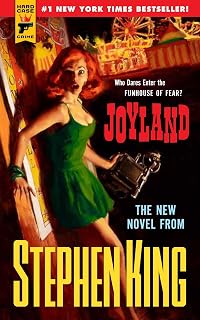
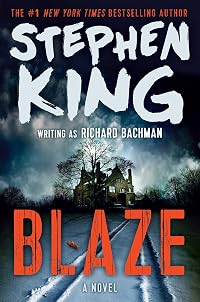
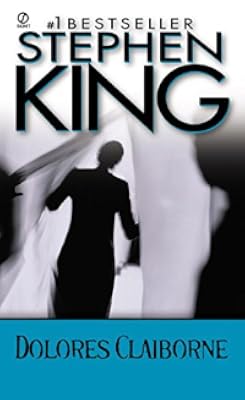
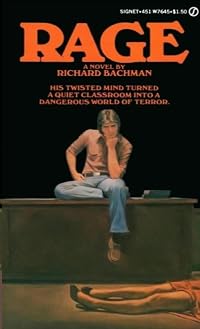
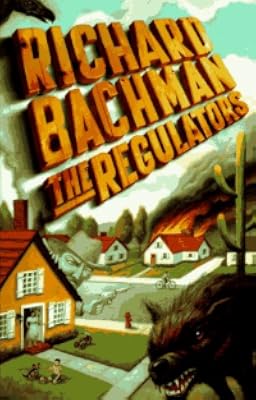

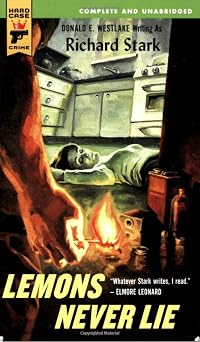
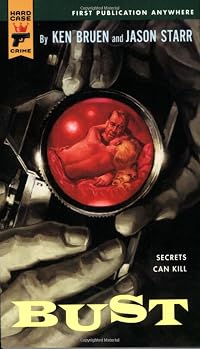
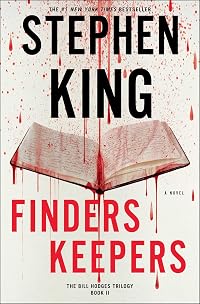



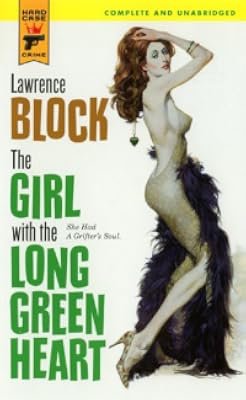

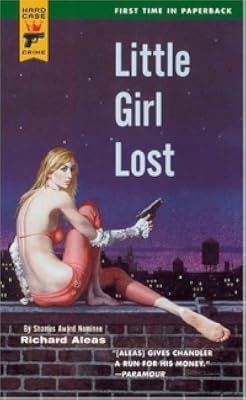

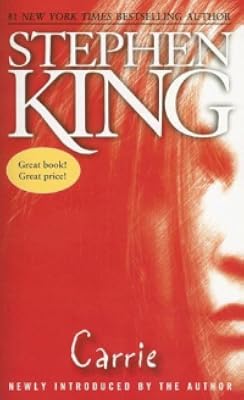
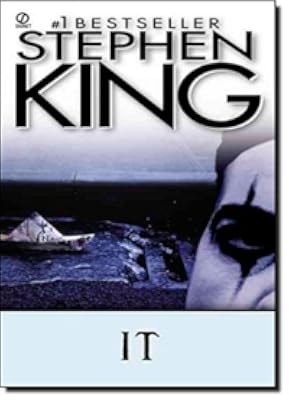


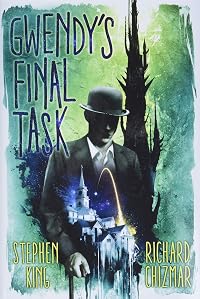

Member Recommendations
wvlibrarydude The old men sitting around telling stories compared very well in method of telling story. If you liked this aspect of either book, then check out the other one.


PghDragonMan Local color is almost another character and adds depth to both titles.
Member Reviews
I enjoyed 'The Colorado Kid' for its bravery as much as its content. This is not the book that either of its covers suggest that it's going to be. The publisher's summary also did nothing to prepare me for the book I was going to read. Here's the pitch it makes:
"On an island off the coast of Maine, a man is found dead. There's no identification on the body. Only the dogged work of a pair of local newspapermen and a graduate student in forensics turns up any clues.
But that's just the beginning of the mystery. Because the more they learn about the man and the baffling circumstances of his death, the less they understand. Was it an impossible crime? Or something stranger still...?"
The covers and the publisher's pitch all have one thing in show more common: they offer the prospect of a dramatic story. A mystery set on an island. An unknown man found dead on a beach. A young reporter eager to solve the mystery and give the story a beginning, a middle and an end and possibly add a little sex appeal along the way.
The book Stephen King has written is nothing like that. 'The Colorado Kid' is almost an essay on what it is that defines a mystery, the demands that our imaginations make for recognisable stories and the gap between storying telling and factual descriptions of complexly connected, non-linear, real-life events. Of course, it's an essay delivered by a master showman who knows how to lead readers on and make them eager for the next page.
I can best give you a feel for the tone of the book by telling you that the first, not particularly short, chapter is mostly spent on a nonagenarian editor of a local newspaper getting his young, female intern to figure out why the editor has pocketed the dollars that their lunch guest, a reporter from the Boston Globe, had left on the table to pay for everyone's lunch. It's a really good chapter. It locates the story in a time and place, starts to build the main characters and to display their relationship to one another and it gently prepares the reader for an almost Socratic discourse on the nature of a mystery.
And there is a mystery and it's a good one. There's the dramatic discovery of an unknown dead guy on a beach. We don't know who he is, how he died or even why he was there at all. There's a charmingly oblique disclosure of how the investigation into the man and the circumstances of his death was carried out and we learn many interesting things, most of which deepen the mystery rather than resolving it.
But the mystery is not the driving force of the novel. It's more in the way of a worked example that is being used to provide teaching moments to the young intern journalist.
And the focus of the lesson?
That a mystery isn't a mystery if it's solved. Which means mysteries make poor stories because stories need a beginning, a middle and an end and they need narratives and characters that we recognise and can empathise with. Stories need to be made of components that allow the reader to assemble a sort of gestalt version of the narrative in their head as each new player or piece of information is introduced. Stories are satisfying. Mysteries that stay mysteries are frustrating. Good reporters love to dive down rabbit holes in search of whatever information there is to find about a mystery but finding everything there is to know doesn't mean that they'll end up with a story they can publish.
And that's about it.
Apart from some great dialogue, some dry humour, some beautifully drawn characters and a strong sense of place, there's nothing much more to 'The Colorado Kid'.
I thought listening to Jeffrey DeMunn read 'The Colorado Kid' was a wonderful way to spend an afternoon. Your experience may vary.
Click on the SoundCloud link below and decide if this is your kind of thing.
https://soundcloud.com/simonschuster/the-colorado-kid-audiobook-1 show less
This one's a 3.5 rounded up to 4.
Often with King, the pleasure is not in where King takes you, but the journey he takes you on. I know there's a lot of readers who complain he can't stick the landing on his novels, and in some cases that may be true, such as with UNDER THE DOME and I'd even say more recently with HOLLY, however I'd say overall it's the exception, not the rule.
In this one, King warns you right up front that there's no satisfying ending here, and it's all about the actual mystery. This is my second time going in, and I knew damn well what was waiting in the final pages.
But I have to say, I do have a weakness for the stories where King just lets a character or two (or three, or five) relay the story to a listener. He did show more it with FROM A BUICK 8, he did it with THE WIND THROUGH THE KEYHOLE, he's done it a few times, and I truly enjoy it every time. This one's no exception.
It's a lightweight King novel, it's never going to be held up as one of the greats, but it's an enjoyable ride, no matter where King finally stops and lets you out. show less
Often with King, the pleasure is not in where King takes you, but the journey he takes you on. I know there's a lot of readers who complain he can't stick the landing on his novels, and in some cases that may be true, such as with UNDER THE DOME and I'd even say more recently with HOLLY, however I'd say overall it's the exception, not the rule.
In this one, King warns you right up front that there's no satisfying ending here, and it's all about the actual mystery. This is my second time going in, and I knew damn well what was waiting in the final pages.
But I have to say, I do have a weakness for the stories where King just lets a character or two (or three, or five) relay the story to a listener. He did show more it with FROM A BUICK 8, he did it with THE WIND THROUGH THE KEYHOLE, he's done it a few times, and I truly enjoy it every time. This one's no exception.
It's a lightweight King novel, it's never going to be held up as one of the greats, but it's an enjoyable ride, no matter where King finally stops and lets you out. show less
The March 2021 #TBRChallenge theme is “book by a favorite author.” I’ve not been in much of a romance-reading mood this month (and its not being helped by my current romance being juvenile and dull), so I decided to change genres and seek out a different favorite. Stephen King is one of my favorite writers, especially in a short format, and though this book clocks in at a novel length (205 pages), it’s definitely on the shorter end of the spectrum.
What I like best about Stephen King is that he is a storyteller. He has an amazing ability to spin a yarn, and that’s exactly what he does here. For me, he captures the flavor of rural Maine (perhaps even islander Maine, given his thoughts in the afterward about how insular their show more communities are), of two old guys telling a story they’ve told multiple times before, like chewing the fat. This time, it’s two old newspapermen telling their young intern, passing the unsolved mystery of the Colorado Kid onto her, to keep it alive and perhaps even the hope of resolving it.
I can see why people would hate this book, even with multiple warnings of the unresolved ending. I can see why people wished it was longer, that one of our narrators had really dug into the case, found the missing pieces that explained everything. As the characters (and King himself) say, we always want an ending, some way to force logic into chaos.
Personally, that’s why I enjoyed it. I like unsolved mysteries (even though I do like solved ones more – they are usually supremely interesting along the journey, even if the resolution is depressingly familiar). I’ve given plenty of thought to what would happen if someone dies without anyone else realizing it. How long would it take to find them? How much effort would be put into identifying them or their cause of death? The plain truth is that a lot of people die alone and unknown. We just don’t want to think about it, and a glut of true-crime docuseries have given us a false sense of security that yes, someone cares enough to chase down the details, no matter how obscure.
It’s a lot of food for thought.
I also enjoyed the meta touches – the name-drops of heralded fictional detectives of yore (Holmes, Marple, Queen); the good-natured ribbing of Murder, She Wrote ♥ It was all woven into the story so seamlessly, so realistically: I can totally see these two geezers, sitting around shooting the breeze and teasing each other, passing along their One Great Unresolved Story to the next generation. This, more than anything, is King’s magic, the way he captures the community of his characters, seemingly effortlessly. Count me in as one who likes this novel! show less
What I like best about Stephen King is that he is a storyteller. He has an amazing ability to spin a yarn, and that’s exactly what he does here. For me, he captures the flavor of rural Maine (perhaps even islander Maine, given his thoughts in the afterward about how insular their show more communities are), of two old guys telling a story they’ve told multiple times before, like chewing the fat. This time, it’s two old newspapermen telling their young intern, passing the unsolved mystery of the Colorado Kid onto her, to keep it alive and perhaps even the hope of resolving it.
I can see why people would hate this book, even with multiple warnings of the unresolved ending. I can see why people wished it was longer, that one of our narrators had really dug into the case, found the missing pieces that explained everything. As the characters (and King himself) say, we always want an ending, some way to force logic into chaos.
Personally, that’s why I enjoyed it. I like unsolved mysteries (even though I do like solved ones more – they are usually supremely interesting along the journey, even if the resolution is depressingly familiar). I’ve given plenty of thought to what would happen if someone dies without anyone else realizing it. How long would it take to find them? How much effort would be put into identifying them or their cause of death? The plain truth is that a lot of people die alone and unknown. We just don’t want to think about it, and a glut of true-crime docuseries have given us a false sense of security that yes, someone cares enough to chase down the details, no matter how obscure.
It’s a lot of food for thought.
I also enjoyed the meta touches – the name-drops of heralded fictional detectives of yore (Holmes, Marple, Queen); the good-natured ribbing of Murder, She Wrote ♥ It was all woven into the story so seamlessly, so realistically: I can totally see these two geezers, sitting around shooting the breeze and teasing each other, passing along their One Great Unresolved Story to the next generation. This, more than anything, is King’s magic, the way he captures the community of his characters, seemingly effortlessly. Count me in as one who likes this novel! show less
This is the first I've ever read of Stephen King. I've never found myself attracted to King's writing...a couple of glances at the films made of his novels and overhearing descriptions of his writing have generally been enough to rule him out for me. That's not because I don't think he's a good writer...I've heard everything to the contrary. Its just that suspense and horror aren't my bent.
What I have found myself drawn to lately, however, is the SyFy Channel's original series, Haven. The series is based off of The Colorado Kid, this short novella by Stephen King. Some of the behind-the-scenes videos from the series discuss how veiled references to King's other stories appear throughout the series, much to the delight of his fans. show more While I'm not interested in reading the rest of his canon...or really anything else by him...I was very interested to read the basis for the just-eery-enough program upon which I've become so hooked.
And when I call this a short novella, its just that: the ebook version finishes at less than 200 pages, so if you pick it up with any time to devote at all, you'll likely finish it in one sitting. Like the television series, the story is set in coastal Maine. This proves to be the perfect setting for a mystery, because, as King states in his afterword, nowhere is quite so isolated to provide for the mysterious as an island. The story is of a man who is discovered dead on a beach by two high school students one morning, and the subsequent investigation that is sold short by local law enforcement, and performed largely at the hand of the two old newspaper reporters of the local paper (who will be instantly recognizable to fans of Haven). The unidentified man, to whom they begin to refer as the Colorado Kid, is eventually identified, and discovered to have not only be from Colorado, but to have been seen in Colorado hours before being discovered dead on a beach in Maine. Thus the mystery begins...and it proves nearly unsolvable.
What King does here that's so fascinating is that he leaves the story at that: an unsolvable mystery (although he hypothesizes the potential for solutions in his afterword, he never identifies any). Rather, this is a story that explores the phenomenon of mystery, the fact that human beings are confronted with (what King views as) the unsolvable mystery of life, and compelled to reach toward it, to keep trying to solve it regardless of how unsolvable it turns out to be, and to keep our future generations motivated to continue probing the unknown, as well. The newspaper reporters pass on the unsolvable story to their college intern, who has become passionate about staying in Maine and carrying on this small newspaper. She is the heir to the story of the Colorado Kid, and we know that she will continue to pursue it. In his afterword, King states that wanting to know can more important than knowing. As much as he seems to eschew any rhyme or reason to the tragedy of life in his thoughts, he seems to be exploring an almost theological idea here, nothing short of the knowledge of good and evil.
There's nothing frightening about the novel. I was left with some chills when I read it late into the night in a quiet apartment with most of the lights off, but they weren't the "something's coming to get me" chills, but rather the chills that accompany an excellent mystery. And that, ultimately, is exactly what this is: an excellent mystery. The supernatural element that drives Haven is absent (although one does ponder paranormal solutions to the mystery when all rational explanations seem to fail), and the reader is drawn into sleuthing with amateur sleuths who are passionate about discovering the answer to the mystery. King even weaves in a classic quote from Sherlock Holmes, and its very much at home here, even though the truth isn't discovered by the end.
But the reader is still left with the hope that it could be discovered. And so we're driven to always keep wondering. And that's the part of the human condition that King is probing here, the thing that drives us to seek answers to "why?" when we're confronted with the unanswerable.
You don't need to be a fan of Stephen King to love this book. You don't even need to be a fan of Haven. If you are a fan of a good mystery, then this should be on your shelf. show less
What I have found myself drawn to lately, however, is the SyFy Channel's original series, Haven. The series is based off of The Colorado Kid, this short novella by Stephen King. Some of the behind-the-scenes videos from the series discuss how veiled references to King's other stories appear throughout the series, much to the delight of his fans. show more While I'm not interested in reading the rest of his canon...or really anything else by him...I was very interested to read the basis for the just-eery-enough program upon which I've become so hooked.
And when I call this a short novella, its just that: the ebook version finishes at less than 200 pages, so if you pick it up with any time to devote at all, you'll likely finish it in one sitting. Like the television series, the story is set in coastal Maine. This proves to be the perfect setting for a mystery, because, as King states in his afterword, nowhere is quite so isolated to provide for the mysterious as an island. The story is of a man who is discovered dead on a beach by two high school students one morning, and the subsequent investigation that is sold short by local law enforcement, and performed largely at the hand of the two old newspaper reporters of the local paper (who will be instantly recognizable to fans of Haven). The unidentified man, to whom they begin to refer as the Colorado Kid, is eventually identified, and discovered to have not only be from Colorado, but to have been seen in Colorado hours before being discovered dead on a beach in Maine. Thus the mystery begins...and it proves nearly unsolvable.
What King does here that's so fascinating is that he leaves the story at that: an unsolvable mystery (although he hypothesizes the potential for solutions in his afterword, he never identifies any). Rather, this is a story that explores the phenomenon of mystery, the fact that human beings are confronted with (what King views as) the unsolvable mystery of life, and compelled to reach toward it, to keep trying to solve it regardless of how unsolvable it turns out to be, and to keep our future generations motivated to continue probing the unknown, as well. The newspaper reporters pass on the unsolvable story to their college intern, who has become passionate about staying in Maine and carrying on this small newspaper. She is the heir to the story of the Colorado Kid, and we know that she will continue to pursue it. In his afterword, King states that wanting to know can more important than knowing. As much as he seems to eschew any rhyme or reason to the tragedy of life in his thoughts, he seems to be exploring an almost theological idea here, nothing short of the knowledge of good and evil.
There's nothing frightening about the novel. I was left with some chills when I read it late into the night in a quiet apartment with most of the lights off, but they weren't the "something's coming to get me" chills, but rather the chills that accompany an excellent mystery. And that, ultimately, is exactly what this is: an excellent mystery. The supernatural element that drives Haven is absent (although one does ponder paranormal solutions to the mystery when all rational explanations seem to fail), and the reader is drawn into sleuthing with amateur sleuths who are passionate about discovering the answer to the mystery. King even weaves in a classic quote from Sherlock Holmes, and its very much at home here, even though the truth isn't discovered by the end.
But the reader is still left with the hope that it could be discovered. And so we're driven to always keep wondering. And that's the part of the human condition that King is probing here, the thing that drives us to seek answers to "why?" when we're confronted with the unanswerable.
You don't need to be a fan of Stephen King to love this book. You don't even need to be a fan of Haven. If you are a fan of a good mystery, then this should be on your shelf. show less
Sometimes, the best thing an author can do is leave you hanging. Life is a mystery without a solution and that's why people want their fiction, especially crime fiction, tied up in a neat little bow. That's also why it's called fiction. This is the best short fiction I've read in a long time. The crime doesn't have to be solved for the book to be good. The writing is what matters and this is one of King's best. The three main characters become your friends by the time you finish. You know something about the island and how it's inhabitants feel about it and the mainland. What more do you need?
I always wondered how Stephen King would fare as the writer of a hard boiled mystery. When I started to read this little slip of a book, I looked for the horror aspect. I waited. I fretted. I decided that I hated this stupid book. I put it down.
I admit that I read the author's afterword when I figured I would not finish the book. Then I thought about it for a while. And I picked the book and continued to read. And I have to say that it is written as a true hard boiled mystery.
I've been so spoiled by the entertainment of the detective who points a finger and exclaims "AHA!" that I forgot that a mystery is the unknown. It is simply speculation because, by nature, it is unsolved. It CAN'T be solved. That's what makes it a mystery.
Once I show more realized and accepted that my questions were not now or ever going to be answered, that I was free to make any and all assumptions about what occurred because there would never be any resolution, I enjoyed the hell out of the story. The easy banter between the three characters was delightful. And I loved the ending paragraph.
I will say that I do not see myself reading much of this particular kind of mystery. I like resolution. I like knowing that the door closed behind me guards no more secrets. But that doesn't mean that the occasional true mystery is not juicy and exciting. It is. It definitely is. show less
I admit that I read the author's afterword when I figured I would not finish the book. Then I thought about it for a while. And I picked the book and continued to read. And I have to say that it is written as a true hard boiled mystery.
I've been so spoiled by the entertainment of the detective who points a finger and exclaims "AHA!" that I forgot that a mystery is the unknown. It is simply speculation because, by nature, it is unsolved. It CAN'T be solved. That's what makes it a mystery.
Once I show more realized and accepted that my questions were not now or ever going to be answered, that I was free to make any and all assumptions about what occurred because there would never be any resolution, I enjoyed the hell out of the story. The easy banter between the three characters was delightful. And I loved the ending paragraph.
I will say that I do not see myself reading much of this particular kind of mystery. I like resolution. I like knowing that the door closed behind me guards no more secrets. But that doesn't mean that the occasional true mystery is not juicy and exciting. It is. It definitely is. show less
This review first appeared on scifiandscary.com - the publisher provided a copy for review consideration
When I’m not reading books that are sci fi or scary, you’ll mostly find me with a crime paperback in my hands. There’s something about mystery novels that calls to something deep within me, they satisfy a need I have to explore the “why?” of life. I’m a particular fan of vintage crime, and as a result I love the Hard Case Crime imprint, which features mystery fiction both old and new, presented with gorgeous pulp style covers. I first read Stephen King’s ‘The Colorado Kid’ when it was published as one of the first wave of books from Hard Case. It’s one of King’s lesser known works, having been out of print in the show more US for the last decade, but they’ve just re-issued it in a new illustrated edition.
The story is simple, and very different from the epic horror tomes that King is most famous for. It is instantly recognisable as his work though, both for its small-town Maine setting and the natural flow of its dialogue. The book is entirely a conversation between two elderly newspapermen, who run the paper that serves the island the book is set on, and the young female journalism student who is interning with them. The trio are discussing what makes the kind of mystery story that newspapers publish, and this leads the two men to relay the story of the Colorado Kid. The events they describe happened some 25 years previously on the island, starting with the discovery of the fresh corpse of a stranger.
To tell more than that would be to give too much away, so I won’t, but needless to say this is a mystery novel through and through. It’s a book about the allure of the unknown, as much as it is a whodunnit and King does a great job of dissecting the appeal of the genre. Along the way he throws in some wonderful characters and memorable events, and paints affectionate picture of small town life. What he doesn't do is solve the case. Instead he leaves the reader with a delightful conundrum to puzzle over.
Is it sci fi or scary, though? I hear you cry. Well, it isn’t scary, and it isn’t sci fi. I would argue though, that it definitely counts as fantastic fiction. The mystery is such that the door is very much left open to supernatural explanations, although King leaves the interpretation of events up to the reader.
It’s worth commenting on what’s new in this edition. There are the many illustrations, which I really enjoyed and which add to the overall experience. The book also features an illuminating and heartfelt introduction from Charles Ardai, one of the founders of Hard Case Crime, on how it came to be in the first place.
‘The Colorado Kid’ is an atypical King book. It’s short, which, as someone who often feels slightly wearied by his tendency to go on a bit, is welcome. It’s not obviously horror and certainly lacks the in your face tension of many of his books. Instead it’s a gentle mystery, one that explores the genre as well as small town life in a way that I found utterly beguiling. Many may be disappointed by the lack of a clear resolution at the end, but for me that misses the point. show less
When I’m not reading books that are sci fi or scary, you’ll mostly find me with a crime paperback in my hands. There’s something about mystery novels that calls to something deep within me, they satisfy a need I have to explore the “why?” of life. I’m a particular fan of vintage crime, and as a result I love the Hard Case Crime imprint, which features mystery fiction both old and new, presented with gorgeous pulp style covers. I first read Stephen King’s ‘The Colorado Kid’ when it was published as one of the first wave of books from Hard Case. It’s one of King’s lesser known works, having been out of print in the show more US for the last decade, but they’ve just re-issued it in a new illustrated edition.
The story is simple, and very different from the epic horror tomes that King is most famous for. It is instantly recognisable as his work though, both for its small-town Maine setting and the natural flow of its dialogue. The book is entirely a conversation between two elderly newspapermen, who run the paper that serves the island the book is set on, and the young female journalism student who is interning with them. The trio are discussing what makes the kind of mystery story that newspapers publish, and this leads the two men to relay the story of the Colorado Kid. The events they describe happened some 25 years previously on the island, starting with the discovery of the fresh corpse of a stranger.
To tell more than that would be to give too much away, so I won’t, but needless to say this is a mystery novel through and through. It’s a book about the allure of the unknown, as much as it is a whodunnit and King does a great job of dissecting the appeal of the genre. Along the way he throws in some wonderful characters and memorable events, and paints affectionate picture of small town life. What he doesn't do is solve the case. Instead he leaves the reader with a delightful conundrum to puzzle over.
Is it sci fi or scary, though? I hear you cry. Well, it isn’t scary, and it isn’t sci fi. I would argue though, that it definitely counts as fantastic fiction. The mystery is such that the door is very much left open to supernatural explanations, although King leaves the interpretation of events up to the reader.
It’s worth commenting on what’s new in this edition. There are the many illustrations, which I really enjoyed and which add to the overall experience. The book also features an illuminating and heartfelt introduction from Charles Ardai, one of the founders of Hard Case Crime, on how it came to be in the first place.
‘The Colorado Kid’ is an atypical King book. It’s short, which, as someone who often feels slightly wearied by his tendency to go on a bit, is welcome. It’s not obviously horror and certainly lacks the in your face tension of many of his books. Instead it’s a gentle mystery, one that explores the genre as well as small town life in a way that I found utterly beguiling. Many may be disappointed by the lack of a clear resolution at the end, but for me that misses the point. show less
Members
- Recently Added By
Lists

Read the book and saw the movie
1,170 works; 195 members

Stephen King Bibliography
77 works; 3 members

Books tagged "feel good"
129 works; 20 members

Books Set on Islands
190 works; 24 members

Books With Place Names in the Title
215 works; 10 members

Books Read in 2006
421 works; 7 members

Eerie eTales
192 works; 3 members

Top Five Books of 2024
795 works; 264 members

Stephen King books
81 works; 1 member
Talk Discussions
Past Discussions
June 2013’s SK Flavor of the Month – The Colorado Kid in King's Dear Constant Readers (August 2014)
Author Information

966+ Works 867,771 Members
Stephen King was born in Portland, Maine, on September 21, 1947. After graduating with a Bachelor's degree in English from the University of Maine at Orono in 1970, he became a teacher. His spare time was spent writing short stories and novels. King's first novel would never have been published if not for his wife. She removed the first few show more chapters from the garbage after King had thrown them away in frustration. Three months later, he received a $2,500 advance from Doubleday Publishing for the book that went on to sell a modest 13,000 hardcover copies. That book, Carrie, was about a girl with telekinetic powers who is tormented by bullies at school. She uses her power, in turn, to torment and eventually destroy her mean-spirited classmates. When United Artists released the film version in 1976, it was a critical and commercial success. The paperback version of the book, released after the movie, went on to sell more than two-and-a-half million copies. Many of King's other horror novels have been adapted into movies, including The Shining, Firestarter, Pet Semetary, Cujo, Misery, The Stand, and The Tommyknockers. Under the pseudonym Richard Bachman, King has written the books The Running Man, The Regulators, Thinner, The Long Walk, Roadwork, Rage, and It. He is number 2 on the Hollywood Reporter's '25 Most Powerful Authors' 2016 list. King is one of the world's most successful writers, with more than 100 million copies of his works in print. Many of his books have been translated into foreign languages, and he writes new books at a rate of about one per year. In 2003, he received the National Book Foundation Medal for Distinguished Contribution to American Letters. In 2012 his title, The Wind Through the Keyhole made The New York Times Best Seller List. King's title's Mr. Mercedes and Revival made The New York Times Best Seller List in 2014. He won the Edgar Allan Poe Award in 2015 for Best Novel with Mr. Mercedes. King's title Finders Keepers made the New York Times bestseller list in 2015. Sleeping Beauties is his latest 2017 New York Times bestseller. (Bowker Author Biography) Stephen King is the author of more than thirty books, all of them worldwide bestsellers. Among his most recent are "Hearts in Atlantis", "The Girl Who Loved Tom Gordon", "Bag of Bones", & "The Green Mile". "On Writing" is his first book of nonfiction since "Danse Macabre", published in 1981. He served as a judge for Prize Stories: The Best of 1999, The O. Henry Awards. He lives in Bangor, Maine with his wife, novelist Tabitha King. King's book, The Bazaar of Bad Dreams: Stories, made the 2015 New York Times bestseller list. (Publisher Provided) show less
Some Editions
Awards and Honors
Distinctions
Series

Belongs to Publisher Series
Work Relationships
Inspired
Common Knowledge
- Canonical title
- The Colorado Kid
- Original title
- The Colorado Kid
- Original publication date
- 2005-10
- People/Characters
- Vince Teague; Stephanie McCann; Dave Bowie; James Cogan; The Colorado Kid; Helen Hafner (show all 16); Jack Moody; Clayton Riggs; Ella Ferguson; Johnny Gravlin; Nancy Arnault; George Wuornos; Chris Robinson; Paul Devane; Arlo Cogan; Gard Edwick
- Important places
- Moose Lookit Island, Maine, USA; Denver, Colorado, USA; Maine, USA
- Related movies
- Haven (2010 | IMDb)
- Dedication
- With admiration, for Dan J. Marlowe, author of The Name of the Game is Death: Hardest of the hardboiled.
- First words
- After deciding he would get nothing of interest from the two old men who comprised the entire staff of The Weekly Islander, the feature writer from the Boston Globe took a look at his watch, remarked that he cou... (show all)ld just make the one-thirty ferry back to the mainland if he hurried, thanked them for their time, dropped some money on the tablecloth, weighted it down with the salt shaker so the stiffish onshore breeze wouldn't blow it away, and hurried down the stone steps from The Grey Gull's patio dining area toward Bay Street and the little town below.
- Last words
- (Click to show. Warning: May contain spoilers.)And on the mound the little boy who had been pitching held his glove up to one of the bright circles which hung in the sky just below the clouds, as if to touch the mystery, and bring it close, and open its heart, and know its story.
- Publisher's editor
- Ardai, Charles
- Original language
- English
- Canonical DDC/MDS
- 813.54
- Canonical LCC
- PS3561.I483
Classifications
Statistics
- Members
- 4,468
- Popularity
- 3,290
- Reviews
- 157
- Rating
- (3.23)
- Languages
- 12 — Czech, Dutch, English, French, German, Hungarian, Italian, Polish, Portuguese, Romanian, Spanish, Turkish
- Media
- Paper, Audiobook, Ebook
- ISBNs
- 56
- ASINs
- 23