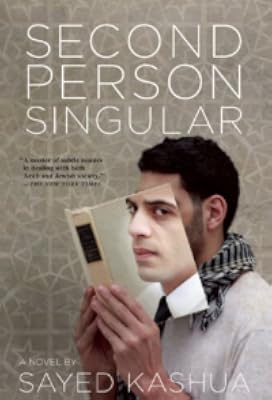
Second Person Singular
by Sayed Kashua
On This Page
Description
A highly respected Jerusalemite attorney embarks on a jealous search for his wife's ex-lover upon finding a love letter in her handwriting tucked inside a used Tolstoy book.Tags
Recommendations













Member Recommendations

Member Reviews
This novel is incredibly well-written, with a well-balanced blend of wry humor, suspense, and profound depth. Set in Israel, it begins with an Arab attorney discovering a used book with a note inside, written in his wife’s handwriting to a Yontan. Stunned and suspicious, the lawyer embarks on a search for this mysterious Yonatan and for the truth about his wife.
What ensues is an unflinching exploration of identity in a torn land. In a country where both Jews and Arabs reside, but are often divided by enormous chasms, questions of identity and loyalty loom large. The party line is that Jews and Arabs have equal treatment and equal opportunity, but the reality is thrown into sharp relief as one character pushes the confines of identity show more to their farthest limits, with life-altering consequences.
To say more about the plot would give away too much of the story. The writing is gripping and keeps you on your toes throughout, as nothing is always what it seems. While entertaining, it is also a thought-provoking meditation on a country tediously balancing itself between two cultures. Very highly recommended. show less
What ensues is an unflinching exploration of identity in a torn land. In a country where both Jews and Arabs reside, but are often divided by enormous chasms, questions of identity and loyalty loom large. The party line is that Jews and Arabs have equal treatment and equal opportunity, but the reality is thrown into sharp relief as one character pushes the confines of identity show more to their farthest limits, with life-altering consequences.
To say more about the plot would give away too much of the story. The writing is gripping and keeps you on your toes throughout, as nothing is always what it seems. While entertaining, it is also a thought-provoking meditation on a country tediously balancing itself between two cultures. Very highly recommended. show less
Second Person Singular by Palestinian-Israeli author Sayed Kashua, tells the story of two men, both Arabs, living in Jerusalem. Superficially, they have similar histories; they both come from small villages and they both came to Jerusalem to go to university and stayed afterward. One man became a successful lawyer, living in a beautiful house with his wife and two young children, he drives a BMW. He's not in love with his wife, but when he finds an affectionate note in his wife's handwriting, tucked into a used book he just purchased, he becomes consumed with jealously and anger and is determined to find the man the note was intended for.
The other man became a social worker. He's struggling financially but he resists his mother's show more entreaties to return to the village he left. He works during the day for a government agency providing social services to heroin addicts and at night he is the caretaker for a young man his age who due to an unspecified accident, lives in a vegetative state. When events cause him to quit his day job, he becomes more fascinated with the past of his Jewish patient, reading his books, listening to his music and using his camera.
Second Person Singular is just a fantastic book. While neither man is particularly sympathetic, it's impossible not to be drawn into their lives. How Kashua draws the two men's lives together is riveting. I will be reading more by this author, who is well-known in Israel. show less
Kashua presents a compelling, compassionate yet sometimes chilling, look at identity -- how we see ourselves, how others see us, what others see in us. His is a universal tale, but also unique in its specifics (people & locale). Things are not always as they seem, whether we deceive ourselves or deceive others (or both or neither). Kashua aptly delineates the divides between wanting to stay true to self, yet to change/have what someone else has/grow. His timely commentaries are so fitting in a locale where identity is a huge part of daily existence.
Of partial importance to the storyline is Tolstoy's novella The Kreutzer Sonata (which I read immediately after finishing Second Person Singular). Kashua masterfully worked in many of show more Tolstoy's themes & ideas (jealousy, relationships between the sexes, the influence of art in life & passion, etc...), paralleling these ideas in his story -- similar themes, just set in a more modern time & with differing religious beliefs from Tolstoy's.
Overall, a beautifully done work that muses on the nature of identity, our ability or inability to change identity, & the impact of emotion/art/beauty/self to impact our lives. show less
Of partial importance to the storyline is Tolstoy's novella The Kreutzer Sonata (which I read immediately after finishing Second Person Singular). Kashua masterfully worked in many of show more Tolstoy's themes & ideas (jealousy, relationships between the sexes, the influence of art in life & passion, etc...), paralleling these ideas in his story -- similar themes, just set in a more modern time & with differing religious beliefs from Tolstoy's.
Overall, a beautifully done work that muses on the nature of identity, our ability or inability to change identity, & the impact of emotion/art/beauty/self to impact our lives. show less
The lives of two Arab-Israeli men in Jerusalem intertwine when one of them finds a letter to the other written in his wife's handwriting and hidden in a used book he buys. The husband, identified throughout only as "the lawyer", immediately wants to kill his wife but decides to investigate first, and he uses his contacts to track the man down. The second man, who met the wife only twice, years ago and before her marriage, is unaware of the furor and has been living an unusual life as a social worker and photographer. He is considerably more likable and interesting than the lawyer, who concedes that his main concern is not whether his wife was a virgin when they married but whether his acquaintances would condemn him if she hadn't show more been.
More important than the plot, and this seemed deliberate to me, were the descriptions of Arab-Israeli life: institutionalized poverty; lack of education, training and job prospects; general disdain towards themselves, and anger and distrust towards Jewish Israelis. The Jews, of course, dislike and distrust them, too, and with their great power and wealth they maintain the second-class lives of the Arab Israelis. Minimal slots (sometimes only one) are designated for Arabs in medical facilities, educational institutions, and presumably elsewhere. Transportation is third-class. Opportunities are less than minimal, and only those with luck (the lawyer) or by deception (the social worker) can make any headway. Both these characters hail from villages in the Triangle, an Arab-populated area some Israelis have proposed trading to Palestine for the area of the West Bank that Jews have illegally colonized. You can imagine that it's not a popular idea with Israeli citizens of Arab descent, who view Israel as their home and who fear even worse conditions under Palestinian rule - not to mention the racism inherent in the plan.
A good story set in an appalling society. show less
More important than the plot, and this seemed deliberate to me, were the descriptions of Arab-Israeli life: institutionalized poverty; lack of education, training and job prospects; general disdain towards themselves, and anger and distrust towards Jewish Israelis. The Jews, of course, dislike and distrust them, too, and with their great power and wealth they maintain the second-class lives of the Arab Israelis. Minimal slots (sometimes only one) are designated for Arabs in medical facilities, educational institutions, and presumably elsewhere. Transportation is third-class. Opportunities are less than minimal, and only those with luck (the lawyer) or by deception (the social worker) can make any headway. Both these characters hail from villages in the Triangle, an Arab-populated area some Israelis have proposed trading to Palestine for the area of the West Bank that Jews have illegally colonized. You can imagine that it's not a popular idea with Israeli citizens of Arab descent, who view Israel as their home and who fear even worse conditions under Palestinian rule - not to mention the racism inherent in the plan.
A good story set in an appalling society. show less
Sein Vater liegt im Sterben. Eilig hastet der Ich-Erzähler aus Illinois zurück nach Israel, um ihn noch einmal zu sehen, vielleicht sogar endlich die Dinge auszusprechen, über die sie seit vierzehn Jahren geschwiegen haben. Die Mutter gibt ihm den Schlüssel zum elterlichen Haus, damit er in seinem alten Zimmer übernachten kann, doch er kann nicht zurück in das Dorf, aus dem man ihn verstoßen hat. Erst musste er mit seiner Frau Falestin nach Jerusalem fliehen, dann sind sie nach Amerika ausgewandert, wo man ihr eine Dozentenstelle angeboten hat. Mit der Rückkehr kommen auch die Erinnerungen wieder auf, an seine Zeit als arabischer Journalist für eine hebräische Zeitung, als Ghostwriter für Autobiografien und als show more Schriftsteller, der eine Kurzgeschichte in einer Studentenzeitung veröffentlichte. Und das Unheil, das es damit nahm.
Sayed Kashua lebt heute in den USA, nachdem er als Kolumnist für die „Haaretz“ gearbeitete hatte und sich einen Namen als Drehbuchautor und Filmkritiker gemacht hatte. „Lügenleben“ ist das fünfte Buch des arabischstämmigen Israelis und zugleich das letzte Übersetzungswerk von Mirjam Pressler, das sie kurz vor ihrem Tod im Januar 2019 noch beendete.
Wie auch andere seiner Romane trägt auch der aktuelle Roman autobiografische Züge und thematisiert nicht nur das schwierige Verhältnis von jüdischen und arabischen Israelis miteinander, sondern auch die Familienzwänge und Traditionen, aus denen es vor allem in ländlichen Gebieten kein Entkommen zu geben scheint. Die Kinder haben sich dem Diktat der Eltern, Dorfältesten und Scheichs zu fügen – egal, ob die Urteile gerecht und richtig sind oder nicht.
Die Erinnerungen des Erzählers folgen keiner chronologischen Struktur und so bleibt lange offen, was es genau war, das zu seiner Vertreibung geführt hat. Auch das seltsame Verhältnis zu seiner Frau Falestin ist eher mysteriös denn nachvollziehbar. Sie leben in zwei Wohnungen, ein echtes Familienleben scheint es nicht zu geben. Auch die drei Kinder erhalten keine Antworten auf ihre Fragen – alles, was die Familie und die Zeit vor der Flucht aus dem Dorf betrifft, bleibt nebulös. Dabei liebt er, bewundert Falestin, aber diese weist ihn ab, akzeptiert ihn jedoch als ihren Mann. Erst nach und nach fügt sich das Bild zusammen und offenbart ein trauriges Schicksal, das man so in der Gegenwart kaum mehr glauben mag.
Ein vielschichtiger Roman, der persönliches Leid, Familie und Tradition, die politische Lage in Israel und auch Emigration und Flucht thematisiert und vor allem die innere Zerrissenheit einer ganzen Generation offenbart, die doch nur glücklich und in Sicherheit leben möchte und auf der Suche hiernach getrieben ist und weder eine klare Vergangenheit noch eine Zukunft zu haben scheint. Und es ist vor allem die Frage danach, was Wahrheit ist und was sie ausmacht und inwieweit wir uns unsere eigene Wahrheit gestalten, um uns in unserem Leben zurechtzufinden. Ein großartiger Roman, ganz sicherlich auch wegen der hervorragenden Übersetzerin. show less
Sayed Kashua lebt heute in den USA, nachdem er als Kolumnist für die „Haaretz“ gearbeitete hatte und sich einen Namen als Drehbuchautor und Filmkritiker gemacht hatte. „Lügenleben“ ist das fünfte Buch des arabischstämmigen Israelis und zugleich das letzte Übersetzungswerk von Mirjam Pressler, das sie kurz vor ihrem Tod im Januar 2019 noch beendete.
Wie auch andere seiner Romane trägt auch der aktuelle Roman autobiografische Züge und thematisiert nicht nur das schwierige Verhältnis von jüdischen und arabischen Israelis miteinander, sondern auch die Familienzwänge und Traditionen, aus denen es vor allem in ländlichen Gebieten kein Entkommen zu geben scheint. Die Kinder haben sich dem Diktat der Eltern, Dorfältesten und Scheichs zu fügen – egal, ob die Urteile gerecht und richtig sind oder nicht.
Die Erinnerungen des Erzählers folgen keiner chronologischen Struktur und so bleibt lange offen, was es genau war, das zu seiner Vertreibung geführt hat. Auch das seltsame Verhältnis zu seiner Frau Falestin ist eher mysteriös denn nachvollziehbar. Sie leben in zwei Wohnungen, ein echtes Familienleben scheint es nicht zu geben. Auch die drei Kinder erhalten keine Antworten auf ihre Fragen – alles, was die Familie und die Zeit vor der Flucht aus dem Dorf betrifft, bleibt nebulös. Dabei liebt er, bewundert Falestin, aber diese weist ihn ab, akzeptiert ihn jedoch als ihren Mann. Erst nach und nach fügt sich das Bild zusammen und offenbart ein trauriges Schicksal, das man so in der Gegenwart kaum mehr glauben mag.
Ein vielschichtiger Roman, der persönliches Leid, Familie und Tradition, die politische Lage in Israel und auch Emigration und Flucht thematisiert und vor allem die innere Zerrissenheit einer ganzen Generation offenbart, die doch nur glücklich und in Sicherheit leben möchte und auf der Suche hiernach getrieben ist und weder eine klare Vergangenheit noch eine Zukunft zu haben scheint. Und es ist vor allem die Frage danach, was Wahrheit ist und was sie ausmacht und inwieweit wir uns unsere eigene Wahrheit gestalten, um uns in unserem Leben zurechtzufinden. Ein großartiger Roman, ganz sicherlich auch wegen der hervorragenden Übersetzerin. show less
For a view into the minds of two Palestinian Israelis, who could be stand-ins for an upper and lower class of Palestinians, this is a revealing story. Initially, it seems to be a mix of social satire in the case of the affluent lawyer who remains unnamed throughout, and personal angst in the case of the young social worker whose Arab name is close enough to a Jewish name that he sometimes slips into the unexpected luck of mistaken identity.
It becomes clear early on that the whole story is one of identity – mistaken, appropriated, constructed, rejected identities within Arab and Jewish Israeli society, where it seems identity determines not only one’s social standing but much of one’s self and emotional health.
The lawyer is a bit show more of a caricature – he thinks he has to struggle constantly to maintain a position at the top among the Palestinian lawyers, although why he has to be at the top is not evident. But it is his identity as a bright, self-made affluent Israeli from the villages, and he fears losing his status to the young lawyers coming behind him. He is so centred on Europeanized Israeli culture that it is a shock, and not entirely convincing, when he suddenly turns into the stereotype of a wife-abusing traditional tribal misogynist who sees wife’s virtue as key to his identity and his social standing. His obsession perhaps underlies how the tribal culture remains close to the surface of some Israeli Arabs, and it threatens to destroy the very status he wants so much.
The social worker, Amir Lahab, I found a much more sympathetic character. His back-story, although not detailed, shows true pathos, someone who is rejected in his own culture because of his father’s actions, and who, as a result, rejects that culture, including his mother who wants him to become part of the village. With no culture, he has no future, or at least does not know what it could be. So he takes a dead-end job, which turns out to offer him the miracle of a new identity that fits him well. Significantly, in his new identity he finds success taking realistic photographic character portraits of Arab Israelis in the old town of Jerusalem.
The contrivance that brings the lawyer together with Amir may be improbable, but it sets a suspenseful edge to the stories, and offers the contrast of their two positions: one clinging to a newly created identity while the old identity pulls him back, while the other rejects the old identity and slips into a new one totally at odds with his old identity.
The only problem I have with the book is that the happiest outcome seems to be with the Arab Israeli who turns into a Jewish Israeli. This seems to suggest a message that I hope Sayed Kashua did not intend, that Arab Israelis might find happiness only when they abandon their old (tribal) culture and fully integrate into the new culture, secular but Jewish. Perhaps Kashua intended to imply that Israeli Arabs need to overcome their tribal traditions to fit into a modern culture, but it seems to imply that there is nothing to be valued in the traditional Arab culture. In fact, Kashua shows nothing positive in Palestinian culture – as it appears in the book, it is all tribal, misogynistic, narrow and without ambition. Perhaps Kashua does intend to imply that, and certainly those factors are worthy of criticism, but it does seem to me (an outsider who really knows nothing of Palestinian or Israeli culture) that that must be overstating the situation. I think there must be something between tribalism and abandonment, and not the self-satisfied self-deception of the caricatured lawyer.
Nevertheless, I liked reading this book. It presents a convincing picture of Israeli Arab life in Jerusalem that I haven’t seen before, it’s engaging and the characters are interesting. show less
It becomes clear early on that the whole story is one of identity – mistaken, appropriated, constructed, rejected identities within Arab and Jewish Israeli society, where it seems identity determines not only one’s social standing but much of one’s self and emotional health.
The lawyer is a bit show more of a caricature – he thinks he has to struggle constantly to maintain a position at the top among the Palestinian lawyers, although why he has to be at the top is not evident. But it is his identity as a bright, self-made affluent Israeli from the villages, and he fears losing his status to the young lawyers coming behind him. He is so centred on Europeanized Israeli culture that it is a shock, and not entirely convincing, when he suddenly turns into the stereotype of a wife-abusing traditional tribal misogynist who sees wife’s virtue as key to his identity and his social standing. His obsession perhaps underlies how the tribal culture remains close to the surface of some Israeli Arabs, and it threatens to destroy the very status he wants so much.
The social worker, Amir Lahab, I found a much more sympathetic character. His back-story, although not detailed, shows true pathos, someone who is rejected in his own culture because of his father’s actions, and who, as a result, rejects that culture, including his mother who wants him to become part of the village. With no culture, he has no future, or at least does not know what it could be. So he takes a dead-end job, which turns out to offer him the miracle of a new identity that fits him well. Significantly, in his new identity he finds success taking realistic photographic character portraits of Arab Israelis in the old town of Jerusalem.
The contrivance that brings the lawyer together with Amir may be improbable, but it sets a suspenseful edge to the stories, and offers the contrast of their two positions: one clinging to a newly created identity while the old identity pulls him back, while the other rejects the old identity and slips into a new one totally at odds with his old identity.
The only problem I have with the book is that the happiest outcome seems to be with the Arab Israeli who turns into a Jewish Israeli. This seems to suggest a message that I hope Sayed Kashua did not intend, that Arab Israelis might find happiness only when they abandon their old (tribal) culture and fully integrate into the new culture, secular but Jewish. Perhaps Kashua intended to imply that Israeli Arabs need to overcome their tribal traditions to fit into a modern culture, but it seems to imply that there is nothing to be valued in the traditional Arab culture. In fact, Kashua shows nothing positive in Palestinian culture – as it appears in the book, it is all tribal, misogynistic, narrow and without ambition. Perhaps Kashua does intend to imply that, and certainly those factors are worthy of criticism, but it does seem to me (an outsider who really knows nothing of Palestinian or Israeli culture) that that must be overstating the situation. I think there must be something between tribalism and abandonment, and not the self-satisfied self-deception of the caricatured lawyer.
Nevertheless, I liked reading this book. It presents a convincing picture of Israeli Arab life in Jerusalem that I haven’t seen before, it’s engaging and the characters are interesting. show less
This is an amazing story. It's a bit convoluted, but it has to be that way for it to work. The story is of the intersection of lives of Israeli Arabs and Israeli Jews, but it's told in an excruciatingly detailed way to show how nuanced that relationship truly is.
The protagonist of the story, a nameless Arab from the Triangle area east of the Green Line, currently lives with his wife and their two children in west Jerusalem where he is a practicing crimimal lawyer. The other important character, who is not named until nearly the end of the story, is an Arab social worker who comes from a similar albeit even poorer background. The social worker who also studied and now works in west Jerusalem encounters an awkward situation which compels show more him to flee his job and turn his part-time job as caregiver for a Jewish young man, an invalid, into a full-time job. By chance, the lawyer encounters a note in a book with the name of the social worker's patient on it. The contents of that note drive the lawyer into a frenzy as he suspects his wife wrote it.
I don't want to give away too much of the plot because it is so well interwoven that the fun of the story is simply discovering what comes next. I have read novels by this author before, but this is the best one by far probably because of its complexity. By the last third of this book, I simply could not put the book down until I found out what happened at the end. show less
The protagonist of the story, a nameless Arab from the Triangle area east of the Green Line, currently lives with his wife and their two children in west Jerusalem where he is a practicing crimimal lawyer. The other important character, who is not named until nearly the end of the story, is an Arab social worker who comes from a similar albeit even poorer background. The social worker who also studied and now works in west Jerusalem encounters an awkward situation which compels show more him to flee his job and turn his part-time job as caregiver for a Jewish young man, an invalid, into a full-time job. By chance, the lawyer encounters a note in a book with the name of the social worker's patient on it. The contents of that note drive the lawyer into a frenzy as he suspects his wife wrote it.
I don't want to give away too much of the plot because it is so well interwoven that the fun of the story is simply discovering what comes next. I have read novels by this author before, but this is the best one by far probably because of its complexity. By the last third of this book, I simply could not put the book down until I found out what happened at the end. show less
Members
- Recently Added By
Lists

Middle East Fiction
179 works; 16 members

The Emergence of the Modern Middle East
289 works; 13 members

Books Read in 2019
4,052 works; 110 members
Author Information

5+ Works 699 Members
Sayed Kashua is the author of the novels Dancing Arabs; Let It Be Morning, which was shortlisted for the International IMPAC Dublin Literary Award; and Second Person Singular, winner of the prestigious Bernstein Prize. He is a columnist for Haaretz and the creator of the prizewinning sitcom, Arab Labor. Now living in the United States with his show more family, he teaches at the University of Illinois. show less
Some Editions
Awards and Honors
Series
Belongs to Publisher Series
Mirmanda (121)
Common Knowledge
- Canonical title*
- Tweede persoon enkelvoud
- Original title
- Goef sjenie jachied
- Alternate titles
- Exposure; Second Person Singular
- Original publication date
- 2010; 2012 (Nederlandse vertaling) (Nederlandse vertaling)
- Important places
- Jerusalem, Israel
- Dedication*
- Voor mijn ouders
- Quotations
- Somehow, in the eyes of the locals, the Arab citizens of Israel were considered to be half-Jewish.
...he had finally figured out that the border police officers, all of whom generally hail from the lower socioeconomic classes of Israeli society, will never stop anyone dressed in clothes more expensive than their own.
What about the nut job settlers who are willing to risk the lives of their children in the name of some divine ideology. - Original language
- Hebrew
*Some information comes from Common Knowledge in other languages. Click "Edit" for more information.
Classifications
- Genres
- Fiction and Literature, General Fiction
- DDC/MDS
- 892.4 — Literature & rhetoric Literatures of other languages Afro-Asiatic literatures Jewish, Israeli, and Hebrew
- LCC
- PJ5055.38 .A84 .G8413 — Language and Literature Oriental languages and literatures Oriental philology and literature Hebrew Literature Individual authors and works
- BISAC
Statistics
- Members
- 229
- Popularity
- 141,897
- Reviews
- 16
- Rating
- (4.00)
- Languages
- 8 — Catalan, Dutch, English, French, German, Hebrew, Italian, Spanish
- Media
- Paper, Audiobook, Ebook
- ISBNs
- 16
- ASINs
- 4