On This Page
Description
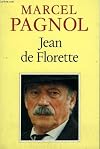
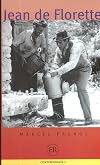
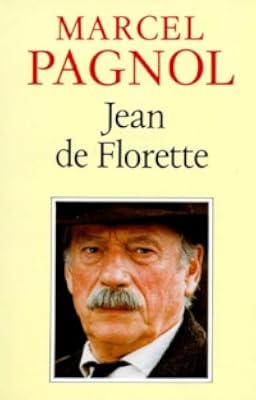
Set amidst the rugged hills of Provence, this epic saga follows the heroic efforts of Jean Cadoret who inherits a farm from his mother, Florettte, and leaves his city job behind, hopping to create a "new Eden" with his loving wife and daughter. But, unbeknownst to Jean, his greedy neighbor, Cesar Soubeyran, is plotting to steal the land out from under him. With the help of his corrupt nephew, the collusion of the clannish villagers and the added effects of a severe drough, Cesar hatches a show more wicked scheme that drives Jean to the brink of desperation. show lessTags
Recommendations























Member Reviews
This was an enjoyable read. It's a well-written book, with only a few jarring moments where the author milks the villagers' narrowmindedness for comic relief. Less romantic and idealized than I had imagined, the story's slowness never descending into boredom. If you're familiar with the 1987 movie, then this book will hold enough material not included there to keep you interested: Jean's farming ploys and attempts at befriending the villagers occupy the main stage for a while, for instance, and plenty of the background characters in the movie get a more thorough treatment here, making the village and the surrounding beauty more real, more like genuine characters. And that's always a good thing. This book, too, feels much more like a show more finished story than the movie, which is very clearly a longish prologue to the second half: this is less obviously only the first part of a longer story. I would recommend reading the second half too, though, simply because Manon des sources is such a good old read. show less
I've been carrying this book around for years (along with its sequel) and finally allowed myself to indulge in its dreaminess. The language is rich and evocative of time and place and Pagnol is a master of character and caricature as well as of dialogue. Ostensibly, this should "fire on all cylinders"; unfortunately for me, it fell a little short of its mark.
I longed for a much more layered and nuanced story behind Jean's ultimate failure; instead I found a man who willingly and blithely ignores his own limitations in favour of stupefying and (pardon the pun) harebrained schemes for success, with nothing more to his credit than his blind optimism, his harmonica and his book-learning. I didn't feel that Pagnol offered much more insight show more than this -- which ultimately turns Jean into a caricature of optimism for me.
While César and Ugolin's underhanded machinations cannot be ignored, it seems to me that Jean would have failed with or without their "help" as he stubbornly refused to submit to even a modicum of circumspection -- which in this case would have been the ingredient necessary for success. Circumspection in this case is most apt as it derives from the Old French, meaning "a careful observation of one's surroundings." Even a cursory glance about his surroundings would have told Jean his venture might be problematic given that he quite clearly faced the challenges of Nature against him. A more modest and careful approach would not have burned a hole in his pocket quite so quickly, nor would it have led him to the final grief of robbing his family of their lifeblood, quite literally.
I'm befuddled by those who speak of a dark and depressing tale, for on the main Pagnol paints some wonderful caricatures of both town jake and country bumpkin to great comic effect. And the depressing factor seeps in, for me, in the guise of rage at this man's stupidity. Nonetheless, I enjoyed the colourful journey in Provence, rich with Pagnol's imagery.
== show less
I longed for a much more layered and nuanced story behind Jean's ultimate failure; instead I found a man who willingly and blithely ignores his own limitations in favour of stupefying and (pardon the pun) harebrained schemes for success, with nothing more to his credit than his blind optimism, his harmonica and his book-learning. I didn't feel that Pagnol offered much more insight show more than this -- which ultimately turns Jean into a caricature of optimism for me.
While César and Ugolin's underhanded machinations cannot be ignored, it seems to me that Jean would have failed with or without their "help" as he stubbornly refused to submit to even a modicum of circumspection -- which in this case would have been the ingredient necessary for success. Circumspection in this case is most apt as it derives from the Old French, meaning "a careful observation of one's surroundings." Even a cursory glance about his surroundings would have told Jean his venture might be problematic given that he quite clearly faced the challenges of Nature against him. A more modest and careful approach would not have burned a hole in his pocket quite so quickly, nor would it have led him to the final grief of robbing his family of their lifeblood, quite literally.
I'm befuddled by those who speak of a dark and depressing tale, for on the main Pagnol paints some wonderful caricatures of both town jake and country bumpkin to great comic effect. And the depressing factor seeps in, for me, in the guise of rage at this man's stupidity. Nonetheless, I enjoyed the colourful journey in Provence, rich with Pagnol's imagery.
== show less
Au village des Bastides Blanches, on hait ceux de Crespin. C'est pourquoi lorsque Jean Cadoret, le Bossu, s'installe à la ferme des Romarins, on ne lui parle pas de la source cachée.
Ce qui facilite les manœuvres des Soubeyran, le Papet et son neveu Ugolin. qui veulent lui racheter son domaine à bas prix...
Jean de Florette (1962), premier volume de L'Eau des collines, marque, trente ans après Pirouettes, le retour de Pagnol au roman.
C'est l'épopée de l'eau nourricière sans laquelle rien n'est possible. Marcel Pagnol y développe l'histoire du père de Manon, évoquée sous forme de flash-back dans le filin Manon des sources (1952).
Les dialogues sont savoureux, et la prose aussi limpide que dans les Souvenirs d'enfance.
Quant au show more Papet et à Ugolin, à la fois drôles et terrifiants, ils sont parmi les créations les plus complexes de Pagnol. " Tu comprends, s'ils avaient bu l'eau de la citerne, c'est sûr qu'ils seraient morts tous les trois, et moi ça m'aurait embêté.
D'avoir bouché la source, c'est pas criminel : c'est pour les œillets. Mais si, à cause de ça, il y avait des morts, eh bien peut-être qu'après nous n'en parlerions pas, mais nous y penserions.
Récit simple et puissant d'une lutte pour la vie, histoire d'un crime et de son châtiment, drame d'une vengeance, tragédie familiale, conflit des coeurs purs et des âmes fortes, opposant un jeune citadin plein de fraîcheur et d'enthousiasme à deux paysans durs, âpres, sournois, fermés, implacables, peinture exacte et magnifique des hommes de la terre, chant du monde, poème de l'eau, du vent, des saisons, des collines, Jean de Florette et Manon des sources sont tout cela et ils sont beaucoup plus que cela, un des sommets de l'oeuvre de Pagnol: le livre de la faute, de l'innocence et du pardon. show less
Ce qui facilite les manœuvres des Soubeyran, le Papet et son neveu Ugolin. qui veulent lui racheter son domaine à bas prix...
Jean de Florette (1962), premier volume de L'Eau des collines, marque, trente ans après Pirouettes, le retour de Pagnol au roman.
C'est l'épopée de l'eau nourricière sans laquelle rien n'est possible. Marcel Pagnol y développe l'histoire du père de Manon, évoquée sous forme de flash-back dans le filin Manon des sources (1952).
Les dialogues sont savoureux, et la prose aussi limpide que dans les Souvenirs d'enfance.
Quant au show more Papet et à Ugolin, à la fois drôles et terrifiants, ils sont parmi les créations les plus complexes de Pagnol. " Tu comprends, s'ils avaient bu l'eau de la citerne, c'est sûr qu'ils seraient morts tous les trois, et moi ça m'aurait embêté.
D'avoir bouché la source, c'est pas criminel : c'est pour les œillets. Mais si, à cause de ça, il y avait des morts, eh bien peut-être qu'après nous n'en parlerions pas, mais nous y penserions.
Récit simple et puissant d'une lutte pour la vie, histoire d'un crime et de son châtiment, drame d'une vengeance, tragédie familiale, conflit des coeurs purs et des âmes fortes, opposant un jeune citadin plein de fraîcheur et d'enthousiasme à deux paysans durs, âpres, sournois, fermés, implacables, peinture exacte et magnifique des hommes de la terre, chant du monde, poème de l'eau, du vent, des saisons, des collines, Jean de Florette et Manon des sources sont tout cela et ils sont beaucoup plus que cela, un des sommets de l'oeuvre de Pagnol: le livre de la faute, de l'innocence et du pardon. show less
Like so many others, I first read this book because of the movies. Jean de Florette with Gerard Depardieu was one of my favourite movies when I was growing up. At the time the book hadn't been published in Portugal, and one of the reasons why I studied French was because I wanted to read Marcel Pagnol in French (which I now can do). This story is so beautiful and tragic. Marcel Pagnol shows as a society and a way of life that now has disappeared.
Absoluut een mooi, goed verteld verhaal. Twee hoofdfiguren: de impressionante en tragische figuur van Jean, een stadsman die uit de boeken denkt te weten hoe hij het paradijs op aarde kan creëren en daar bijna in lijkt te slagen; en de weifelachtige Ugolin, die gedreven door hebzucht en een beenharde, cynische oom, Jean ten gronde richt, maar daar tegelijk erg onder lijdt. Met andere woorden: de thema's van de onmacht van het modernisme, en de strijd tussen hebzucht en geweten. Prachtig verteld, met veel oog voor de idyllisch lijkende maar eigenlijk onverbiddelijke natuur van de Provence.
Apr 26, 2012Dutch
1
This was a very enjoyable show. It's a well-written film, with only a few jarring moments where the authors milk the villagers' narrowmindedness for comic relief. Less romantic and idealized than I had imagined, the story's slowness never descends into boredom. This movie is very clearly a longish prologue to the second half: this is (less obviously) only the first part of a longer story. I would recommend seeing the second half too, simply because Manon des sources is such a good sequel.
Jan 5, 2026English (UK)
Très émouvant
May 22, 2006 (Edited)French
Members
- Recently Added By
Lists

Down on the Farm
17 works; 6 members
Author Information

175+ Works 5,841 Members
Marcel Pagnol was born on February 28, 1895. He was a French novelist, playwright, and filmmaker. In 1946, he became the first filmmaker elected to the Académie Française. Pagnol died in Paris on April 18, 1974. (Bowker Author Biography)
Series

Belongs to Publisher Series
Work Relationships
Is contained in
Has the adaptation
Common Knowledge
- Canonical title
- Jean de Florette
- Original title
- Jean de Florette
- Original publication date
- 1963
- Related movies
- Jean de Florette (1986 | IMDb); Manon des sources (1952 | IMDb)
- Original language
- French
- Disambiguation notice
- 2877060543 1988 Editions de Fallois
2877065111 2004 Editions de Fallois
Classifications
Statistics
- Members
- 435
- Popularity
- 70,711
- Reviews
- 8
- Rating
- (4.09)
- Languages
- 7 — Danish, English, French, German, Hebrew, Italian, Portuguese
- Media
- Paper, Audiobook, Ebook
- ISBNs
- 19
- ASINs
- 15