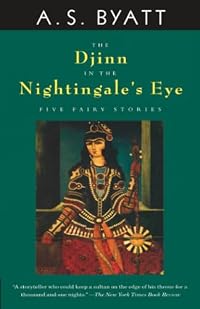
The Djinn in the Nightingale's Eye
by A. S. Byatt
On This Page
Description
Glowing with narrator Virginia Leishman's finely tuned phrasing, The Djinn in the Nightingale's Eye is the perfect introduction to A.S. Byatt, an author who continues to receive international awards and acclaim. Her wondrous fairy tales are iridescent stories full of spells, marvelous creatures, and beautiful princesses. The title tale focuses on Dr. Gillian Perholt, a narratologist. The sturdy, middle-aged scholar travels the world, speaking at international conferences about the art of show more storytelling. She immerses herself in the study of fabulous, archetypical heroes: patient Griselda, lovely Scheherazade, brave Gilgamesh. But when she is given the fairy tale's three wishes-chances to alter her own story, the choices she makes are both timeless and surprisingly unique. A.S. Byatt, whose imaginative novels sparkle with layers of imagery and drama, focuses on the magic that is created each time a storyeller speaks. The five stories that comprise The Djinn in the Nightingale's Eye are as fascinating and finely crafted as ivory puzzles. show lessTags
Recommendations
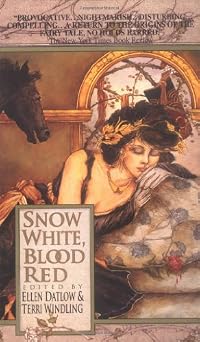
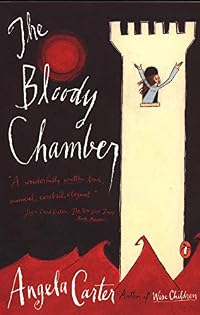
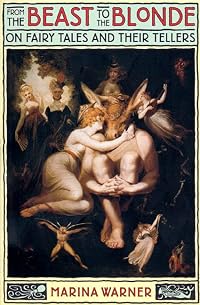
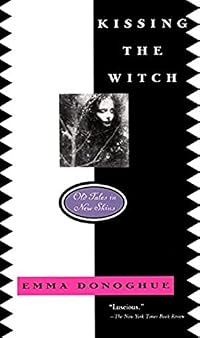






Member Recommendations

nillacat Yourcenar's stories are sadder and more bitter than Byatt's, so be prepared. But they are hauntingly beautiful.

Member Reviews
The first four stories are indeed pure fantasy fairy stories that take the reader back to a simple childhood fantasy land. They are beautifully and precisely written, but at the end of the fourth story Dragon's Breath I was wondering whether these tales were just an exercise in the execution of fairy tales; something along the lines of a famous author proving to herself that she can write in this vein. However the title story which is of novella length is worth the money spent on this collection. Byatt once again shows how she can mix literature, literary history and fantasy into a satisfying concoction that draws the reader into a compelling story.
The Djinn in the Nightingale's eye features Gillian Perholt a story teller whose show more profession as a narratologist takes her to a conference in Ankara Turkey. She is described as English and stolid and a little nervous of flying, but thoughts of tales from the Arabian nights has piqued her interest. She is presenting a paper on Chaucer's tale The Patient Griselda which allows Byatt to retell this piece of literary history whilst adding her own thoughts to the relevance of the story. Gillian meets an old colleague Orhan Rifat who takes her to Istanbul, to museums, to the famous covered market and to Hagia Sophia. Their fascination for stories lead them to re-tell the story of Gilgamesh and his love for Enkidu. A young student of Orhan presents Gillian with a dirty small glass jar which may be very old and here starts Gillian's own fantasy story, because when she uncorks the bottle a huge Genie (Djinn) appears and grants her three wishes for releasing him from his prison.
Gillian of course wants to know more, wants to know the history of the Djinn, she wants to know his stories. She falls in love with the Djinn, her life has become a fantasy story, how should she frame her wishes, how should she keep her connection with the Djinn, what wonderful things will happen to her now and how can she avoid the pitfalls of wishing for too much or too little. Byatt takes the reader on a wonderful fantasy ride with a knowledgable protagonist ready to ask the questions one might wish to ask if ever you were lucky enough to enslave a Djinn: the right sort of Djinn that is, because Gillian's Djinn is kind, thoughtful and everything you might want a Djinn to be. It becomes a love story and a story that will gladden the heart of the reader and effortlessly take him/her back to childhood fantasies, with the added bonus of delving further into the myths.
The interest and depth of the Djinn story made me wish to re-read the more simple first four fairy stories and so 4 stars for this collection show less
The Djinn in the Nightingale's eye features Gillian Perholt a story teller whose show more profession as a narratologist takes her to a conference in Ankara Turkey. She is described as English and stolid and a little nervous of flying, but thoughts of tales from the Arabian nights has piqued her interest. She is presenting a paper on Chaucer's tale The Patient Griselda which allows Byatt to retell this piece of literary history whilst adding her own thoughts to the relevance of the story. Gillian meets an old colleague Orhan Rifat who takes her to Istanbul, to museums, to the famous covered market and to Hagia Sophia. Their fascination for stories lead them to re-tell the story of Gilgamesh and his love for Enkidu. A young student of Orhan presents Gillian with a dirty small glass jar which may be very old and here starts Gillian's own fantasy story, because when she uncorks the bottle a huge Genie (Djinn) appears and grants her three wishes for releasing him from his prison.
Gillian of course wants to know more, wants to know the history of the Djinn, she wants to know his stories. She falls in love with the Djinn, her life has become a fantasy story, how should she frame her wishes, how should she keep her connection with the Djinn, what wonderful things will happen to her now and how can she avoid the pitfalls of wishing for too much or too little. Byatt takes the reader on a wonderful fantasy ride with a knowledgable protagonist ready to ask the questions one might wish to ask if ever you were lucky enough to enslave a Djinn: the right sort of Djinn that is, because Gillian's Djinn is kind, thoughtful and everything you might want a Djinn to be. It becomes a love story and a story that will gladden the heart of the reader and effortlessly take him/her back to childhood fantasies, with the added bonus of delving further into the myths.
The interest and depth of the Djinn story made me wish to re-read the more simple first four fairy stories and so 4 stars for this collection show less
If you like storytelling, if you enjoy Italo Calvino or Borges or Neil Gaiman, you will love this little book of tales. Each is a perfect little postmodern fairy-tale, charming, frightening or enlightening. The tone is illustrated nicely by the Tale of the Eldest Princess, who, realizing she is in a story and not liking the role she is playing ("I do not want to be the princess who fails and must be rescued" and she cries), decides, after much reflection and with the brusque encouragement of a dangerous guide, to leave the road and abandon the story and create her own. Along the way she sees sometimes an old woman walking behind her, or ahead of her on the path. Much later she learns that there is always an old woman ahead of you or show more behind you... and I'm sure she will someday be the old woman to another young woman who chooses to make her own path. show less
Lucid, poetical, mysterious, and appealing. The title story, a nest of stories and a meditation on the nature of story and on the roles of men and women in the world, is a marvel. Some of Byatt's images strike horror into my heart in a way no other writer's images can, and she can move my contrary heart to joy unlike any other writer, as well. The other stories are gemlike as well. I particularly liked "The Eldest Princess."
Byatt, best known for her novel “Possession,” here pens five fairy tales for adults. None of the stories are retellings of traditional tales, per se, yet all are familiar, borrowing as they do from the understood and recognized conventions of the fairy tale format.
The real stand-outs in the collection are “The Tale of the Eldest Princess,” in which the title character recognizes just what sort of fairy tale she’s found herself living and decides to change her own fate by leaving that story for her own; and the title story, which is also the longest and most fully realized. This tale is set in the present day, starring Gillian, a contemporary middle-aged woman who lives and works as a narratologist…a studier of stories. show more Despite its contemporary setting, however, the language and description is that of fairy tales, lending an aura of mystery and magic to common things. Gillian is a collector of art glass and, while in Turkey at a narratology convention, acquires a lovely glass bottle with a secret locked inside—an ancient and beautiful djinn. Familiar with the conventions of the story she’s found herself within, Gillian attempts to wish the correct wishes and finds that there is simply no way to do so. show less
The real stand-outs in the collection are “The Tale of the Eldest Princess,” in which the title character recognizes just what sort of fairy tale she’s found herself living and decides to change her own fate by leaving that story for her own; and the title story, which is also the longest and most fully realized. This tale is set in the present day, starring Gillian, a contemporary middle-aged woman who lives and works as a narratologist…a studier of stories. show more Despite its contemporary setting, however, the language and description is that of fairy tales, lending an aura of mystery and magic to common things. Gillian is a collector of art glass and, while in Turkey at a narratology convention, acquires a lovely glass bottle with a secret locked inside—an ancient and beautiful djinn. Familiar with the conventions of the story she’s found herself within, Gillian attempts to wish the correct wishes and finds that there is simply no way to do so. show less
Intellectual fairy tales, in Byatt’s characteristically lush language. The longest, eponymous tale is a modern-day fable, but even more enchanting for being so.
Easy and very literate short stories that ride the classic fairy tale train. I have not read any of Byatt's novels, but if they are put together as well as the short stories, then I am sure they are a treat. It seems that she hides the moral of her stories a little deeper but and puts the characters in a fluctuating moral compass, which eventually swings heavily in one direction or the other.
Four short fairy tales followed by the title fairy tale novella, The Djinn in the Nightingale's Eye.
This is the first book that I have read by A S Byatt, and I can see how she achieved her popularity. The tales are wonderfully and beautifully told by a true wordsmith. (Isn't that how fairy tales should be!).
One of my favorites was The Eldest Princess. Eldest children are often given short shrift in fairy tales and fail their tasks, which are eventually accomplished by the youngest child. In this story, the Princess realizes that she inhabits such a story, but refuses to follow the plot and makes her own way.
Although I enjoyed the title piece The Djinn in the Nightingale's Eye, I dislike the framing of this one. In it, a storyteller show more goes to a convention of storytellers in Instanbul and we hear several of their tales. Then, wandering through a bazaar, our storyteller purchases a rare and beautiful bottle and steps into her own story. To me, the first stories told by the other tellers of tales seem superfluous, almost as if they were added in to make the Djinn story longer.
Still, I'm looking forward to the next A. S. Byatt that I will read. show less
This is the first book that I have read by A S Byatt, and I can see how she achieved her popularity. The tales are wonderfully and beautifully told by a true wordsmith. (Isn't that how fairy tales should be!).
One of my favorites was The Eldest Princess. Eldest children are often given short shrift in fairy tales and fail their tasks, which are eventually accomplished by the youngest child. In this story, the Princess realizes that she inhabits such a story, but refuses to follow the plot and makes her own way.
Although I enjoyed the title piece The Djinn in the Nightingale's Eye, I dislike the framing of this one. In it, a storyteller show more goes to a convention of storytellers in Instanbul and we hear several of their tales. Then, wandering through a bazaar, our storyteller purchases a rare and beautiful bottle and steps into her own story. To me, the first stories told by the other tellers of tales seem superfluous, almost as if they were added in to make the Djinn story longer.
Still, I'm looking forward to the next A. S. Byatt that I will read. show less
Members
- Recently Added By
Lists

Favorite Fairy Tale Retellings
210 works; 61 members

Speculative Fiction: Slipstream Literature
166 works; 16 members

Literature About Women and Girls
391 works; 39 members

I Can't Finish This Book
189 works; 22 members
Author Information

83+ Works 38,188 Members
A.S. Byatt was born on August 24, 1936 in Sheffield, England. She received a B.A. from Newnham College, Cambridge in 1957, did graduate study at Bryn Mawr College from 1957-58, and attended Somerville College, Oxford from 1958-59. She was a staff member in the extra-mural department at the University of London from 1962-71. From 1968-69, she was show more also a part-time lecturer in the liberal studies department of the Central School of Art and Design, London. She was a lecturer at University College from 1972-80 and then senior lecturer from 1981-83. She became a full-time writer in 1983. Her works include The Biographer's Tale, The Virgin in the Garden, Babel Tower, A Whistling Woman, and The Children's Book. She also wrote numerous collections of short stories including Sugar and Other Stories, The Matisse Stories, The Djinn in the Nightingale's Eye, Elementals, and Little Black Book of Stories. Byatt received the English Speaking Union fellowship in 1957-58, the Fellow of the Royal Society of Literature in 1983, the Silver Pen Award for Still Life, and the Booker Prize for Possession: A Romance in 1990. (Bowker Author Biography) show less
Some Editions
Awards and Honors
Work Relationships
Common Knowledge
- Canonical title
- The Djinn in the Nightingale's Eye
- Original publication date
- 1994
- Related movies
- Three Thousand Years of Longing (2022 | IMDb)
- Dedication
- For Cevat Capan
- First words
- There was once a little tailor, a good and unremarkable man, who happened to be journeying through a forest, in search of work perhaps, for in those days men travelled great distances to make a meagre living ...
- Quotations
- She had hated the stories of St Paul and the other apostles because they were true, they were told to her as true stories, and this somehow stopped off some essential imaginative involvement with them, probably because she di... (show all)dn't believe them, if required to believe they were true.
Once upon a time ... there was a woman who ... was merely a narratologist, a being of secondary order, whose days were spent hunched in great libraries scrying, interpreting, decoding the fairy-tales of childhood and the vodk... (show all)a-posters of the grown-up world, the unending romances of golden coffee-drinkers, and the impeded couplings of doctors and nurses, dukes and poor maidens, horsewomen and musicians.... Two or three times a year she flew to strange cities, ... where narratologists gathered like starlings, parliaments of wild fowls, telling stories about stories. - Last words
- (Click to show. Warning: May contain spoilers.)"If I do", said the djinn.
Classifications
Statistics
- Members
- 1,555
- Popularity
- 14,617
- Reviews
- 19
- Rating
- (3.87)
- Languages
- 7 — English, French, German, Latvian, Croatian, Swedish, Turkish
- Media
- Paper, Audiobook, Ebook
- ISBNs
- 20
- ASINs
- 12