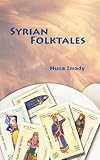
Syrian Folktales
by Muna Imady
On This Page
Description
This delightful book relates folktales from various regions of Syria. Each folktale is located on a regional map and is accompanied by a local, related recipe.Tags
Recommendations
















Member Reviews
I love learning about new cultures and places through their folklore - the stories told, the traditional foods and clothing, what kind of buildings they live in, and so on. It's immensely fascinating to me to see how different people live and how much diversity there is in the world. Strangely, despite my step-family being half-Syrian, I wasn't terribly familiar with much of the folklore from my great-grandparents' home, though of course I knew many favorite foods (mmm, kibbeh!) and certain set phrases and vaguely recognize some nursery songs that my Sito sings to the new babies. I guess that's how it is when the traditions are a few generations back and connected to me only by a parent's re-marriage.
At any rate, I was of course show more interested in Syrian Folktales when I saw it on the Early Reviewer list and requested it immediately. I have to say that I was pleasantly surprised to learn that the title is a bit of a misnomer. It's not just folktales that Imady presents, but several different kinds of folklore: cooking, riddles, and proverbs are also present. If anything, I was a bit disappointed that the illustrations of traditional clothing on the cover weren't carried through the insides, too. But it's balanced by each set of stories, recipes, &c. being grouped by region with a simple map of Syria to show the location and a brief lesson on why each region is noteworthy.
This is by no means a thorough, scholarly look at folklore in Syria, but it is a very nice introduction, with one or two stories per region. I rather liked that many recipes were very similar, showing how the country as a whole might have something like kibbeh, but each region has its own traditional take. One thing that caught me by surprise, though it shouldn't have, is the overwhelmingly Muslim filter of the stories and the hadiths (proverbs attributed to the prophet Mohammed). I think I forgot that Syria is a Muslim nation because my own family are from the Catholic minority. This might also explain why some of the words I know are different from those used by Imady (also, different dialects!).
Recently I have been growing more interested in Middle Eastern folklore, but haven't really been certain about which aspect I wanted to study more. I liked this little glimpse into the Syrian traditions, and I think it would make a fine book for anyone with a similar interest or curiosity. It's definitely something I'm going to give to my cousins, if they'd also like to learn a little more about their cultural heritage. show less
At any rate, I was of course show more interested in Syrian Folktales when I saw it on the Early Reviewer list and requested it immediately. I have to say that I was pleasantly surprised to learn that the title is a bit of a misnomer. It's not just folktales that Imady presents, but several different kinds of folklore: cooking, riddles, and proverbs are also present. If anything, I was a bit disappointed that the illustrations of traditional clothing on the cover weren't carried through the insides, too. But it's balanced by each set of stories, recipes, &c. being grouped by region with a simple map of Syria to show the location and a brief lesson on why each region is noteworthy.
This is by no means a thorough, scholarly look at folklore in Syria, but it is a very nice introduction, with one or two stories per region. I rather liked that many recipes were very similar, showing how the country as a whole might have something like kibbeh, but each region has its own traditional take. One thing that caught me by surprise, though it shouldn't have, is the overwhelmingly Muslim filter of the stories and the hadiths (proverbs attributed to the prophet Mohammed). I think I forgot that Syria is a Muslim nation because my own family are from the Catholic minority. This might also explain why some of the words I know are different from those used by Imady (also, different dialects!).
Recently I have been growing more interested in Middle Eastern folklore, but haven't really been certain about which aspect I wanted to study more. I liked this little glimpse into the Syrian traditions, and I think it would make a fine book for anyone with a similar interest or curiosity. It's definitely something I'm going to give to my cousins, if they'd also like to learn a little more about their cultural heritage. show less
 This review was written for LibraryThing Early Reviewers.
With Syria so much in the news lately, the publication of this small volume of stories, riddles and recipes seems especially timely, and grants the reader an insight into the culture of Syria that creates a connection that goes beyond the images of unrest and violence. Concerned that traditional folklore is being lost, Muna Imady has collected these folk materials from the oral tradition of women throughout Syria, and presents them to us here simply, without embellishment.
The book is organized geographically. Imady briefly describes each muhafaza, or governorate, of Syria. Each region is represented by a story, and the stories are accompanied by riddles, songs, and recipes. The tales are nicely varied, and while some are familiar folk show more variations, others were delightful surprises, containing beings such as gooleh that I hadn't run across before. The recipes are varied as well, ranging from various versions of kibbeh,, which could probably be recreated in a modern American kitchen fairly easily, to the less practical Roast Camel, whose instructions require the cook to kill a camel, wrap it in its skin, and dig a hole in the desert to roast it in. Some of the recipes are a bit shy on actual method, and this is clearly not primarily a cookbook, but they do help to give a rounded picture of common daily culture in Syria, and it was nice to have them included.
I also liked the songs and riddles. It would have been nice to have notated music for the songs (which, since they are here only in English translation, are not very accessible without their tunes.) In her introduction, Imady hopes that her work will inspire more comprehensive studies of Syrian folk traditions. Syrian Folktales is a delightful tasting menu for a fascinating culture that is clearly worth exploring further. show less
The book is organized geographically. Imady briefly describes each muhafaza, or governorate, of Syria. Each region is represented by a story, and the stories are accompanied by riddles, songs, and recipes. The tales are nicely varied, and while some are familiar folk show more variations, others were delightful surprises, containing beings such as gooleh that I hadn't run across before. The recipes are varied as well, ranging from various versions of kibbeh,, which could probably be recreated in a modern American kitchen fairly easily, to the less practical Roast Camel, whose instructions require the cook to kill a camel, wrap it in its skin, and dig a hole in the desert to roast it in. Some of the recipes are a bit shy on actual method, and this is clearly not primarily a cookbook, but they do help to give a rounded picture of common daily culture in Syria, and it was nice to have them included.
I also liked the songs and riddles. It would have been nice to have notated music for the songs (which, since they are here only in English translation, are not very accessible without their tunes.) In her introduction, Imady hopes that her work will inspire more comprehensive studies of Syrian folk traditions. Syrian Folktales is a delightful tasting menu for a fascinating culture that is clearly worth exploring further. show less
This review was written for LibraryThing Early Reviewers.Un livre merveilleux et délicieux à la fois! Française d'origine algérienne, je m’intéresse à la culture syrienne sans avoir pu un jour mettre les pieds dans ce pays de jasmin mais ce livre m'a en quelques sortes transportée.. Une lecture fluide, accessible, et agréable qui permet à notre imagination de "voir" ce que Muna Imady tient tellement à nous décrire et détailler.. Avis aux amateurs d'humour et de cuisine, ce livre fera votre bonheur! Et je n'oublis pas de citer ces nombreux hadiths qui ponctuent souvent un chapitre, un paragraphe, une recette ou juste une idée: captivants et réjouissants..
Imady has successfully accomplished what we all say we should do: get a hold of the story-tellers and write this stuff down. Riddles, songs, and recipes from the various governorates of Syria flesh out the folklore collection, making this volume more of an introduction to a culture than simply a book of stories. The tales themselves are presented in a sparse form, perfect for the scholar.
This review was written for LibraryThing Early Reviewers.Just finished this great book! I'm amazed that I've been born and raised in Damascus but never heard any of these fun stories before! Unlike the stories I heard as a kid these had a whole new taste … a taste of home. I enjoyed reading them immensely and really wish there were more and more!! For one who is distanced from her country and feeling sooo homesick it was the perfect remedy. As I finished reading the last page I promised myself to learn these stories by heart and tell them to my baby girl when she grows up.
I just started reading this book two hours ago and did not let go until I finished it. It has this beautiful Syrian mixture of cuisine, folk tales and culture. I am Syrian, yet I found it very intriguing and learned a lot about my beautiful country. The stories are superb. I particularly liked the one from Lattakia! The recipes are great and a must try. Muna's book is an invitation to rich and beautiful Syria. Not many people heard about Syria before the crisis which did not give them a good idea about it. Muna's book tells them what the real Syria is like. I highly recommend this book and await some more from this great writer.
I usually don't write book reviews, I find that a lot of times they robe the reader from the chance to dig into a book and find what they seek without the voice of the reviewer echoing in there subconscious, at least that's what happens to me. Which is why I’ll refrain from any pointed spoilers in this review.
I have, personally, read many fairytale/folktale collections, in fact most recently (before reading this gem) I had read a book on Irish folktales. I remember thinking while reading it “it is heartbreaking that this has never been done in my country”. Therefore my joy in reading this book was unparalleled for two reasons. On one hand I am overjoyed by reading a good book, and this is a good book, and on the other I feel as show more though this book is more than just a collection of stories, it is a historical document, that effectively imprints the folktales of the Syrian people into documentation. As the authoress notes our society has become computer game and TV obsessed, so what more important time than now to have these stories forever documented into the treasury of our world. This book saves a part of history that isn’t political or war obsessed, giving generations to come an idea that there is more to there history than a red page.
I really highly recommend this book to any reader, of an age and any background.
N. show less
I have, personally, read many fairytale/folktale collections, in fact most recently (before reading this gem) I had read a book on Irish folktales. I remember thinking while reading it “it is heartbreaking that this has never been done in my country”. Therefore my joy in reading this book was unparalleled for two reasons. On one hand I am overjoyed by reading a good book, and this is a good book, and on the other I feel as show more though this book is more than just a collection of stories, it is a historical document, that effectively imprints the folktales of the Syrian people into documentation. As the authoress notes our society has become computer game and TV obsessed, so what more important time than now to have these stories forever documented into the treasury of our world. This book saves a part of history that isn’t political or war obsessed, giving generations to come an idea that there is more to there history than a red page.
I really highly recommend this book to any reader, of an age and any background.
N. show less
Members
- Recently Added By
Author Information
3 Works 77 Members
All Editions
Common Knowledge
- Original publication date
- 2011
- Dedication
- To my mother and father with all my love.
- First words
- Kan ya ma kan are magic words that carry me back into my Tete's little red bedroom forty years ago.
Classifications
Statistics
- Members
- 72
- Popularity
- 434,617
- Reviews
- 43
- Rating
- (4.10)
- Languages
- English
- Media
- Paper
- ISBNs
- 2