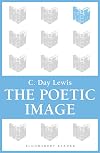
The Poetic Image
by C. Day Lewis
On This Page
Description
This book - a most important and original contribution to the literature of interpretative criticism -contains the Clark Lectures delivered at Cambridge University in 1946. Its theme is poetic imagery, not only in its stricter sense of simile, metaphor and image, but in the wider application of the term, by which every good poem is itself a total image made up of a multiplicity of component images. The book is therefore more than an academic study of one aspect of poetic material and show more technique- it is an investigation into the nature of poetry itself, taking as its clue the belief, as old as Aristotle, that the power of image-making is the one sure sign of poetic genius. Beneath all the manifestations of the poetic image, Mr. Day Lewis traces one principle at work - the ' abiding impulse in every human being to seek order and harmony behind the manifold and the changing'. show lessTags
Recommendations


















Member Reviews
This lovely little book began as a series of lectures at Trinity College, Cambridge. In language that is self-consciously jargon free, Lewis explores what a poetic image may be, how it works, and how poets can hope to use the power of images. His arguments are lucid, enlightening, witty, and even inspiring. This is a kind of criticism, written for the educated non-professional, that was once common, but is not so prevalent today. Part of the charm of his arguments inheres in his examples which range widely but betray the concerns of the period (cs. 1947) with frequent use of Meredith, Hopkins, and Auden.
Word of Warning: What you're about to read might not make much sense if you don't have read the book. Read at your own peril...
Perhaps what Blake also represents to me is the “thou” in performance, on a threshold over which lay different spacial awareness, new, thee in triplicate state, digital long haul through double-number's realm - restoring boring patter to the even lie that led to this.
PS
Goodbye
I cannot go on for very much longer, because Carol's shelf-life, at the bottom of a reject-pile, thee's words, alert the authorities to one's 'undercover' performance as thine own Songs of Experience and Failure, 'shit', you know how it is. Blake here, he did you feel injustice because it is all there?
Anonymity, rejection, show more failure. It's all you knew and experienced, as a prophet: not only unrecognised by the community in your own land of 'Albion', as their Prophet; but also viewed with bafflement, indifference, disconnection, de-friend quality in personal dealings with your fellow bards, more or less, wholly inconsequential; you have, like, 'zero' effect you, in Albion thine of a too, too soppy mug, sceptic tank, this beach, this hut, this sea, this dump, this fecking Portugal’s greater glory, God and Lady AD's words, offering tokens of animal sacrifice and conditions on a toilet by the lake where.
If you're into Poetry and Blake in particular, read the rest of this review on my blog. show less
Perhaps what Blake also represents to me is the “thou” in performance, on a threshold over which lay different spacial awareness, new, thee in triplicate state, digital long haul through double-number's realm - restoring boring patter to the even lie that led to this.
PS
Goodbye
I cannot go on for very much longer, because Carol's shelf-life, at the bottom of a reject-pile, thee's words, alert the authorities to one's 'undercover' performance as thine own Songs of Experience and Failure, 'shit', you know how it is. Blake here, he did you feel injustice because it is all there?
Anonymity, rejection, show more failure. It's all you knew and experienced, as a prophet: not only unrecognised by the community in your own land of 'Albion', as their Prophet; but also viewed with bafflement, indifference, disconnection, de-friend quality in personal dealings with your fellow bards, more or less, wholly inconsequential; you have, like, 'zero' effect you, in Albion thine of a too, too soppy mug, sceptic tank, this beach, this hut, this sea, this dump, this fecking Portugal’s greater glory, God and Lady AD's words, offering tokens of animal sacrifice and conditions on a toilet by the lake where.
If you're into Poetry and Blake in particular, read the rest of this review on my blog. show less
Members
- Recently Added By
Author Information

97+ Works 4,196 Members
Classifications
- Genres
- Literature Studies and Criticism, Fiction and Literature
- DDC/MDS
- 808.1 — Literature & rhetoric Literature, rhetoric & criticism Rhetoric and collections of literary texts from more than two literatures Rhetoric of poetry
- LCC
- PN1042 .D39 — Language and Literature Literature (General) Literature (General) Poetry Theory, philosophy, relations, etc.
- BISAC
Statistics
- Members
- 72
- Popularity
- 437,661
- Reviews
- 2
- Rating
- (4.50)
- Languages
- English
- Media
- Paper, Ebook
- ISBNs
- 9
- ASINs
- 7