The Medical Discoveries of Edward Bach, Physician
by Nora Weeks
On This Page
Description
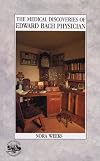
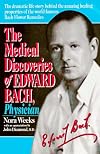
In 1912 Edward Bach qualified as a medical doctor and embarked upon a career which not only had a profound efffect on medical science, but brought to ordinary people the world over, a simple, safe and effective system of healing. Dr Bach made a detailed study of bacteriology, immunology and homoeopathy and found a clear connection between chronic disease and negative mental attitudes. It was the relationship between mind and body which formed the basis of his further research and as he show more became increasingly convinced that emotional harmony was the key to good health, he was determined to find a simple, non-invasive and harmless method of healing which could be used safely by everyone. 'The Medical Discoveries of Edward Bach' tells how Dr Bach's work developed, from his childhood hopes and dreams of a healthy society, to the discovery of a complete system of 38 remedies which address all aspects of human nature, emotional outlook and personality. Edward Bach was an eminent physician whose remarkable contribution to medicine, healing and humanity has yet to be fully realised. show lessTags
Recommendations

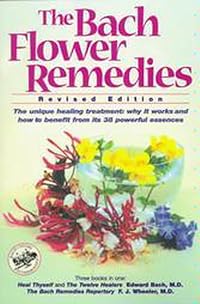


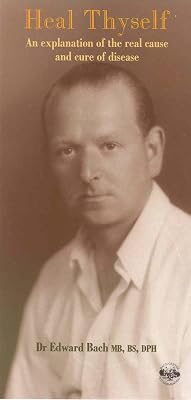
















Member Reviews
Dr. Edward Bach started college at age twenty, became a physician after having worked at his father's foundry, tried to enlist in WWI but was rejected because of poor health and instead was assigned the duties of a 400 bed ward and almost died after having lost consciousness due to loss of blood. He survived the surgery. He studied bacteriology and gave injections of his own manufacture during the Influenza Epidemic of 1918. He could not continue his research so he left to work at the London Homeopathic Hospital.
The book is wonderfully packed with detail and, well, kindness. You come away with a sense that the author knew her subject, although she never says this. Her research includes personal testaments by doctors who did know him and show more some of his case studies. The story of his life involves much personal suffering and you expect that he lived a long, happy life.
Bach went from being a bacteriologist to homeopath to herbalist, and the book makes the point that he preferred to be named an herbalist. By the title, The Medical Discoveries of Edward Bach, Physician (What the Flowers do for the Body), the author is saying, it could be argued, that he remained at his core, a doctor. Bach risked rejection by the medical board by pursuing the treatment of patients with flower essences that are added by the drop to a glass of water instead of what he learned in medical school. He treated his patients successfully with the flower essences for disorders he could have treated with standard medication. The book goes into more detail about the first nineteen discoveries he made, namely mimulus, impatiens,agrimony, chicory, vervain, clematis, centuary, cerato, scleranthus, water violet, gentain, rock rose, wild oat, olive, grape vine, gorse, oak, heather and rock water---than the last nineteen. Since these flower essences are still being sold today, more description is available elsewhere.
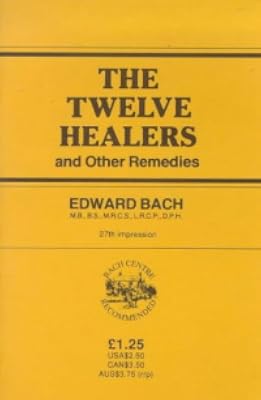
Dr. Bach grouped disorders/medical conditions not by the disease, but by the character-type/personality type based on mental qualities of the individual, believing that whatever disorders may look similar, are not necessarily similar because people are different. He studied the patient and assessed what emotional signs they were exhibiting and chose what essences he had found helped with those problems. His treatment was affordable. He felt that people "got out of tune" and that they should feel like themselves again. His ultimate goal was that they felt happiness. Reading the book, you want that for him as well and it is a shock when he abruptly dies at age fifty. You may find learning what flower goes with what emotion to be difficult and confusing, but at its heart, this book is after all, a biography. It should be mandatory reading for those studying herbs and of course, Dr. Bach published his findings : Heal Thyself; The Twelve Healers, etc. show less
The book is wonderfully packed with detail and, well, kindness. You come away with a sense that the author knew her subject, although she never says this. Her research includes personal testaments by doctors who did know him and show more some of his case studies. The story of his life involves much personal suffering and you expect that he lived a long, happy life.
Bach went from being a bacteriologist to homeopath to herbalist, and the book makes the point that he preferred to be named an herbalist. By the title, The Medical Discoveries of Edward Bach, Physician (What the Flowers do for the Body), the author is saying, it could be argued, that he remained at his core, a doctor. Bach risked rejection by the medical board by pursuing the treatment of patients with flower essences that are added by the drop to a glass of water instead of what he learned in medical school. He treated his patients successfully with the flower essences for disorders he could have treated with standard medication. The book goes into more detail about the first nineteen discoveries he made, namely mimulus, impatiens,agrimony, chicory, vervain, clematis, centuary, cerato, scleranthus, water violet, gentain, rock rose, wild oat, olive, grape vine, gorse, oak, heather and rock water---than the last nineteen. Since these flower essences are still being sold today, more description is available elsewhere.
Dr. Bach grouped disorders/medical conditions not by the disease, but by the character-type/personality type based on mental qualities of the individual, believing that whatever disorders may look similar, are not necessarily similar because people are different. He studied the patient and assessed what emotional signs they were exhibiting and chose what essences he had found helped with those problems. His treatment was affordable. He felt that people "got out of tune" and that they should feel like themselves again. His ultimate goal was that they felt happiness. Reading the book, you want that for him as well and it is a shock when he abruptly dies at age fifty. You may find learning what flower goes with what emotion to be difficult and confusing, but at its heart, this book is after all, a biography. It should be mandatory reading for those studying herbs and of course, Dr. Bach published his findings : Heal Thyself; The Twelve Healers, etc. show less
Ratings
Members
- Recently Added By
Author Information
9 Works 79 Members
Common Knowledge
- Canonical title
- The Medical Discoveries of Edward Bach, Physician
- People/Characters
- Edward Bach
- Epigraph
- The physician's high and only mission is to restore the sick to health, to cure... - Hahnemann
- First words
- Edward Bach was born on September 24th, 1886, at Moseley, a village about three miles outside Birmingham in Warwickshire, and was the eldest of a family of two boys and a girl.
- Last words
- (Click to show. Warning: May contain spoilers.)We, his team, thank the Great Creator of all.
(Click to show. Warning: May contain spoilers.)Her book is a touching and beautiful tribute to one of the greatest holistic medical pioneers by his loving, dedicated disciple. It is a joy to read and re-read, an inspiration and a guiding light. - John Diamond, M.D., May, 1979 - Original language*
- Engels
*Some information comes from Common Knowledge in other languages. Click "Edit" for more information.
Classifications
Statistics
- Members
- 54
- Popularity
- 563,309
- Reviews
- 1
- Rating
- (3.40)
- Languages
- Dutch, English, Spanish
- Media
- Paper, Ebook
- ISBNs
- 6
- ASINs
- 5