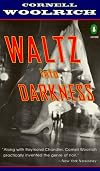
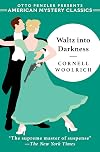
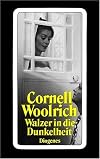
Waltz into Darkness
by Cornell Woolrich
On This Page
Description
When New Orleans coffee merchant Louis Durand first meets his bride-to-be after a months-long courtship by mail, he's shocked that she doesn't match the photographs sent with her correspondence. But Durand has told his own fibs, concealing from her the details of his wealth, and so he mostly feels fortunate to find her so much more beautiful than expected. Soon after they marry, however, he becomes increasingly convinced that the woman in his life is not the same woman with whom he exchanged show more letters, a fact that becomes unavoidable when she suddenly disappears with his fortune. show lessTags
Recommendations




















Member Recommendations


Member Reviews
Having never met his fiancee, Louis Durant should have been a little more suspicious when a beautiful young blonde showed up instead of the elder brunette that he was expecting. Like many men, he couldn’t see beyond her looks until it was too late. Waltz Into Darkness by Cornell Woolrich is a story of greed, deception and loss of innocence and self-control.
Set in the 1880’s and published in 1947 this dark tale doesn’t feel dated and this plot-line would be relevant today. Woolrich is a master at dark suspense and the contrast between the susceptible Durant and the clever smoothness of Julia draws the reader into the story. When tragedy befalls, we are ready, but unfortunately Durant is not.
I am a huge Woolrich fan and this is a show more good one. I was a little disappointed in how the author softened the ending as I would rather have had Julia’s actions and motives remain ambiguous. Although this book is set in the 18th century it still had a very noir feeling as it deals with a man’s downward spiral at the hands of a femme fatale. I found Waltz Into Darkness a real page turner. show less
Set in the 1880’s and published in 1947 this dark tale doesn’t feel dated and this plot-line would be relevant today. Woolrich is a master at dark suspense and the contrast between the susceptible Durant and the clever smoothness of Julia draws the reader into the story. When tragedy befalls, we are ready, but unfortunately Durant is not.
I am a huge Woolrich fan and this is a show more good one. I was a little disappointed in how the author softened the ending as I would rather have had Julia’s actions and motives remain ambiguous. Although this book is set in the 18th century it still had a very noir feeling as it deals with a man’s downward spiral at the hands of a femme fatale. I found Waltz Into Darkness a real page turner. show less
I have to admit, sometimes noir stories are uncomfortable to read. Noir characters are flawed, and the flaws are human flaws, ones that we can find in our mirrors.
Character-centered stories, noir or otherwise, so often have this feel of characters constructed and then turned loose on a playing field to see what happens. And, with noir, character flaws usually determine the acton. It’s a 300 page march to defeat.
That’s the way it is in this story by Cornell Woolrich.
Louis Durand is a well-to-do late-nineteenth-century New Orleans businessman. He’s tragically widowed and lonely, awkward and actually kind of unambitious about romance. He’s corresponded with a woman in St. Louis named Julia Russell. They have never met but have show more exchanged letters and photographs, have fallen in a sort of practical love and agreed to marry.
Julia travels by riverboat to New Orleans, where Louis has prepared a new home for the two of them. As the time approaches, he’s anxious to meet her and, if not fall hopelessly in love with her, at least fall in love with married life again.
When the travelers disembark from the boat, Julia is not there. Louis is despondent, but then surprised by the appearance of a beautiful woman, unlike the photographs he’d received, saying she is Julia. Julia explains that she sent photographs of another woman in order to be assured that Louis didn’t just fall in love with her beauty.
Louis in his turn confesses that he also lied in his letters. He had claimed to be a factory foreman when in fact he owned the factory. He didn’t want her to fall in love with his money.
Of course the woman claiming to be Julia isn’t Julia. She will turn out to be a woman more or less named Bonny, an orphan with an unclear but consistently dishonest past.
Louis is an easy mark. He’s so in love with the woman he thinks is Julia, or maybe just in love with being in love and apparently being loved by a woman so beautiful.
Woolrich describes Louis’s ecstasy in vivid detail. The style of the book’s opening is almost tryingly florid, but that will change.
We know things aren’t going to end well. We’re in a noir world after all. Louis has lost control of his character as well as his money. “Julia” is a thief, a con artist. It’s just Louis’s mind-fog that keeps him from seeing what we see.
She steals his money and disappears. Louis is obsessed with finding her, not only because he wants to recover his money and bring her to justice, but also because just maybe he’s still in love with her, or whatever he was in love with, despite it all.
Eventually, Louis is going to cross a moral line that he can’t come back from. Julia/Bonny crossed that line a long time ago, and she’s a pro at it, whether she’s playing against Louis or, later, with him. Part of the game though is that you are really only ever playing for yourself. Louis of course doesn’t know that.
When he got to the line and started to cross it, I really tried to stop him, the way you wish a character wouldn’t do what you know he’s going to do. But you’re just a reader, you have to follow him where he’s going. And nobody’s going to pull a “happily ever after” out of this hat.
And so it goes. Actually there is a kind of triumph for both characters in the end, but I'm not going to spoil that.
Calling out noir stories for misogyny is shooting sleepy fish in a small barrel. But we should probably still do it. This is a “femme fatale” story for sure. A beautiful but morally impoverished woman leads a man to his humiliating demise. Not a healthy standard.
But there’s a ton of nuance. For one thing, Julia/Bonny is actually not running her own show. Before telling it, Woolrich lists the story’s characters, including “Billy,” “a name on a burned scrap of letter, an unseen figure watching a window, a stealthy knocking at a door.” He’s also the puppeteer directing Julia/Bonny’s actions.
So the good news is that Bonny (I’ll give up using both names) isn’t so autonomously evil, but the bad news is that offstage she’s given up her autonomy to another man.
For another thing, I think there are counterpoints to think about in relation to the femme fatale in general.
The femme fatale operates in a male-dominated world. Louis isn’t a bad man, but he is a man of his time, with the presumptions about women of his time — she is weak, not very clever, and in need of a man’s leadership. And he equates beauty with naive innocence. It’s as though he’s just waiting for a woman to show him he’s wrong. He almost deserves that, if not the full treatment that Bonny dishes out.
Is the femme fatale justified, from the standpoint of turning the tables on the man? Maybe not on this particular man — Louis is an “innocent” in some respects and he deserves our sympathy for the tragic death of his first wife — but the point of the depiction of the femme fatale in a novel (or a film) is to remove her and her counterpart from the particular, to move into an iconic space in which the femme fatale really can be justified, since her “victim” is equally iconic rather than particular and real.
She asserts the legitimacy of a woman as against the presumptions of a man. In that iconic sense, that’s his comeuppance. His own conventional but still predatory attitude towards women meets its match in an adept predator of a different make.
We wouldn’t want to fall into a trap of thinking that the only way a woman can assert her legitimacy is by victimizing a man. That would be just that much more misogyny, as well as validating conflict as the natural relationship between women and men.
All of that is why I think the femme fatale is such a provocative and interesting figure. Woolrich made me think of other great femme fatale depictions, especially in noir movies — Peggy Cummins as Annie in Gun Crazy, Barbara Stanwyck as Lilly in Baby Face, . . . Stanwyck’s Lilly in particular shines as a woman turning the romantic and sexual tables on the men in her life.
Obviously, I like this book. It’s much more than just a “crime story.” Woolrich deserves his standing. show less
Character-centered stories, noir or otherwise, so often have this feel of characters constructed and then turned loose on a playing field to see what happens. And, with noir, character flaws usually determine the acton. It’s a 300 page march to defeat.
That’s the way it is in this story by Cornell Woolrich.
Louis Durand is a well-to-do late-nineteenth-century New Orleans businessman. He’s tragically widowed and lonely, awkward and actually kind of unambitious about romance. He’s corresponded with a woman in St. Louis named Julia Russell. They have never met but have show more exchanged letters and photographs, have fallen in a sort of practical love and agreed to marry.
Julia travels by riverboat to New Orleans, where Louis has prepared a new home for the two of them. As the time approaches, he’s anxious to meet her and, if not fall hopelessly in love with her, at least fall in love with married life again.
When the travelers disembark from the boat, Julia is not there. Louis is despondent, but then surprised by the appearance of a beautiful woman, unlike the photographs he’d received, saying she is Julia. Julia explains that she sent photographs of another woman in order to be assured that Louis didn’t just fall in love with her beauty.
Louis in his turn confesses that he also lied in his letters. He had claimed to be a factory foreman when in fact he owned the factory. He didn’t want her to fall in love with his money.
Of course the woman claiming to be Julia isn’t Julia. She will turn out to be a woman more or less named Bonny, an orphan with an unclear but consistently dishonest past.
Louis is an easy mark. He’s so in love with the woman he thinks is Julia, or maybe just in love with being in love and apparently being loved by a woman so beautiful.
Woolrich describes Louis’s ecstasy in vivid detail. The style of the book’s opening is almost tryingly florid, but that will change.
We know things aren’t going to end well. We’re in a noir world after all. Louis has lost control of his character as well as his money. “Julia” is a thief, a con artist. It’s just Louis’s mind-fog that keeps him from seeing what we see.
She steals his money and disappears. Louis is obsessed with finding her, not only because he wants to recover his money and bring her to justice, but also because just maybe he’s still in love with her, or whatever he was in love with, despite it all.
Eventually, Louis is going to cross a moral line that he can’t come back from. Julia/Bonny crossed that line a long time ago, and she’s a pro at it, whether she’s playing against Louis or, later, with him. Part of the game though is that you are really only ever playing for yourself. Louis of course doesn’t know that.
When he got to the line and started to cross it, I really tried to stop him, the way you wish a character wouldn’t do what you know he’s going to do. But you’re just a reader, you have to follow him where he’s going. And nobody’s going to pull a “happily ever after” out of this hat.
And so it goes. Actually there is a kind of triumph for both characters in the end, but I'm not going to spoil that.
Calling out noir stories for misogyny is shooting sleepy fish in a small barrel. But we should probably still do it. This is a “femme fatale” story for sure. A beautiful but morally impoverished woman leads a man to his humiliating demise. Not a healthy standard.
But there’s a ton of nuance. For one thing, Julia/Bonny is actually not running her own show. Before telling it, Woolrich lists the story’s characters, including “Billy,” “a name on a burned scrap of letter, an unseen figure watching a window, a stealthy knocking at a door.” He’s also the puppeteer directing Julia/Bonny’s actions.
So the good news is that Bonny (I’ll give up using both names) isn’t so autonomously evil, but the bad news is that offstage she’s given up her autonomy to another man.
For another thing, I think there are counterpoints to think about in relation to the femme fatale in general.
The femme fatale operates in a male-dominated world. Louis isn’t a bad man, but he is a man of his time, with the presumptions about women of his time — she is weak, not very clever, and in need of a man’s leadership. And he equates beauty with naive innocence. It’s as though he’s just waiting for a woman to show him he’s wrong. He almost deserves that, if not the full treatment that Bonny dishes out.
Is the femme fatale justified, from the standpoint of turning the tables on the man? Maybe not on this particular man — Louis is an “innocent” in some respects and he deserves our sympathy for the tragic death of his first wife — but the point of the depiction of the femme fatale in a novel (or a film) is to remove her and her counterpart from the particular, to move into an iconic space in which the femme fatale really can be justified, since her “victim” is equally iconic rather than particular and real.
She asserts the legitimacy of a woman as against the presumptions of a man. In that iconic sense, that’s his comeuppance. His own conventional but still predatory attitude towards women meets its match in an adept predator of a different make.
We wouldn’t want to fall into a trap of thinking that the only way a woman can assert her legitimacy is by victimizing a man. That would be just that much more misogyny, as well as validating conflict as the natural relationship between women and men.
All of that is why I think the femme fatale is such a provocative and interesting figure. Woolrich made me think of other great femme fatale depictions, especially in noir movies — Peggy Cummins as Annie in Gun Crazy, Barbara Stanwyck as Lilly in Baby Face, . . . Stanwyck’s Lilly in particular shines as a woman turning the romantic and sexual tables on the men in her life.
Obviously, I like this book. It’s much more than just a “crime story.” Woolrich deserves his standing. show less
Delicious fun. Irish (aka Cornell Woolrich) tries his hand at a big melodrama set in the late nineteenth century American South, a change from his more usual seedy noir New York. A tale of obsessive, misguided passion, criminality, amorality, and violence in a long-distance epistolary romance gone terribly wrong. Probably over-long, padded with quite a few too many gas lamps and sweepingly opulent petticoats, but still wryly observant, with a fundamentally cynical view of women's deviousness and men's foolishness and lust, and with some very good crisp writing. The abruptly redemptive ending doesn't work very well, but it kept me up past my bedtime to see how it got there. Definitely the sort of thing you'll like, if you like this sort show more of thing.
See more reviews on my website - https://juliestielstra.com show less
See more reviews on my website - https://juliestielstra.com show less
Different from the other Woolrich stories I've read as this is set in 1880 and concerns Louis Durand, a lonely man in his thirties who is the wealthy co-owner of a coffee business in New Orleans. His fiancée died on the eve of their wedding years ago, and he has not found love again, but he is now awaiting the arrival of the woman he is going to marry, who he has never met but has corresponded with. But when the river steamer from St Louis arrives, she is not aboard - or is she? A stunningly beautiful blonde woman in her early twenties introduces herself as his bride to be, explaining the discrepancy with the photo she sent, of a dark haired mature woman, by saying that she sent a photo of her aunt, as she prefers older men and wanted show more to be judged on her character in her letters, not her appearance.
Durand can hardly believe his luck and falls head over heels, failing to pick up on the wrong notes that are obvious to the reader. Before long, betrayal ensues and he believes he now hates her, but his own romantic weakness will ultimately destroy him.
This is the story of a love that can see no reason, literally. Love is blind despite Durand's eventual realisation of his wife's faults and her complicity and perhaps worse in the murder of his prospective bride. The ending doesn't really convince, with the idea that someone who can be so horribly callous can have a sudden total change of heart, and Durand's wilful ignorance also is rather wearing. show less
Durand can hardly believe his luck and falls head over heels, failing to pick up on the wrong notes that are obvious to the reader. Before long, betrayal ensues and he believes he now hates her, but his own romantic weakness will ultimately destroy him.
This is the story of a love that can see no reason, literally. Love is blind despite Durand's eventual realisation of his wife's faults and her complicity and perhaps worse in the murder of his prospective bride. The ending doesn't really convince, with the idea that someone who can be so horribly callous can have a sudden total change of heart, and Durand's wilful ignorance also is rather wearing. show less
Cornell Woolrich was a favorite of moviemakers: his novels and stories were adapted into more than 25 motion pictures, with Rear Window as probably the most famous. Two (Francois Truffaut’s 1969 film Mississippi Mermaid and 2001’s Original Sin—which, though it is already largely forgotten in whole, has achieved an extended internet lifespan in the form of a much-viewed clip of an explicit sex scene) were based on Waltz into Darkness, a 1947 novel published by Woolrich under the pseudonym William Irish. Both of these adaptations postdate Hollywood’s noir explosion of the 40s and early 50s, and the story takes place not in hardboiled Chicago or Kansas City but in post-Civil War New Orleans. Still, this is a classic noir study of a show more femme fatale—in this case a woman who goes by the names Julia and Bonnie. The two women who have played Julia/Bonny, Catharine Denueve and Angelina Jolie, are beautiful actresses who can possess a serpentine coolness on screen that is, despite the deficiencies of both films, appropriate for the role.
Louis Durand is a businessman hoping to augment his financial happiness with a marriage to a mail order bride. When he arrives at a steamboat dock to meet her for the first time he finds not the plain looking woman whose photograph he was sent but a beautiful young girl. The girl, Julia, gives an unconvincing explanation as to why she deceived him about her looks, and Louis, pleased by her beauty, lets none of her ensuing suspicious behavior—a coarse crossing of the legs, the neck snapping of a song bird—convince him that she is not really the woman she claims to be, until, that is “Julia” cleans out his bank accounts and disappears. This expected betrayal, coming less than a third of the way through the book, turns Louis murderous: he stalks women who resemble Julia on the streets, hires a private detective, chases a mask wearing girl through Mardi Gras to press a revolver into her chest. These hallucinatory chapters are a fine writing performance by Mr. Woolrich, whose style throughout the book is more fluid and graceful that those of his tough guy peers.
After a chance dinner invitation brings Louis back in contact with Julia, who explains that her real name is Bonny, and he is placated by her flimsy sob story, we know that loss of money was not what drove Louis to near insanity but the loss of love. And to protect this woman he will not only cheat and murder but allow himself to be murdered.
As is typical in noir the femme fatale’s motives are ambiguous. We see her through Louis’s eyes, and are only privy to the careful chosen thoughts she shares with him. She exists as much as hints and clues left behind—as when the name “Billy” is seen on a burnt letter in a fireplace—as she does as a full bodied presence. Julia/Bonny, however, has more depth than other characters of her type—since she is revealed early on as a thief and liar, the reader doesn’t have to spend a lot of time wondering when she will show her evil, but rather is given a few hundred pages to watch her vacillate between the world she is comfortable in, that of con games and crime, and that which she aspires to, the high class life of New York fashions and fine dining. That her behavior in both of these worlds is that of a sociopath is hardly surprising, given the way that female strivers were commonly portrayed. (And perhaps still are: one of the more frequently voiced views of Hillary Clinton was the ominous one that she would “do anything to win.”) I’ll leave to the reader to judge whether the ending reveals that Julia/Bonny is a more complex being than we imagined or a hopelessly cardboard figure having an unconvincing epiphany. That Louis becomes a vehicle for her redemption, short-lived though it may be, just as she is the vehicle of his brilliantly described downfall is a nifty turnaround of a noir convention. show less
Louis Durand is a businessman hoping to augment his financial happiness with a marriage to a mail order bride. When he arrives at a steamboat dock to meet her for the first time he finds not the plain looking woman whose photograph he was sent but a beautiful young girl. The girl, Julia, gives an unconvincing explanation as to why she deceived him about her looks, and Louis, pleased by her beauty, lets none of her ensuing suspicious behavior—a coarse crossing of the legs, the neck snapping of a song bird—convince him that she is not really the woman she claims to be, until, that is “Julia” cleans out his bank accounts and disappears. This expected betrayal, coming less than a third of the way through the book, turns Louis murderous: he stalks women who resemble Julia on the streets, hires a private detective, chases a mask wearing girl through Mardi Gras to press a revolver into her chest. These hallucinatory chapters are a fine writing performance by Mr. Woolrich, whose style throughout the book is more fluid and graceful that those of his tough guy peers.
After a chance dinner invitation brings Louis back in contact with Julia, who explains that her real name is Bonny, and he is placated by her flimsy sob story, we know that loss of money was not what drove Louis to near insanity but the loss of love. And to protect this woman he will not only cheat and murder but allow himself to be murdered.
As is typical in noir the femme fatale’s motives are ambiguous. We see her through Louis’s eyes, and are only privy to the careful chosen thoughts she shares with him. She exists as much as hints and clues left behind—as when the name “Billy” is seen on a burnt letter in a fireplace—as she does as a full bodied presence. Julia/Bonny, however, has more depth than other characters of her type—since she is revealed early on as a thief and liar, the reader doesn’t have to spend a lot of time wondering when she will show her evil, but rather is given a few hundred pages to watch her vacillate between the world she is comfortable in, that of con games and crime, and that which she aspires to, the high class life of New York fashions and fine dining. That her behavior in both of these worlds is that of a sociopath is hardly surprising, given the way that female strivers were commonly portrayed. (And perhaps still are: one of the more frequently voiced views of Hillary Clinton was the ominous one that she would “do anything to win.”) I’ll leave to the reader to judge whether the ending reveals that Julia/Bonny is a more complex being than we imagined or a hopelessly cardboard figure having an unconvincing epiphany. That Louis becomes a vehicle for her redemption, short-lived though it may be, just as she is the vehicle of his brilliantly described downfall is a nifty turnaround of a noir convention. show less
This story was really difficult to read: the feeling of dread was present from the beginning and only intensified. I have admired other of Woolrich's noir novels much more because they felt very cleverly plotted and readable. In this story,the characters, especially Louis Durand, was somehow terribly 2-dimensional and so naive. Intuitively, the plot was surprisingly predictable and the mail order bride seemed a rather featureless person with no spark. I think the villain in novels can be admirable for their part of the story and have enjoyed some truly wicked types that give a real twang to the story. In this novel, Woolrich's elegant prose and snappy characterizations were missing their usual impact on the descriptions. My view, of show more course and YMMV! show less
Loved it. Until the ending which is keeping with the genre but I wonder if it's the ending Woolrich would have chosen to publish.
Members
- Recently Added By
Author Information

Cornell Woolrich was born in New York City in 1903. While he was attending Columbia University, Woolrich wrote Children of the Ritz, which won a $10,000 prize. More than 30 of Woolrich's works have been adapted for films or TV, his most famous being Rear Window, an Alfred Hitchcock creation. The Cornell Woolrich Omnibus is a collection of his best show more works including Rear Window, I Married a Dead Man, and Waltz into Darkness. Cornell Woolrich died in 1968. (Bowker Author Biography) show less
Series
Belongs to Publisher Series
Work Relationships
Is contained in
Has the adaptation
Common Knowledge
- Canonical title*
- La sirena del Mississipi
- Original title
- Waltz into Darkness
- Original publication date
- 1947
- People/Characters
- Louis Durand; Bertha Russell; Julia Russell; Walter Downs
- Important places
- New Orleans, Louisiana, USA; St Louis, Missouri, USA; Mobile, Alabama, USA
- Related movies
- La sirène du Mississipi (1969 | IMDb); Original Sin (2001 | IMDb)
- Epigraph
- "If one should love you with real love
(Such things have been,
Things your fair face knows nothing of
It seems, Faustine). . ."
SWINBURNE - First words
- The soundless music starts.
- Last words
- (Click to show. Warning: May contain spoilers.)The Waltz is done.
*Some information comes from Common Knowledge in other languages. Click "Edit" for more information.
Classifications
Statistics
- Members
- 301
- Popularity
- 106,799
- Reviews
- 9
- Rating
- (3.51)
- Languages
- 6 — Catalan, English, French, German, Italian, Spanish
- Media
- Paper, Ebook
- ISBNs
- 15
- ASINs
- 10