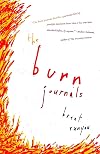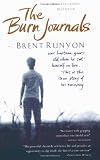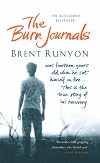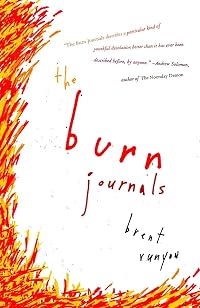
The Burn Journals
by Brent Runyon
On This Page
Description
Brent Runyon was fourteen years old when he set himself on fire. In this book he describes that suicide attempt and his recovery over the following year. He takes us into the Burn Unit in a children's hospital and through painful burn care and skin-grafting procedures. Then to a rehabilitation hospital, for intensive physical, occupational, and psychological therapy. And then finally back home, to the frightening prospect of entering high school. But more importantly, Runyon takes us into show more his own mind. He shares his thoughts and hopes and fears with such unflinching honesty that we understand with a terrible clarity what it means to want to kill yourself and how it feels to struggle back toward normality. Intense, exposed, insightful, The Burn Journals is a deeply personal story with universal reach. It is impossible to look away. Impossible to remain unmoved. This truly riveting memoir is a spectacular debut for a talented new writer. show lessTags
Recommendations




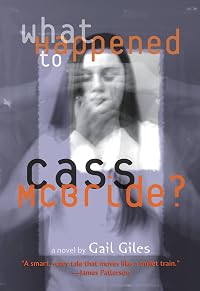

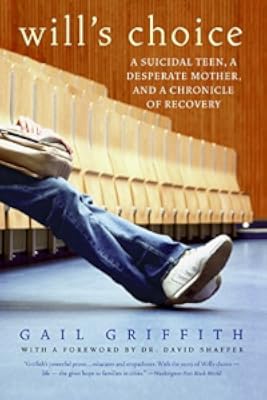
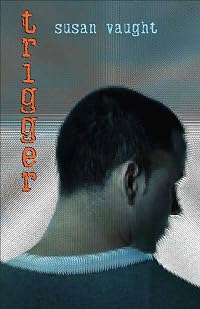
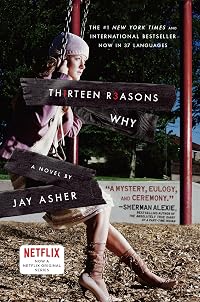




Member Recommendations
Member Reviews
Currently nearing the end of my first year as a suicide attempt survivor, I found myself relating to a fair amount of Mr. Runyon's experiences. Thankfully, I didn't have to deal with the burn treatment aspect of things, and therefore did not share the lengthy hospital stays and surgeries, but I did share many of Brent's frustrations of dealing with the awkward questions and mental health care system in the aftermath of the attempt.
I did, at times, find myself thinking that Brent, disfigured by his own doing, was awfully critical of the other patients he came across during his treatment, especially considering that many of them were disabled at birth or injured through accidents at no fault of their own.
Although I felt the book might show more have benefited from a different format (while I understand the idea, it ends up looking unfinished and a bit like a run-on), I appreciated his open and honest portrayal of life after an attempt and the continued struggles to re-identify yourself among your family, friends, and society.
Not all of our scars are as visible as Mr. Runyon's, but we have them just the same. show less
I did, at times, find myself thinking that Brent, disfigured by his own doing, was awfully critical of the other patients he came across during his treatment, especially considering that many of them were disabled at birth or injured through accidents at no fault of their own.
Although I felt the book might show more have benefited from a different format (while I understand the idea, it ends up looking unfinished and a bit like a run-on), I appreciated his open and honest portrayal of life after an attempt and the continued struggles to re-identify yourself among your family, friends, and society.
Not all of our scars are as visible as Mr. Runyon's, but we have them just the same. show less
At fourteen, Runyon put on his bathrobe, doused it with gasoline, stepped into the tub and lit himself on fire. He suffered third-degree burns over 85 percent of his body. He endured months of excruciating skin grafts and physical therapy. The Burn Journals spans Runyon's first year of recovery from this horrifying suicide attempt as he struggles with the pain, the guilt and the questions from himself and others as to why he did it.
This book does not contain any solutions or answers to suicide, depression or self-hatred. Runyon can never answer why he tried to kill himself. He doesn't really know. Runyon wrote his book ten years after he set himself on fire, but he writes it in the first person as his fourteen-year-old self. This makes show more the book so valuable for teens, especially males, who may run the spectrum of sadness to thoughts or plans of suicide. Here, in Runyon's words, they may find hope that they are not completely alone under the desolate weight of depression.
This book should be included in the teen departments of school and public libraries and will be useful for anyone working with teens; however, this may not be a book for readers who have suffered accidental traumatic experiences and burn victims may struggle to identify with someone who purposely caused such pain. show less
This book does not contain any solutions or answers to suicide, depression or self-hatred. Runyon can never answer why he tried to kill himself. He doesn't really know. Runyon wrote his book ten years after he set himself on fire, but he writes it in the first person as his fourteen-year-old self. This makes show more the book so valuable for teens, especially males, who may run the spectrum of sadness to thoughts or plans of suicide. Here, in Runyon's words, they may find hope that they are not completely alone under the desolate weight of depression.
This book should be included in the teen departments of school and public libraries and will be useful for anyone working with teens; however, this may not be a book for readers who have suffered accidental traumatic experiences and burn victims may struggle to identify with someone who purposely caused such pain. show less
If you've never contemplated the horrific act of suicide by fire, it might seem too incomprehensible to read about, and you might just go into this book with a bad attitude against Brent Runyon. But he never makes excuses for himself, which is part of what makes this book so powerful. The memoir hasn't a whiff of "woe is me" in it, despite the fact that it could be full of it; additionally, Runyon takes the high road by never daring to suggest that he is some expert on teen suicide. He just tells the story and lets his story work its magic.
This is an excellent book in all aspects. It is well written, interesting and informative. It is also disturbing. To be fourteen and feel the way that Brent does must be so traumatic. It would have been interesting to read a bit from his parents but then that isn't what this book is about.
Nothing is left to the imagination; the reader knows exactly what the pain of taking a bath would feel like or the pain of being turned in bed. For me the most distressing part was actually the moment he set himself alight.
I can't recommend this book highly enough. The blurb is right and how often does that happen? The ending leaves you content but curious. I was that involved I regretted having to go to sleep but made sure I didn't put it down the show more next day.
Although the 'chapters' are extremely lengthy there are plenty of places to stop reading - however it's that good why would you want to! show less
Nothing is left to the imagination; the reader knows exactly what the pain of taking a bath would feel like or the pain of being turned in bed. For me the most distressing part was actually the moment he set himself alight.
I can't recommend this book highly enough. The blurb is right and how often does that happen? The ending leaves you content but curious. I was that involved I regretted having to go to sleep but made sure I didn't put it down the show more next day.
Although the 'chapters' are extremely lengthy there are plenty of places to stop reading - however it's that good why would you want to! show less
It takes a lot of courage to write a book like this. Most people can not write so openly and honestly about their feelings, especially when they know they've done something to grievously hurt their family. But Brent Runyon can, and does.
As an eighth grader, Brent set fire to himself in a suicide attempt. He suffered sever burns over 85% of his body, but, obviously, did not die. Brent's story takes us from the events immediately preceding his attempt and through the many months of his recovery.
Much of the narrative is taken up with the details and routines that anyone suffering such severe burns must endure, no matter how they occurred. But in Brent's case there is the ever-present knowledge that he brought this on himself.
Although I show more wish we could have learned more about why Brent attempted suicide in the first place, he says very plainly (through recounted sessions with assorted psychologists) that he doesn't really know why he did it, can't remember what could have made him so sad and desperate, and certainly isn't going to do anything like it again. A cautionary tale indeed for any teens thinking of committing suicide. show less
As an eighth grader, Brent set fire to himself in a suicide attempt. He suffered sever burns over 85% of his body, but, obviously, did not die. Brent's story takes us from the events immediately preceding his attempt and through the many months of his recovery.
Much of the narrative is taken up with the details and routines that anyone suffering such severe burns must endure, no matter how they occurred. But in Brent's case there is the ever-present knowledge that he brought this on himself.
Although I show more wish we could have learned more about why Brent attempted suicide in the first place, he says very plainly (through recounted sessions with assorted psychologists) that he doesn't really know why he did it, can't remember what could have made him so sad and desperate, and certainly isn't going to do anything like it again. A cautionary tale indeed for any teens thinking of committing suicide. show less
VOYA: 5Q, 4P
You can't get much more dramatic or horrifyingly compelling than reading about someone who sets themselves on fire. It's one of those stories that you're glad is being told, but you wish it wasn't actually real. It's hard to imagine the despair the author must have felt in the time leading up to his decision to attempt suicide. From the outside Brent was surrounded by a loving family, and attentive friends. He had interests, intelligence, and talents. This memoir is a true lesson in the painful reality that is depression. It is not logical, but it is real. On the other side of it, Brent himself cannot articulate the 'why' of the matter. This disconnect can be particularly difficult for those who want to support loved ones show more through mental health issues.
The Burn Journals gives a voice to this experience and to the general feelings that don't always have names or distinct causes. This validation from someone who so closely understands how this feels, written with love for his younger self and for those who helped him heal is a gem of narrative nonfiction. show less
You can't get much more dramatic or horrifyingly compelling than reading about someone who sets themselves on fire. It's one of those stories that you're glad is being told, but you wish it wasn't actually real. It's hard to imagine the despair the author must have felt in the time leading up to his decision to attempt suicide. From the outside Brent was surrounded by a loving family, and attentive friends. He had interests, intelligence, and talents. This memoir is a true lesson in the painful reality that is depression. It is not logical, but it is real. On the other side of it, Brent himself cannot articulate the 'why' of the matter. This disconnect can be particularly difficult for those who want to support loved ones show more through mental health issues.
The Burn Journals gives a voice to this experience and to the general feelings that don't always have names or distinct causes. This validation from someone who so closely understands how this feels, written with love for his younger self and for those who helped him heal is a gem of narrative nonfiction. show less
I thought this book was well written and had an interesting matter-of-fact style, but I would have preferred if at some point it had detoured into a more self-reflective tone. This book looks starkly at the reality of one child's choice to attempt suicide. Most of the book deals with Brent Runyan's recovery process. It describes the day-by-day process of lying in a hospital bed and rebuilding relationships with the people he tried to leave behind.
I only read two thirds of this book. I think this would probably be a fantastic read for a teenager going through similar desolation. The book was originally written as a cathartic experience for the author, who has been featured on This American Life. The prose do not suffer despite the fact show more that it was not originally written for mass consumption, and I think that most people would enjoy the memoir more than I did show less
I only read two thirds of this book. I think this would probably be a fantastic read for a teenager going through similar desolation. The book was originally written as a cathartic experience for the author, who has been featured on This American Life. The prose do not suffer despite the fact show more that it was not originally written for mass consumption, and I think that most people would enjoy the memoir more than I did show less
Members
- Recently Added By
Author Information

3 Works 1,190 Members
Some Editions
Awards and Honors
Awards
Distinctions
Common Knowledge
- Canonical title
- The Burn Journals
- Original publication date
- 2004
- People/Characters
- Brent Runyon
- Dedication
- "For Christina Egloff. She said I should write everything I could remember and called it The Burn Journals. We spent four years working together on this book. She developed the structure. She shaped the tone, rhythm, and paci... (show all)ng. She pursued perfection in all the details. This book wouldn't exist without her."
- First words
- "I'm awake, listening to the radio, and Mom is yelling at me to get out of bed."
- Last words
- (Click to show. Warning: May contain spoilers.)"I'm here."
- Publisher's editor
- Siscoe, Nancy
- Blurbers
- Solomon, Andrew; Golden, Arthur; Homes, A.M.
Classifications
- Genres
- Nonfiction, Teen, Biography & Memoir
- DDC/MDS
- 362.28092 — Society, government, & culture Social problems and social services Social Welfare Mental illness Suicide
- LCC
- HV6546 .R86 — Social sciences Social pathology. Social and public welfare. Criminology Social pathology. Social and public welfare. Criminology Crimes and offenses
- BISAC
Statistics
- Members
- 955
- Popularity
- 27,735
- Reviews
- 42
- Rating
- (3.79)
- Languages
- English, French, Indonesian, Russian
- Media
- Paper, Audiobook, Ebook
- ISBNs
- 23
- ASINs
- 3