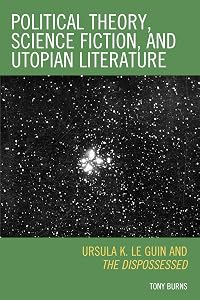
Political Theory, Science Fiction, and Utopian Literature: Ursula K. Le Guin and The Dispossessed
by Tony Burns
On This Page
Description
Ursula K. Le Guin's The Dispossessed is of interest to political theorists because of its association with anarchism, and because it is thought to represent a turning point in the history of utopian/dystopian political thought, literature, and science fiction. Published in 1974, it marked a revival of utopianism after decades of dystopian writing. The widely accepted view is that The Dispossessed represents a new kind of literary utopia, called a critical utopia by Tom Moylan. The present show more work challenges this reading of The Dispossessed and its place in the histories of utopian/dystopian literature and science fiction. It explores the differences between traditional utopian novels and suggests that The Dispossessed is not a utopian novel but a novel about utopianism and politics. Le Guin's concerns relate more to nineteenth-century European Realists than with science fiction of utopian literature. It also claims that her theory of the novel has an affinity with ancient Greek tragedy and implies that there is a conservatism in Le Guin's work as a creative writer, which fits uneasily with her personal commitment to anarchism. Book jacket. show lessTags
Members
- Recently Added By
Author Information
12 Works 44 Members
Tony Burns is associate professor in the School of Politics and International Relations at the University of Nottingham in the United Kingdom.
Common Knowledge
- People/Characters
- Ursula K. Le Guin
Classifications
- Genres
- Literature Studies and Criticism, Fiction and Literature, Science Fiction
- DDC/MDS
- 813.54 — Literature & rhetoric American literature in English American fiction in English 1900-1999 1945-1999
- LCC
- PS3562 .E42 — Language and Literature American literature American literature Individual authors 1961-
- BISAC
Statistics
- Members
- 7
- Popularity
- 2,744,652
- Languages
- English
- Media
- Paper, Ebook
- ISBNs
- 3