On This Page
Description
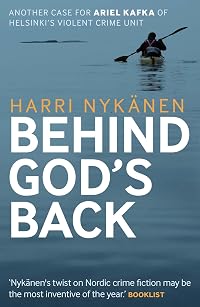
'Nykänen's twist on Nordic crime fiction may be the most inventive of the year. Ariel Kafka, a middle-aged bachelor, is a detective in Helsinki (think early Harry Hole) and, as far as he knows, the only Jew on the entire Helsinki police force, which is why he's picked to head up the investigation of a series of murders that began with two Arabic-looking men who may have been shouting Jewish obscenities as they died. Set during the days leading up to Yom Kippur, this complex tale moves show more quickly, as Ari attempts to figure it all out. With pressure from his colleagues, police administration, his brother, and the local Jewish community, can he uncover everything before the holiest day in the Jewish calender? The clever combination of classic Jewish themes with the traditions of Nordic crime makes for a refreshing tale with wide appeal. And the subtle humor, combined with a hero who is not completely depressed and alcoholic, makes it even better. Not just for readers of Nordic fiction, this should also be suggested to those who relate to New York Jewish detectives, including Lenny Briscoe (from Law & Order) and John Munch (from Homicide and Law & Order: SVU), as well as readers who enjoy the black humor of Stuart MacBride.' Booklist
Harri Nykänen, born in Helsinki in 1953, was a well-known crime journalist before turning to fiction. He won the Finnish crime writing award The Clue in 1990 and in 2001. His fiction exposes the local underworld through the eyes of the criminal, the terrorist, and, most recently, from the point of view of an eccentric Helsinki police inspector.
. show less
Tags
Recommendations

























Member Reviews
...nordic noir at its best!
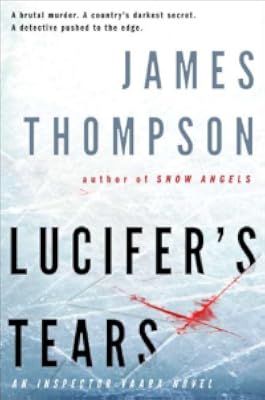
I am continuing my love affair with mystery writers of the far north. I have to say I thoroughly enjoy the Scandinavian or Nordic Noir mystery genre! The dark side is always just under the surface. A frisson that burns through and creates that indefinable tempo that one comes to recognize and appreciate--demand even. From the personification of Mankell's Wallender, to Stieg Larsson's Blomkvist and Salander, James Thompson's Karri Varra and now, for me, Harri Nykanen 's Kafla.
I loved this story of detective Ari Kafla struggling with a murder investigation that flows from train deaths to drug hits, with a touch of terrorism and Mossad as a side dish.
Jewish detective Ari Kafla finds tentacles stretching back into show more his family, into his synagogue relations, even ambassadorial connections, all confronting him with choices of family and faith, his loyalty to all and duty as a detective.
Kafla's inner struggles strengthen the story. An excellent read. show less
I am continuing my love affair with mystery writers of the far north. I have to say I thoroughly enjoy the Scandinavian or Nordic Noir mystery genre! The dark side is always just under the surface. A frisson that burns through and creates that indefinable tempo that one comes to recognize and appreciate--demand even. From the personification of Mankell's Wallender, to Stieg Larsson's Blomkvist and Salander, James Thompson's Karri Varra and now, for me, Harri Nykanen 's Kafla.
I loved this story of detective Ari Kafla struggling with a murder investigation that flows from train deaths to drug hits, with a touch of terrorism and Mossad as a side dish.
Jewish detective Ari Kafla finds tentacles stretching back into show more his family, into his synagogue relations, even ambassadorial connections, all confronting him with choices of family and faith, his loyalty to all and duty as a detective.
Kafla's inner struggles strengthen the story. An excellent read. show less
The bodies certainly pile up in Nights of Awe, Harri Nykänen's first foray into the series featuring Ariel Kafka of the Helsinki Violent Crimes Unit. Nykänen is no fledgling writer -- he has several books under his belt, including his Raid series, which was the basis for a TV show in Finland.
Nights of Awe is a good series opener, a very serious police procedural where the solution doesn't unravel until the very end. It's a no-nonsense story, with a different approach to Scandinavian crime fiction that takes place during the ten days between Rosh Hashanah and Yom Kippur known as Yamim Noraim, or Days of Awe. The main character is Ariel (Ari) Kafka, 40, unmarried, Jewish, first and foremost a policeman, then a Jew. As he notes,
"If show more Rabbi Liebstein was right and the world was falling to pieces, an unpleasant role had been reserved for me. It was my job to gather up all of the gears that were flying off and repair the clock so it would work again."
And considering that by the end of the novel there are eight people laying dead, all connected to one case, he's got his work cut out for him. The first two bodies are discovered at the railyard in Linnunlaulu, one having been shot and the other had fallen or had been pushed from a bridge onto the top of a passing train. All kinds of theories are put forward as to the nature of the killings, but Ari knows it's much to early to think on the theoretical side. There are few clues at the scene other than a cell phone needing a password to unlock it and a map from Hertz. As the detectives begin their investigation, more bodies turn up, and it isn't long until an inspector from the Security Police (SUPO) gets involved, much to Ari's dismay. The clues lead to an Iraqi refugee, his co-worker and his cousin, a known drug dealer, but the tabloids are linking the killings to terrorism either on the part of Israeli political extremists or Arab terrorists. In the meantime, Ari's brother and a spokesperson for the Helsinki Jewish congregation believe that the deaths are linked to a terrorist plot to blow up the synagogue during the High Holy Days, during which, coincidentally, the Israeli foreign minister is paying a visit, a theory bolstered by the involvement of the head of security of the Israeli embassy. Sorting out these theories and getting to the truth in the face of pressure being heaped on Ari from several directions is going to be difficult at best.
Nights of Awe is ambitious, to say the least, but it's a good start to what will probably be a good series to follow. The writing is straightforward with little to get in the way of the plot -- no long sessions of interior monologue expressing the main character's angst, for example, but at times it can get a little confusing as body after body piles up and new plot developments are revealed little by little. Ari's character is portrayed realistically, but some of the supporting characters are kind of just there in the background. This isn't necessarily a drawback, but rather a reflection of a first novel in a series where the lead character is the focus. And while there is a lot of action, it's sort of secondary, where the crime has already happened rather than say, a car blowing up in front of the cops' noses.
I have to admire how the author handles two major issues: first, in the treatment of Jewish attitudes toward Israeli politics, he notes that there are some who have misgivings about Israel's policies toward its Arab neighbors, but he also takes at look at things from Israel's point of view. Second, the author gives a fair treatment of the Muslims in this novel, especially when the police turn to the Imam of the local Islamic center for assistance, rather than accusation.
I do have a couple of niggles: first, there is very little in the way of sense of place here. Maybe it's just me, but after all of the Scandinavian crime fiction I've read, very little of it takes place in Finland, so it would be nice if the reader was able to absorb some of the local scene. A sense of place adds a bit more credibility as well as another dimension to any story; this is one aspect of the novel where the author fell short. I'm sure that will be rectified in coming installlments and it's definitely not a deal breaker as to whether or not I'll pick up more books by Nykänen in the future, but it is worth mentioning. Second: Mossad? Really?
In spite of my minor complaints, I'd recommend it to readers of Scandinavian crime fiction, but with the caveat that it's not the usual Nordic fare that most readers have already experienced. It's also dark and very serious in tone, so it's definitely not for cozy readers or readers that are looking for something lighthearted. I don't mind dark, and I'll definitely be ready and eager to read the next book when it's translated. show less
Nights of Awe is a good series opener, a very serious police procedural where the solution doesn't unravel until the very end. It's a no-nonsense story, with a different approach to Scandinavian crime fiction that takes place during the ten days between Rosh Hashanah and Yom Kippur known as Yamim Noraim, or Days of Awe. The main character is Ariel (Ari) Kafka, 40, unmarried, Jewish, first and foremost a policeman, then a Jew. As he notes,
"If show more Rabbi Liebstein was right and the world was falling to pieces, an unpleasant role had been reserved for me. It was my job to gather up all of the gears that were flying off and repair the clock so it would work again."
And considering that by the end of the novel there are eight people laying dead, all connected to one case, he's got his work cut out for him. The first two bodies are discovered at the railyard in Linnunlaulu, one having been shot and the other had fallen or had been pushed from a bridge onto the top of a passing train. All kinds of theories are put forward as to the nature of the killings, but Ari knows it's much to early to think on the theoretical side. There are few clues at the scene other than a cell phone needing a password to unlock it and a map from Hertz. As the detectives begin their investigation, more bodies turn up, and it isn't long until an inspector from the Security Police (SUPO) gets involved, much to Ari's dismay. The clues lead to an Iraqi refugee, his co-worker and his cousin, a known drug dealer, but the tabloids are linking the killings to terrorism either on the part of Israeli political extremists or Arab terrorists. In the meantime, Ari's brother and a spokesperson for the Helsinki Jewish congregation believe that the deaths are linked to a terrorist plot to blow up the synagogue during the High Holy Days, during which, coincidentally, the Israeli foreign minister is paying a visit, a theory bolstered by the involvement of the head of security of the Israeli embassy. Sorting out these theories and getting to the truth in the face of pressure being heaped on Ari from several directions is going to be difficult at best.
Nights of Awe is ambitious, to say the least, but it's a good start to what will probably be a good series to follow. The writing is straightforward with little to get in the way of the plot -- no long sessions of interior monologue expressing the main character's angst, for example, but at times it can get a little confusing as body after body piles up and new plot developments are revealed little by little. Ari's character is portrayed realistically, but some of the supporting characters are kind of just there in the background. This isn't necessarily a drawback, but rather a reflection of a first novel in a series where the lead character is the focus. And while there is a lot of action, it's sort of secondary, where the crime has already happened rather than say, a car blowing up in front of the cops' noses.
I have to admire how the author handles two major issues: first, in the treatment of Jewish attitudes toward Israeli politics, he notes that there are some who have misgivings about Israel's policies toward its Arab neighbors, but he also takes at look at things from Israel's point of view. Second, the author gives a fair treatment of the Muslims in this novel, especially when the police turn to the Imam of the local Islamic center for assistance, rather than accusation.
I do have a couple of niggles: first, there is very little in the way of sense of place here. Maybe it's just me, but after all of the Scandinavian crime fiction I've read, very little of it takes place in Finland, so it would be nice if the reader was able to absorb some of the local scene. A sense of place adds a bit more credibility as well as another dimension to any story; this is one aspect of the novel where the author fell short. I'm sure that will be rectified in coming installlments and it's definitely not a deal breaker as to whether or not I'll pick up more books by Nykänen in the future, but it is worth mentioning. Second: Mossad? Really?
In spite of my minor complaints, I'd recommend it to readers of Scandinavian crime fiction, but with the caveat that it's not the usual Nordic fare that most readers have already experienced. It's also dark and very serious in tone, so it's definitely not for cozy readers or readers that are looking for something lighthearted. I don't mind dark, and I'll definitely be ready and eager to read the next book when it's translated. show less
When the bodies of two Arab men are found in Helsinki, Detective Ariel Kafka of the Violent Crimes Unit, and one of only two Jewish policemen in Finland, is the lead investigator. One of the men was presumably tortured before being shot and the other looks like he was pushed from a bridge onto railway tracks. The bodies are quickly identified and at first police wonder if the crimes are race related, but as more bodies start piling up, consideration turns to a possible terrorist attack being planned.
Ariel Kafka who is around 40, single and usually unobservant of his religion’s traditions and rules. He's not a maverick, a loner or an alcoholic. His working relationships are conflict free and he manages to get on with most of his show more superiors. Kafka can be a bit acerbic but I liked his his dry humor. I would definitely give the second book in the series a try when I have time. show less
Ariel Kafka who is around 40, single and usually unobservant of his religion’s traditions and rules. He's not a maverick, a loner or an alcoholic. His working relationships are conflict free and he manages to get on with most of his show more superiors. Kafka can be a bit acerbic but I liked his his dry humor. I would definitely give the second book in the series a try when I have time. show less
Whereas the blurb says "complicated", I might be inclined to substitute the word "convoluted" when describing this crime story. Set in Helsinki, it is the story of a Jewish police inspector (Ariel Kafka) investigating the violent deaths of a number of men, all Arabs, in a number of separate but clearly related incidences.
With conspiracy theories abounding, the obvious terrorist angle being pushed by the security police (SUPO), a possible Israeli connection (Mossad), not to mention a drugs-related theory added to the mix, you can quickly see why this story might seem overly complicated to some, me included, particularly given the book's modest length.
As regards the main character, his loyalties quickly become tested when his brother, show more together with the head of the local Jewish congregation, show interest and apply pressure for what might be termed a 'suitable' outcome. This loyalty is further tested when a childhood friend who had moved to Israel appears back on the scene.
To my mind the loyalty test ("I'm first and foremost a police officer, second a Finn, and only third a Jew") is the more interesting and successful aspect of the story. Kafka is a somewhat cynical yet humourous individual, but his character I felt needed further development. There are a large number of other characters, unfortunately none of them are really developed to any great extent. Given that at its centre is the Jewish/Arab divide, I felt the book demonstrated something of an imbalance here, the author's concentration obviously being on the Jewish element, with Arab characters not featuring very much.
The plot I was not really enamoured with, it is overly complicated and tries to be a bit too clever, resulting in a story that does not really do itself justice. The growing body count also made it harder to keep track of developments. By story's end my interest was waning, sorry to say. 2.5 stars out of 5 from me, which is a little lower than the score given by many other reviewers (I say in the book's favour), so read and be your own judge!
The book was first publish in Finland in 2004, only recently translated into english, and appears to be the first in a series. show less
With conspiracy theories abounding, the obvious terrorist angle being pushed by the security police (SUPO), a possible Israeli connection (Mossad), not to mention a drugs-related theory added to the mix, you can quickly see why this story might seem overly complicated to some, me included, particularly given the book's modest length.
As regards the main character, his loyalties quickly become tested when his brother, show more together with the head of the local Jewish congregation, show interest and apply pressure for what might be termed a 'suitable' outcome. This loyalty is further tested when a childhood friend who had moved to Israel appears back on the scene.
To my mind the loyalty test ("I'm first and foremost a police officer, second a Finn, and only third a Jew") is the more interesting and successful aspect of the story. Kafka is a somewhat cynical yet humourous individual, but his character I felt needed further development. There are a large number of other characters, unfortunately none of them are really developed to any great extent. Given that at its centre is the Jewish/Arab divide, I felt the book demonstrated something of an imbalance here, the author's concentration obviously being on the Jewish element, with Arab characters not featuring very much.
The plot I was not really enamoured with, it is overly complicated and tries to be a bit too clever, resulting in a story that does not really do itself justice. The growing body count also made it harder to keep track of developments. By story's end my interest was waning, sorry to say. 2.5 stars out of 5 from me, which is a little lower than the score given by many other reviewers (I say in the book's favour), so read and be your own judge!
The book was first publish in Finland in 2004, only recently translated into english, and appears to be the first in a series. show less
The author, formerly a crime reporter, has crafted an interesting police officer. Ariel Kafka is 1 of 2 Jewish policeman in Finland. He considers himself a Finnish policeman first and a Jew second. He only goes to the synagogue occasionally. He has a sense of humor and deals gently with his rabbi trying to persuade him to come to synagogue more often. His conflicting loyalties come into play when as an inspector in the Helsinki Violent crime unit he is called to the scene of the murder of 2 Arab men. As more murders take place, he realizes that Israel's spy agency, the Mossad, is involved. He follows the case to the end, despite misinformation from SUPO(Finnish Security Police) and the Israeli embassy.
I give it 5 stars out of 5.
It was show more an easy read--3 days for me and hard to put down. A friend lent me this book. show less
I give it 5 stars out of 5.
It was show more an easy read--3 days for me and hard to put down. A friend lent me this book. show less
Ariel Kafka cruises greater Helsinki, attempting to solve the mystery of a progressively increasing number of murdered men and women. The author is a former reporter for Finland's leading newspaper, which gives the narrative, dialogue, and characters somewhat more realism and definitely more humor than in much of the Nordic detective genre. Kafka is not quite as flawed as some of his Scandinavian fictional contemporaries, but nonetheless has his own idiosyncrasies that make him a memorable and sympathetic character.
Absolutely riveting. I suppose I was expecting a fairly standard Scandinavian noir, this one a police procedural in Finland. But it's much, much more than that. Almost anything I could add would be a spoiler, so I recommend that you grab a copy of 'Nights of Awe' and discover it for yourself. I cannot wait to discover more about Harri Nykanen's work, and about some of the features and issues addressed in this fascinating novel.
Members
- Recently Added By
Lists

Scandinavian Crime Fiction
224 works; 37 members

Books with Jewish Protagonists: Crime and Detective Fiction
9 works; 1 member

Allie's Wishlist
217 works; 2 members

Reading Globally
136 works; 16 members
Author Information

51+ Works 496 Members
Awards and Honors
Series

Common Knowledge
- Canonical title
- Nights of Awe
- Original publication date
- 2004
- People/Characters
- Inspector Ariel Kafka
- Important places
- Helsinki, Finland
Classifications
- Genres
- Fiction and Literature, Mystery
- DDC/MDS
- 894.54134 — Literature & rhetoric Literatures of other languages Literatures of Altaic, Uralic, Hyperborean, Dravidian languages; literatures of miscellaneous languages of south Asia Finno-Ugric languages Finnic languages Finnish Finnish fiction 2000–
- LCC
- HV8227.3 .A2 .N956 — Social sciences Social pathology. Social and public welfare. Criminology Social pathology. Social and public welfare. Criminal justice administration Police. Detectves. Constabulary By region or country
- BISAC
Statistics
- Members
- 91
- Popularity
- 353,487
- Reviews
- 12
- Rating
- (3.52)
- Languages
- English, Finnish, German
- Media
- Paper, Audiobook, Ebook
- ISBNs
- 8
- ASINs
- 2