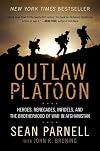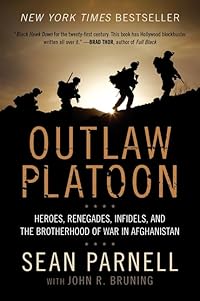
Outlaw Platoon: Heroes, Renegades, Infidels, and the Brotherhood of War in Afghanistan
by Sean Parnell
On This Page
Description
A riveting story of American fighting men, Outlaw Platoon is Lieutenant Sean Parnell's stunning personal account of the legendary U.S. Army's 10th Mountain Division's heroic stand in the mountains of Afghanistan.Acclaimed for its vivid, poignant, and honest recreation of sixteen brutal months of nearly continuous battle in the deadly Hindu Kesh, Outlaw Platoon is a Band of Brothers or We Were Soldiers Once and Young for the early 21st century—an action-packed, highly emotional true story show more of enormous sacrifice and bravery.
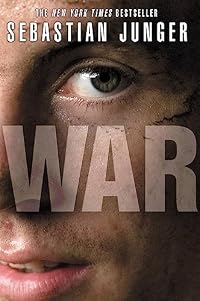
A magnificent account of heroes, renegades, infidels, and brothers, it stands with Sebastian Junger's War as one of the most important books to yet emerge from the heat, smoke, and fire of America's War in Afghanistan.
. show less
Tags
Recommendations

Member Reviews
Well written and timeless in its descriptions of small unit combat in Afghanistan from a US perspective. Those who read a lot of military history will find more than a few echoes of the Vietnam experience from a professional point of view. The author comes across as introspective and skilled, but there are some hints of misogyny and american exceptionalism that are unsurprising but no less troubling for it. Probably the best GWOT era small unit combat book I’ve read thus far. 3.75 stars.
If you expect books on contemporary US military history to be all gung ho and righteous posturing, this book will be a stunning surprise.
Sean Parnell has achieved in this diary something very rarely experienced in military diaries and histories from any era.
With humble eloquence and intelligent self-reflection, he takes us inside the mind and life of a platoon leader during deployment in one of the most hazardous conflict zones in recent history.
We get the privilege of sharing in what is unspoken at the time: the doubts, the bonds of brotherly love, the daily psychological battle that all front line soldiers must face but few ever speak of.
The book brims with insight that civilians and those off the front line would otherwise find show more impossible to imagine. In a refreshing turn for the genre, it is illuminating to see so much detailed coverage of the non-combat aspects of the mission.
An early passage tells of a first meeting with a local Afghan leader and we experience the clash of cultures at first hand, and the vast gulf of life experience that leaves Sean feeling way out of his depth despite all the 21st century training and equipment.
One cannot read this book without finding a deep respect for the men of the platoon.
There is humour, adrenaline-filled exhilaration, but also intense despair and sadness.
With grit and loyalty, and the moral courage of their leaders, it is clear they served with honour despite the circumstances into which they were thrown.
For any soldiers reading this book, I imagine it must inspire a desire to live up to such high standards.
For civilians, I challenge you not to be thinking: Is there not more we can do
to make the world a better place, so that in this day and age we no longer need such sacrifice? show less
Sean Parnell has achieved in this diary something very rarely experienced in military diaries and histories from any era.
With humble eloquence and intelligent self-reflection, he takes us inside the mind and life of a platoon leader during deployment in one of the most hazardous conflict zones in recent history.
We get the privilege of sharing in what is unspoken at the time: the doubts, the bonds of brotherly love, the daily psychological battle that all front line soldiers must face but few ever speak of.
The book brims with insight that civilians and those off the front line would otherwise find show more impossible to imagine. In a refreshing turn for the genre, it is illuminating to see so much detailed coverage of the non-combat aspects of the mission.
An early passage tells of a first meeting with a local Afghan leader and we experience the clash of cultures at first hand, and the vast gulf of life experience that leaves Sean feeling way out of his depth despite all the 21st century training and equipment.
One cannot read this book without finding a deep respect for the men of the platoon.
There is humour, adrenaline-filled exhilaration, but also intense despair and sadness.
With grit and loyalty, and the moral courage of their leaders, it is clear they served with honour despite the circumstances into which they were thrown.
For any soldiers reading this book, I imagine it must inspire a desire to live up to such high standards.
For civilians, I challenge you not to be thinking: Is there not more we can do
to make the world a better place, so that in this day and age we no longer need such sacrifice? show less
Outlaw platoon is the story of today's buffalo soldiers, engaged in futile and costly battles on the Afghan-Pakistan border. Commanding a platoon of Humvee-borne infantry from the 10th Mountain Division, 2LT Parnell experiences the typical journey of an enthusiastic and patriotic young man absorbed into a bureaucratic machine. He seems to slowly realize the futility of his mission but can still not acknowledge that his and his men's sacrifice is in vain. Even the comradeship shows marked boundaries. He describes some truly atrocious and anti-social behaviors allowed for by the.mismanaged and underled US military. Abandoned by politics in an unwinnable war, the buffalo soldiers carry on.
The vignettes of infantry firefights are show more well-crafted. Supplied and trained in Pakistan, the Afghan fighters are more than a match for the US soldiers. As the Afghans can select their battles in difficult terrain, the soldiers in the Humvees are in an uncomfortable position. Parnell's platoon quickly takes large casualties. Inflicting punishment on the Afghans offers little compensation as the region isn't short in supplying angry young men. The millions spent in killing a few hundred Taliban should have been used to rebuild bridges or improve US education. Pounding the Afghan mountains with America's arsenal only helps fill the coffers of the arms dealers and their lobbyists. The book could be easily turned into an updated remake of the movie Platoon. show less
The vignettes of infantry firefights are show more well-crafted. Supplied and trained in Pakistan, the Afghan fighters are more than a match for the US soldiers. As the Afghans can select their battles in difficult terrain, the soldiers in the Humvees are in an uncomfortable position. Parnell's platoon quickly takes large casualties. Inflicting punishment on the Afghans offers little compensation as the region isn't short in supplying angry young men. The millions spent in killing a few hundred Taliban should have been used to rebuild bridges or improve US education. Pounding the Afghan mountains with America's arsenal only helps fill the coffers of the arms dealers and their lobbyists. The book could be easily turned into an updated remake of the movie Platoon. show less
Deployed to Afghanistan in 2006, Parnell and his platoon would spend over a year at Forward Operating Base (FOB) Bermel, a remote outpost in eastern Afghanistan, mere kilometers from the Afghan-Pakistan border. The description of their area of operations paints a desolate picture of a rugged, mountainous landscape, untouched by time. Jagged cliffs and mountain ranges serve as both obstacles and enemy hideouts as Parnell and The Outlaws sortie out from FOB Bermel to try and staunch the flow of enemy personnel and materiel coming in from Pakistan. Far from the ragtag bunch of farmers and militia he had been led to believe, the enemy that they came up against (both local and foreign) was cunning, tactically proficient, well-equipped, show more experienced, and completely ruthless.
Over the course of their deployment, The Outlaws become engaged in several firefights. Thanks to the very descriptive and clear writing, it is very easy for the reader to get a good grasp of the geography of the battles. Parnell takes the time to put things into context, and as a result, the book has a very immersive feel to it. I could easily imagine myself riding in a humvee with Parnell and trying to endure the ungodly summer heat or the sheer terror of being caught in an ambush. Parnell discusses his thoughts and decision-making processes at length throughout the book and also tells us a great deal about the various personalities in the platoon and their idiosyncrasies. Again, the reader can sympathize with him as he struggles to make decisions and be a competent platoon leader. The constant banter between Parnell and his men serves to highlight the diversity of the group as well as provide some humor to an otherwise morbid story.
One thing I appreciated about Outlaw Platoon is the raw honesty of it. Parnell pulls no punches when it comes to describing the things he saw. Much like David Finkel’s The Good Soldiers, Outlaw Platoon is graphically violent. Blood is spilled, limbs are mangled by machine guns and grenades, and bodies are completely blown apart by bombs and missiles dropped from aircraft. One particularly harrowing chapter doesn’t even involve combat. The Outlaws come across a remote village where the children have been brutally tortured, mutilated, and raped by the enemy as a warning to not support the coalition. Parnell’s description of such imagery doesn’t require any dramatization or tabloid sensationalism, the horror speaks for itself.
Parnell struggles with reconciling the differences between his humanity and the requirements of surviving as a soldier. When it’s all said and done, and Parnell is safely back home after his tour, he puts into words what many of us cannot and simply concludes that his life has been changed forever, and there is no going back to the way things were before. Although Parnell had planned to make a career out of the Army, he ended up being medically retired at the rank of Captain due to the traumatic brain injuries he sustained in battle.
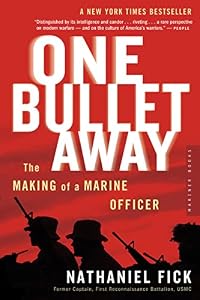
All in all, I’d give Outlaw Platoon a 5 out of 5. It is probably one of the best war memoirs I’ve read thus far. I’d put it up there with other modern war memoirs such as Nathaniel Fick’s One Bullet Away. The writing is clear, honest, and gives the reader a great deal of insight into Parnell’s mindset and experiences. While the battles the platoon fought will probably never go down in the annals of military history as the greatest, largest, or most decisive of battles ever won, Parnell shares with us his small portion of the war in Afghanistan. Outlaw Platoon is both touching and horrifying; filled with emotion and vivid imagery. It is not a book about foreign policy or strategy, but rather a look at the men of 3rd platoon 2/87 inf. 10 Mountain Division who fought in the mountains of eastern Afghanistan in 2006. show less
Over the course of their deployment, The Outlaws become engaged in several firefights. Thanks to the very descriptive and clear writing, it is very easy for the reader to get a good grasp of the geography of the battles. Parnell takes the time to put things into context, and as a result, the book has a very immersive feel to it. I could easily imagine myself riding in a humvee with Parnell and trying to endure the ungodly summer heat or the sheer terror of being caught in an ambush. Parnell discusses his thoughts and decision-making processes at length throughout the book and also tells us a great deal about the various personalities in the platoon and their idiosyncrasies. Again, the reader can sympathize with him as he struggles to make decisions and be a competent platoon leader. The constant banter between Parnell and his men serves to highlight the diversity of the group as well as provide some humor to an otherwise morbid story.
One thing I appreciated about Outlaw Platoon is the raw honesty of it. Parnell pulls no punches when it comes to describing the things he saw. Much like David Finkel’s The Good Soldiers, Outlaw Platoon is graphically violent. Blood is spilled, limbs are mangled by machine guns and grenades, and bodies are completely blown apart by bombs and missiles dropped from aircraft. One particularly harrowing chapter doesn’t even involve combat. The Outlaws come across a remote village where the children have been brutally tortured, mutilated, and raped by the enemy as a warning to not support the coalition. Parnell’s description of such imagery doesn’t require any dramatization or tabloid sensationalism, the horror speaks for itself.
Parnell struggles with reconciling the differences between his humanity and the requirements of surviving as a soldier. When it’s all said and done, and Parnell is safely back home after his tour, he puts into words what many of us cannot and simply concludes that his life has been changed forever, and there is no going back to the way things were before. Although Parnell had planned to make a career out of the Army, he ended up being medically retired at the rank of Captain due to the traumatic brain injuries he sustained in battle.
All in all, I’d give Outlaw Platoon a 5 out of 5. It is probably one of the best war memoirs I’ve read thus far. I’d put it up there with other modern war memoirs such as Nathaniel Fick’s One Bullet Away. The writing is clear, honest, and gives the reader a great deal of insight into Parnell’s mindset and experiences. While the battles the platoon fought will probably never go down in the annals of military history as the greatest, largest, or most decisive of battles ever won, Parnell shares with us his small portion of the war in Afghanistan. Outlaw Platoon is both touching and horrifying; filled with emotion and vivid imagery. It is not a book about foreign policy or strategy, but rather a look at the men of 3rd platoon 2/87 inf. 10 Mountain Division who fought in the mountains of eastern Afghanistan in 2006. show less
As an attempt to get into the lives and the minds of the young men fighting the war in Afghanistan, this book works fairly well. These are the stories of very young men -- I want to call them boys, but truly can't. What makes a man face death and his overwhelming fear? Lt. Parnell concludes it's love - and sees that his job, as the leader of the platoon, is to make sure the chemistry is right to support the love of these men for one another. In the end, though, it's futile. They can win individual battles against the Afghan and Taliban but there is an unending supply of new enemy soldiers, well equipped and just as determined to win. You have to wonder about the sense in conducting such a war, and in the judgment of men who refuse show more medical care when fluid from your brain is leaking out from your ears and nose... I found this interesting, both in terms of the description of the situation on the forward lines in Afghanistan and in the way it let us see how men become and remain warriors. show less
If you expect books on contemporary US military history to be all gung ho and righteous posturing, this book will be a stunning surprise.
Sean Parnell has achieved in this diary something very rarely experienced in military diaries and histories from any era.
With humble eloquence and intelligent self-reflection, he takes us inside the mind and life of a platoon leader during deployment in one of the most hazardous conflict zones in recent history.
We get the privilege of sharing in what is unspoken at the time: the doubts, the bonds of brotherly love, the daily psychological battle that all front line soldiers must face but few ever speak of.
The book brims with insight that civilians and those off the front line would otherwise find show more impossible to imagine. In a refreshing turn for the genre, it is illuminating to see so much detailed coverage of the non-combat aspects of the mission.
An early passage tells of a first meeting with a local Afghan leader and we experience the clash of cultures at first hand, and the vast gulf of life experience that leaves Sean feeling way out of his depth despite all the 21st century training and equipment.
One cannot read this book without finding a deep respect for the men of the platoon.
There is humour, adrenaline-filled exhilaration, but also intense despair and sadness.
With grit and loyalty, and the moral courage of their leaders, it is clear they served with honour despite the circumstances into which they were thrown.
For any soldiers reading this book, I imagine it must inspire a desire to live up to such high standards.
For civilians, I challenge you not to be thinking: Is there not more we can do
to make the world a better place, so that in this day and age we no longer need such sacrifice? show less
Sean Parnell has achieved in this diary something very rarely experienced in military diaries and histories from any era.
With humble eloquence and intelligent self-reflection, he takes us inside the mind and life of a platoon leader during deployment in one of the most hazardous conflict zones in recent history.
We get the privilege of sharing in what is unspoken at the time: the doubts, the bonds of brotherly love, the daily psychological battle that all front line soldiers must face but few ever speak of.
The book brims with insight that civilians and those off the front line would otherwise find show more impossible to imagine. In a refreshing turn for the genre, it is illuminating to see so much detailed coverage of the non-combat aspects of the mission.
An early passage tells of a first meeting with a local Afghan leader and we experience the clash of cultures at first hand, and the vast gulf of life experience that leaves Sean feeling way out of his depth despite all the 21st century training and equipment.
One cannot read this book without finding a deep respect for the men of the platoon.
There is humour, adrenaline-filled exhilaration, but also intense despair and sadness.
With grit and loyalty, and the moral courage of their leaders, it is clear they served with honour despite the circumstances into which they were thrown.
For any soldiers reading this book, I imagine it must inspire a desire to live up to such high standards.
For civilians, I challenge you not to be thinking: Is there not more we can do
to make the world a better place, so that in this day and age we no longer need such sacrifice? show less
Young men confronted with a vicious enemy in Afghanistan. What really interested me in the battles memoir was the Pakistan-supported Haqqani network melting away to safety behind the nearby border and linked with Iran. The platoon itself shows true resolve and "grit" earning respectful fear from the enemy as the "green skulls". The unfortunate duplicity of a native interpreter points out the perils working with elements of the local population.
With the author's adoration of the Harry Potter and excitement over Dementors, it makes me aware of how young and lacking in life experience our warriors may be. Of course, if I was in the author's role at the same age, I probably would have been going on about LOTR and the Nazgûl.
With the author's adoration of the Harry Potter and excitement over Dementors, it makes me aware of how young and lacking in life experience our warriors may be. Of course, if I was in the author's role at the same age, I probably would have been going on about LOTR and the Nazgûl.
Members
- Recently Added By
Lists

Afghanistan
16 works; 1 member
Author Information
10 Works 788 Members
All Editions
Common Knowledge
- Original publication date
- 2012
- Blurbers
- Cussler, Clive; Coughlin, Jack; West, Bing; Thor, Brad; Sites, Kevin; Pressfield, Steven (show all 10); O'Brien, Tim; Luttrell, Marcus; Kyle, Chris; Stanton, Doug
Classifications
Statistics
- Members
- 416
- Popularity
- 73,823
- Reviews
- 18
- Rating
- (4.20)
- Languages
- Dutch, English, German, Swedish
- Media
- Paper, Audiobook, Ebook
- ISBNs
- 7
- ASINs
- 6