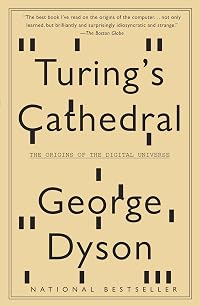
Turing's Cathedral: The Origins of the Digital Universe
by George Dyson
On This Page
Description
"Legendary historian and philosopher of science George Dyson vividly re-creates the scenes of focused experimentation, incredible mathematical insight, and pure creative genius that gave us computers, digital television, modern genetics, models of stellar evolution--in other words, computer code. In the 1940s and '50s, a group of eccentric geniuses--led by John von Neumann--gathered at the newly created Institute for Advanced Study in Princeton, New Jersey. Their joint project was the show more realization of the theoretical universal machine, an idea that had been put forth by mathematician Alan Turing. This group of brilliant engineers worked in isolation, almost entirely independent from industry and the traditional academic community. But because they relied exclusively on government funding, the government wanted its share of the results: the computer that they built also led directly to the hydrogen bomb. George Dyson has uncovered a wealth of new material about this project, and in bringing the story of these men and women and their ideas to life, he shows how the crucial advancements that dominated twentieth-century technology emerged from one computer in one laboratory, where the digital universe as we know it was born"-- "Legendary historian and philosopher of science George Dyson vividly re-creates the scenes of focused experimentation, incredible mathematical insight, and pure creative genius that gave us computers, digital television, modern genetics, models of stellar evolution--in other words, computer code"-- show lessTags
Recommendations
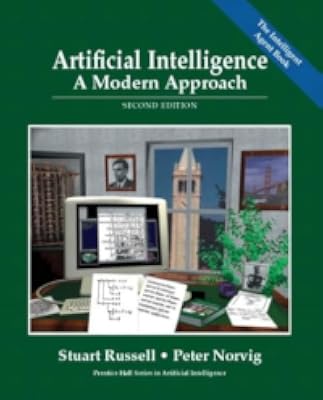
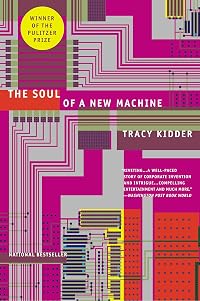
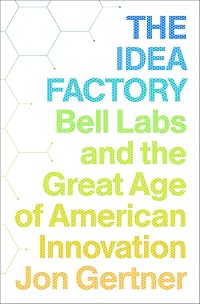
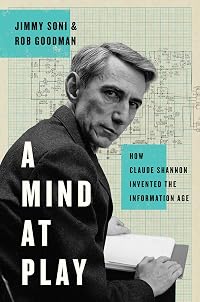
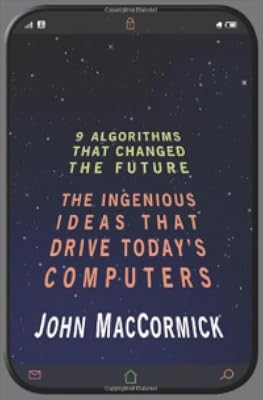
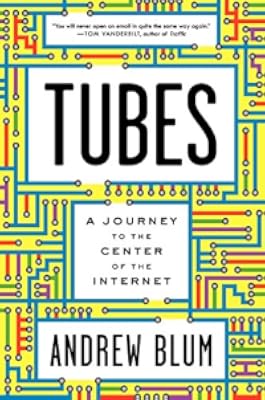
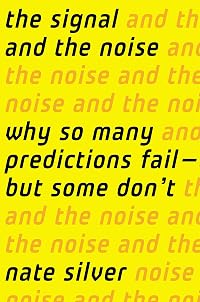
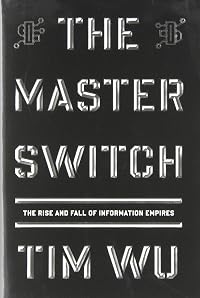
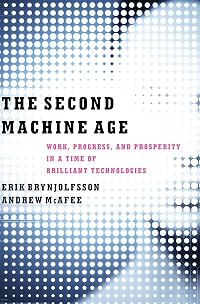
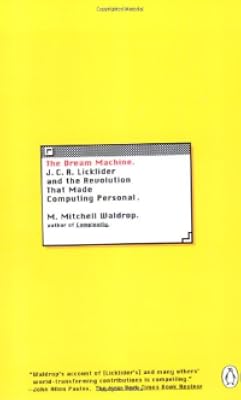
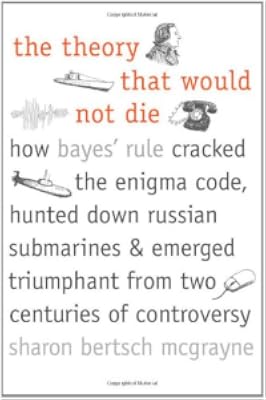
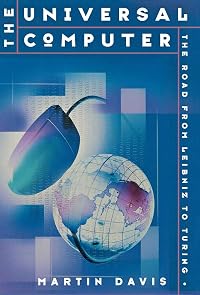
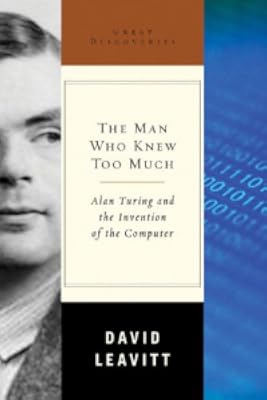
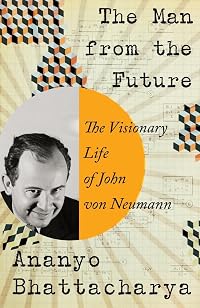
Member Recommendations
nillacat Well-researched and well-told histories of early computers and the fascinating people who designed and built them.
Member Reviews
This book is an illuminating history of how/why the first computers were built and the people who did it. It is also a survey of the problems they were destined to solve. And while these short descriptions are accurate, it does little to describe how powerful this book is. It set off a chain reaction in my intellectual life.
Why? It conveys how special computer technology is, how many people struggled to make it work, and how cheaply and easily we, today, can gain access to this medium of computation and thought. It also shares a vision for computers that does not come across in the mainstream -- a vision that mathematicians dreamed not so long ago. It intimately ties computers to our own birth/death cycles via the exploration of DNA and show more the development of the atom bomb (computers were funded to perfect destruction, not just power desktop or mobile apps). This and many other ideas and events are woven together into an awe-inspiring and personal story of the author’s childhood.
I enjoy many other things about this book. I like that you won’t find any mention of Microsoft, Apple, or other current players in computing (nor will you learn much about the title character, Turing, unfortunately). The book rightly focuses on the past, Princeton, the EDVAC, and the people who transported these ideas across the physical barrier (sometimes with the use of bicycle wheels and wire). I also like the liberties Dyson takes to create metaphors for technology; they make the subject a lot less dry and add a sense of wonder.
Dyson admirably brings in many viewpoints from women and people who normally are not talked about in association with technology. He speaks about the native Americans that inhabited Princeton and even writes about what happened to the natives of Enewetok before it was annihilated by the first hydrogen bomb.
So I’ve convinced you that I’m a fan, but this book does deserve some criticism. The audience of this book is not clear. Dyson alludes to complex ideas in passing and I imagine some would be caught off guard and discouraged from reading more. The chapter on Godel was especially esoteric (though motivating). I also wish there had been more references offered for self-study of computer engineering (this is a good one https://www.librarything.com/work/7767819).
People have pointed to other faults of the book and I disagree with some of them. First, this book is not misleading. Some poor reviews complain that details of the architecture and planning phases of EDVAC aren't included. There is no need for this since the author is hitting on the main conceptual developments. Some also say that mysticism pervades this book. I would argue that is an exaggeration and any hint of that tone actually helps us remember how special computers are. I certainly feel some "magic" and emotion in the fact that numbers and transistors have been able to conquer so much of our world. Others also say the writing is vague and the story has too many loose ends. I think Dyson leaves loose ends to pique your curiosity so you’ll find more sources. This is not an encyclopedic reference, rather a personal perspective. Finally, some accuse this book of being scattered and random. Know that it is organized thematically, not chronologically. This does cause the story to jump in time, but the overall organization is great if you're more interested in making connections.
Give this book a chance. You may not like it at first, but chapters can often be read independently and the historical accounts are eye-opening. They might lead you on a path like it did for me. show less
Why? It conveys how special computer technology is, how many people struggled to make it work, and how cheaply and easily we, today, can gain access to this medium of computation and thought. It also shares a vision for computers that does not come across in the mainstream -- a vision that mathematicians dreamed not so long ago. It intimately ties computers to our own birth/death cycles via the exploration of DNA and show more the development of the atom bomb (computers were funded to perfect destruction, not just power desktop or mobile apps). This and many other ideas and events are woven together into an awe-inspiring and personal story of the author’s childhood.
I enjoy many other things about this book. I like that you won’t find any mention of Microsoft, Apple, or other current players in computing (nor will you learn much about the title character, Turing, unfortunately). The book rightly focuses on the past, Princeton, the EDVAC, and the people who transported these ideas across the physical barrier (sometimes with the use of bicycle wheels and wire). I also like the liberties Dyson takes to create metaphors for technology; they make the subject a lot less dry and add a sense of wonder.
Dyson admirably brings in many viewpoints from women and people who normally are not talked about in association with technology. He speaks about the native Americans that inhabited Princeton and even writes about what happened to the natives of Enewetok before it was annihilated by the first hydrogen bomb.
So I’ve convinced you that I’m a fan, but this book does deserve some criticism. The audience of this book is not clear. Dyson alludes to complex ideas in passing and I imagine some would be caught off guard and discouraged from reading more. The chapter on Godel was especially esoteric (though motivating). I also wish there had been more references offered for self-study of computer engineering (this is a good one https://www.librarything.com/work/7767819).
People have pointed to other faults of the book and I disagree with some of them. First, this book is not misleading. Some poor reviews complain that details of the architecture and planning phases of EDVAC aren't included. There is no need for this since the author is hitting on the main conceptual developments. Some also say that mysticism pervades this book. I would argue that is an exaggeration and any hint of that tone actually helps us remember how special computers are. I certainly feel some "magic" and emotion in the fact that numbers and transistors have been able to conquer so much of our world. Others also say the writing is vague and the story has too many loose ends. I think Dyson leaves loose ends to pique your curiosity so you’ll find more sources. This is not an encyclopedic reference, rather a personal perspective. Finally, some accuse this book of being scattered and random. Know that it is organized thematically, not chronologically. This does cause the story to jump in time, but the overall organization is great if you're more interested in making connections.
Give this book a chance. You may not like it at first, but chapters can often be read independently and the historical accounts are eye-opening. They might lead you on a path like it did for me. show less
I might have easily given this book four stars if Dyson could have stuck to history instead of indulging himself in inane speculations, and commentaries that are sadly meant to sound profound. The connections he draws between completely unrelated aspects of technology and biology are so strained that whenever I read a particularly grievous one, I'm forced to put the book down and walk around the room until the waves of stupidity subside a bit. For example, at one point Dyson asks us to consider whether digital computers might be "optimizing our genetic code ... so we can better assist them." At another he explains the reason we can't predict the evolution of the digital universe is because algorithms that predicted airplane movements in show more WW2 had to be normalized to the reference frame of the target... or something? Throughout the entire book there's a complete disconnect between the technical nature of the things he describes and the vague abstractions that he twists into obscenely trite metaphors.
Dyson seems to live in some sort of science-fiction wonderland where every computer program is a kind of non-organic organism. He calls code "symbiotic associations of self-reproducing numbers" that "evolved into collector societies, bringing memory allocations and other resources back to the collective nest." They are active, autonomous entities which "learned how to divide into packets, traverse the network, correct any errors suffered along the way, and reassemble themselves at the other end." By the end of the book I'm not even sure if Dyson means this as a metaphor - he appears to genuinely believe that it's merely a matter of perspective.
The truth is, if every human died tomorrow and the internet was left to run from now to infinity, not a single advance would be made in the state of computing. The viruses would quickly burn themselves away, the servers would grind monotonously at their maintenance routines, and the Google webcrawlers would stoically trudge through every porn site on Earth, an infinite number of times.
Dyson might respond that programs integrate humans as a symbiotic part of their evolution, but in that case you could say the same thing about clothing, music, or furniture. In this light the IKEA franchise must be viewed as a great self-replicating organism, conscripting humans in the propagation of its global hegemony of coffee tables. show less
Dyson seems to live in some sort of science-fiction wonderland where every computer program is a kind of non-organic organism. He calls code "symbiotic associations of self-reproducing numbers" that "evolved into collector societies, bringing memory allocations and other resources back to the collective nest." They are active, autonomous entities which "learned how to divide into packets, traverse the network, correct any errors suffered along the way, and reassemble themselves at the other end." By the end of the book I'm not even sure if Dyson means this as a metaphor - he appears to genuinely believe that it's merely a matter of perspective.
The truth is, if every human died tomorrow and the internet was left to run from now to infinity, not a single advance would be made in the state of computing. The viruses would quickly burn themselves away, the servers would grind monotonously at their maintenance routines, and the Google webcrawlers would stoically trudge through every porn site on Earth, an infinite number of times.
Dyson might respond that programs integrate humans as a symbiotic part of their evolution, but in that case you could say the same thing about clothing, music, or furniture. In this light the IKEA franchise must be viewed as a great self-replicating organism, conscripting humans in the propagation of its global hegemony of coffee tables. show less
An interesting but somewhat unfulfilling book, focused on the development of one of the first computers at the Institute of Advanced Studies in Princeton, NJ. As with many historians, Dyson errs on the side of trying to cram in as many of his research notes and extraneous facts as possible. Many would have been best left as footnotes/endnotes to avoid cluttering up the narrative, or simply omitted as they add nothing to the understanding of the subject under discussion. He also didn't bother to stick to the topic, veering off into long asides about marginally related topics, such as the history of lands of what would become central New Jersey, from the native tribes through William Penn, the Revolutionary War, etc. None of which have show more anything to do with the actual topic of the book.
On the plus side, Dyson clearly shows how the development of the modern computer was tied directly to the development of the atom bomb and the hydrogen bomb. Not only were the calculations vital to the bomb project, but many of the same people were involved in both. Despite the title, the main character is John Von Neumann, a brilliant and fascinating person who tends not to receive the recognition he deserves. The anecdotes of his life and descriptions of his contributions to a variety of fields make the book worth reading. show less
On the plus side, Dyson clearly shows how the development of the modern computer was tied directly to the development of the atom bomb and the hydrogen bomb. Not only were the calculations vital to the bomb project, but many of the same people were involved in both. Despite the title, the main character is John Von Neumann, a brilliant and fascinating person who tends not to receive the recognition he deserves. The anecdotes of his life and descriptions of his contributions to a variety of fields make the book worth reading. show less
In large part a nonlinear biography of John von Neumann and history of the Institute for Advanced Study in Princeton, where von Neumann in the late 1940s did his influential-ever-after "architecting" of the MANIAC computer. Woven in are discussions of many relevant topics such as Gödel/Turing metamathematics, early ways of programming, Monte Carlo approximation, the theory of self-reproducing automata, and today's accelerating trend towards a compu-singularity. (Why not mention the obliteration of privacy, Mr Dyson?) Overwhelming everything, however, is the dreary -- nay, sick and ghastly -- fact that nuclear weaponry and other military evils were the main driving force behind the building of the first electronic digital computers with show more Turing universality. A powerful, discerning, penetrating book. show less
I had an issue with this non-fiction, but also a whole lot of love.
So this is about the mathematicians who heralded the whole computer movement. You know, the OTHER, more disreputable and crazy smart people like Von Neumann, Gödel, and all the other nutters like Turing who ushered in the computer age from just a thought experiment into a hand-made lab and later into the co-authors of the nuclear age.
Yeah. THOSE crazy nutters. The ones that ran enough physics programs on their automatic machines to model nuclear explosions and bring about the bomb. Computers, and not the poor women (and a few men) who got paid to crunch math by hand for years, are the real reason we have the nuclear age. And also why we have genetic sciences.
Pretty show more obvious, I know, but still, these guys are some unsung heroes. Just programmers. Sheesh. Whatever.
The book is full of love. I love the people. And then there was a wholly appropriate section expounding on science fiction and the future of AIs and I LOVED that, too, especially the form a realistic alien might take.
So what issues did I have?
WAY too much time was spent on the schools. Early schools, history, blah blah blah. Sure. Colleges are important and such, but I lost my caring factor until a while after we were introduced to Von Neumann. And what an interesting guy he was! :)
A side issue I should have more problem with is the role of women in this non-fiction, but like real history, too much idiocy prevents half our population from having more active roles. I'm not too fond of how the women here were relegated to being facilitators, suicidal wives, or footnotes to Crick and Watson. But let's be real here. We have a horrible track record at pushing these people aside in reality, not just in history.
I can appreciate the minds SHOWN HERE while still wishing the other minds had a chance. It didn't diminish my fascination. I can have MORE fascination to spare elsewhere. :)
So. Maybe not the best non-fiction I've ever read, but I did learn a hell of a lot about the people who ushered in the computer age and it's quite a story. And honestly, it makes for a more realistic story than the others I've read that focused more on WWII encryption engines as the real focus and impetus for computers. Making nukes is pretty damn huge. And obvious. :) show less
So this is about the mathematicians who heralded the whole computer movement. You know, the OTHER, more disreputable and crazy smart people like Von Neumann, Gödel, and all the other nutters like Turing who ushered in the computer age from just a thought experiment into a hand-made lab and later into the co-authors of the nuclear age.
Yeah. THOSE crazy nutters. The ones that ran enough physics programs on their automatic machines to model nuclear explosions and bring about the bomb. Computers, and not the poor women (and a few men) who got paid to crunch math by hand for years, are the real reason we have the nuclear age. And also why we have genetic sciences.
Pretty show more obvious, I know, but still, these guys are some unsung heroes. Just programmers. Sheesh. Whatever.
The book is full of love. I love the people. And then there was a wholly appropriate section expounding on science fiction and the future of AIs and I LOVED that, too, especially the form a realistic alien might take.
So what issues did I have?
WAY too much time was spent on the schools. Early schools, history, blah blah blah. Sure. Colleges are important and such, but I lost my caring factor until a while after we were introduced to Von Neumann. And what an interesting guy he was! :)
A side issue I should have more problem with is the role of women in this non-fiction, but like real history, too much idiocy prevents half our population from having more active roles. I'm not too fond of how the women here were relegated to being facilitators, suicidal wives, or footnotes to Crick and Watson. But let's be real here. We have a horrible track record at pushing these people aside in reality, not just in history.
I can appreciate the minds SHOWN HERE while still wishing the other minds had a chance. It didn't diminish my fascination. I can have MORE fascination to spare elsewhere. :)
So. Maybe not the best non-fiction I've ever read, but I did learn a hell of a lot about the people who ushered in the computer age and it's quite a story. And honestly, it makes for a more realistic story than the others I've read that focused more on WWII encryption engines as the real focus and impetus for computers. Making nukes is pretty damn huge. And obvious. :) show less
Title should read "Von Neumann machines: The human stories". You're welcome dear publisher.
I hope you've already read and know the history of the creation of the computer because this book dispenses with all that nonsense and instead concentrates on absolutely inconsequential trivia. Parties, social interactions, immigration issues, divorces, building houses, fixing cars and all kinds of irrelevant waffle that is day to day life pushing to the side exploding nuclear bombs.
It's nice to see the background to the revolution and I appreciate it but it's like a misfocused photo where the face is completely blurry but by god that concrete wall behind the subject has razor sharp detail. I cannot but feel frustrated every time the author wraps show more up the technical side with a glib and borderline misleading paragraph (as it's glossing over any and all details) only to waste the rest of the chapter recounting sleeping arrangements and letter writing. I care about those things too but not that much. show less
I hope you've already read and know the history of the creation of the computer because this book dispenses with all that nonsense and instead concentrates on absolutely inconsequential trivia. Parties, social interactions, immigration issues, divorces, building houses, fixing cars and all kinds of irrelevant waffle that is day to day life pushing to the side exploding nuclear bombs.
It's nice to see the background to the revolution and I appreciate it but it's like a misfocused photo where the face is completely blurry but by god that concrete wall behind the subject has razor sharp detail. I cannot but feel frustrated every time the author wraps show more up the technical side with a glib and borderline misleading paragraph (as it's glossing over any and all details) only to waste the rest of the chapter recounting sleeping arrangements and letter writing. I care about those things too but not that much. show less
A very detailed and dragging history of the early computers, told through the lens of Alan Turing, John von Neumann (especially him), and the Institute for Advanced Study in Princeton. Less breezy and interesting than, say, Gleick's The Information, which cover some of the same ground. The capsule biographies are neat, but the sheer number of "characters" begins to confuse. The detail of early computer structure, programming, and usage is boggling. Still, as a historian I appreciated some of the impact these folks have and how it fit into the history of the time. If I was more oriented toward engineering and computer science, and had appreciable skills in such areas, maybe I would find it way more interesting and smooth. Still, an show more important book for understanding our computer-oriented world. show less
Members
- Recently Added By
Published Reviews
added by shervinafshar
Lists

2013 Notable Books for Adults
26 works; 5 members

Top Five Books of 2016
795 works; 229 members
Author Information

5+ Works 1,687 Members
Some Editions
Awards and Honors
Awards
Common Knowledge
- Original publication date
- 2012
- People/Characters
- Alan Turing; John von Neumann
- Important places
- Princeton, New Jersey, USA
- Epigraph
- It was not made for those who sell oil or sardines . . .
--G. W. Leibniz - First words
- At 10:30 P.M. on March 3, 1953, in a one-story brick building at the end of Olden Lane in Princeton, New Jersey, Italian Norwegian mathematical biologist Nils Aall Barricelli inoculated a 5-kilobyte digital universe with rand... (show all)om numbers generated by drawing playing cards from a shuffled deck.
- Quotations
- A fine line separates approximation from simulation, and developing a model is the better part of assuming control. So as not to shoot down commercial airliners, the SAGE (Semi-Automatic Ground Environment) air defense system... (show all) that developed out of MIT’s Project Whirlwind in the 1950’s kept track of all passenger flights, developing a real-time model that led to the SABRE (Semi-Automatic Business Related Environment) airline reservation system that still controls much of the passenger traffic today, Google sought to gauge what people were thinking and became what people were thinking, Facebook sought to map the social graph, and became the social graph. Algorithms developed to model flucutuations in financial markets gained control of those markets, leaving human traders behind. “Toto,” said Dorothy in The Wizard of Oz. “I’ve a feeling we’re not in Kansas anymore.” What American termed “artificial intelligence” the British termed “mechanical intelligence,” a designation that Alan Turing considered more precise. We began by observing intelligent behavior (such as language, vision, goal-seeking, and pattern-recognition) in organisms, and struggled to reproduce this behavior by encoding it into logically deterministic machines. We knew from the beginning that this logical, intelligent behavior evident in organisms was the result of fundamentally statistical, probabilistic processes, but we ignored that (or left the details to the biologists), while building “models” of intelligence-with mixed success. Through large-scale statistical, probabilistic information processing, real progress is being made on some of the hard problems, such as speech recognition, language translation, protein folding, and stock market prediction – even if only for the next millisecond, now enough time to compete a trade. How can this be intelligence, since we are just throwing statistical, probabilistic horsepower at the problem and seeing what sticks, without an underlying understanding? There’s no model. And how does a brain do it? With a model? These are not models of intelligent processes. They ARE intelligent processes.
- Last words
- (Click to show. Warning: May contain spoilers.)The note accompanying the cards (addressed to "Mr. Barricelli" and signed "TWL") concludes with the following statement:
"There must be something about this code that you haven't explained yet."
Classifications
- Genres
- Technology, Nonfiction, Science & Nature, General Nonfiction, History, Biography & Memoir
- DDC/MDS
- 004.09 — Computer science, information & general works Computer science, knowledge & systems Computer science standard subdivisions History, geographic treatment, biography
- LCC
- QA76.17 .D97 — Science Mathematics Mathematics Instruments and machines Calculating machines Electronic computers. Computer science
- BISAC
Statistics
- Members
- 1,189
- Popularity
- 20,999
- Reviews
- 34
- Rating
- (3.54)
- Languages
- 5 — English, German, Italian, Japanese, Spanish
- Media
- Paper, Audiobook, Ebook
- ISBNs
- 20
- ASINs
- 11