On This Page
Description
He needed to get out of his office, soak up the atmosphere and discover different worlds with each new investigation. He needed the cafes and bars where he so often ended up waiting, at the counter, drinking a beer or a calvados depending on the circumstances. He needed to do battle patiently in his office with a suspect who refused to talk and sometimes, after hours and hours, he'd obtain a dramatic confession. In Simenon's final novel featuring Inspector Maigret, the famous detective show more reaches a pivotal moment in his career, contemplating his past and future as he delves into the Paris underworld one last time, to investigate the case of a missing lawyer. show lessTags
Recommendations







































Member Reviews
I so enjoyed my first experience of the Maigret series of French detective novels that I quickly moved on to a second, despite a stack (physical and virtual) of other books in various media waiting for me to return to them. Having been told that I could essentially read these books -- of which there are 75 -- in any order, I chose this one almost at random. The extent to which there was any logic involved in the selection, I suppose the fact that it was available played a role in the decision, as did the fact that since the title included another adult (this Mr. Charles), I presumed that the story would differ distinctively from the previous volume I'd read, Maigret Goes to School, which had prominent roles for children.
It turns out show more that I have now read the last book in the series. I'll assume until convinced otherwise that the decision Maigret makes at the opening of the book is a significant one that would have carried more weight had I read more than one other book about him previously. Otherwise, this book starts and ends like any other book in such a series, and so, well, I guess this wasn't too much of a continuity banana slip on my part.
The book tells the story of a drunk society woman whose philandering husband, an accomplished professional, goes missing. We spend much of the book not knowing if he's alive or dead, and slowly learning about his past, and that of his psychologically remote wife. As with the previous book, I was most impressed by just how much people can drink and still get their work done, a fact set in contrast by a prominent character who drinks even more than all the other characters combined. show less
It turns out show more that I have now read the last book in the series. I'll assume until convinced otherwise that the decision Maigret makes at the opening of the book is a significant one that would have carried more weight had I read more than one other book about him previously. Otherwise, this book starts and ends like any other book in such a series, and so, well, I guess this wasn't too much of a continuity banana slip on my part.
The book tells the story of a drunk society woman whose philandering husband, an accomplished professional, goes missing. We spend much of the book not knowing if he's alive or dead, and slowly learning about his past, and that of his psychologically remote wife. As with the previous book, I was most impressed by just how much people can drink and still get their work done, a fact set in contrast by a prominent character who drinks even more than all the other characters combined. show less
Maigret and Monsieur Charles is the last of the new Penguin series of English translations to have been published - it has taken 6 years. I remember buying the first one, Pietr the Lavian, in Waterstone’s by Birmingham New Street Station. At the opening of Maigret and Monsieur Charles, you know instantly that Maigret has lost his mojo. Offered the post of the Chief of the Police Judiciaire, he turns it down. He is not office based. He wants to be involved in the day to day investigation. A women, an alcoholic with strange mannerisms, catches his attention. One wonders whether he is atttacted to her. He visits her in her lavish home. She is in a dressing gown. The story revolves around her husband, a womaniser, who has been missing for show more a month. Maigret with his detective visits late night clubs and bars to see if anyone has seen him. He is not sure what to wear. The clubs don’t sell beer. He doesn’t like that. He remains unhappy throughout the book and investigation. Page 104 is interesting. ‘Because each time I am caught up in a human experience’. If this isn't there any more, it is understandable that he can't continue. show less
A nice, lateish, Maigret, which (as they so often do) turns out to be all about Maigret slowly attempting to work out what is going on in the mind of a middle-aged woman. In this case the lady has reported her husband missing: the question is whether he has been murdered or just gone off with a night-club hostess. There's a subplot about Maigret turning down a promotion, but that doesn't really go anywhere; all the interest is in the interaction between Maigret and Mme Sabin-Levesque.
The Final Maigret
Review of the Penguin Classics paperback (January 2020) of a new translation* by Ros Schwartz of the French language original 'Maigret et monsieur Charles' (1972)
Maigret and Monsieur Charles is the final Maigret novel and ends the series on somewhat of an ambiguous note. Maigret has been edging towards retirement for the past several novels with his friend Dr. Pardon telling him cut back his tobacco and alcohol intake and his even enjoying a rest cure by 'taking the waters' during Maigret in Vichy (Maigret #67 - 1968). In Maigret and the Loner (Maigret #73 - 1971) his age was given as being 55 years old, although in book time he had already worked for 42 years since the first serialization of Pietr the Latvian (Maigret show more #1) in 1929.
The novel opens with an offer for Maigret to become the Head of the Police Judiciare, obviously a pre-retirement promotion and reward for a successful long-standing career of service. The Chief Inspector is reluctant to give up his investigative duties for an administrative position however and distracts himself with a new case. A Madame Sabin-Levesque comes to his office to report her husband the lawyer Gérard Sabin-Levesque as missing, but this is after a period of one month since his actual disappearance. Maigret and his team discover that the prominent lawyer led a second life under the pseudonym of Monsieur Charles, and made a habit of periodically disappearing for several days for extra-marital liaisons. Madame Sabin-Levesque appears to have a second life of her own and is cracking under the stress of the situation and is descending into alcoholism.
Maigret solves the case with his usual understanding of human nature and his sympathy for the suspect, a definite characteristic of the late Maigrets. The novel and the series ends with him determined not to accept the offered promotion but to continue in his Chief Inspector position.
Georges Simenon himself retired from novel writing with this book published in 1972, and instead worked on his memoirs over the course of 21 Dictées (French: Dictations) (1975-1981). There are only 12 currently (as of late May 2022) listed at GR's Listopia for the Simenon Dictées Series but French Wikipedia lists all 21 at Les Dictées.
See book cover at http://www.trussel.com/maig/covers/charles4.jpg
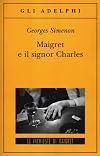
The cover of the original French language edition of "Maigret and Monsieur Charles" as published by Presses de la Cité, France 1972. Image sourced from Maigret of the Month.
I read the first dozen Maigret novels earlier this year and then intended to proceed with several of Simenon's romans durs (French: hard novels) which he considered his more serious work, as opposed to the lighter fare involving the Chief Inspector. The non-Maigrets are more difficult to source however and there seem to be less than a dozen in current editions from Penguin Classics and a few others from NYRB (New York Review of Books). Anyway, to keep the Simenon pipeline flowing, I thought I'd add a dozen or so of the late Maigrets to my ongoing Simenon reading survey.
This is Maigret #75 in both the recent Penguin Classics series of new translations (2013-2020) of the Inspector Maigret novels and in the previous standard Maigret Series Listopia as listed on Goodreads. There are variances in the numbering of some of the earlier novels otherwise.
Trivia and Links
* The earlier English translation by Marianne Alexandre Sinclair also gave the title as Maigret and Monsieur Charles (Hamish Hamilton, 1973 & later reprints).
There is extensive background and a detailed plot description (spoilers obviously) about Maigret and Monsieur Charles at Maigret of the Month.
Maigret and Monsieur Charles has been adapted for television twice:
The first adaptation was in a 1977 French language television episode of the long-running series
Les enquêtes du commissaire Maigret (1967-1990) starring Jean Richard as Inspector Maigret.
The second adaptation was in a 1978 Japanese language television episode 警視と最後の事件 (Keishi to saigo no jiken/The Inspector and the Last Case) of Tokyo Megure Keishi (Inspector Megure of Tokyo) (1976-1978) starring Kinya Aikawa as Inspector Megure. This series reimagines the Maigret stories taking place in then current day 1970s Japan.
There is an article about the Penguin Classics re-translations of the Inspector Maigret novels at Maigret, the Enduring Appeal of the Parisian Sleuth by Paddy Kehoe, RTE, August 17, 2019. show less
Review of the Penguin Classics paperback (January 2020) of a new translation* by Ros Schwartz of the French language original 'Maigret et monsieur Charles' (1972)
Maigret and Monsieur Charles is the final Maigret novel and ends the series on somewhat of an ambiguous note. Maigret has been edging towards retirement for the past several novels with his friend Dr. Pardon telling him cut back his tobacco and alcohol intake and his even enjoying a rest cure by 'taking the waters' during Maigret in Vichy (Maigret #67 - 1968). In Maigret and the Loner (Maigret #73 - 1971) his age was given as being 55 years old, although in book time he had already worked for 42 years since the first serialization of Pietr the Latvian (Maigret show more #1) in 1929.
The novel opens with an offer for Maigret to become the Head of the Police Judiciare, obviously a pre-retirement promotion and reward for a successful long-standing career of service. The Chief Inspector is reluctant to give up his investigative duties for an administrative position however and distracts himself with a new case. A Madame Sabin-Levesque comes to his office to report her husband the lawyer Gérard Sabin-Levesque as missing, but this is after a period of one month since his actual disappearance. Maigret and his team discover that the prominent lawyer led a second life under the pseudonym of Monsieur Charles, and made a habit of periodically disappearing for several days for extra-marital liaisons. Madame Sabin-Levesque appears to have a second life of her own and is cracking under the stress of the situation and is descending into alcoholism.
Maigret solves the case with his usual understanding of human nature and his sympathy for the suspect, a definite characteristic of the late Maigrets. The novel and the series ends with him determined not to accept the offered promotion but to continue in his Chief Inspector position.
Georges Simenon himself retired from novel writing with this book published in 1972, and instead worked on his memoirs over the course of 21 Dictées (French: Dictations) (1975-1981). There are only 12 currently (as of late May 2022) listed at GR's Listopia for the Simenon Dictées Series but French Wikipedia lists all 21 at Les Dictées.
See book cover at http://www.trussel.com/maig/covers/charles4.jpg
The cover of the original French language edition of "Maigret and Monsieur Charles" as published by Presses de la Cité, France 1972. Image sourced from Maigret of the Month.
I read the first dozen Maigret novels earlier this year and then intended to proceed with several of Simenon's romans durs (French: hard novels) which he considered his more serious work, as opposed to the lighter fare involving the Chief Inspector. The non-Maigrets are more difficult to source however and there seem to be less than a dozen in current editions from Penguin Classics and a few others from NYRB (New York Review of Books). Anyway, to keep the Simenon pipeline flowing, I thought I'd add a dozen or so of the late Maigrets to my ongoing Simenon reading survey.
This is Maigret #75 in both the recent Penguin Classics series of new translations (2013-2020) of the Inspector Maigret novels and in the previous standard Maigret Series Listopia as listed on Goodreads. There are variances in the numbering of some of the earlier novels otherwise.
Trivia and Links
* The earlier English translation by Marianne Alexandre Sinclair also gave the title as Maigret and Monsieur Charles (Hamish Hamilton, 1973 & later reprints).
There is extensive background and a detailed plot description (spoilers obviously) about Maigret and Monsieur Charles at Maigret of the Month.
Maigret and Monsieur Charles has been adapted for television twice:
The first adaptation was in a 1977 French language television episode of the long-running series
Les enquêtes du commissaire Maigret (1967-1990) starring Jean Richard as Inspector Maigret.
The second adaptation was in a 1978 Japanese language television episode 警視と最後の事件 (Keishi to saigo no jiken/The Inspector and the Last Case) of Tokyo Megure Keishi (Inspector Megure of Tokyo) (1976-1978) starring Kinya Aikawa as Inspector Megure. This series reimagines the Maigret stories taking place in then current day 1970s Japan.
There is an article about the Penguin Classics re-translations of the Inspector Maigret novels at Maigret, the Enduring Appeal of the Parisian Sleuth by Paddy Kehoe, RTE, August 17, 2019. show less
Le dernier Maigret de Simenon. Mais si !
Une histoire à mettre dans les grands classiques de Maigret. Un polar « sociologique » qui s’intéresse à un couple bien aisé (Monsieur est notaire et il possède une des études les plus en vue de Paris) mais qui ne se côtoie plus, ne s’aime plus et ne se croise plus que rarement dans un grand appartement. D’ailleurs, monsieur s’absente régulièrement dans les bras de jeunes filles et madame boit à la maison. Madame boit beaucoup !
Et Madame débarque dans le bureau du commissaire pour signaler la disparition de monsieur Sabin-Levesque…
Une histoire à mettre dans les grands classiques de Maigret. Un polar « sociologique » qui s’intéresse à un couple bien aisé (Monsieur est notaire et il possède une des études les plus en vue de Paris) mais qui ne se côtoie plus, ne s’aime plus et ne se croise plus que rarement dans un grand appartement. D’ailleurs, monsieur s’absente régulièrement dans les bras de jeunes filles et madame boit à la maison. Madame boit beaucoup !
Et Madame débarque dans le bureau du commissaire pour signaler la disparition de monsieur Sabin-Levesque…
Jan 10, 2023 (Edited)French
Frankrig, Paris, 1970
Kriminalkommisær Jules Maigret er leder af drabsafdelingen og bliver tilbudt stillingen som direktør for kriminalpolitiet, men han er tilfreds hvor han er. Han har været ved politiet i 40 år og har tre år tilbage, før han går på pension. Lapointe har været der i ti år, men hedder stadig "unge Lapointe".
Nathalie Sabin-Levesque er den alkoholiserede hustru til den rige advokat Gérard Sabin-Levesque på 48. De lever hvert deres liv, hun med cognac-flasken, han med månedlige flerdages ture med nogle af byens semi-professionelle damer som strip-tease dansere og natklub-"værtinder". Men nu har han været væk i en hel måned og hun opsøger Maigret i stedet for afdelingen for savnede personer. Han har arvet show more firmaet med et af byens bedste klienteller, men driver det også godt. En fuldmægtig Lecureur klarer sagerne, mens Gérard turer rundt, men Nathalie har forbud mod at kontakte ham.
Nathalie drikker cognac som vand og er hastigt på vej ned i rendestenen. Gérard har giftet sig med hende da hun hed Nathalie Frassier og var barpige hos Chez Mademoiselle, så godt ud og arbejdede under navnet Trika. Men efter brylluppet var hun bare en nipsgenstand i hjemmet og alle hadede hende undtagen hendes egen kammerpige Claire Marelle, der er både omsorgsfuld og loyal.
For to år siden fandt hun sig en elsker Jo Fazio og sammen overvejede de at slå Gérard ihjel. Efter at have skygget Gérard nogle gange lykkedes det den attende februar for Jo at slå Gérard ned. Han smadrer kraniet på ham grundigt, binder fødderne til noget tungt og smider ham i Seinen. Her dukker liget op efter nogle uger i stærkt opløst tilstand. En ny retsmediciner, Grenier, klarer opgaven uden at kny, men vil gerne hjem og have et varmt bad bagefter. Kort efter forsøger Nathalie at begå selvmord ved at skære pulsårene over, men hun bliver reddet af Claire. Man finder også den bil, liget har været transporteret i. Moeurs og hans folk fra identifikationsafdelingen går den efter med en tættekam.
Det ender med at Nathalie skyder Jo på klods hold med en lille damerevolver, men med en fem-seks kugler i brystet er det mere end nok. Maigret kan aflevere Nathalie til dommer Coindet og hun ender sikkert på fængselshospitalet på grund af sit nedbrudte helbred.
Alle berømmer Gérard for at være lys og charmerende og ved at han turer rundt som "Monsieur Charles" jævnt tit, men de fordømmer ham ikke at forsømme sin kone. Ganske tankevækkende. Maigret trækker på sit gamle netværk blandt natklubejere og gamle alfonser og prostituerede for at finde Gérards spor.
Meget underholdende krimi. show less
Kriminalkommisær Jules Maigret er leder af drabsafdelingen og bliver tilbudt stillingen som direktør for kriminalpolitiet, men han er tilfreds hvor han er. Han har været ved politiet i 40 år og har tre år tilbage, før han går på pension. Lapointe har været der i ti år, men hedder stadig "unge Lapointe".
Nathalie Sabin-Levesque er den alkoholiserede hustru til den rige advokat Gérard Sabin-Levesque på 48. De lever hvert deres liv, hun med cognac-flasken, han med månedlige flerdages ture med nogle af byens semi-professionelle damer som strip-tease dansere og natklub-"værtinder". Men nu har han været væk i en hel måned og hun opsøger Maigret i stedet for afdelingen for savnede personer. Han har arvet show more firmaet med et af byens bedste klienteller, men driver det også godt. En fuldmægtig Lecureur klarer sagerne, mens Gérard turer rundt, men Nathalie har forbud mod at kontakte ham.
Nathalie drikker cognac som vand og er hastigt på vej ned i rendestenen. Gérard har giftet sig med hende da hun hed Nathalie Frassier og var barpige hos Chez Mademoiselle, så godt ud og arbejdede under navnet Trika. Men efter brylluppet var hun bare en nipsgenstand i hjemmet og alle hadede hende undtagen hendes egen kammerpige Claire Marelle, der er både omsorgsfuld og loyal.
For to år siden fandt hun sig en elsker Jo Fazio og sammen overvejede de at slå Gérard ihjel. Efter at have skygget Gérard nogle gange lykkedes det den attende februar for Jo at slå Gérard ned. Han smadrer kraniet på ham grundigt, binder fødderne til noget tungt og smider ham i Seinen. Her dukker liget op efter nogle uger i stærkt opløst tilstand. En ny retsmediciner, Grenier, klarer opgaven uden at kny, men vil gerne hjem og have et varmt bad bagefter. Kort efter forsøger Nathalie at begå selvmord ved at skære pulsårene over, men hun bliver reddet af Claire. Man finder også den bil, liget har været transporteret i. Moeurs og hans folk fra identifikationsafdelingen går den efter med en tættekam.
Det ender med at Nathalie skyder Jo på klods hold med en lille damerevolver, men med en fem-seks kugler i brystet er det mere end nok. Maigret kan aflevere Nathalie til dommer Coindet og hun ender sikkert på fængselshospitalet på grund af sit nedbrudte helbred.
Alle berømmer Gérard for at være lys og charmerende og ved at han turer rundt som "Monsieur Charles" jævnt tit, men de fordømmer ham ikke at forsømme sin kone. Ganske tankevækkende. Maigret trækker på sit gamle netværk blandt natklubejere og gamle alfonser og prostituerede for at finde Gérards spor.
Meget underholdende krimi. show less
May 20, 2021Danish
Leggere un Maigret (e questo è l'ultimo che Simenon ha scritto) è sempre piacevole. Certamente non il migliore, ma sono garantite le tre eccellenze di questo autore: scintillante ricostruzione d'ambiente, raffinata costruzione dei personaggi, intrigo lucido e avvincente.
May 18, 2012Italian
Members
- Recently Added By
Published Reviews
Maigret’n toimistoon tulee vieras: hermostunut, hienosti pukeutunut madame Sabin-Levesque, tunnetun parisilaisen lakimiehen puoliso. Hän on huolissaan miehensä katoamisesta. Tämä on ennekin ollut ilmoittamatta muutamia päiviä poissa kotoa, mutta ei koskaan näin pitkään.
Sabin-Levesque löydetään kuolleen joesta.
Kun Maigret alkaa tutkia tilannetta ja avioparin menneisyyttä, show more paljastuu että kumpikin puolisoista on elänyt täysin omaa elämäänsä. Ja kertoessaan Sabin-Levesquen perheen elämään liittyvistä ihmiskohtaloista Simeon on kirjailija parhaimmillaan, hänen ihmiskuvauksensa terävimmillään. show less
Sabin-Levesque löydetään kuolleen joesta.
Kun Maigret alkaa tutkia tilannetta ja avioparin menneisyyttä, show more paljastuu että kumpikin puolisoista on elänyt täysin omaa elämäänsä. Ja kertoessaan Sabin-Levesquen perheen elämään liittyvistä ihmiskohtaloista Simeon on kirjailija parhaimmillaan, hänen ihmiskuvauksensa terävimmillään. show less
added by Asko_Tolonen
Lists

Reading LIst
648 works; 1 member
Author Information

1,317+ Works 62,741 Members
The prolific Belgian-born writer Georges Simenon produced hundreds of fictional works under his own name and 17 pseudonyms, in addition to more than 70 books about Inspector Maigret, long "the favorite sleuth of highbrow detective-story readers" (SR). More than 50 "Simenons" have been made into films. In addition to his mystery stories, he wrote show more what he called "hard" books, the serious psychological novels numbering well over 100. The autobiographical Pedigree, set in his native town of Liege, is perhaps his finest work. The publication of Simenon's intimate memoirs also attracted considerable attention. Simenon himself once said that he would never write a "great novel." Yet Gide called him "a great novelist, perhaps the greatest and truest novelist we have in French literature today," and Thornton Wilder (see Vol. 1) found that Simenon's narrative gift extends "to the tips of his fingers." The following are some of Simenon's novels, exclusive of the Maigret detective stories, that are in print. (Bowker Author Biography) Georges Simenon was born on February 13, 1903 in Liege, Belgium. He wrote more than 200 fiction works under 16 different pseudonyms. His first book, The Case of Peter the Lent led to 80 more of the like including the main character, Inspector Maigret. He published over 400 books that were translated into 50 different languages and sold by the millions. He also wrote psychological novels, including The Man Who Watched the Train Go By. He died on September 4, 1989 in Lausanne. (Bowker Author Biography) show less
Some Editions
Series

Belongs to Publisher Series
Work Relationships
Common Knowledge
- Canonical title
- Maigret and Monsieur Charles
- Original title
- Maigret et monsieur Charles
- Original publication date
- 1972
- People/Characters
- Jules Maigret; Louise Maigret; Albert Lapointe; Albert Janvier; Nathalie Sabin-Levesque
- Important places*
- Parigi, Francia; Francia
- Related movies*
- Maigret et Monsieur Charles (1977 | IMDb)
- First words*
- Maigret jouait, dans un rayon de soleil de mars encore un peu frileux.
- Original language
- French
*Some information comes from Common Knowledge in other languages. Click "Edit" for more information.
Classifications
Statistics
- Members
- 299
- Popularity
- 106,894
- Reviews
- 9
- Rating
- (3.60)
- Languages
- 13 — Danish, Dutch, English, Estonian, Finnish, French, German, Hungarian, Italian, Polish, Portuguese, Spanish, Swedish
- Media
- Paper, Audiobook, Ebook
- ISBNs
- 26
- ASINs
- 6