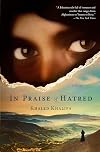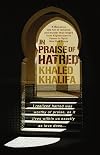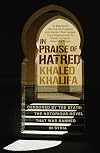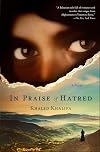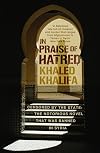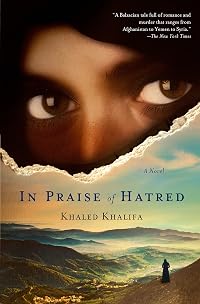
In Praise of Hatred
by Khālid Khalīfah
On This Page
Description
In the secluded house of her grandparents a young Muslim girl is raised by her aunts but as tensions in Syria through the 1980s rise, the walls are no longer enough to shield them from the political and social chaos outside.Tags
Recommendations



















Member Reviews
This is a book that seems more interesting in the abstract. It seems more interesting now that I've finished reading it than I did while reading it. I really felt tugged apart while reading it: I could describe this book as both fascinating and tedious. I don't know whether it just doesn't translate well or whether the style and content are simply at odds with the structure and layout of standard Western novels. It struck me at times as similar to an old-fashioned novel with an omniscient narrator, even though this is a story in the first-person singular.
There is a lot of talk about dreams. There is a lot of waiting around. The internal voice of the narrator never gives much of a reason or justification for her radicalization; it seems show more to just happen one day almost beyond her control. The narrator's character isn't given much depth or agency. Of course, the lack of agency makes sense, being raising in a fundamental, religious household. But there is something lacking (in the novel or in the translation) to make this lack of agency compelling.
But I think I'll still think about this book for a long time. So I guess in that sense, it succeeded. show less
There is a lot of talk about dreams. There is a lot of waiting around. The internal voice of the narrator never gives much of a reason or justification for her radicalization; it seems show more to just happen one day almost beyond her control. The narrator's character isn't given much depth or agency. Of course, the lack of agency makes sense, being raising in a fundamental, religious household. But there is something lacking (in the novel or in the translation) to make this lack of agency compelling.
But I think I'll still think about this book for a long time. So I guess in that sense, it succeeded. show less
 This review was written for LibraryThing Early Reviewers.
Like Reading Lolita in Tehran, this turned out to be a very literary book. Although the author sometimes compared feelings to physical objects in ways that didn’t resonate with me, there was no denying that his writing style was beautiful. On a sentence level, this was very well written. I wasn’t as impressed by the plot. The author often digresses to talk about the main character’s family members. These bits were some of the easiest to follow and some of the most exciting parts of the book. However, I didn’t like how they broke up the main story. Each time we returned to the main character’s perspective, I felt as though she fluctuated between hatred and more compassionate, accepting feelings. I didn’t understand what show more influenced her feelings or how she ended up feeling the way she did very well at all.
The last section of the book worked a bit better for me. It almost exclusively followed the main character and I could at least logically see how her emotions were changing. We still don’t get much in the way of her thoughts though, so I never felt a true connection. This was by far my favorite part of the book, because I enjoyed seeing the main character change, but I liked some of the earlier parts as well. The author began with a helpful little history lesson which at least gave me somewhere to start googling so that I could understand the events taking place in the book. The snippets of the different character’s lives all gave me interesting glimpses of what life was like in Syria in the 1980′s. Part of me feels like the problem might be me not the book. Perhaps if I read more slowly, more thoughtfully, I might find some meaning there I missed? I’m not sure. As is, I enjoyed the factual, educational parts of the book, but the feelings meant to be conveyed escaped me.
This review first published at Doing Dewey. show less
The last section of the book worked a bit better for me. It almost exclusively followed the main character and I could at least logically see how her emotions were changing. We still don’t get much in the way of her thoughts though, so I never felt a true connection. This was by far my favorite part of the book, because I enjoyed seeing the main character change, but I liked some of the earlier parts as well. The author began with a helpful little history lesson which at least gave me somewhere to start googling so that I could understand the events taking place in the book. The snippets of the different character’s lives all gave me interesting glimpses of what life was like in Syria in the 1980′s. Part of me feels like the problem might be me not the book. Perhaps if I read more slowly, more thoughtfully, I might find some meaning there I missed? I’m not sure. As is, I enjoyed the factual, educational parts of the book, but the feelings meant to be conveyed escaped me.
This review first published at Doing Dewey. show less
This review was written for LibraryThing Early Reviewers.Unfortunately I find it very difficult to praise anything about this book. I found it to be so over-written and over-stylized that it was impossible to actually break through to the story itself. Other than the main character’s internal dialogue, there is no conversation in the book at all, I admit I found my eyes glazing over and skipping many of the long descriptive paragraphs. This is a shame because I believe the author has a very interesting story to tell. I know very little about Syria and was looking forward to finding out about this mysterious country that is figuring so prominently in the news but obviously this wasn’t the book to help me.
The unnamed narrator of In Praise of Hatred is a young, deeply ultraconservative show more Muslim girl and her hatred of others is complete and intense. Ultimately she becomes an extremist. The level of hatred expressed in this book was disturbing, such strong convictions all based on differences between sects, infidels or any opposition is frightening and the willingness to kill or be killed is something I find almost impossible to comprehend.
The book is set in the city of Aleppo during the violent upheavals that took place during the 1980’s . The book has been banned in Syria and I believe the author, Khaled Khalifa, is trying to expose this darkness and show that such a strong hatred will never bring this country to a peaceful resolution. I simply could not get over the flaws of this book, and I found myself often counting pages in a desperate manner, hoping to reach the end. I should mention here that I would have abandoned this book except that I received it though Library Things Early Reading Program. show less
The unnamed narrator of In Praise of Hatred is a young, deeply ultraconservative show more Muslim girl and her hatred of others is complete and intense. Ultimately she becomes an extremist. The level of hatred expressed in this book was disturbing, such strong convictions all based on differences between sects, infidels or any opposition is frightening and the willingness to kill or be killed is something I find almost impossible to comprehend.
The book is set in the city of Aleppo during the violent upheavals that took place during the 1980’s . The book has been banned in Syria and I believe the author, Khaled Khalifa, is trying to expose this darkness and show that such a strong hatred will never bring this country to a peaceful resolution. I simply could not get over the flaws of this book, and I found myself often counting pages in a desperate manner, hoping to reach the end. I should mention here that I would have abandoned this book except that I received it though Library Things Early Reading Program. show less
This review was written for LibraryThing Early Reviewers.I found this to be a very difficult read, primarily because I couldn't really connect with any of the characters. I thought the sequence of activity within the story to be a little chaotic, jumping randomly (or it least it seemed random to me) from past to present and past again. I found some of the references too esoteric for understanding. The religious practices were a little too bizarre, and again quite possibly cultural, for me to relate to even though I'm Muslim. I can't say that this was a bad read or even poorly written (or possibly translated) book, it is quite simply one that didn't work for me on a number of levels.
The topic of this book is an important and interesting one, and I really wanted to enjoy it, but the writing (or translation) was just atrocious. I forced myself to keep reading under the hope that it would get better, and managed to make it to almost the middle point, but I'm giving up on it now. The first 30 pages or so are the worst were the author skips back & forth in time constantly sometimes two or 3 times in the same paragraph making it really hard to follow. Movement through time often makes for an interesting book, but only if it's done with structure and discipline, which it wasn't in this case. The author also seems to rush through everything, never getting into any depth on any character or topic. As a result, it was show more extremely difficult to feel any kind of emotional connection to any of the characters.I would not recommend this book. show less
This review was written for LibraryThing Early Reviewers.I've never reviewed a book without actually finishing it before, but although I've tried for at least 2 weeks I have not been able to get past pg. 78.
I thought it was me, until I read the other reviews. I jut can't puyt my finger on wht the problem is. Part of the problem seemed to b that it felt very much like the female narrator is written from a male's perspective.
I was really hoping to gain some insight into the background of Syria's problems, and I think I did gain just a little, but, unfortunately, wht little I gained was not worth the effort. Even if there had been great insight later in the book, I just couldn't justify the effort I put into reading this even to this point.
I thought it was me, until I read the other reviews. I jut can't puyt my finger on wht the problem is. Part of the problem seemed to b that it felt very much like the female narrator is written from a male's perspective.
I was really hoping to gain some insight into the background of Syria's problems, and I think I did gain just a little, but, unfortunately, wht little I gained was not worth the effort. Even if there had been great insight later in the book, I just couldn't justify the effort I put into reading this even to this point.
This review was written for LibraryThing Early Reviewers.Maybe its me but I could not understand this book. Perhaps it does not translate well. Perhaps i am too ignorant of Syrian conflicts but I did not understand the meaning of many Arabic words used and no explanation was given. Could not keep people straight and could not relate to the main character or even sympathize with her as I did not understand her at all.. I found it jumps from topic to topic leaving me confused. Too many dreams , too many breast references, too much lecturing. Sorry.
This review was written for LibraryThing Early Reviewers.Members
- Recently Added By
Author Information

17 Works 670 Members
Some Editions
Awards and Honors
Common Knowledge
- Canonical title
- In Praise of Hatred
- Original title
- مديح الكراهية
- Alternate titles
- Madih al-karahiya
- Original publication date
- 2006
- Original language
- Arabic
Classifications
- Genres
- Fiction and Literature, General Fiction
- DDC/MDS
- 892.7 — Literature & rhetoric Literatures of other languages Afro-Asiatic literatures Arabic (Egypt, Lebanon, Palestine, Saudi Arabia, Sudan)
- LCC
- PJ7942 .H343 .M3413 — Language and Literature Oriental languages and literatures Oriental philology and literature Arabic Arabic literature Individual authors or works
- BISAC
Statistics
- Members
- 132
- Popularity
- 248,476
- Reviews
- 9
- Rating
- (2.76)
- Languages
- Arabic, Dutch, English, French
- Media
- Paper, Ebook
- ISBNs
- 10
- ASINs
- 1