On This Page
Description
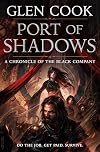
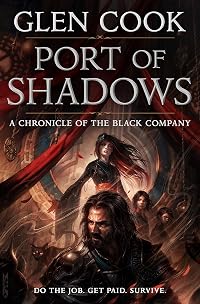
"The soldiers of the Black Company don't ask questions, they get paid. But being "The Lady's favored" is attracting the wrong kind of attention and has put a target on their backs--and the Company's historian, Croaker, has the biggest target of all. The one person who was taken into The Lady's Tower and returned unchanged has earned the special interest of the court of sorcerers known as The Ten Who Were Taken. Now, he and the company are being asked to seek the aid of their newest member, show more Mischievous Rain, to break a rebel army. However, Croaker doesn't trust any of the Taken, especially not ones that look so much like The Lady and her sister..."--Publisher description. show lessTags
Recommendations







Member Reviews
Be warned: The entire point of this novel is that it is collected by in-universe fragments and viewpoints that have both been meddled with and modified by characters whose agendas are not stated, and can only be guessed at with information found in the rest of the "Black Company" novels. This makes for an unusual reading experience, and if you're not prepared going in, it's likely to sour most on the book.
In spite of being set between books 1 and 2 of this series, therefore, it should be read much later -- it will be off-putting and impossible to follow if read in its place in a strict chronological order. I personally read it after "Dreams of Steel", and found this to be a good spot, as having read a book narrated by Lady before show more reading this helps me care and understand about the person who more than anyone else shapes the events in the world of The Black Company. On re-read of the series as a whole, though, it will likely benefit from being read exactly where it takes place.
As a novel, it's a bit weak. The story is erratic and episodic, and when it finally does start building towards a climax, the viewpoint character is so uninformed and out of the loop -- as well as having had his mind and memories magically muddled -- that it likely will feel anti-climactic to the reader.
But as an entry to the larger character arcs and mythology of the Black Company universe, this is quite a treat. I'd therefore recommend this as warmly to the die-hard fan as I would warn off a casual reader expecting more of the same as was on offer in the rest of the series. One might, a bit reductively, liken it to reading Tolkien's "Silmarillion" -- an erratic narrative unlikely to be an engrossing reading experience to someone who once read and enjoyed "The Hobbit" and "The Lord of the Rings" a decade or two ago, but a treasure trove hugely rewarding to those who immerse themselves in the books again and again, year after year.
In short, "Port of Shadows" follows two plotlines. The main one is set during the time gap between the original "Black Company" novel and its immediate sequel, "Shadows Linger", and has the same first person narrator as those books. The second one, containing much shorter chapters, is set centuries before, during the tyrannic era of the Dominator, and thus gives us intriguing glimpses into the world's background.
The former of these plotlines is made muddy both by Croaker's lack of information (he's purposefully kept in the dark about many pivotal facts) and by his mind being magically altered over the course of the book (affecting both his personality and his memory). The second is made muddy by being presented as 'found footage' that has been censored, rewritten and edited, possibly many times, by people with a vested interest in doing so. What we're reading is likely true in the broad strokes, but specific details like character relationships, identities and -- vitally -- names are obviously modified or outright fabricated.
The point, it seems to me, is precisely what doesn't jive in "Port of Shadows". Every plotpoint, detail or action that doesn't seem to immediately make sense is a clue -- why has this been changed? Who has had the power to change it, and what would their motivation have been? And, perhaps crucially, why is it changed at all, instead of outright deleted and censored? These questions aren't really as complicated as they might seem, if the other books in the series are taken into account. And I found it both touching, interesting and plain cool once I started gleaning the answers.
However, the story also provides plenty of mysteries to which we do not have answers, and loose ends that are not tied up. The plan, clearly, is for Cook to bring it all together in his planned final entry to the series, which this seems to act as "part 1" to. Whether that will pay out depends on if that novel is ever finished, and how good that novel is. If it's a worthy conclusion, it will likely retroactively make "Port of Shadows" a much more vital entry. As it stands, though, it's mainly for those with a particular vested interest in the franchise. But I am one of those, and I'm certainly very happy I read it. show less
In spite of being set between books 1 and 2 of this series, therefore, it should be read much later -- it will be off-putting and impossible to follow if read in its place in a strict chronological order. I personally read it after "Dreams of Steel", and found this to be a good spot, as having read a book narrated by Lady before show more reading this helps me care and understand about the person who more than anyone else shapes the events in the world of The Black Company. On re-read of the series as a whole, though, it will likely benefit from being read exactly where it takes place.
As a novel, it's a bit weak. The story is erratic and episodic, and when it finally does start building towards a climax, the viewpoint character is so uninformed and out of the loop -- as well as having had his mind and memories magically muddled -- that it likely will feel anti-climactic to the reader.
But as an entry to the larger character arcs and mythology of the Black Company universe, this is quite a treat. I'd therefore recommend this as warmly to the die-hard fan as I would warn off a casual reader expecting more of the same as was on offer in the rest of the series. One might, a bit reductively, liken it to reading Tolkien's "Silmarillion" -- an erratic narrative unlikely to be an engrossing reading experience to someone who once read and enjoyed "The Hobbit" and "The Lord of the Rings" a decade or two ago, but a treasure trove hugely rewarding to those who immerse themselves in the books again and again, year after year.
In short, "Port of Shadows" follows two plotlines. The main one is set during the time gap between the original "Black Company" novel and its immediate sequel, "Shadows Linger", and has the same first person narrator as those books. The second one, containing much shorter chapters, is set centuries before, during the tyrannic era of the Dominator, and thus gives us intriguing glimpses into the world's background.
The former of these plotlines is made muddy both by Croaker's lack of information (he's purposefully kept in the dark about many pivotal facts) and by his mind being magically altered over the course of the book (affecting both his personality and his memory). The second is made muddy by being presented as 'found footage' that has been censored, rewritten and edited, possibly many times, by people with a vested interest in doing so. What we're reading is likely true in the broad strokes, but specific details like character relationships, identities and -- vitally -- names are obviously modified or outright fabricated.
The point, it seems to me, is precisely what doesn't jive in "Port of Shadows". Every plotpoint, detail or action that doesn't seem to immediately make sense is a clue -- why has this been changed? Who has had the power to change it, and what would their motivation have been? And, perhaps crucially, why is it changed at all, instead of outright deleted and censored? These questions aren't really as complicated as they might seem, if the other books in the series are taken into account. And I found it both touching, interesting and plain cool once I started gleaning the answers.
However, the story also provides plenty of mysteries to which we do not have answers, and loose ends that are not tied up. The plan, clearly, is for Cook to bring it all together in his planned final entry to the series, which this seems to act as "part 1" to. Whether that will pay out depends on if that novel is ever finished, and how good that novel is. If it's a worthy conclusion, it will likely retroactively make "Port of Shadows" a much more vital entry. As it stands, though, it's mainly for those with a particular vested interest in the franchise. But I am one of those, and I'm certainly very happy I read it. show less
This one is a bit odd, even by Cook's standards.
Definitely a Croaker book, not quite the voice of the original Black Company trilogy, but very similar, but with the same disconnects and abrupt transitions of Murgen's Books of the Company- Croaker has the insanity he has in the final Book of the Company, though it's written very naturally.
This is a book for the fan. Readers not already familiar with the series will not understand much of what goes on; those who are fans of the Company will find much to enjoy.
The story is less important than the question: What is the Tides Elba and her children that return from the Tower? And in true Cook fashion; never directly answered.
An intriguing book, written to Cook's usual standards, but more an show more "ongoing tales of the Black Company" than the start of something new. show less
Definitely a Croaker book, not quite the voice of the original Black Company trilogy, but very similar, but with the same disconnects and abrupt transitions of Murgen's Books of the Company- Croaker has the insanity he has in the final Book of the Company, though it's written very naturally.
This is a book for the fan. Readers not already familiar with the series will not understand much of what goes on; those who are fans of the Company will find much to enjoy.
The story is less important than the question: What is the Tides Elba and her children that return from the Tower? And in true Cook fashion; never directly answered.
An intriguing book, written to Cook's usual standards, but more an show more "ongoing tales of the Black Company" than the start of something new. show less
It's a good one, a reach back to the early days of the series, when the prose was simple, carrying the story along like an old soldier sitting in a bar, telling about the wars he fought in his youth. The problem is trying to fit it into the established narrative without upending it. Mostly succeeds, but it's not perfect.
A new Black Company novel! This one occurs about mid-way through the previous books, after the battle at Charm but before the Company heads south. If you haven't read any Black Company books before, this won't make a lot of sense to you.
Because this one is going back in time, all of the old favorite members of the Company are around - Elmo, Otto, Silent, One-Eye, Goblin, the Captain and of course Croaker, the annalist and teller of this tale.
Like some of the latter books, this one is primarily about the company in an occupation phase. They have been given responsibility for rooting out rebels in and around Aloe, in the name of the Lady. Despite being mercenaries, they keep the peace and help out with civic improvements, this is a very show more gentle 'occupation'. Things would be quiet if they didn't have to deal with both rebels and people trying to bring back the Dominator, the ultimate evil.
This would have been given a higher rating but for some unfortunate anti-feminist themes. Not sure why Cook had to go there, in one case it is totally unexplained and completely unnecessary. There's also too much emphasis on keeping information away from Croaker, which I guess was an explanation for how the narrator could be surprised by some events, but it was clumsy. show less
Because this one is going back in time, all of the old favorite members of the Company are around - Elmo, Otto, Silent, One-Eye, Goblin, the Captain and of course Croaker, the annalist and teller of this tale.
Like some of the latter books, this one is primarily about the company in an occupation phase. They have been given responsibility for rooting out rebels in and around Aloe, in the name of the Lady. Despite being mercenaries, they keep the peace and help out with civic improvements, this is a very show more gentle 'occupation'. Things would be quiet if they didn't have to deal with both rebels and people trying to bring back the Dominator, the ultimate evil.
This would have been given a higher rating but for some unfortunate anti-feminist themes. Not sure why Cook had to go there, in one case it is totally unexplained and completely unnecessary. There's also too much emphasis on keeping information away from Croaker, which I guess was an explanation for how the narrator could be surprised by some events, but it was clumsy. show less
It reads like a Black Company fanfic, so a non-fan wouldn't get much out of it. I enjoyed it, mostly due to nostalgia for the characters. However, the ending is unsatisfying as the book must contrive to reset things in order to fit between book 1 and book 2 of the original series.
Not the best in the series by any stretch. At times, it drags and almost seems like Glen Cook is phoning it in; however, still pretty good. Definitely to be read after all the preceding novels; this one doesn't stand on its own.
Port of Shadows is Fake News: This Black Company installment from Glen Cook (chronologically #1.5, but published >#10) will be enjoyed by long-term fans much more than newer folk reading the books in order. I came from reading only the first book and recommend skipping it (I am still intrigued to read Shadows Linger eventually). As part of group read in the Goodread's Sword & Sorcery group, series fans suggest reading the original trilogy first (Chronicles of the Black Company) and reaffirm that the other books are more engaging.
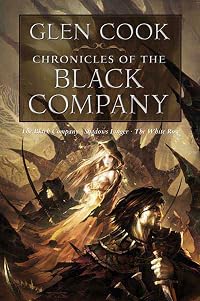
1- The Black Company (1984)
1.5- Port of Shadows (2018)
2- Shadows Linger (1984)
3- The White Rose (1985)
The Black Company (The Chronicle of the Black Company, #1) by Glen Cook Port of Shadows (The Chronicles of show more the Black Company, #1.5) by Glen Cook Shadows Linger (The Chronicles of the Black Company, #2) by Glen Cook The White Rose (The Chronicles of the Black Company, #3) by Glen Cook
Some spoilers follow as I explain why Port of Shadows is alluring Fake News:
To quote the main narrator Croaker (physician and official historian of the group): "I had no idea what this ferocious campaign was all about. Well, yes, there were Rebels and Resurrectionists in need of butchering out here. Hints from the wife and kids suggested a possible connection to the Port of Shadows business, but … I could not help suspecting that something more was afoot.
The most reliable information about the late empire is not reliable at all. It, too, is consensus guesswork woven from untrustworthy fragmentary records and hand-me-down oral histories."
Alfred Hitchcock once said, "The MacGuffin is the thing that the spies are after but the audience don't care"; the titular "Port of Shadows" is not quite a MacGuffin--but it's pretty close: the mysterious "Port" is the focus of the Black Company's quest/conflict, but ample threads/arcs regarding the danger stemming from it are consistently left unexplained or shown to be not dangerous.
Ostensible conflict (excerpt): "…if the Lady had spoken truly, Tides Elba was a threat to the whole world. She could become the port through which the hideous shadow known as the Dominator could make his return. No doubt she was sought by and beloved of every Resurrectionist cultist hoping to raise the old evil from his grave. No doubt she was the prophesied messiah of darkness."
We are told (not shown) that the Port is an exposed pathway for the evil Dominator to be resurrected--yet as a reader I was never engaged. For one, the Dominator's evilness is not demonstrated, nor do the flashbacks really feature him or his behavior; secondly, the "Port" and all its possible incarnations are not really dangerous (we are told, not shown, many times that the possible Ports are causing mayhem, but the Black Company and our narrator Croaker never seem to be in any danger); and lastly, any such resurrection (i.e., use of the Port) never seems close. Nothing ever seems to be at stake.
A lack luster tale told in a confusing fashion: The tale is told via a weave of historic (long time ago) and present-day chapters. The initial 1/3rd is great, but the mysterious "Just follow my command and do a mysterious task without explanation" [given by the Lady or the Black Co Captain to Croaker] starts to fall flat thereafter. Suspicious activity from the magician One-Eye and the Taken Limper introduced in the beginning are ultimately just snippets for old time fans to relish. Although entertaining, any tension from having untrustworthy companions is not capitalized on.
Fake News: We learn lots of what is going via journalistic accounts (not direct witnessing) as characters touch base with Croaker. This makes sense since he is the Annalist, but also keeps the reader distant. The alternating shifts in time also change point of view (first person with Croaker and third person). Within one yarn, there is time travel (forward and back) in which people are transported via time.
Everyone is unreliable, either because they are mischievous, possessed/"not acting like themselves," are clones, impostors, twins, or alternative incarnations of themselves (Mischievous rain had at least three version of herself; Laissa at least two, Ankou shapeshifts, etc.). The confusion does not seem to be unfurled intentionally (i.e., in a Phillip Dick story). Instead we are given a huge swath of characters, all unreliable, most only appearing for a short time, most with multiple instances of themselves… and none of them know what is going on (see below excerpts).
I am assuming that the following stories in the series follow through and make this feel more complete, but as a standalone novel, and even as a sequel, it feels incomplete.
Excerpts (a.k.a., Fake News headlines):
The most reliable information about the late empire is not reliable at all. It, too, is consensus guesswork woven from untrustworthy fragmentary records and hand-me-down oral histories.
We’re into something unlike anything we’ve ever seen. We don’t know what it is. That’s why we keep talking and talking. I can’t even express it. It’s something that we can’t handle the way we usually do. We can’t trick it. We can’t crush it by being the nastiest killers on the field. It’s all inside. Insidious.
Nobody knows what’s going on. Anything that we think we know is almost certainly not…
"…You don’t know anything more than I do. And now I’m beginning to think that maybe even the Taken is without a clue.” Our mistress was known for playing lives-long games that only she could fathom.
The Captain deployed his ingenuous smile, neither denying nor confirming, just suggesting that he knew something that would remain a mystery to everyone else.
Nothing was what it looked like. Nothing stayed the same. Nothing went the way that it should.
Somebody keeps making us forget stuff
I had no idea what this ferocious campaign was all about. Well, yes, there were Rebels and Resurrectionists in need of butchering out here. Hints from the wife and kids suggested a possible connection to the Port of Shadows business, but … I could not help suspecting that something more was afoot.
From the Old Man down to the Third and local kid Gurdlief Speak, folks keep asking me for news they need to make sense of a time that no surviving memories make sensible.
the Black Company must have been smacked with a widespread, savage, and utterly, angrily deliberate memory assault.
None of the Senjak sisters were described accurately. None of them were identified by their correct names.
The most reliable information about the late empire is not reliable at all. It, too, is consensus guesswork woven from untrustworthy fragmentary records and hand-me-down oral histories. show less
1- The Black Company (1984)
1.5- Port of Shadows (2018)
2- Shadows Linger (1984)
3- The White Rose (1985)
The Black Company (The Chronicle of the Black Company, #1) by Glen Cook Port of Shadows (The Chronicles of show more the Black Company, #1.5) by Glen Cook Shadows Linger (The Chronicles of the Black Company, #2) by Glen Cook The White Rose (The Chronicles of the Black Company, #3) by Glen Cook
Some spoilers follow as I explain why Port of Shadows is alluring Fake News:
To quote the main narrator Croaker (physician and official historian of the group): "I had no idea what this ferocious campaign was all about. Well, yes, there were Rebels and Resurrectionists in need of butchering out here. Hints from the wife and kids suggested a possible connection to the Port of Shadows business, but … I could not help suspecting that something more was afoot.
The most reliable information about the late empire is not reliable at all. It, too, is consensus guesswork woven from untrustworthy fragmentary records and hand-me-down oral histories."
Alfred Hitchcock once said, "The MacGuffin is the thing that the spies are after but the audience don't care"; the titular "Port of Shadows" is not quite a MacGuffin--but it's pretty close: the mysterious "Port" is the focus of the Black Company's quest/conflict, but ample threads/arcs regarding the danger stemming from it are consistently left unexplained or shown to be not dangerous.
Ostensible conflict (excerpt): "…if the Lady had spoken truly, Tides Elba was a threat to the whole world. She could become the port through which the hideous shadow known as the Dominator could make his return. No doubt she was sought by and beloved of every Resurrectionist cultist hoping to raise the old evil from his grave. No doubt she was the prophesied messiah of darkness."
We are told (not shown) that the Port is an exposed pathway for the evil Dominator to be resurrected--yet as a reader I was never engaged. For one, the Dominator's evilness is not demonstrated, nor do the flashbacks really feature him or his behavior; secondly, the "Port" and all its possible incarnations are not really dangerous (we are told, not shown, many times that the possible Ports are causing mayhem, but the Black Company and our narrator Croaker never seem to be in any danger); and lastly, any such resurrection (i.e., use of the Port) never seems close. Nothing ever seems to be at stake.
A lack luster tale told in a confusing fashion: The tale is told via a weave of historic (long time ago) and present-day chapters. The initial 1/3rd is great, but the mysterious "Just follow my command and do a mysterious task without explanation" [given by the Lady or the Black Co Captain to Croaker] starts to fall flat thereafter. Suspicious activity from the magician One-Eye and the Taken Limper introduced in the beginning are ultimately just snippets for old time fans to relish. Although entertaining, any tension from having untrustworthy companions is not capitalized on.
Fake News: We learn lots of what is going via journalistic accounts (not direct witnessing) as characters touch base with Croaker. This makes sense since he is the Annalist, but also keeps the reader distant. The alternating shifts in time also change point of view (first person with Croaker and third person). Within one yarn, there is time travel (forward and back) in which people are transported via time.
Everyone is unreliable, either because they are mischievous, possessed/"not acting like themselves," are clones, impostors, twins, or alternative incarnations of themselves (Mischievous rain had at least three version of herself; Laissa at least two, Ankou shapeshifts, etc.). The confusion does not seem to be unfurled intentionally (i.e., in a Phillip Dick story). Instead we are given a huge swath of characters, all unreliable, most only appearing for a short time, most with multiple instances of themselves… and none of them know what is going on (see below excerpts).
I am assuming that the following stories in the series follow through and make this feel more complete, but as a standalone novel, and even as a sequel, it feels incomplete.
Excerpts (a.k.a., Fake News headlines):
The most reliable information about the late empire is not reliable at all. It, too, is consensus guesswork woven from untrustworthy fragmentary records and hand-me-down oral histories.
We’re into something unlike anything we’ve ever seen. We don’t know what it is. That’s why we keep talking and talking. I can’t even express it. It’s something that we can’t handle the way we usually do. We can’t trick it. We can’t crush it by being the nastiest killers on the field. It’s all inside. Insidious.
Nobody knows what’s going on. Anything that we think we know is almost certainly not…
"…You don’t know anything more than I do. And now I’m beginning to think that maybe even the Taken is without a clue.” Our mistress was known for playing lives-long games that only she could fathom.
The Captain deployed his ingenuous smile, neither denying nor confirming, just suggesting that he knew something that would remain a mystery to everyone else.
Nothing was what it looked like. Nothing stayed the same. Nothing went the way that it should.
Somebody keeps making us forget stuff
I had no idea what this ferocious campaign was all about. Well, yes, there were Rebels and Resurrectionists in need of butchering out here. Hints from the wife and kids suggested a possible connection to the Port of Shadows business, but … I could not help suspecting that something more was afoot.
From the Old Man down to the Third and local kid Gurdlief Speak, folks keep asking me for news they need to make sense of a time that no surviving memories make sensible.
the Black Company must have been smacked with a widespread, savage, and utterly, angrily deliberate memory assault.
None of the Senjak sisters were described accurately. None of them were identified by their correct names.
The most reliable information about the late empire is not reliable at all. It, too, is consensus guesswork woven from untrustworthy fragmentary records and hand-me-down oral histories. show less
Members
- Recently Added By
Author Information

118+ Works 36,178 Members
Some Editions
Series

Common Knowledge
- Canonical title
- Port of Shadows
- Original publication date
- 2018-09-11
Classifications
Statistics
- Members
- 299
- Popularity
- 107,585
- Reviews
- 7
- Rating
- (3.58)
- Languages
- English, Polish
- Media
- Paper, Audiobook, Ebook
- ISBNs
- 7
- ASINs
- 2