On This Page
Description
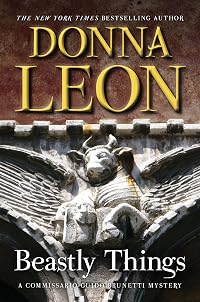
When the body of man is found in a canal, damaged by the tides, carrying no wallet, and wearing only one shoe, Brunetti has little to work with. No local has filed a missing-person report, and no hotel guests have disappeared. Where was the crime scene? And how can Brunetti identify the man when he can't show pictures of his face? The autopsy shows a way forward: it turns out the man was suffering from a rare, disfiguring disease. With Inspector Vianello, Brunetti canvasses shoe stores, and show more winds up on the mainland in Mestre, outside of his usual sphere. From a shopkeeper, they learn that the man had a kindly way with animals. At the same time, animal rights and meat consumption are quickly becoming preoccupying issues at the Venice Questura, and in Brunetti's home, where conversation at family meals offer a window into the joys and conflicts of Italian life. Perhaps with the help of Signorina Elettra, Brunetti and Vianello can identify the man and understand why someone wanted him dead. show lessTags
Recommendations





























Member Reviews
Beastly Things (Comm. Brunetti #21) by Donna Leon. It is always a nice thing to revisit Venice at any time of the year. The canals, the ancient mansions that line them, the young lovers and the people of the town mixing and mingling as does the languages they speak. It is a city built on both the water and romance.
But it is a city, and like every other city in the world, there is evil. When the body of a man is discovered in a canal, the work of Commissario Brunetti begins. This is the 21st outing for this urbane detective and. like those that came before, this case has long arms that reach out from the water city and into the real world beyond.
The body is something of a mystery. No identification, one shoe missing and the body itself show more suffering from a rare, non-life threatening disease. This latter thing gives the man a very distinct look, one that people are sure to remember. Like Brunetti does, although he can’t quite recall from whence that memory comes.
As in all of the Brunette novels there is a great array of various themes presented. The family life of the Commissario plays an important role in grounding the detective in real life, keeping him away that the world is not just full of crime and bad people but is in fact a very good and welcoming place. His office life, wether sparring with his boss or indulging Signorina Elettra in her flagrant misuse of her skills as a computer hacker. That is something that is always useful to the police in discovering the whys behind many of the people they face.
Beastly Things takes Brunetti away from his beloved Venice and on to the main land of Italy, to be surrounded by the many beastly things that abound there, not least of which are traffic and factories. It is to this last inconvenience that calls to Brunetti and his right hand man, Inspector Vianello. They have tracked the dead man to his home and his work as a veterinarian. It is not the man’s work with pets that may have caused his death, but the job he took a few months ago to certify the animals that were being brought to a industrial slaughterhouse as being good enough to process. And to certify the processed meat as being edible.
As in many of these novels, real world concerns, in this case animal rights and the humane processing of such, comes into play making the book have a greater world view that so many other plain detective novels fail to achieve. This is another fine addition to a long ling of very satisfying novels set in the all to real, and wet, world of Venice.
And the last chapter may have you grabbing for a hankie, it’s that good. show less
But it is a city, and like every other city in the world, there is evil. When the body of a man is discovered in a canal, the work of Commissario Brunetti begins. This is the 21st outing for this urbane detective and. like those that came before, this case has long arms that reach out from the water city and into the real world beyond.
The body is something of a mystery. No identification, one shoe missing and the body itself show more suffering from a rare, non-life threatening disease. This latter thing gives the man a very distinct look, one that people are sure to remember. Like Brunetti does, although he can’t quite recall from whence that memory comes.
As in all of the Brunette novels there is a great array of various themes presented. The family life of the Commissario plays an important role in grounding the detective in real life, keeping him away that the world is not just full of crime and bad people but is in fact a very good and welcoming place. His office life, wether sparring with his boss or indulging Signorina Elettra in her flagrant misuse of her skills as a computer hacker. That is something that is always useful to the police in discovering the whys behind many of the people they face.
Beastly Things takes Brunetti away from his beloved Venice and on to the main land of Italy, to be surrounded by the many beastly things that abound there, not least of which are traffic and factories. It is to this last inconvenience that calls to Brunetti and his right hand man, Inspector Vianello. They have tracked the dead man to his home and his work as a veterinarian. It is not the man’s work with pets that may have caused his death, but the job he took a few months ago to certify the animals that were being brought to a industrial slaughterhouse as being good enough to process. And to certify the processed meat as being edible.
As in many of these novels, real world concerns, in this case animal rights and the humane processing of such, comes into play making the book have a greater world view that so many other plain detective novels fail to achieve. This is another fine addition to a long ling of very satisfying novels set in the all to real, and wet, world of Venice.
And the last chapter may have you grabbing for a hankie, it’s that good. show less
At the heart of BEASTLY THINGS is a murder mystery, the plot is tight, and the methods of detection inspirational, but for much of the novel other issues, not entirely Venetian, take centre stage. Guido Brunetti is pretty sure he recognises the man's face a farmers' protest the previous autumn and the wonderful Signorina Elettra manages to find his face in footage of the protest. But he is not a farmer. The search for his identity and the reason for his murder leads Brunetti and his team into a world of corruption.
Brunetti and Vianello pay a visit to an horrific slaughterhouse on the mainland at Mestre but in a sense what goes on in the management of this slaughterhouse and others in the near region is worse than the actual slaughter of show more the animals that they witness.
It evokes a deep feeling of melancholy in Brunetti about the state of things. He seems more bitter and disillusioned than has emerged in earlier novels.
Before Brunetti could answer, they were disturbed by the appearance from the left of a enormous – did it have eight decks? Nine? Ten? – cruise ship. It trailed meekly behind a gallant tug, but the fact that the hawser connecting them dipped limply into the water gave the lie to the appearance of whose motors were being used to propel them and which boat decided the direction.
What a perfect metaphor, Brunetti thought: it looked like the government was pulling the Mafia into port to decommission and destroy it, but the ship that appeared to be doing the pulling had by far the smaller motor, and any time the other one chose, it could give a yank on the hawser and remind the other boat of where the power lay.
and
In no way deterred by the failure of the book to spin up a winning combination, Brunetti opened to Book Eleven. ‘No thief can steal your will.’ This time he closed the book and set it aside. Again, he gave his attention to the light in the window and the statement he had just read: neither provided illumination.
Government ministers were arrested with frightening frequency; the head of government himself boasted, in the middle of a deepening financial crisis, that he didn’t have financial worries and had nineteen houses; Parliament was reduced to an open sewer. And where were the angry mobs in the piazzas?
Who stood up in Parliament to discuss the bold-faced looting of the country? But let a young and virginal girl be killed, and the country went mad; slash a throat and the press was off and running for days. What will was left among the public that had not been destroyed by television and the penetrant vulgarity of the current administration? ‘Oh, yes, a thief can steal your will. And has,’ he heard himself say aloud.
and
He had been curt; of course he had been curt, but he had not wanted to be sucked into yet another discussion of the crime. It troubled him that many people had so readily come to treat murder as a kind of savage joke, to which the only response was grotesque humour. Perhaps this reaction was no more than magic thinking, a manifestation of the hope that laughter would keep it from happening again, or from happening to the person who laughed.
Once again, BEASTLY THINGS comes into my category of crime fiction that makes you think. This is what we have come to expect from Donna Leon but from this novel you get the sense that in Italy corruption is winning the battle. How long can Guido Brunetti and his team fight the good fight? show less
Brunetti and Vianello pay a visit to an horrific slaughterhouse on the mainland at Mestre but in a sense what goes on in the management of this slaughterhouse and others in the near region is worse than the actual slaughter of show more the animals that they witness.
It evokes a deep feeling of melancholy in Brunetti about the state of things. He seems more bitter and disillusioned than has emerged in earlier novels.
Before Brunetti could answer, they were disturbed by the appearance from the left of a enormous – did it have eight decks? Nine? Ten? – cruise ship. It trailed meekly behind a gallant tug, but the fact that the hawser connecting them dipped limply into the water gave the lie to the appearance of whose motors were being used to propel them and which boat decided the direction.
What a perfect metaphor, Brunetti thought: it looked like the government was pulling the Mafia into port to decommission and destroy it, but the ship that appeared to be doing the pulling had by far the smaller motor, and any time the other one chose, it could give a yank on the hawser and remind the other boat of where the power lay.
and
In no way deterred by the failure of the book to spin up a winning combination, Brunetti opened to Book Eleven. ‘No thief can steal your will.’ This time he closed the book and set it aside. Again, he gave his attention to the light in the window and the statement he had just read: neither provided illumination.
Government ministers were arrested with frightening frequency; the head of government himself boasted, in the middle of a deepening financial crisis, that he didn’t have financial worries and had nineteen houses; Parliament was reduced to an open sewer. And where were the angry mobs in the piazzas?
Who stood up in Parliament to discuss the bold-faced looting of the country? But let a young and virginal girl be killed, and the country went mad; slash a throat and the press was off and running for days. What will was left among the public that had not been destroyed by television and the penetrant vulgarity of the current administration? ‘Oh, yes, a thief can steal your will. And has,’ he heard himself say aloud.
and
He had been curt; of course he had been curt, but he had not wanted to be sucked into yet another discussion of the crime. It troubled him that many people had so readily come to treat murder as a kind of savage joke, to which the only response was grotesque humour. Perhaps this reaction was no more than magic thinking, a manifestation of the hope that laughter would keep it from happening again, or from happening to the person who laughed.
Once again, BEASTLY THINGS comes into my category of crime fiction that makes you think. This is what we have come to expect from Donna Leon but from this novel you get the sense that in Italy corruption is winning the battle. How long can Guido Brunetti and his team fight the good fight? show less
Beastly Things is, I believe, the 21st novel in Donna Leon's long-running Commissario Guido Brunetti series set in contemporary Venice. In this installment, the body of a man is pulled from an out-of-the-way canal, but he is found to have been stabbed to death, not drowned by accident. There is no clue as to his identity except that he seems to have a strange bodily malformation, a very swollen chest and neck. This fact leads Brunetti to the man's identity; he was a veterinarian who also worked as an inspector at a slaughterhouse, inspecting the live animals to be certain that they're healthy and then inspecting samples of the resulting meat to make sure it's not contaminated. All is not as it seems at the abbatoir, however, and soon show more Brunetti finds himself questioning the very food he eats.... As always, it is a delight to enter Leon's Venice - having never been there, I have no idea if it's an accurate representation, but I love the way Brunetti and his colleagues and family go about their lives in this enchanted place that is so very familiar to them. And Brunetti remains one of the most thoughtful, philosophical even, detectives in all of modern detective literature; he, and the other main characters, are so finely drawn and such real, complex human beings that one hopes to visit Venice one day and have a prosecco with them all. I am sad that I received this book yesterday (as I write this) and finished it today, even though I tried very hard to draw out the reading experience; it means another year or so before a new novel in the series arrives to delight me all over again. Reading this book just may make the reader consider becoming a vegetarian (which I am not - at present), be warned that there are some graphic scenes of the work inside an abbatoir. Aside from that squeamishness, this book is highly, highly recommended. show less
Police procedurals, sometimes plodding compared to their PI and amateur sleuth cousins, usually follow a cop’s methodical investigation. In Donna Leon’s Beastly Things, Commissario Guido Brunetti moves one step at a time as he seeks the killer of a kindly veterinarian whose body is found floating in a Venice canal, but it’s Brunetti’s ruminations on official corruption, the human condition, treatment of animals, food and life in the Italian island city that make it a satisfying journey and, at times, a disturbing one.
Leon’s fans will enjoy this 21st installment that revisits familiar characters, although the book can be an easy introduction to the series (as it was for me). All you need to know to enjoy the novel you’ll show more learn along the way.
The body pulled from the canal was not immediately identified by the medical examiner except to recognize the deceased’s deformity–extraordinarily thick shoulders and neck–caused by a rare disease. Ultimately Brunetti identifies the victim as Andrea Nava and learns that he lives not in Venice but in Mestre, a nearby mainland city thus setting up a minor jurisdictional confrontation, almost obligatory in cop novels. In an interview with Nava’s wife, Brunetti learns that she was separated from her husband, that her husband was having sex with another woman and that in addition to his veterinary practice, he worked part time in a slaughter house.
The commisario follows up these leads, unconvinced that Nava’s wife had anything to do with his stabbing death. On the trail of evidence, Brunetti invariably stops off in a café for coffee or wine and a snack with his assistant, Inspector Vianello and goes home for lunch with his wife.
As I read this I realized I was looking look for clues; I read mysteries expecting the plot to proceed apace or reasonably so. (Even Poirot keeps the little grey cells moving.) I try to figure out who did it before the detective does. To Brunetti, (or Leon) life itself is as important as the case. We learn Brunetti is not the troubled loner of many detective stories but has a good home life and easy relationship with his wife. His rich, influential in-laws are another story, but they don’t figure heavily in this novel.
He’s also sensitive. When he interviews Nava’s wife he delays telling her the bad news, hoping she will figure it out first. His sensitivities–and vulnerabilities–show up clearly in a gruesome slaughter house scene, and after, when Brunetti discusses the values of vegetarianism with his family.
You could call him cynical. He’s an Italian cop; he sees officialdom as a less than ethical system but he manages to go with the flow without compromising himself. Or so it seemed in this installment of Leon’s series. The system he’s a part of is explained in an internal dialog Brunetti has when he’s called into the office of his boss, Vice-Questor Giuseppe Patta. His boss’s decade-long stay in his position was,
“in anomalous defiance of the rule that high police officials were transferred every few years. Patta’s tenacity in his post had puzzled Brunetti until he realized that the only policemen who were transferred away from cities where they combated crime were those who met with success, especially those who were successful in their opposition to the Mafia.”
Brunetti and Vianello visit Nava’s veterinary office then the slaughterhouse where they meet the boss and his attractive assistant. The detective pair also interview the vet who worked at the slaughterhouse before Nava and they ultimately uncover a dirty secret.
Leon’s prose is effective and her occasional figurative language imaginative. When Brunetti finally tells Nava’s wife that he’s dead, she faints in her chair.
“…her head fell against the back of the chair. Then, like a sweater placed carelessly on a piece of furniture, she slithered to the floor at their feet.”
Humor here is of the nod-your-head-and-smile variety, often reflecting Brunetti’s foibles, such as when he visits a hospital.
“A lifetime of good health had done nothing to counter the effects of imagination; thus Brunetti was often subject to the attacks of diseases to which he had not been exposed and of which he displayed no symptoms.”
Brunetti is vaguely reminiscent of Inspector Jules Maigret, commenting on social conventions, popping into convenient cafes for a glass of wine and exploring the fascinating corners of his native city. Rather than Paris, Venice is Brunetti’s beloved home and the city quickly becomes a character in the book. Brunetti ponders Venice’s palazzos, churches, bars, and even the bothersome portable vendor stalls that block sidewalks. In Beastly Things, Leon combines the city’s canals along with its natives, its tourists and its bureaucrats to paint a detailed, intriguing portrait. show less
Leon’s fans will enjoy this 21st installment that revisits familiar characters, although the book can be an easy introduction to the series (as it was for me). All you need to know to enjoy the novel you’ll show more learn along the way.
The body pulled from the canal was not immediately identified by the medical examiner except to recognize the deceased’s deformity–extraordinarily thick shoulders and neck–caused by a rare disease. Ultimately Brunetti identifies the victim as Andrea Nava and learns that he lives not in Venice but in Mestre, a nearby mainland city thus setting up a minor jurisdictional confrontation, almost obligatory in cop novels. In an interview with Nava’s wife, Brunetti learns that she was separated from her husband, that her husband was having sex with another woman and that in addition to his veterinary practice, he worked part time in a slaughter house.
The commisario follows up these leads, unconvinced that Nava’s wife had anything to do with his stabbing death. On the trail of evidence, Brunetti invariably stops off in a café for coffee or wine and a snack with his assistant, Inspector Vianello and goes home for lunch with his wife.
As I read this I realized I was looking look for clues; I read mysteries expecting the plot to proceed apace or reasonably so. (Even Poirot keeps the little grey cells moving.) I try to figure out who did it before the detective does. To Brunetti, (or Leon) life itself is as important as the case. We learn Brunetti is not the troubled loner of many detective stories but has a good home life and easy relationship with his wife. His rich, influential in-laws are another story, but they don’t figure heavily in this novel.
He’s also sensitive. When he interviews Nava’s wife he delays telling her the bad news, hoping she will figure it out first. His sensitivities–and vulnerabilities–show up clearly in a gruesome slaughter house scene, and after, when Brunetti discusses the values of vegetarianism with his family.
You could call him cynical. He’s an Italian cop; he sees officialdom as a less than ethical system but he manages to go with the flow without compromising himself. Or so it seemed in this installment of Leon’s series. The system he’s a part of is explained in an internal dialog Brunetti has when he’s called into the office of his boss, Vice-Questor Giuseppe Patta. His boss’s decade-long stay in his position was,
“in anomalous defiance of the rule that high police officials were transferred every few years. Patta’s tenacity in his post had puzzled Brunetti until he realized that the only policemen who were transferred away from cities where they combated crime were those who met with success, especially those who were successful in their opposition to the Mafia.”
Brunetti and Vianello visit Nava’s veterinary office then the slaughterhouse where they meet the boss and his attractive assistant. The detective pair also interview the vet who worked at the slaughterhouse before Nava and they ultimately uncover a dirty secret.
Leon’s prose is effective and her occasional figurative language imaginative. When Brunetti finally tells Nava’s wife that he’s dead, she faints in her chair.
“…her head fell against the back of the chair. Then, like a sweater placed carelessly on a piece of furniture, she slithered to the floor at their feet.”
Humor here is of the nod-your-head-and-smile variety, often reflecting Brunetti’s foibles, such as when he visits a hospital.
“A lifetime of good health had done nothing to counter the effects of imagination; thus Brunetti was often subject to the attacks of diseases to which he had not been exposed and of which he displayed no symptoms.”
Brunetti is vaguely reminiscent of Inspector Jules Maigret, commenting on social conventions, popping into convenient cafes for a glass of wine and exploring the fascinating corners of his native city. Rather than Paris, Venice is Brunetti’s beloved home and the city quickly becomes a character in the book. Brunetti ponders Venice’s palazzos, churches, bars, and even the bothersome portable vendor stalls that block sidewalks. In Beastly Things, Leon combines the city’s canals along with its natives, its tourists and its bureaucrats to paint a detailed, intriguing portrait. show less
In this latest installment of Donna Leon''s Brunetti detective novels, she weaves in ecological and deterioration of life in Venice. The reader confronts the encroachment of environmental changes, tourists, and corruption as seen through the eyes of Brunetti, who is disturbed by what he sees and by this particular murder. A veterinarian is murdered and dumped into a canal. As Brunetti puts the seemingly unrelated pieces together, he solves a crime that goes beyond murder of an individual but also the crimes of manipulation, bullying, greed, corruption, poisoning, and cruelty to animals. There is a scene that has enough vagueness and enough description of the slaughtering of animals for human consumption to disturb the reader and have an show more effect similar to the effect The Jungle had in the last century. This novel is well written and holds the readers interest until the very satisfying end. show less
Donna Leon never disappoints. Her evocation of Venice as living community, rather than as a tourist hotspot, and of Commissario Brunetti and the family whom he loves, and who ground him is what gives this series its depth. But here too is an involving story. Here is an unidentified body in the canal, leading eventually to a slaughterhouse, where as the tale develops, crime after crime is uncovered, and few of the characters involved live happily ever after.
Leon writes a good mystery. She loves (and knows) Venice where Brunetti works at the Questura. His family, his coworkers, and he are lovingly revealed just a little more with each book. Leon delves into Venetian life, replete with corruption and tragedy. She takes us on a walk with each book, showing us how close we and others can come to the line between corruption and civilization. I love her characterizations. This book had good minor ones: the shoe ladies, the old woman sneaking onto the vaporetto, the driver who knows the tides.
Members
- Recently Added By
Published Reviews
ThingScore 75
In Venetian Commissario Guido Brunetti’s hunt for clues during a murder investigation in Beastly Things, he makes his way to a meat company’s slaughterhouse on the mainland. There, the sounds and smells of the animal butchering cause Brunetti to feel helplessly faint at heart. Even though there is much sleuthing time left in the day, he hurries home for a long shower and glasses of wine. show more This treatment brings little relief to his delicate sensibilities, and next day, he continues to avoid the office, ignoring his duties in the case that took him to the slaughterhouse.
Can anyone imagine any other homicide cop, Harry Bosch for example, behaving like such a fragile flower? Dragging his feet on a murder case just because some cows were turned into steaks? The way it’s supposed to work, not even dead two-legged creatures should deter homicide guys. Four-legged corpses wouldn’t give Bosch a pause in his hunt for murderers.
But cops do things differently in Venice. Brunetti is famous for rarely passing up the sumptuous lunches and dinners his spectacular wife Paola prepares. And he punctuates each day with leisurely visits to bistros for coffee and pastries. Much of his work day, it’s true, is taken up with the necessary manipulation of his immediate superior, the very political Vice Questore Giuseppe Patta, and he must forever tiptoe around his country’s rampant corruption. Nevertheless, Brunetti seems seldom far from a snooze or a soothing glass of wine, especially when his sensitive nerves are threatened.
The 21st novel in Donna Leon’s series has all the familiar elements, but unlike other recent Brunetti books, this one offers an authentically puzzling case and some brilliant grilling of suspects. The story gets under way when a male body turns up in a Venice canal. Medical examination reveals that the victim was stabbed three times and stripped clean of all identification. Brunetti starts the case from scratch, without even a name for the body.
The usual shortcuts to vital information are provided to Brunetti by the Internet-savvy police receptionist, Signorina Elettra. (That’s another area where Bosch must operate differently, not having a secretary who saves him from pounding the pavement in the interests of answering the case’s smaller but essential questions.) Still, it’s Brunetti who shines on his own in the sessions of cross-examination. These exchanges are vastly entertaining, and show Brunetti, rallied from his spell of faint-heartedness, as a sleuth at the top of his game. show less
Can anyone imagine any other homicide cop, Harry Bosch for example, behaving like such a fragile flower? Dragging his feet on a murder case just because some cows were turned into steaks? The way it’s supposed to work, not even dead two-legged creatures should deter homicide guys. Four-legged corpses wouldn’t give Bosch a pause in his hunt for murderers.
But cops do things differently in Venice. Brunetti is famous for rarely passing up the sumptuous lunches and dinners his spectacular wife Paola prepares. And he punctuates each day with leisurely visits to bistros for coffee and pastries. Much of his work day, it’s true, is taken up with the necessary manipulation of his immediate superior, the very political Vice Questore Giuseppe Patta, and he must forever tiptoe around his country’s rampant corruption. Nevertheless, Brunetti seems seldom far from a snooze or a soothing glass of wine, especially when his sensitive nerves are threatened.
The 21st novel in Donna Leon’s series has all the familiar elements, but unlike other recent Brunetti books, this one offers an authentically puzzling case and some brilliant grilling of suspects. The story gets under way when a male body turns up in a Venice canal. Medical examination reveals that the victim was stabbed three times and stripped clean of all identification. Brunetti starts the case from scratch, without even a name for the body.
The usual shortcuts to vital information are provided to Brunetti by the Internet-savvy police receptionist, Signorina Elettra. (That’s another area where Bosch must operate differently, not having a secretary who saves him from pounding the pavement in the interests of answering the case’s smaller but essential questions.) Still, it’s Brunetti who shines on his own in the sessions of cross-examination. These exchanges are vastly entertaining, and show Brunetti, rallied from his spell of faint-heartedness, as a sleuth at the top of his game. show less
added by VivienneR
Auch in Brunettis 21. Fall wirkt die nackte Gier als mörderische Triebkraft. In den Verhören der Beteiligten läuft der Kommissar zu großer Form auf, die Autorin konstruiert Dialoge voll Esprit und psychologischer Raffinesse.
added by rat_in_a_cage
Bei keinem Kommissar stimmt die Work-Life-Balance wie bei Guido Brunetti: Im 21. Fall lässt Donna Leon ihren Ermittler wieder an der Lagunenstadt leiden und Müßiggang, Familie, Essen, Wein genießen.
added by rat_in_a_cage
Lists

Donna Leon
23 works; 5 members

Stories set in Venice The City Of Canals
14 works; 2 members

Books Read in 2020
4,379 works; 124 members

Books Read in 2022
5,166 works; 112 members
Author Information

64+ Works 46,137 Members
Donna Leon was born on September 29, 1942 in Montclair, New Jersey. She taught English literature in England, Switzerland, Iran, China, Italy and Saudi Arabia. She is the author of a Commissario Guido Brunetti Mystery series. Friends in High Places, a novel from the series, won the Crime Writers Association Macallan Silver Dagger for Fiction in show more 2000. German Television has produced 16 Commissario Brunetti mysteries for broadcast. She was a crime reviewer for the Sunday Times. She has written the libretto for a comic opera and has set up her own opera company, Il Complesso Barocco. Her titles Jewels of Pardise, The Golden Egg, By Its Cover, Falling in Love and The Waters of Eternal Youth made The New York Times Bestseller List. (Bowker Author Biography) show less
Some Editions
Awards and Honors
Distinctions
Series

Belongs to Publisher Series
El balancí [Edicions 62] (666)
detebe (24302)
Work Relationships
Is contained in
Has the adaptation
Common Knowledge
- Canonical title
- Beastly Things
- Original title
- Beastly things
- Original publication date
- 2012
- People/Characters
- Guido Brunetti; Dottore Ettore Rizzardi; Signorina Elettra Zorzi; Vice-Questore Guiseppe Patta; Inspector Vianello; Signorina Borelli (show all 7); Doctore Andrea Nava
- Important places
- Venice, Veneto, Italy
- Related movies*
- Tierische Profite (2015 | IMDb)
- Epigraph
- Va tacito e nascosto,
quand'avido è di preda,
l'astuto cacciator.
E chi è a mal far disposto,
non brama che si veda
l'inganno del suo cor.
When intent on his prey,
the clever hunter
mov... (show all)es silently and hidden.
And he who wants to do evil
is not eager
that the evil in his heart be seen.
Giulio Cesare
Handel - Dedication
- For Fabio Moretti and Umberto Branchini
- First words
- The man lay still, as still as a piece of meat on a slab, as still as death itself.
- Quotations*
- Wenn jemand, der immer lügt, erklärt, er sei ein Lügner, sagt er dann die Wahrheit?
- Last words
- (Click to show. Warning: May contain spoilers.)Though Brunetti found that fact somehow comforting, it was the sight of the green parrot disappearing down the street on the shoulder of his owner, the man arm in arm with a woman, that lifted his heart and wiped it clean of any funereal gloom.
- Original language
- English
*Some information comes from Common Knowledge in other languages. Click "Edit" for more information.
Classifications
Statistics
- Members
- 1,038
- Popularity
- 24,877
- Reviews
- 53
- Rating
- (3.78)
- Languages
- 10 — Catalan, Dutch, English, Finnish, French, German, Polish, Portuguese, Spanish, Swedish
- Media
- Paper, Audiobook, Ebook
- ISBNs
- 44
- UPCs
- 1
- ASINs
- 20