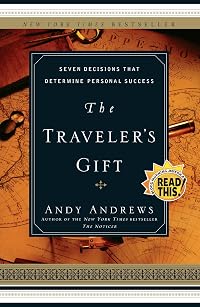
The Traveler's Gift: Seven Decisions that Determine Personal Success
by Andy Andrews
On This Page
Description
Only a few months ago, he was a successful executive. Now hes a desperate man. But a divine adventure is about to unfold. Join David Ponder on an incredible journey that will help you discover the Seven Decisions for Success. In the tradition of best-selling books by Og Mandino, The Travelers Gift is destined to become a classic.Tags
Recommendations


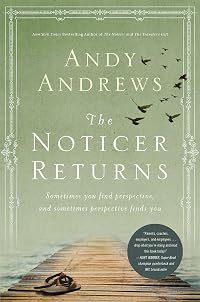



Member Reviews
First, let’s get the seven principles out of the way:
The buck stops here.
I will seek wisdom.
I am a person of action.
I have a decided heart.
Today I will choose to be happy.
I will greet this day with a forgiving spirit.
I will persist without exception.
These are certainly reasonable principles for living, and this book teaches you so. I don’t have a problem with any of that. What I DO have a problem with is how the book teaches it, and what else goes along with it.
The book is the story of David Ponder (uh, get, it, like he’s supposed to PONDER something important), a typical middle-aged guy who puts his priorities wrong, loses all his money, and decides to kill himself. So far, just a touch melodramatic. But then, instead of show more dying, he finds himself being whisked away to visit six historic figures, from Solomon to Abraham Lincoln to Anne Frank, who each pass on to him one of the seven life-transforming principles. They each not only co-operate with this bizarre process, but each pen a letter to him, each about the same length and sprinkled with the same type of late 20th century self-talk & affirmations that none of those people would have actually written.
So far, you just have a overly stretched sentimental & incredulous metaphor, but one that is fairly innocuous and sometimes even moving. But things start getting weird with the last of David’s trips: he meets the archangel Gabriel, who not only passes along the last principle but also says he is the last “traveler” that God has ordained to take this message and share it with others. He says that David is last in a line that has included Joan of Arc, George Washington, & Martin Luther King, Jr. Okay, that’s just too much for me. But it gets worse: Gabriel then starts talking about a pre-Adamic ancient race that fell apart, and implies that the principles that David now has will save the human race from a similar fate.
Okay, time out, boys & girls. Does the author really believe that there was a culture 30,000 years ago that was technologically superior to our own? Does the author really believe that these seven principles are the key to the whole human race? It almost sounds like he is putting these principles above Scripture itself, that he is claiming divine revelation in them. The final blow is that David is given a view of his future, where these principles have not only made him fabulously rich, but hailed by tens of thousands as their spiritual benefactor.
Bottom line: good principles, but WAY too much nuttiness in between for me. show less
The buck stops here.
I will seek wisdom.
I am a person of action.
I have a decided heart.
Today I will choose to be happy.
I will greet this day with a forgiving spirit.
I will persist without exception.
These are certainly reasonable principles for living, and this book teaches you so. I don’t have a problem with any of that. What I DO have a problem with is how the book teaches it, and what else goes along with it.
The book is the story of David Ponder (uh, get, it, like he’s supposed to PONDER something important), a typical middle-aged guy who puts his priorities wrong, loses all his money, and decides to kill himself. So far, just a touch melodramatic. But then, instead of show more dying, he finds himself being whisked away to visit six historic figures, from Solomon to Abraham Lincoln to Anne Frank, who each pass on to him one of the seven life-transforming principles. They each not only co-operate with this bizarre process, but each pen a letter to him, each about the same length and sprinkled with the same type of late 20th century self-talk & affirmations that none of those people would have actually written.
So far, you just have a overly stretched sentimental & incredulous metaphor, but one that is fairly innocuous and sometimes even moving. But things start getting weird with the last of David’s trips: he meets the archangel Gabriel, who not only passes along the last principle but also says he is the last “traveler” that God has ordained to take this message and share it with others. He says that David is last in a line that has included Joan of Arc, George Washington, & Martin Luther King, Jr. Okay, that’s just too much for me. But it gets worse: Gabriel then starts talking about a pre-Adamic ancient race that fell apart, and implies that the principles that David now has will save the human race from a similar fate.
Okay, time out, boys & girls. Does the author really believe that there was a culture 30,000 years ago that was technologically superior to our own? Does the author really believe that these seven principles are the key to the whole human race? It almost sounds like he is putting these principles above Scripture itself, that he is claiming divine revelation in them. The final blow is that David is given a view of his future, where these principles have not only made him fabulously rich, but hailed by tens of thousands as their spiritual benefactor.
Bottom line: good principles, but WAY too much nuttiness in between for me. show less
It is a great premise for a novel: Man loses his job, is faced with bills, and realizes that he is worth more dead than alive. It's typical "It's a Wonderful Life", but more heavy-handed and with more characters than one measly angel named Clarence.
Then there is "The Five People You Meet in Heaven" by Mitch Albom. A man dies and fails to see his worth, so he is met by five people whom his life changed in ways he never knew.
The Traveler's Gift does the reader a great disservice in that the end is sunshine and rainbows and that is simply not the way it goes sometimes. Sometimes your circumstance does matter. Sometimes forgiving others doesn't change the world. Sometimes persistence is a waste of time, especially if you are on the wrong show more track. This book is full of feel-good sound bites that do not translate seamlessly into real life.
For every Chamberlain, there were hundreds (if not thousands) of men who died in Gettysburg who felt just as passionate about being a man of action as he did. Anne Frank told him to choose to be happy. However, she forgot to tell him that anger which is just is also a tool that Jesus himself used for the benefit of the Kingdom of God. Abraham Lincoln told him to consider what others thought after Christopher Columbus told him not to pay attention to the opinions of others. And that was after King Solomon told him to surround himself with those whom he wanted to emulate.
And in the end, David Ponder catches a glimpse of himself as today's Joel Osteen or Tony Roberts, speaking feel-good fluff to an arena full of gullible people. I just had to roll my eyes when I read the part about David Ponder Boulevard. If you do all of these seven things, recommended by some of the most famous people in history, you will be successful. Believe that, and I've got some land to sell you.
Here are the seven that I would preach:
John D. Rockefeller: Work hard, rest often
Albert Einstein: Believe in something bigger than yourself
Nicola Tesla: Know that life is not about fair
Jacqueline Kennedy Onassis: Remember that "this, too shall pass"
Napoleon Bonaparte: Get that chip off your shoulder
Aristotle: Everything in moderation
Jesus of Nazareth: Strive to have very few regrets
While this book is a good story when it's not overly preachy or sunshine-and-rainbows, it is the latter so often that it is not recommended. show less
Then there is "The Five People You Meet in Heaven" by Mitch Albom. A man dies and fails to see his worth, so he is met by five people whom his life changed in ways he never knew.
The Traveler's Gift does the reader a great disservice in that the end is sunshine and rainbows and that is simply not the way it goes sometimes. Sometimes your circumstance does matter. Sometimes forgiving others doesn't change the world. Sometimes persistence is a waste of time, especially if you are on the wrong show more track. This book is full of feel-good sound bites that do not translate seamlessly into real life.
For every Chamberlain, there were hundreds (if not thousands) of men who died in Gettysburg who felt just as passionate about being a man of action as he did. Anne Frank told him to choose to be happy. However, she forgot to tell him that anger which is just is also a tool that Jesus himself used for the benefit of the Kingdom of God. Abraham Lincoln told him to consider what others thought after Christopher Columbus told him not to pay attention to the opinions of others. And that was after King Solomon told him to surround himself with those whom he wanted to emulate.
And in the end, David Ponder catches a glimpse of himself as today's Joel Osteen or Tony Roberts, speaking feel-good fluff to an arena full of gullible people. I just had to roll my eyes when I read the part about David Ponder Boulevard. If you do all of these seven things, recommended by some of the most famous people in history, you will be successful. Believe that, and I've got some land to sell you.
Here are the seven that I would preach:
John D. Rockefeller: Work hard, rest often
Albert Einstein: Believe in something bigger than yourself
Nicola Tesla: Know that life is not about fair
Jacqueline Kennedy Onassis: Remember that "this, too shall pass"
Napoleon Bonaparte: Get that chip off your shoulder
Aristotle: Everything in moderation
Jesus of Nazareth: Strive to have very few regrets
While this book is a good story when it's not overly preachy or sunshine-and-rainbows, it is the latter so often that it is not recommended. show less
Andy Andrews, described on the book jacket as "a comedian, author, speaker, entertainer, television celebrity, and...serious fisherman," offers up this piece of fantasy historical fiction in which the protagonist, David Ponder, is about to lose everything he values because of a business gone bad. In an It's a Wonderful Life twist, he seeks to end his life, thinking that his family would be better off without him by collecting his insurance money. Rather than not being born, however, Ponder is transported through time, where he "meets," in order, Harry Truman, Solomon, Joshua Lawrence Chamberlain, Christopher Columbus, Anne Frank, Abraham Lincoln, and the archangel Gabriel. Each one gives him a "decision for success" which he is to use show more when he recovers from his car accident.
What Andrews attempts to do, in a rather hokey but easy-to-read way, is present to his readers a seven-step plan for taking control of their lives. Slightly spiritual without getting preachy, the book's seven tips do make sense, even if Andrews' method of presenting them is a bit far-fetched. (His historical research, however, especially on Chamberlain, is very good.) But perhaps this is what some people need in this era of self-help overload--a little escapism to help them realize that their lives are something that can be managed, and they don't need $200-an-hour help to do it. The simplest ways are often the best, if not the easiest, ways to do things. show less
What Andrews attempts to do, in a rather hokey but easy-to-read way, is present to his readers a seven-step plan for taking control of their lives. Slightly spiritual without getting preachy, the book's seven tips do make sense, even if Andrews' method of presenting them is a bit far-fetched. (His historical research, however, especially on Chamberlain, is very good.) But perhaps this is what some people need in this era of self-help overload--a little escapism to help them realize that their lives are something that can be managed, and they don't need $200-an-hour help to do it. The simplest ways are often the best, if not the easiest, ways to do things. show less
I'm not sure I've read many (any?) motivational books so this is different for me.
I read this because my husband brought it home after a work event and I thought it sounded worth a read.
I definitely get the Bill and Ted's Excellent Adventure feeling here (there's nothing wrong with that as far as I'm concerned, I love Bill and Ted).
A man is at his whit's end. He's feeling very badly for himself and his family.
Before crashing his car he says "why me?"
Then he starts hurtling through time. He meets several very inspiring historical figures and each one gives him a life lesson.
So, then the reader asks, "why him?" Why was this man chosen to take this journey and to learn these lessons?
I definitely feel that we are to believe that he is to show more do something very special with the lessons he's been chosen to learn. Um, is that something special to be a motivational speaker?
It gets a little bit corny at the end, but I enjoyed it. show less
I read this because my husband brought it home after a work event and I thought it sounded worth a read.
I definitely get the Bill and Ted's Excellent Adventure feeling here (there's nothing wrong with that as far as I'm concerned, I love Bill and Ted).
A man is at his whit's end. He's feeling very badly for himself and his family.
Before crashing his car he says "why me?"
Then he starts hurtling through time. He meets several very inspiring historical figures and each one gives him a life lesson.
So, then the reader asks, "why him?" Why was this man chosen to take this journey and to learn these lessons?
I definitely feel that we are to believe that he is to show more do something very special with the lessons he's been chosen to learn. Um, is that something special to be a motivational speaker?
It gets a little bit corny at the end, but I enjoyed it. show less
I liked the message and 7 decisions presented by this book. However, I was turned off but the somewhat hackneyed writing of the actual story.
And to be honest, I was much more interested in how the protagonist would apply these decisions in his own life and current situation, rather than seeing a glimpse of a possible future where he has already accomplished his goals. I thought it took away from the message that the protagonist was basically told, apply these things and you will be successful beyond your wildest dreams, versus seeing him make the decision to apply these principles and work hard to change his situation.
But overall, I think the basic concepts in this book are solid and can be applicable to one's own life.
And to be honest, I was much more interested in how the protagonist would apply these decisions in his own life and current situation, rather than seeing a glimpse of a possible future where he has already accomplished his goals. I thought it took away from the message that the protagonist was basically told, apply these things and you will be successful beyond your wildest dreams, versus seeing him make the decision to apply these principles and work hard to change his situation.
But overall, I think the basic concepts in this book are solid and can be applicable to one's own life.
An inspirational style book that draws lessons from history. I most enjoyed the chapters with US Presidents (Lincoln and Truman). At times, I felt like the story was a bit contrived at times. That said, I did think there was good value in the "Seven Decisions" model that the author laid out. Some good ideas worthy of additional study and review.
A very rare "not worth finishing" tome. Sanctimonious and preachy, filled with the wisdom of white men (with one familiar female WWII refugee thrown in). Little parables are followed by personal declarations by the main character of the value of the lessons of the parables.
Members
- Recently Added By
Lists

Men's healing resources
749 works; 1 member
Author Information

49 Works 5,273 Members
Andy Andrews is an internationally known speaker and novelist whose combined works have sold millions of copies worldwide. He has been received at the White House and has spoken at the request of four different United States presidents. Andrews' bestselling book, The Traveler's Gift: Seven Decisions that Determine Personal Success, is an show more international bestseller that remained on the New York Times bestseller list for four and a half months; it has been translated into nearly 20 languages. Andrews lived a relatively normal life until the age of nineteen, when both his parents died, his mother from cancer, his father in an automobile accident. Andrews says he made some bad choices at this point in his life found himself homeless, sleeping occasionally under a pier on the gulf coast or in someone's garage. He begain to ask himself, "Is life just a lottery ticket, or are there choices one can make to direct his future?" Over time, he read more than two hundred biographies of great men and women. How did they become the people they were, he wondered. Were they simply born this way? Or were there decisions made at critical junctures in their lives that led to such success? Andrews finally determined that there were seven characteristics that each person had in common. This became the basis for his story in The Traveler's Gift. Andrews also wrote The Butterfly Effect, The Heart Mender, The Noticer, and The Noticer Returns. (Publisher Provided) show less
Awards and Honors
Distinctions
Common Knowledge
- Epigraph
- In great deed, something abides. On great fields, something stays. Forms change and pass, bodies disappear but spirits linger to consecrate ground for the vision place of the soul. And reverent men and women from afar a... (show all)nd generations that know us not and that we know not of, shall come here to ponder and to dream and the power of the vision shall pass into their souls.
- Dedication
- Dedicated to Robert D. Smith, a champion—and the inspiration for this book.
- First words
- Headlights swept the house as the taxi turned out of the driveway.
- Quotations
- "As children, we were afraid of the dark. Now as adults, we are afraid of the light. We are afraid to step out. We are afraid to become more."
"Do not run from power. Gather it as you would the finest fruit. Power in the hands of a good person is like a cool drink of water on a hot summer day. It refreshes everyone with whome it comes in contact."
"if you worry about what other people think of you, then you will have more confidence in their opinion than you have in your own. Poor is the man whose future depends on the opinions and permission of others. Remember this, ... (show all)if you are afraid of criticism, you will die doing nothing."
"If a thousand people believe something foolish, it is still foolish!"
"David, we are all in situations of our own choosing. Our thinking creates a pathway to success or failure. By disclaiming responsibility, we crush the prospect of an incredible future that might have been ours."
"If I'm sane enough to recognize insanity, does that mean I'm okay after all?" - Last words
- (Click to show. Warning: May contain spoilers.)And there, just above the buttons, embroidered on the flap, were crossed swords--the symbol of a fighting man.
Classifications
Statistics
- Members
- 1,490
- Popularity
- 15,621
- Reviews
- 26
- Rating
- (3.85)
- Languages
- Czech, English, French
- Media
- Paper, Audiobook, Ebook
- ISBNs
- 21
- UPCs
- 5
- ASINs
- 9