On This Page
Description
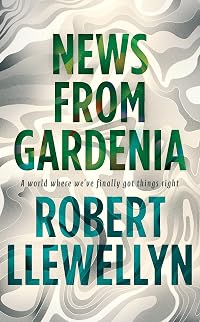
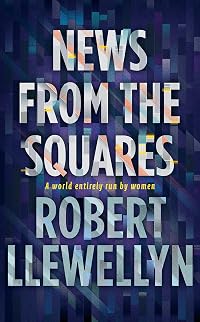
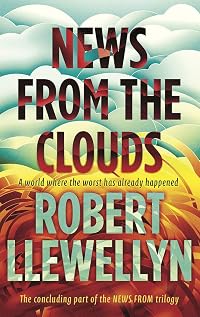
When Gavin Meckler's light aircraft encounters a mysterious cloud and crashes to earth, he discovers that the eerily quiet landscape in which he has landed is 200 years older than the one from which he took off. In this gentle, peaceful, sustainable new world, it is possible to travel from one side of the globe to the other in a matter of minutes without burning fuel, and everyone is a gardener because that's how they can be sure to eat. Inspired by William Morris's utopian novel News from show more Nowhere, Robert Llewellyn shows us a future where we don't burn anything to make anything else and which isn't hovering on the brink of disaster; where aliens haven't invaded, meteors haven't hit and zombies haven't taken over. In short, a world where humanity eventually gets it right. All the technology described in the novel has seen the light of day in reality. Llewellyn's future isn't perfect and may not be very likely, but it is entirely possible. show lessTags
Recommendations







Member Reviews
I have several major quibbles with this book, the last of which may seem a little contradictory.
The first and most significant - the protagonist is a jerk. He reminded me of that bit in ‘The Social Network’, when Mark Zuckerberg’s girlfriend is breaking up with him and says, “You think women don’t like you because you’re a nerd [geek?]. But it’s actually because you’re an asshole.” I paraphrase, but you get the idea. Someone needs to say this to Gavin. When he rocked up in the future, I kept expecting someone to call him on his misogyny. No-one did! There was even a moment when he commented smugly that ‘gender roles’ did not appear to have changed in the past 200 years. Bafflingly, the woman he said this to somehow show more did not understanding what he was saying and let it pass. This struck me as a missed opportunity.
What really got up my nose, I think, is that the author tries to position Gavin as a technology-minded guy who isn’t great with people. Some vague reference is made to his having ADD. If this was supposed to imply that Gavin is on the autistic spectrum, it was done incredibly awkwardly. Moreover, he only ever seems to have social issues with women. I was reminded once again that these socially-inept-geek character tropes are only ever applied to male characters. As Gavin tells us early on, women only care about things that discussing feelings, buying nice houses, and going to farmer’s markets. I could happily have broken both this guy’s arms to express my feelings about him without the need for discussion.
Secondly, I had quite high hopes for this novel as it has an excellent starting concept. Inspired by [b:News from Nowhere|189746|News from Nowhere|William Morris|https://images.gr-assets.com/books/1172550120s/189746.jpg|13352231] by William Morris, it tries to extrapolate a utopian future for the UK in 2211. As both author and protagonist observe, utopian writing is extremely rare at the moment. Instead, we have a slew of apocalyptic disaster novels, TV shows, and films, plus a healthy of crop of dystopias that often star photogenic youths. I wasn’t terribly impressed by the execution of ‘News from Gardenia’, however. For one thing, I was amazed that the protagonist never thought to ask what was happening outside the UK until he was sent abroad on a day trip. It also baffled me how incurious he seemed about the 200 years he missed, not bothering to read the book he’d been given for some time. His tedious preoccupation with Grace (who was mysteriously never given a personality) crowded out the actual utopian detail that I was hoping for. Ironically, he kept going on about his feelings when I wanted technical details!
For example, how exactly were children were brought up and educated? Did people move around a lot or settle in one place for extended periods? What was the biodiversity like? How had climate change altered the weather patterns? What were people’s attitudes to sexuality and gender? Who created the AI that apparently ran the infrastructure? Could people communicate with it? Was anyone living in space, or on the moon, or on Mars? In what ways did the so-called Book differ from the internet as we know it now? What was Africa like? Why wasn’t South America mentioned; did it still exist? Were pandas extinct? Had religion really died out everywhere but the American Midwest? What was literature like? Music? Art? What were the big research questions for scientists? Had alcohol and drugs vanished? Etc, etc, etc.
Thirdly, at only 235 pages ‘New from Gardenia’ simply wasn’t long enough. It was the only book I took on an overnight trip and I finished it before the first of three trains home even arrived. I was left with only a free-sheet to read, an ignominious predicament indeed. Apparently this is the first in a trilogy. It ends abruptly and arbitrarily on a cliffhanger, whereas with another 200 pages to make Gavin less of a jerk and explain more of the setting it may have ended up a better read. As it was, distinctly disappointing. show less
The first and most significant - the protagonist is a jerk. He reminded me of that bit in ‘The Social Network’, when Mark Zuckerberg’s girlfriend is breaking up with him and says, “You think women don’t like you because you’re a nerd [geek?]. But it’s actually because you’re an asshole.” I paraphrase, but you get the idea. Someone needs to say this to Gavin. When he rocked up in the future, I kept expecting someone to call him on his misogyny. No-one did! There was even a moment when he commented smugly that ‘gender roles’ did not appear to have changed in the past 200 years. Bafflingly, the woman he said this to somehow show more did not understanding what he was saying and let it pass. This struck me as a missed opportunity.
What really got up my nose, I think, is that the author tries to position Gavin as a technology-minded guy who isn’t great with people. Some vague reference is made to his having ADD. If this was supposed to imply that Gavin is on the autistic spectrum, it was done incredibly awkwardly. Moreover, he only ever seems to have social issues with women. I was reminded once again that these socially-inept-geek character tropes are only ever applied to male characters. As Gavin tells us early on, women only care about things that discussing feelings, buying nice houses, and going to farmer’s markets. I could happily have broken both this guy’s arms to express my feelings about him without the need for discussion.
Secondly, I had quite high hopes for this novel as it has an excellent starting concept. Inspired by [b:News from Nowhere|189746|News from Nowhere|William Morris|https://images.gr-assets.com/books/1172550120s/189746.jpg|13352231] by William Morris, it tries to extrapolate a utopian future for the UK in 2211. As both author and protagonist observe, utopian writing is extremely rare at the moment. Instead, we have a slew of apocalyptic disaster novels, TV shows, and films, plus a healthy of crop of dystopias that often star photogenic youths. I wasn’t terribly impressed by the execution of ‘News from Gardenia’, however. For one thing, I was amazed that the protagonist never thought to ask what was happening outside the UK until he was sent abroad on a day trip. It also baffled me how incurious he seemed about the 200 years he missed, not bothering to read the book he’d been given for some time. His tedious preoccupation with Grace (who was mysteriously never given a personality) crowded out the actual utopian detail that I was hoping for. Ironically, he kept going on about his feelings when I wanted technical details!
For example, how exactly were children were brought up and educated? Did people move around a lot or settle in one place for extended periods? What was the biodiversity like? How had climate change altered the weather patterns? What were people’s attitudes to sexuality and gender? Who created the AI that apparently ran the infrastructure? Could people communicate with it? Was anyone living in space, or on the moon, or on Mars? In what ways did the so-called Book differ from the internet as we know it now? What was Africa like? Why wasn’t South America mentioned; did it still exist? Were pandas extinct? Had religion really died out everywhere but the American Midwest? What was literature like? Music? Art? What were the big research questions for scientists? Had alcohol and drugs vanished? Etc, etc, etc.
Thirdly, at only 235 pages ‘New from Gardenia’ simply wasn’t long enough. It was the only book I took on an overnight trip and I finished it before the first of three trains home even arrived. I was left with only a free-sheet to read, an ignominious predicament indeed. Apparently this is the first in a trilogy. It ends abruptly and arbitrarily on a cliffhanger, whereas with another 200 pages to make Gavin less of a jerk and explain more of the setting it may have ended up a better read. As it was, distinctly disappointing. show less
News from Gardenia is the first book in Robert Llewellyn's semi-utopian "News from" trilogy. It follows an early 21st Century engineer called Gavin who, whilst flying to a meeting, gets sucked through an anomoly near Didcot Power station and ends up landing in 200 years into the future. The future Robert details for Gavin and us is one where the UK population has crashed, the economy has folded, climate change effects have made large scale changes and yet people are happy to work in community gardens. It shows that happiness is not necessarily associated with exchanging bits of paper or lumps of metal with numbers on them, but that people could potentially live by sharing.
In some ways what Robert has written is a sci-fi book about what show more some people in the "green" environmental movement and Transition Towns groups would like to see us move towards. What the book neatly skips over (though does describe as part of Gavin's missed history) is the turmoil that would need to be gone through to get from where we are now to where the Gardenians are in the book. The population crash is what makes the agrarian society he describes possible, and that's usually a topic that eco-warriors shy away from discussing. When you've only got a population in the UK of a million or two, then subsistence gardening does become a more believable option.
However not everything is rosy and utopian. Gavin's engineering skills are in demand by Gardenians who seem to have lost the ability to understand and repair their remaining advanced technology, despite having documentation to hand. There are also areas of the world that still hold out the old style economies and in those areas trade, business, religion and cities are still very much alive.
This book is an interesting take on a near future sci-fi. Its a relatively short read and at times I found I wanted to shake the Gavin character to get him to find out more about the society he was in and the technology they used. Despite being a well educated engineer with access to a ubiquitous information system he seems to be remarkably poor at quick back ground research!
I've a feeling that the book could have been two or three times as long easily, to allow a more in depth development of characters and settings. This is a shame as it would have been good to see how things like conflict and disagreement were handled in Gardenia... I just don't buy the idea that everyone loves everyone else nearly all the time. If they did, we'd still have loads of hippy communes from the 1960s thriving today. show less
In some ways what Robert has written is a sci-fi book about what show more some people in the "green" environmental movement and Transition Towns groups would like to see us move towards. What the book neatly skips over (though does describe as part of Gavin's missed history) is the turmoil that would need to be gone through to get from where we are now to where the Gardenians are in the book. The population crash is what makes the agrarian society he describes possible, and that's usually a topic that eco-warriors shy away from discussing. When you've only got a population in the UK of a million or two, then subsistence gardening does become a more believable option.
However not everything is rosy and utopian. Gavin's engineering skills are in demand by Gardenians who seem to have lost the ability to understand and repair their remaining advanced technology, despite having documentation to hand. There are also areas of the world that still hold out the old style economies and in those areas trade, business, religion and cities are still very much alive.
This book is an interesting take on a near future sci-fi. Its a relatively short read and at times I found I wanted to shake the Gavin character to get him to find out more about the society he was in and the technology they used. Despite being a well educated engineer with access to a ubiquitous information system he seems to be remarkably poor at quick back ground research!
I've a feeling that the book could have been two or three times as long easily, to allow a more in depth development of characters and settings. This is a shame as it would have been good to see how things like conflict and disagreement were handled in Gardenia... I just don't buy the idea that everyone loves everyone else nearly all the time. If they did, we'd still have loads of hippy communes from the 1960s thriving today. show less
THIS REVIEW CONTAINS SPOILERS.
Sadly, I have to say that I did not think this book was very good. It's a utopian novel, and suffered from the same problems that all utopian novels seem to me to have: nothing actually happens beyond "character goes to utopia, residents of utopia explain things about their society and history". At least in Herland there's some conflict, but seriously nothing happens in this book at all. I also thought that the setting was wrong - it's supposed to be about 200 years in the future, 150 years after society collapsed, and everyone in the UK is mixed race (Anglo-Indian-looking, I believe), living long lives in perfect health, and living in self-sufficient communal housing, but no one knows how any of the show more technology they rely on actually works. Also the whole country is covered in forest. I don't feel like enough time had passed for such changes to have occurred, and it bothered me. Well, I know that this utopia is really Bobby's hippy eco-geek dream world (except with no scientists or engineers?) and that is fine by me, but if you're trying to present something as being a realistic vision of the future it would be better if it were actually realistic.
Additionally, this book really needed to be looked at by an editor. It's supposed to be written in an informal, chatty first-person style, but the number of comma splices and the stilted dialogue started to wear on me pretty quickly. There are also several misspellings of the "sight/site" variety. show less
Sadly, I have to say that I did not think this book was very good. It's a utopian novel, and suffered from the same problems that all utopian novels seem to me to have: nothing actually happens beyond "character goes to utopia, residents of utopia explain things about their society and history". At least in Herland there's some conflict, but seriously nothing happens in this book at all. I also thought that the setting was wrong - it's supposed to be about 200 years in the future, 150 years after society collapsed, and everyone in the UK is mixed race (Anglo-Indian-looking, I believe), living long lives in perfect health, and living in self-sufficient communal housing, but no one knows how any of the show more technology they rely on actually works. Also the whole country is covered in forest. I don't feel like enough time had passed for such changes to have occurred, and it bothered me. Well, I know that this utopia is really Bobby's hippy eco-geek dream world (except with no scientists or engineers?) and that is fine by me, but if you're trying to present something as being a realistic vision of the future it would be better if it were actually realistic.
Additionally, this book really needed to be looked at by an editor. It's supposed to be written in an informal, chatty first-person style, but the number of comma splices and the stilted dialogue started to wear on me pretty quickly. There are also several misspellings of the "sight/site" variety. show less
Ratings
Members
- Recently Added By
Lists

for you little gardener and lover of trees
14 works; 2 members
Author Information

13+ Works 497 Members
Awards and Honors
Notable Lists
Series

Common Knowledge
- First words
- It would appear that there are only two groups of people who truly ponder the long-term future of the human race. - Preface
I feel confident that through the long annals of human history plenty of people have regretted not making a greater effort to understand someone they loved. - Last words
- (Click to show. Warning: May contain spoilers.)If the battery level made no sense, what I saw below me made even less.
Classifications
Statistics
- Members
- 38
- Popularity
- 765,268
- Reviews
- 3
- Rating
- (3.43)
- Languages
- English
- Media
- Paper, Ebook
- ISBNs
- 3
- ASINs
- 2