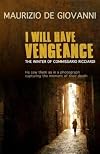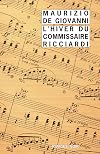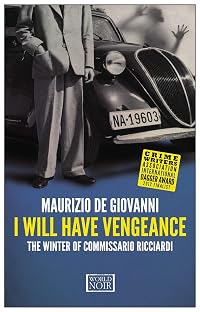
I Will Have Vengeance: The Winter of Commissario Ricciardi
by Maurizio De Giovanni
Commissario Ricciardi (1), Commissario Ricciardi [Fumetto] (1)
On This Page
Description
Naples, March 1931: a bitter wind stalks the city streets, and murder lies at its chilled heart. As one of the world s greatest tenors, Maestro Vezzi, is found brutally murdered in his dressing room at Naples famous San Carlo Theatre, the enigmatic and aloof Commissario Ricciardi is called in to investigate. Arrogant and bad-tempered, Vezzi was hated by many, but with the livelihoods of the opera at stake, who would have committed this callous act? Ricciardi, along with his loyal colleague, show more Maione, is determined to discover the truth. But Ricciardi carries his own secret: will it help him solve this murder? show lessTags
Recommendations





Member Reviews
Commissario Ricciardi, a coldly efficient homicide detective in 1931 Naples, sees and hears the ghosts of the recently dead. He keeps this to himself, but the visions seem to help him solve murders and other people are aware on some level that he operates on a different level.
Arnaldo Vezzi, “Mussolini’s favorite tenor,” is killed in his dressing room during an opera performance. A “worthless man” with immense talent, there is no shortage of suspects. Ricciardi’s visions play a small role in building a case and solving the crime. The rest is excellent detective work and his ability to discern the motives and character of people from a glimmer of information. And when Ricciardi does figure it out, there’s a final, humanistic show more twist to help him achieve the best result for all involved. Except of course, Vezzi, who got what he seemingly deserved. show less
Arnaldo Vezzi, “Mussolini’s favorite tenor,” is killed in his dressing room during an opera performance. A “worthless man” with immense talent, there is no shortage of suspects. Ricciardi’s visions play a small role in building a case and solving the crime. The rest is excellent detective work and his ability to discern the motives and character of people from a glimmer of information. And when Ricciardi does figure it out, there’s a final, humanistic show more twist to help him achieve the best result for all involved. Except of course, Vezzi, who got what he seemingly deserved. show less
One of my favorite things to do to relax is to read a good mystery. I'm particular about how I read my mysteries. I look for books that are usually not too gruesome and not two violent. I usually pick up mysteries from other countries and in another time because I’m looking for the back story which would allow me to experience the thrill of delving into a different culture or getting to know a different country. I already follow murder mystery series that are set in Scotland, England, Italy, Spain, France ETC. I do a lot of homework in selecting a series and I try to find a mystery series that has a long list of books that I can follow. I read them in chronological order, as the author wrote them.
I came upon this book by Mauricio show more Giovanni in Carmichael books in Louisville Ky. It is part of the World Noir Series from Europa Editions. They became famous for publishing the Elena Ferrante series. Came up on two or three of the Commisario Ricciardi series in Carmichaels, and I became intrigued by the premise of the series as well as the very different set of circumstances.
I picked up two or three of the first books and I jumped right in. This first one sets the tone I think for the rest of the series. We are introduced to Commissario Ricciardi, his sidekick Brigadier Maionne, and his doting Tata Rosa. As with all good literature, the author takes a long time to introduce us to the main characters. Characters that will be continuously accompany us on their adventures throughout series. De Giovanni does a very good job of introducing us to them and he does so at a very leisurely pace. He is not really in a hurry to get this important but somewhat tedious task done quickly. He lets us get a feel for the characters.
Of course there is a very distinguishing characteristic of the main protagonist, a distinguishing characteristic that makes him of interest and makes us dig deeper into the character and the murder mystery. This particular characteristic for this series is especially unnerving. The ability that Commissario Ricciardi has is phantasmagorical which makes takes this story into unchartered realms, especially for me. I'm not going to give it away here, because it's a big part of the pleasure of reading the book. De Giovanni does an excellent job of setting up the mystery. He sets the scenes he built things up nicely and he leads the reader along on an unusual ride. It is hard going at first, the initial reading of the early part of the book is awkward and somewhat uncomfortable for the reader. I think that was intentional because it forces us to face our own discomfort with respect to what the plot line is about, but as the story goes on it becomes more interesting, it eventually sucks us in as the story moves towards the middle. The slow and excruciating setup is part of the charm of the book, it makes the reader pay attention to everything that the author presents and makes us consider all of the possibilities.
The story centers around the death of a famous tenor in the opera house in Naples during the Italian fascist period, Il Duce is mentioned casually throughout the book. It was a particularly gruesome death and the suspects are many. The usual premise of a murder mystery. The difference is how Commissario Ricciardi solves the mystery. He is meticulous and rational in how he attacks the problems, but he also employs his “gift” to help him. All along his journey to solving the crime, he is beset by his superior’s inability as well as his own emotional upheavals hidden under his placid demeanor. The story is a study in contrast of reason and irrationality.
The ending was satisfactory, but the enjoyment of the book lies in the chase that De Giovanni takes us on.
I already started second book. show less
I came upon this book by Mauricio show more Giovanni in Carmichael books in Louisville Ky. It is part of the World Noir Series from Europa Editions. They became famous for publishing the Elena Ferrante series. Came up on two or three of the Commisario Ricciardi series in Carmichaels, and I became intrigued by the premise of the series as well as the very different set of circumstances.
I picked up two or three of the first books and I jumped right in. This first one sets the tone I think for the rest of the series. We are introduced to Commissario Ricciardi, his sidekick Brigadier Maionne, and his doting Tata Rosa. As with all good literature, the author takes a long time to introduce us to the main characters. Characters that will be continuously accompany us on their adventures throughout series. De Giovanni does a very good job of introducing us to them and he does so at a very leisurely pace. He is not really in a hurry to get this important but somewhat tedious task done quickly. He lets us get a feel for the characters.
Of course there is a very distinguishing characteristic of the main protagonist, a distinguishing characteristic that makes him of interest and makes us dig deeper into the character and the murder mystery. This particular characteristic for this series is especially unnerving. The ability that Commissario Ricciardi has is phantasmagorical which makes takes this story into unchartered realms, especially for me. I'm not going to give it away here, because it's a big part of the pleasure of reading the book. De Giovanni does an excellent job of setting up the mystery. He sets the scenes he built things up nicely and he leads the reader along on an unusual ride. It is hard going at first, the initial reading of the early part of the book is awkward and somewhat uncomfortable for the reader. I think that was intentional because it forces us to face our own discomfort with respect to what the plot line is about, but as the story goes on it becomes more interesting, it eventually sucks us in as the story moves towards the middle. The slow and excruciating setup is part of the charm of the book, it makes the reader pay attention to everything that the author presents and makes us consider all of the possibilities.
The story centers around the death of a famous tenor in the opera house in Naples during the Italian fascist period, Il Duce is mentioned casually throughout the book. It was a particularly gruesome death and the suspects are many. The usual premise of a murder mystery. The difference is how Commissario Ricciardi solves the mystery. He is meticulous and rational in how he attacks the problems, but he also employs his “gift” to help him. All along his journey to solving the crime, he is beset by his superior’s inability as well as his own emotional upheavals hidden under his placid demeanor. The story is a study in contrast of reason and irrationality.
The ending was satisfactory, but the enjoyment of the book lies in the chase that De Giovanni takes us on.
I already started second book. show less
Commissario of Police Luigi Alfredo Ricciardi doesn’t need his job, strictly speaking. Financially secure, a rarity in Naples in 1931, and of aristocratic lineage, he could be a gentleman of leisure if he wished, marry a woman with blue blood like his, and live pleasantly, attending parties and the opera. But Ricciardi’s job lends him his sole purpose in life, and the reasons why make him one of the most compelling fictional detectives I know of.
He has no friends or family, save a seventy-year-old woman who was his nanny during his childhood, and who feels free to lecture him on his workaholic habits as she serves him dinner, typically an hour before midnight. Neither sociable nor personable, Ricciardi puzzles most of his show more subordinates—indeed, most people he meets—and if it weren’t for his brilliant track record, nobody would want to work for him. His brigadier, Maione, is the only policeman on the force to realize how everyone misjudges Ricciardi, whose deep green eyes seem perpetually full of sadness. If anything, the commissario feels too much.
But even Maione doesn’t know why, or what ghosts lurk in his boss’s mind—literally. Ever since Ricciardi stumbled across a murder victim in his parents’ garden as a child, a scene he privately euphemizes as the Incident, he’s been deluged by empathy for the dead. As he walks around Naples, he hallucinates corpses he’s seen in the past, imagines what they felt just before they died, and, remarkably enough, uses that perception as an investigating technique. That’s how Ricciardi lives his work, for he’s known all his life “that crime is the dark side of emotion.”
And oh, by the way, Ricciardi hates opera and its excess of feeling. His singular opinion for his time and place figures in I Will Have Vengeance, for not only does the title come from an opera, the murder victim is a famous tenor. In life, Maestro Arnaldo Vezzi’s singing and stage presence commanded devotion from adoring audiences, but nobody liked him up close, especially not the managers, cast, and crews who had to work with him, and whom he terrorized. Even so, his star power was such that money flowed in his direction, and wherever he performed, he drew packed houses.
Consequently, who’d kill the goose that laid so many golden eggs? What provocation would push a member of the opera company to commit that murder and sweep all practicality aside? Those are the questions Ricciardi wishes he could answer, for the killing happened in Vezzi’s dressing room during an intermezzo, which points toward a perpetrator who’d have free backstage access.
Besides the hard-working Maione, assisting Ricciardi is a priest who loves opera. Thanks to a network of favors granted and received, Don Pierino Fava manages to witness performances from a spot just behind the curtain, as he does the fateful night in question. At Ricciardi’s request, he explains the opera’s story line and the ins and outs of operatic performance—details that matter to the investigation, dear reader, so pay attention. But it’s not just business between priest and commissario; the good Don Pierino, though flabbergasted that Ricciardi hates opera, also senses the shadow over the man’s soul.
I Will Have Vengeance moves like lightning, without waste motion or words, proving once more that a character-driven mystery can be just as riveting and suspenseful as its plot-centered cousin. As with the opera, every detail matters, and all’s in plain sight, something I appreciate. There are no tricks here, no rabbits pulled out of hats. I also like the departmental politics, and how Ricciardi handles his boss, an incompetent with friends in high places, which is to say that the commissario shows him no respect. Occasionally, that allows de Giovanni to work in subtle political commentary about Mussolini or his Fascist regime.
Another subplot I like concerns the sole outlet for Ricciardi’s softer feelings, a young woman who lives in a building across from his, and whom he likes to watch embroider at night. Trust me, it’s not creepy, and there’s more going on than even the hawk-eyed Ricciardi can guess.
I Will Have Vengeance is a masterful mystery, and I heartily recommend it. show less
He has no friends or family, save a seventy-year-old woman who was his nanny during his childhood, and who feels free to lecture him on his workaholic habits as she serves him dinner, typically an hour before midnight. Neither sociable nor personable, Ricciardi puzzles most of his show more subordinates—indeed, most people he meets—and if it weren’t for his brilliant track record, nobody would want to work for him. His brigadier, Maione, is the only policeman on the force to realize how everyone misjudges Ricciardi, whose deep green eyes seem perpetually full of sadness. If anything, the commissario feels too much.
But even Maione doesn’t know why, or what ghosts lurk in his boss’s mind—literally. Ever since Ricciardi stumbled across a murder victim in his parents’ garden as a child, a scene he privately euphemizes as the Incident, he’s been deluged by empathy for the dead. As he walks around Naples, he hallucinates corpses he’s seen in the past, imagines what they felt just before they died, and, remarkably enough, uses that perception as an investigating technique. That’s how Ricciardi lives his work, for he’s known all his life “that crime is the dark side of emotion.”
And oh, by the way, Ricciardi hates opera and its excess of feeling. His singular opinion for his time and place figures in I Will Have Vengeance, for not only does the title come from an opera, the murder victim is a famous tenor. In life, Maestro Arnaldo Vezzi’s singing and stage presence commanded devotion from adoring audiences, but nobody liked him up close, especially not the managers, cast, and crews who had to work with him, and whom he terrorized. Even so, his star power was such that money flowed in his direction, and wherever he performed, he drew packed houses.
Consequently, who’d kill the goose that laid so many golden eggs? What provocation would push a member of the opera company to commit that murder and sweep all practicality aside? Those are the questions Ricciardi wishes he could answer, for the killing happened in Vezzi’s dressing room during an intermezzo, which points toward a perpetrator who’d have free backstage access.
Besides the hard-working Maione, assisting Ricciardi is a priest who loves opera. Thanks to a network of favors granted and received, Don Pierino Fava manages to witness performances from a spot just behind the curtain, as he does the fateful night in question. At Ricciardi’s request, he explains the opera’s story line and the ins and outs of operatic performance—details that matter to the investigation, dear reader, so pay attention. But it’s not just business between priest and commissario; the good Don Pierino, though flabbergasted that Ricciardi hates opera, also senses the shadow over the man’s soul.
I Will Have Vengeance moves like lightning, without waste motion or words, proving once more that a character-driven mystery can be just as riveting and suspenseful as its plot-centered cousin. As with the opera, every detail matters, and all’s in plain sight, something I appreciate. There are no tricks here, no rabbits pulled out of hats. I also like the departmental politics, and how Ricciardi handles his boss, an incompetent with friends in high places, which is to say that the commissario shows him no respect. Occasionally, that allows de Giovanni to work in subtle political commentary about Mussolini or his Fascist regime.
Another subplot I like concerns the sole outlet for Ricciardi’s softer feelings, a young woman who lives in a building across from his, and whom he likes to watch embroider at night. Trust me, it’s not creepy, and there’s more going on than even the hawk-eyed Ricciardi can guess.
I Will Have Vengeance is a masterful mystery, and I heartily recommend it. show less
Questo è il secondo libro che leggo il cui protagonista è il commissario Ricciardi. In ordine temporale sarebbe dovuto essere il primo. Ebbene, ne sono innamorata pazza. De Giovanni scrive benissimo, ti cattura, e le atmosfere che crea con maestria sono perfette: un poliziotto come lui in una Napoli anni '30... Più che un giallo quindi direi che è quasi un noir, ma più sfumato. C'è tristezza, malinconia, ma anche un filo di speranza nei sentimenti positivi appena accennati e che sono trattati con grande delicatezza. Leggetelo.
Set in Naples in 1931, this novel takes place during the early rule of Benito Mussolini. We meet 31 year old Commissario Luigi Alfredo Ricciardi, a brilliant, unmarried, almost friendless, policeman. Though he is independently wealthy enough not to have to work, he has a different motivation: he sees, and hears, dead people. The ghosts of those who have died sorrowfully haunt him and his only relief seems to be the brief period following a successful investigation, when the voices leave Ricciardi alone for a time. The dead don’t comfort Ricciardi – they don’t even see him. They’re entirely wrapped up in their last thoughts.
After an odd introduction containing some supernatural elements, the book settles down into a fairly show more standard procedural in which Ricciardi and his faithful subordinate, Brigadier Maione, investigate the murder of Arnaldo Vezzi, one of Italy’s greatest opera singers, who has been stabbed in his dressing room on the opening night of a new season. There are plenty of suspects because almost everyone despised the singer. Ricciardi must piece together the evidence through careful listening and observation of everyone involved. Maurizio de Giovanni does a spectacular job of weaving this remarkable man and his remarkable ability into a setting that is filled with authentic details of Naples, its opera theater, and the historical backdrop. Ricciardi's visions are a blessing and a curse. His solace comes in the evening when he sits in his room, watching his neighbor across the courtyard doing embroidery.
I read my first Maurizio de Giovanni novel last week (The Crocodile) and immediately rushed out and got the first book in the Commissario Ricciardi series even though I usually am not a fan of reading books that incorporate the supernatural. They are two of my favorite books of the year and I can't wait to read more from this author. show less
After an odd introduction containing some supernatural elements, the book settles down into a fairly show more standard procedural in which Ricciardi and his faithful subordinate, Brigadier Maione, investigate the murder of Arnaldo Vezzi, one of Italy’s greatest opera singers, who has been stabbed in his dressing room on the opening night of a new season. There are plenty of suspects because almost everyone despised the singer. Ricciardi must piece together the evidence through careful listening and observation of everyone involved. Maurizio de Giovanni does a spectacular job of weaving this remarkable man and his remarkable ability into a setting that is filled with authentic details of Naples, its opera theater, and the historical backdrop. Ricciardi's visions are a blessing and a curse. His solace comes in the evening when he sits in his room, watching his neighbor across the courtyard doing embroidery.
I read my first Maurizio de Giovanni novel last week (The Crocodile) and immediately rushed out and got the first book in the Commissario Ricciardi series even though I usually am not a fan of reading books that incorporate the supernatural. They are two of my favorite books of the year and I can't wait to read more from this author. show less
Ricciardi is a man who has let his rather gruesome ability separate him from the rest of the world. He's rich. He lives alone, or almost alone-- his old nanny lives in and takes care of him. His only moments of pleasure seem to be when he sits in his darkened room and watches a young woman sitting by her window embroidering in the lamplight.
There didn't seem to be much historical flavor to I Will Have Vengeance other than mentioning Mussolini once in a while, but it was interesting to see how Ricciardi solved the crime. Yes, he does see the final seconds of Vezzi the tenor's life, so he does know who killed him, but that's not going to stand up in a court of law. He has to very carefully backtrack and interview countless people before show more he can declare the crime solved.
The mystery is an excellent one that I did enjoy following, but the characters all left me cold. Perhaps this reaction is due to the translation? I'm not sure. But one thing that I am sure of is that I doubt I'll be reading further in the series. show less
There didn't seem to be much historical flavor to I Will Have Vengeance other than mentioning Mussolini once in a while, but it was interesting to see how Ricciardi solved the crime. Yes, he does see the final seconds of Vezzi the tenor's life, so he does know who killed him, but that's not going to stand up in a court of law. He has to very carefully backtrack and interview countless people before show more he can declare the crime solved.
The mystery is an excellent one that I did enjoy following, but the characters all left me cold. Perhaps this reaction is due to the translation? I'm not sure. But one thing that I am sure of is that I doubt I'll be reading further in the series. show less
Lo stile è sempre quello di De Giovanni, ma rispetto ai libri della serie de I Bastardi di Pizzofalcone, il commissario Ricciardi non mi ha conquistato nella stessa maniera.
Una tristezza di fondo e la tetraggine del periodo non hanno di certo aiutato a farmi amare un personaggio alquanto inconsueto e particolare. Le sue cupe visioni e il carattere chiuso e tormentato, quasi dovesse scontare da solo tutte le colpe del mondo, non facilitano di certo empatia nei suoi confronti.
La parte iniziale risulta un po’ lenta, a tratti forse anche moderatamente noiosa, ma la storia pian piano decolla soprattutto con l’entrare nel vivo dell’indagine che si arricchisce di personaggi variegati che danno corpo alla vicenda.
Alla fine si legge show more bene, ma non mi ha fatto desiderare di continuare immediatamente anche con le altre storie di questo protagonista.
Effettive 3 stelle e mezzo.
***************************** RILETTURA del 12/2021***************************
Quali sono le componenti che influenzano il nostro giudizio su un libro?
Per me non è solo la storia, il contenuto, il modo in cui è scritto e via dicendo, una componente sostanziale è anche il momento in cui lo leggiamo, il modo in cui siamo noi stessi predisposti, il nostro stato d’animo, tutti fattori questi che ritengo determinati per definire la nostra personale valutazione. E sono state proprio queste ultime componenti che hanno fatto la differenza nella rilettura di questo libro che, diversamente dalla prima volta, non stento adesso a definire un imperdibile se non addirittura un capolavoro.
Rileggerlo è stato come scoprire un nuovo mondo, nuove emozioni e Ricciardi – e con lui tutti i comprimari - hanno conquistato il mio cuore e la mia mente come non era successo la prima volta, tanto da farmi leggere in un soffio tutti in una volta i primi otto libri di questa bellissima serie. Ognuno ha come sfondo una storia gialla, un delitto che, nella sostanza, alla fine diventa quasi solo lo stratagemma per portare in primo piano una città unica nel suo genere in un momento storico particolare, Napoli, che a sua volta diventa lo scenario perfetto per portare in primo piano e far risaltare ancor di più i vari personaggi con le loro peculiarità e complessità, a cominciare proprio da Ricciardi che con quel suo carattere ombroso e tormentato è riuscito questa volta a conquistarmi in tutto e per tutto.
Una serie da leggere assolutamente. show less
Una tristezza di fondo e la tetraggine del periodo non hanno di certo aiutato a farmi amare un personaggio alquanto inconsueto e particolare. Le sue cupe visioni e il carattere chiuso e tormentato, quasi dovesse scontare da solo tutte le colpe del mondo, non facilitano di certo empatia nei suoi confronti.
La parte iniziale risulta un po’ lenta, a tratti forse anche moderatamente noiosa, ma la storia pian piano decolla soprattutto con l’entrare nel vivo dell’indagine che si arricchisce di personaggi variegati che danno corpo alla vicenda.
Alla fine si legge show more bene, ma non mi ha fatto desiderare di continuare immediatamente anche con le altre storie di questo protagonista.
Effettive 3 stelle e mezzo.
***************************** RILETTURA del 12/2021***************************
Quali sono le componenti che influenzano il nostro giudizio su un libro?
Per me non è solo la storia, il contenuto, il modo in cui è scritto e via dicendo, una componente sostanziale è anche il momento in cui lo leggiamo, il modo in cui siamo noi stessi predisposti, il nostro stato d’animo, tutti fattori questi che ritengo determinati per definire la nostra personale valutazione. E sono state proprio queste ultime componenti che hanno fatto la differenza nella rilettura di questo libro che, diversamente dalla prima volta, non stento adesso a definire un imperdibile se non addirittura un capolavoro.
Rileggerlo è stato come scoprire un nuovo mondo, nuove emozioni e Ricciardi – e con lui tutti i comprimari - hanno conquistato il mio cuore e la mia mente come non era successo la prima volta, tanto da farmi leggere in un soffio tutti in una volta i primi otto libri di questa bellissima serie. Ognuno ha come sfondo una storia gialla, un delitto che, nella sostanza, alla fine diventa quasi solo lo stratagemma per portare in primo piano una città unica nel suo genere in un momento storico particolare, Napoli, che a sua volta diventa lo scenario perfetto per portare in primo piano e far risaltare ancor di più i vari personaggi con le loro peculiarità e complessità, a cominciare proprio da Ricciardi che con quel suo carattere ombroso e tormentato è riuscito questa volta a conquistarmi in tutto e per tutto.
Una serie da leggere assolutamente. show less
Members
- Recently Added By
Lists

Italian Literature
558 works; 40 members

Books Read in 2017
4,249 works; 129 members
Best Mysteries With a Historical Setting
292 works; 160 members
Author Information

103+ Works 3,400 Members
Some Editions
Awards and Honors
Series


Belongs to Publisher Series
Common Knowledge
- Canonical title
- I Will Have Vengeance: The Winter of Commissario Ricciardi
- Original title
- Le lacrime del pagliaccio
- Alternate titles*
- Il senso del dolore: L'inverno del commissario Ricciardi
- Original publication date
- 2006
- People/Characters*
- Commissario Luigi Alfredo Ricciardi; Brigadiere Raffaele Maione; Dottor Bruno Modo; Rosa Vaglio; Don Pierino Fava; Livia Vezzi
- Important places
- Naples, Italy
- Dedication
- To my mother
- First words
- The dead child was standing motionless at the intersection between Santa Teresa and the museum.
- Last words
- (Click to show. Warning: May contain spoilers.)As she went on embroidering, Enrica smiled.
- Original language*
- Italiano
- Disambiguation notice
- ISBN 8869611973 / 9788869611971 is a graphic novel based on Il senso del dolore; please do not combine with the novel, thank you.
*Some information comes from Common Knowledge in other languages. Click "Edit" for more information.
Classifications
- Genres
- Fiction and Literature, Mystery, Historical Fiction
- DDC/MDS
- 853.92 — Literature & rhetoric Italian, Romanian & related literatures Italian fiction 1900- 21st Century
- LCC
- PQ4904 .E146 .S4613 — Language and Literature French, Italian, Spanish and Portuguese literatures Italian literature Individual authors, 2001-
- BISAC
Statistics
- Members
- 413
- Popularity
- 75,416
- Reviews
- 30
- Rating
- (3.62)
- Languages
- 9 — Catalan, Czech, Dutch, English, French, German, Greek, Italian, Spanish
- Media
- Paper, Audiobook, Ebook
- ISBNs
- 28
- ASINs
- 9